



Four-year bar on expats unacceptable, says JCCI

August 14, 2014

Jeddah, Aug 14: The Ministry of Labor has said it will not make any exceptions to its decision not to allow private firms falling in the yellow level of the Nitaqat Saudization program to keep their foreign manpower for more than four years even as top industry officials questioned the viability of the decision, which they said will be difficult to implement.ministry of labour
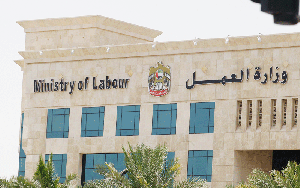
"Not even the manpower with accumulated experience or those born in Saudi Arabia will be exempted from the decision," business daily Al-Eqtisadiah reported on Wednesday quoting an official source in the ministry.

The decision will come into effect on Oct. 25 and six months later, the period of stay will be reduced to two years only.

"The decision will strictly apply to all expatriates working for any of the firms in the yellow Nitaqat category whose stay in the Kingdom has exceeded four years," he said.

The source, however, said expatriate workers of these companies will be allowed to transfer their residence permits to firms in the platinum and green Nitaqat levels.

He said the ministry took the decision to force companies in the yellow Nitaqat level to expedite the Saudization process. "The ministry is determined to employ more Saudis in the private sector," he added.

Meanwhile, members of the board of directors of the Jeddah Chamber of Commerce and Industry are unanimous in their opinion that it will be extremely difficult for the ministry to enforce its decision, especially in the industrial and contracting sectors.

They warned that the decision will create a manpower deficiency and will adversely affect the Saudization process.

The members also warned against the security, social and economic implications the decision would have on the labor market. They said the Kingdom would become a source of technical and vocational manpower for other countries if the decision was imposed.

Board member Ahmed Al-Marbaie said the decision could not be implemented on the industrial and contracting companies because they depend mainly on expatriate manpower. "These companies are always looking for expatriate manpower with sufficient experience, which they cannot find among Saudis," he said.

Al-Marbaie said if the ministry was adamant on its decision, the Kingdom would lose its trained and qualified foreign manpower. "In this case, we will be sending the qualified foreign manpower to other countries on a gold platter," he said.

"It is not acceptable to lose our trained foreign manpower and the workers who were born in the Kingdom as a result of this decision," he added.

Ibrahim Batterji, deputy chairman of the chamber's industrial committee, said it is not simply possible for the private companies to train the foreign manpower only to lose them in four years.

He warned that as a result of the decision, people might leave the industrial and contracting sectors and would invest in the commercial sector or the stock market instead.

"Saudization needs more time until the national carders are ready to accept all sorts of jobs. We will not be able to solve the problem of unemployment among Saudis by such decisions," he said.

Comments

Add new comment

  • Coastaldigest.com reserves the right to delete or block any comments.
  • Coastaldigset.com is not responsible for its readers’ comments.
  • Comments that are abusive, incendiary or irrelevant are strictly prohibited.
  • Please use a genuine email ID and provide your name to avoid reject.
News Network
May 3,2020

Jeddah, May 3: Saudis and expats who spread rumors on social media could be jailed for up to five years and fined SR3 million ($800,000) under measures to counter false information regarding the coronavirus pandemic.

The move follows warnings by Saudi Arabia’s Ministry of Health, Ministry of Interior, General Presidency of the Two Holy Mosques and other government entities that people should rely on trusted news sources and not third parties for information on the Kingdom’s handling of the COVID-19 outbreak.

The Saudi Public Prosecutor warned that legal action will be taken against individuals who spread misinformation and rumors.

On Saturday, media spokesman for the Riyadh region police, Col. Shakir Al-Tuwaijri, highlighted a video circulating on social media in which a person spreads rumors about steps taken to curb the spread of the coronavirus.

Other false claims include a planned change in curfew hours, warnings of food shortages, and a suggestion that health authorities are deliberately concealing the number of cases in the Kingdom.

In a recent case, a Riyadh resident claimed to know when worshippers will be allowed to return to the Grand Mosque.

All suspects have been arrested and face legal action, police said.

Dimah Al-Sharif, a Saudi legal counsel and member of the International Association of Lawyers, urged people to be responsible regarding content they access on social media.

“Receivers should not save such content or share it with others, and should delete it if possible since they, too, will be liable,” she said.

“Under Saudi laws to counter cyber-crime, we are not allowed to produce, prepare, send or save any unauthorized content or rumors.”

Individuals who breach regulations can be jailed for up to five years and face fines of SR3 million, as well as confiscation of the device(s) used in the crime, she said.

In addition, the judicial ruling will be published in newspapers at the offender’s expense.

The Kingdom’s Public Prosecution Office took to social media to warn users about the consequences of spreading rumors and misinformation.

@bip_ksa tweeted: “Receiving information from its official sources is a moral obligation and commitment, and legal responsibility. Do not fall victim to malicious rumors and news from anonymous sources that violate the procedures and effort, and cause terror regarding the Coronavirus, in order to avoid strict criminal accountability in this regard.”

Comments

Add new comment

  • Coastaldigest.com reserves the right to delete or block any comments.
  • Coastaldigset.com is not responsible for its readers’ comments.
  • Comments that are abusive, incendiary or irrelevant are strictly prohibited.
  • Please use a genuine email ID and provide your name to avoid reject.
News Network
April 26,2020

Abu Dhabi, Apr 26: Indian Ambassador to the UAE Pavan Kapoor says he is appalled after the bodies of three Indians flown back to India were returned to Abu Dhabi on Friday.

The three deceased Indian nationals had died of non-coronavirus causes and were flown to Delhi on Thursday but were promptly returned by authorities there.

“We are appalled at what has happened,” Kapoor told Gulf News. “We do not know if the bodies were returned because of coronavirus-related restrictions, but we are obviously not sending the remains of people [who have passed away from COVID-19],” he added.

“[As we understand], it happened because of new protocols at the airport and we are trying to sort it out,” he said.

Sent back a few hours later

“The remains were not offloaded from the plane, and were sent back a few hours later,” Kapoor explained.

The deceased were Kamlesh Bhatt, who passed away on April 17, and Sanjeev Kumar and Jagsir Singh who both died on April 13.

According to reports in Indian media, Kamlesh Bhat was 23 years old, and hailed from Tehri Garhwal district. He allegedly died of cardiac arrest. Along with the remains Kumar and Singh, Bhatt’s body was initially repatriated on an Etihad Airways flight, then sent back, even though his relatives had been on their way to collect them.

Kapoor explained the procedure through which remains are normally returned to family members back home, saying that the worker’s employer typically makes arrangements with cargo companies to repatriate bodies on cargo aircraft.

The employer applies for a No Objection Certificate from the Indian Embassy, which is granted once the Embassy ensures that all local formalities have been completed. The cargo company then applies for airport clearance, and the airline obtains approvals from the receiving airport.

“If airport protocols have changed, it means cargo companies have to be more careful about the clearance they’re getting,” Kapoor advised.

Additional costs
The ambassador added there may eventually be additional costs to repatriate the bodies but that it is first necessary to sort out the concerns.

The global coronavirus outbreak has spawned difficulties in repatriating mortal remains as a result of the travel restrictions imposed by countries. Remains of people dying from COVID-19 are not being sent back, but the caution surrounding the handling of bodies often affects the repatriation of those who succumb to other causes.

As Gulf News reported, Kerala chief minister Pinarayi Vijayan reached out to Indian Prime Minister Narendra Modi on Friday for intervention in bringing back the bodies of Keralites who have died in the Gulf from non-COVID-19 causes.

“I would like to draw your attention to the grievances received from Non-resident Keralites Associations (NRKs) in the Gulf Cooperation Council (GCC) countries on the delay caused in bringing home the mortal remains of NRKs who had expired due to reasons other than the COVID-19 infection,” read the letter by the CM.

“It is learnt that a ‘clearance certificate’ from the Indian Embassies is required to process the application of bringing home the mortal remains of the dead. The Embassies are [further] insisting on the production of a no-objection certificate from the Ministry of Home Affairs (MHA), New Delhi. To enable to bring back the bodies of the NRIs whose deaths occurred due to reasons other than COVID-19 infection, without necessary procedural hassles, I request your kind intervention,” Vijayan has requested.

Comments

Add new comment

  • Coastaldigest.com reserves the right to delete or block any comments.
  • Coastaldigset.com is not responsible for its readers’ comments.
  • Comments that are abusive, incendiary or irrelevant are strictly prohibited.
  • Please use a genuine email ID and provide your name to avoid reject.
News Network
March 11,2020

Riyadh, Mar 11: Energy titan Saudi Aramco said Tuesday it will boost crude oil supplies to 12.3 million barrels per day in April, flooding markets as it escalates a price war with Russia.

Riyadh had already slashed its price for April delivery after Russia refused its proposal that producer alliance OPEC+ orchestrate a co-ordinated cut of 1.5 million barrels per day.

The production cut had been mooted to shore up global oil prices, which have gone into meltdown as the deadly new coronavirus casts a pall over the world economy, but now price cuts and rising output indicate an unravelling of OPEC+ co-operation.

"Saudi Aramco announces that it will provide its customers with 12.3 million barrels per day of crude oil in April," the company said in a statement to the Saudi stock exchange.

Saudi Arabia, the world's biggest crude exporter has been pumping some 9.8 million bpd so its announcement on Tuesday means it will be adding at least 2.5 million bpd from April.

"The Company has agreed with its customers to provide them with such volumes starting 1 April 2020. The Company expects that this will have a positive, long-term financial effect," the statement said.

Saudi Arabia says it has an output capacity of 12 million bpd but it is not known for how long it can sustain such levels.

The kingdom also has millions of barrels of crude stored in strategic reserves to be used when needed and is expected to use it to provide the extra supply to the global market.

"Production above 12 million bpd shows the Saudis have something to prove," director of Britain-based RS Energy Bill Farren-Price said.

"This is a grab for market share. The taps are open and the prices have been cut sharply," Farren-Price told AFP.

In a quick response, Russian Energy Minister Alexander Novak said Moscow could boost production in the short term "by 200,00-300,000 bpd, with a potential of 500,000 bpd in the near future".

But he stressed that Moscow was in favour of extending a December agreement that had seen OPEC and Russia agree to cut production by 500,000 barrels per day in 2020, lowering output from October 2018 levels by 1.7 million barrels per day.

The events of recent days have signalled a disintegration of collaboration between OPEC and Russia.

Russia is a non-OPEC member and the world's second-biggest oil producer, but Moscow and other non-members have in recent years co-operated with the oil cartel in an arrangement known as OPEC+.

The Saudi price cuts over the weekend, which were the first salvo in the price war, sent oil prices crashing -- registering the single biggest one-day loss in three decades on Monday.

Saudi Arabia draws around 70 per cent of its revenues from oil, and the revenues are key to ambitious reform programmes launched by Crown Prince Mohammed bin Salman.

Comments

Add new comment

  • Coastaldigest.com reserves the right to delete or block any comments.
  • Coastaldigset.com is not responsible for its readers’ comments.
  • Comments that are abusive, incendiary or irrelevant are strictly prohibited.
  • Please use a genuine email ID and provide your name to avoid reject.