Friday sermons at Prophet’s Mosque to be translated into six languages

September 29, 2015

Madinah, Sep 29: The Agency of General Presidency for the Prophet’s Mosque Affairs has appointed six interpreters to translate Friday sermons into French, English, Urdu, Chichewa, Turkish and Hausa.

ProphetThe translated version of the sermons would be broadcasted on various FM radio frequencies, including English (105.5FM), Urdu (105FM), Chichewa (99FM), French (99.5FM), Turkish (107FM), and Hausa (107.2).

Abdullah Al-Hattab, director of the translation department at the Prophet’s Mosque, said that about 300,000 pilgrims and visitors have already benefited from the translation services.

He said the project will enable a vast number of worshippers from diverse backgrounds to understand the important messages.

The broadcast is also being made accessible through the online website of the project.

“Instant translation devices are also being distributed among worshippers in this regard. All of the devices are sterilized to ensure health safety,” he said.

“The project is considered as a major achievement and a quantum leap in the nature and quality of the services offered at the Prophet’s Mosque to assist and welcome visitors, worshippers and Muslims from all around the world,” he added.

Comments

Add new comment

  • Coastaldigest.com reserves the right to delete or block any comments.
  • Coastaldigset.com is not responsible for its readers’ comments.
  • Comments that are abusive, incendiary or irrelevant are strictly prohibited.
  • Please use a genuine email ID and provide your name to avoid reject.
News Network
February 5,2020

The Organisation of Islamic Cooperation (OIC) has said it rejects US President  Donald Trump 's recently unveiled Middle East plan.

The 57-member body, which held a summit on Monday  to discuss the plan in Saudi Arabia's Jeddah, said in a statement that it "calls on all member states not to engage with this plan or to cooperate with the US administration in implementing it in any form".

Requested by the Palestinian leadership, the meeting of the body came two days after the Arab League rejected Trump's so-called "deal of the century", saying: "It does not meet the minimum rights and aspirations of Palestinian people."

Addressing a pro-Israel audience at the White House with Israeli Prime Minister Benjamin Netanyahu by his side, Trump on Tuesday described his long-delayed plan for resolving the Israeli-Palestinian conflict as a "win-win solution" for both sides.

The US president said his proposed deal would ensure the establishment of a two-state solution, promising Palestinians a state of their own with a new capital in Abu Dis, a suburb just outside Jerusalem. Trump also said Jerusalem would be the "undivided capital" of Israel. The Palestinians want both occupied East Jerusalem and the West Bank to be part of a future state.

Palestinian leaders, who were absent during the announcement and had rejected the proposal even before its release, denounced the plan as "a new Balfour Declaration" that heavily favoured Israel and would deny them a viable independent state.

The OIC said in a statement on Twitter on Sunday that its "open-ended executive committee meeting" at the level of foreign ministers would "discuss the organisation's position after the US administration announced its peace plan".

With member states from four continents, the OIC is the second-largest intergovernmental organisation in the world after the United Nations, with a collective population reaching more than 1.8 billion.

The majority of its member states are Muslim-majority countries, while others have significant Muslim populations, including several African and South American countries. While the 22 members of the Arab League are also part of the OIC, the organisation has several significant non-Arab member states, including Turkey, Iran and Pakistan. It also has five observer members, including Russia and Thailand.

Iran 'barred'

Meanwhile, Iran on Monday accused its regional rival Saudi Arabia of blocking its officials from attending the OIC meeting.

"The government of Saudi Arabia has prevented the participation of the Iranian delegation in the meeting to examine the 'deal of the century' plan at the headquarters of the Organization of Islamic Cooperation," Fars news agency quoted Abbas Mousavi, spokesman for Iran's foreign ministry, as saying.

Mousavi said Iran - one of the countries to strongly condemn Trump's plan - had filed a complaint with the OIC and accused its regional rival of misusing its position as the host for the organisation's headquarters.

There was no immediate comment from Saudi officials.

Following the unveiling of Trump's plan, the Saudi foreign ministry expressed appreciation for Trump's efforts and support for direct peace negotiations under Washington's auspices, while state media reported that King Salman had called Palestinian President Mahmoud Abbas to reassure him of Riyadh's unwavering commitment to the Palestinian cause.

The announcement of Trump's plan drew mixed responses from Arab states.

Observers said the reaction was indicative of the division among Arab countries and their inability to prioritise the Palestinian people's plight over domestic economic agendas and political calculations in relation to the Trump administration.

Comments

Add new comment

  • Coastaldigest.com reserves the right to delete or block any comments.
  • Coastaldigset.com is not responsible for its readers’ comments.
  • Comments that are abusive, incendiary or irrelevant are strictly prohibited.
  • Please use a genuine email ID and provide your name to avoid reject.
Agencies
June 22,2020

Riyadh, Jun 22: The Ministry of Municipal and Rural Affairs (MMRA) in Saudi Arabia has announced the continuation of the ban on providing Shisha (hubble-bubble), and the closure of children's play areas in restaurants as a precautionary measure for protecting the health of citizens and residents from the novel coronavirus COVID-19 infection.

The new stage, in which the Kingdom is beginning to coexist with the virus, focuses on the concept of "social distancing" that has emerged since the start of the coronavirus crisis throughout the world,

It stipulates leaving at least 2 meters between one person and the other in public places to prevent the transmission of infection, in addition to covering the mouth and nose by wearing a facemask.

It also specifies complying with the preventive protocols in workplaces, stores, shops, mosques and tourist attractions, with human gatherings not to exceed 50 people, as a maximum.

Comments

Add new comment

  • Coastaldigest.com reserves the right to delete or block any comments.
  • Coastaldigset.com is not responsible for its readers’ comments.
  • Comments that are abusive, incendiary or irrelevant are strictly prohibited.
  • Please use a genuine email ID and provide your name to avoid reject.
Agencies
August 2,2020

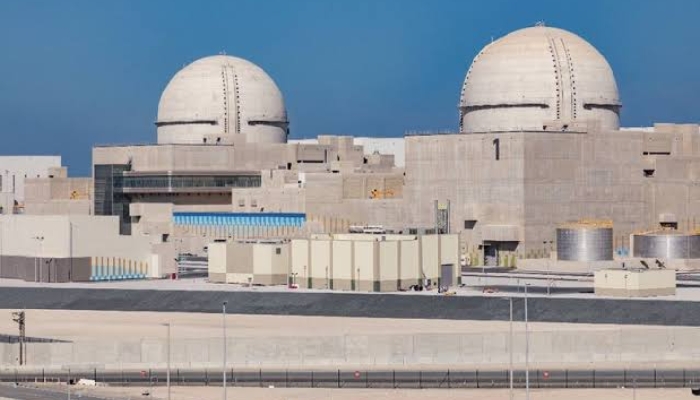
Dubai, Aug 2: The United Arab Emirates (UAE) announced on Saturday that it has started operations in the first of four reactors at the Barakah nuclear power station - the first nuclear power plant in the Arab world.

Emirates Nuclear Energy Corporation (ENEC), which is building and operating the plant with Korea Electric Power Corporation (KEPCO) said in a press release that its subsidiary Nawah Energy Company "has successfully started up Unit 1 of the Barakah Nuclear Energy Plant, located in the Al Dhafrah Region of Abu Dhabi".

That signals that Unit 1, which had fuel rods loaded in March, has achieved "criticality" - a sustained fission chain reaction.

"The start-up of Unit 1 marks the first time that the reactor safely produces heat, which is used to create steam, turning a turbine to generate electricity," said ENEC.

Barakah, which was originally scheduled to open in 2017, has been dogged by delays and is billions of dollars over budget. It has also raised myriad concerns among nuclear energy veterans who are concerned about the potential risks Barakah could visit upon the Arabian Peninsula, from an environmental catastrophe to a nuclear arms race.

Paul Dorfman, an honorary senior research fellow at the Energy Institute, University College London and founder and chair of the Nuclear Consulting Group, has criticised the Barakah reactors' "cheap and cheerful" design that he says cuts corners on safety.

Dorfman authored a report (PDF) last year detailing key safety features Barakah's reactors lack, such as a "core catcher" to literally stop the core of a reactor from breaching the containment building in the event of a meltdown. The reactors are also missing so-called Generation III Defence-In-Depth reinforcements to the containment building to shield against a radiological release resulting from a missile or fighter jet attack.

Both of these engineering features are standard on new reactors built in Europe, says Dorfman.

There have been at least 13 aerial attacks on nuclear facilities in the Middle East - more than any other region on earth.

The vulnerability of critical infrastructure in the Arabian Peninsula was further laid bare last year after Saudi Arabia's oil facilities at Abqaiq and Khurais were attacked by 18 drones and seven cruise missiles - an assault that temporarily knocked out more than half of the kingdom's oil production.

On Saturday, Dorfman reiterated his concern that there is no regional protocol in place to determine liability should an accident or incident at Barakah result in radioactive contamination spreading from the UAE to its neighbours. 

"Given Barakah has started up, because of all the well-rehearsed nuclear safety and security problems, it may be critically important that the Gulf states collectively evolve a Nuclear Accident Liability Convention, so that if anything does go wrong, victim states may have some sort of redress," Dorfman told Al Jazeera. 

The UAE has substantial oil and gas reserves, but it has made huge investments in developing alternative energy sources, including nuclear and solar.

Experts though have questioned why the UAE - which is bathed in sunlight and wind - has pushed ahead with nuclear energy - a far more expensive and riskier option than renewable energy sources.

When the UAE first announced Barakah in 2009, nuclear power was cheaper than solar and wind. But by 2012 - when the Emirates started breaking ground to build the reactors - solar and wind costs had plummeted dramatically.

Between 2009 and 2019, utility-scale average solar photovoltaic costs fell 89 percent and wind fell 43 percent, while nuclear jumped 26 percent, according to an analysis by the financial advisory and asset manager Lazard.

There are also concerns about the potential for Barakah to foment nuclear proliferation in the Middle East - a region rife with geopolitical fault lines and well-documented history of nuclear secrecy.

The UAE has sought to distance itself from the region's bad behaviour by agreeing not to enrich its own uranium or reprocess spent fuel. It has also signed up to the United Nation's nuclear watchdog's Additional Protocol, significantly enhancing inspection capabilities, and secured a 123 Agreement with the United States that allows bilateral civilian nuclear cooperation.


Comments

Add new comment

  • Coastaldigest.com reserves the right to delete or block any comments.
  • Coastaldigset.com is not responsible for its readers’ comments.
  • Comments that are abusive, incendiary or irrelevant are strictly prohibited.
  • Please use a genuine email ID and provide your name to avoid reject.

