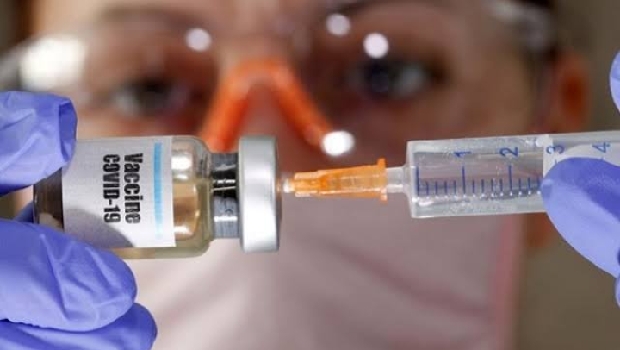
Global COVID-19 cases nearing 9 million: Johns Hopkins University

Agencies
June 22, 2020

The total number of global COVID-19 cases was nearing 9 million, while the deaths have increased to over 467,000, according to the Johns Hopkins University.

By Monday morning, the total number of cases stood at 8,927,195, while the fatalities increased to 467,636, the University's Center for Systems Science and Engineering (CSSE) revealed in its latest update.

With 2,279,306 cases and 119,967 deaths, the US continues with the world's highest number of COVID-19 infections and fatalities, according to the CSSE.

Brazil comes in the second place with 1,083,341 infections and 50,591 deaths.

In terms of cases, Russia ranks third (583,879), and was followed by India (410,461), the UK (305,803), Peru (251,338), Spain (246,272), Chile (242,355), Italy (238,499), Iran (204,952), France (197,008), Germany (191,272), Turkey (187,685), Mexico (180,545), Pakistan (176,617), Saudi Arabia (157,612), Bangladesh (112,306) and Canada (103,078), the CSSE figures showed.

The other countries with over 10,000 deaths are the UK (42,717), Italy (34,634), France (29,643), Spain (28,323), Mexico (21,825) and India (13,254).

Comments

Add new comment

  • Coastaldigest.com reserves the right to delete or block any comments.
  • Coastaldigset.com is not responsible for its readers’ comments.
  • Comments that are abusive, incendiary or irrelevant are strictly prohibited.
  • Please use a genuine email ID and provide your name to avoid reject.
Agencies
July 29,2020

If everything goes as Russia’s expectation, it will be world’s first country to approve a coronavirus vaccine for widespread in the second week of August despite safety and efficacy concerns, according to a report. The adenoviral vector-based vaccine developed by Russian military and government researchers is currently in phase 2 trials.

According to a report from CNN, Russian officials are hoping to get approval for the COVID-19 vaccine developed by the Moscow-based Gamaleya Institute on Agust 10 or even before that. The officials told the outlet that the vaccine will be approved for public use with frontline healthcare workers receiving it first.

“It’s a Sputnik moment,” said Kirill Dmitriev, head of Russia’s sovereign wealth fund, which is financing Russian vaccine research, referring to the successful 1957 launch of the world’s first satellite by the Soviet Union, according to CNN.

“Americans were surprised when they heard Sputnik’s beeping. It’s the same with this vaccine. Russia will have got there first,” he was quoted as saying.

However, Russia is yet to release the scientific data on its coronavirus vaccine trials, hence, questions remain about the safety and efficacy of the vaccine, said the report. The vaccine is in the second phase of testing with developers planning to launch the phase 3 trials sometime after August 3.

Earlier, Interfax reported, citing Health Minister Mikhail Murashko, that the vaccine will be widely used in parallel with phase 3 trials. He said the country plans to vaccinate medics who are at high-risk for COVID-19 next month before clinical trials are completed.

Murashko added that individuals at higher risk of getting infected with the coronavirus such as older people or those with health conditions will also be prioritised for the vaccine, although he did not estimate or reveal when that would happen. The minister added 800 people will be recruited for the phase 3 trials.

Meanwhile, health officials were more cautious considering the fact that human testing of the vaccine is incomplete, and the state registration is expected to begin after August 3, reported The Moscow Times.

On Monday, Moderna and Pfizer announced the commencement of the final phase 3 trials of their candidate vaccines against the SARS-CoV-2 virus, which has so far claimed at least 654,477 lives and infected 16,514,500 people worldwide. 

Researchers will recruit up to 30,000 volunteers in separate trials both backed by the US government. India's first indigenous coronavirus vaccine, COVAXIN, is undergoing phase 1 human clinical trials across the country. More than 150 COVID-19 vaccines are being developed all over the world with at least six candidates already in late-stage clinical trials.

Comments

Add new comment

  • Coastaldigest.com reserves the right to delete or block any comments.
  • Coastaldigset.com is not responsible for its readers’ comments.
  • Comments that are abusive, incendiary or irrelevant are strictly prohibited.
  • Please use a genuine email ID and provide your name to avoid reject.
News Network
April 23,2020

Geneva, Apr 23: The World Health Organisation (WHO) on Wednesday (local time) said that the COVID-19 crisis will not end any time soon, with several countries only in the initial stages of the fight against the virus.

"Make no mistake, we have a long way to go. Coronavirus will be with us for a long time. There is no question that stay at home orders and other physical distancing measures have successfully suppressed transmission in many countries," WHO chief Tedros Adhanom Ghebreyesus said in a press conference.

"Most countries are in the early stages of their epidemics. And some, which were affected early in the pandemic, are now starting to see a resurgence in the number of cases," he added.

COVID-19 has infected more than 2.6 million people around the world and a total of 1,83,027 people have died due to coronavirus, according to data from US-based Johns Hopkins University.

Comments

Add new comment

  • Coastaldigest.com reserves the right to delete or block any comments.
  • Coastaldigset.com is not responsible for its readers’ comments.
  • Comments that are abusive, incendiary or irrelevant are strictly prohibited.
  • Please use a genuine email ID and provide your name to avoid reject.
News Network
May 19,2020

May 19: A Chinese laboratory has been developing a drug it believes has the power to bring the coronavirus pandemic to a halt.

The outbreak first emerged in China late last year before spreading across the world, prompting an international race to find treatments and vaccines.

A drug being tested by scientists at China's prestigious Peking University could not only shorten the recovery time for those infected, but even offer short-term immunity from the virus, researchers say.

Sunney Xie, director of the university's Beijing Advanced Innovation Center for Genomics, told AFP that the drug has been successful at the animal testing stage.

"When we injected neutralising antibodies into infected mice, after five days the viral load was reduced by a factor of 2,500," said Xie.

"That means this potential drug has (a) therapeutic effect."

The drug uses neutralising antibodies -- produced by the human immune system to prevent the virus infecting cells -- which Xie's team isolated from the blood of 60 recovered patients.

A study on the team's research, published Sunday in the scientific journal Cell, suggests that using the antibodies provides a potential "cure" for the disease and shortens recovery time.

Xie said his team had been working "day and night" searching for the antibody.

"Our expertise is single-cell genomics rather than immunology or virology. When we realised that the single-cell genomic approach can effectively find the neutralising antibody we were thrilled."

He added that the drug should be ready for use later this year and in time for any potential winter outbreak of the virus, which has infected 4.8 million people around the world and killed more than 315,000.

"Planning for the clinical trial is underway," said Xie, adding it will be carried out in Australia and other countries since cases have dwindled in China, offering fewer human guinea pigs for testing.

"The hope is these neutralised antibodies can become a specialised drug that would stop the pandemic," he said.

China already has five potential coronavirus vaccines at the human trial stage, a health official said last week.

But the World Health Organization has warned that developing a vaccine could take 12 to 18 months.

Scientists have also pointed to the potential benefits of plasma -- a blood fluid -- from recovered individuals who have developed antibodies to the virus enabling the body's defences to attack it.

More than 700 patients have received plasma therapy in China, a process which authorities said showed "very good therapeutic effects".

"However, it (plasma) is limited in supply," Xie said, noting that the 14 neutralising antibodies used in their drug could be put into mass production quickly.

Using antibodies in drug treatments is not a new approach, and it has been successful in treating several other viruses such as HIV, Ebola and Middle East Respiratory Syndrome (MERS).

Xie said his researchers had "an early start" since the outbreak started in China before spreading to other countries.

Ebola drug Remdesivir was considered a hopeful early treatment for COVID-19 -- clinical trials in the US showed it shortened the recovery time in some patients by a third -- but the difference in mortality rate was not significant.

The new drug could even offer short-term protection against the virus.

The study showed that if the neutralising antibody was injected before the mice were infected with the virus, the mice stayed free of infection and no virus was detected.

This may offer temporary protection for medical workers for a few weeks, which Xie said they are hoping to "extend to a few months".

More than 100 vaccines for COVID-19 are in the works globally, but as the process of vaccine development is more demanding, Xie is hoping that the new drug could be a faster and more efficient way to stop the global march of the coronavirus.

"We would be able to stop the pandemic with an effective drug, even without a vaccine," he said.

Comments

Add new comment

  • Coastaldigest.com reserves the right to delete or block any comments.
  • Coastaldigset.com is not responsible for its readers’ comments.
  • Comments that are abusive, incendiary or irrelevant are strictly prohibited.
  • Please use a genuine email ID and provide your name to avoid reject.