


Global outrage over Houthi missile attack near Makkah

October 29, 2016

Riyadh, Oct 29: The ballistic missile launched by the Houthi militias targeting the holy city of Makkah late on Thursday evoked worldwide condemnation on Friday with foreign ambassadors in Riyadh, key world leaders and prominent organizations joining Saudi society in unequivocally denouncing the “heinous act.”
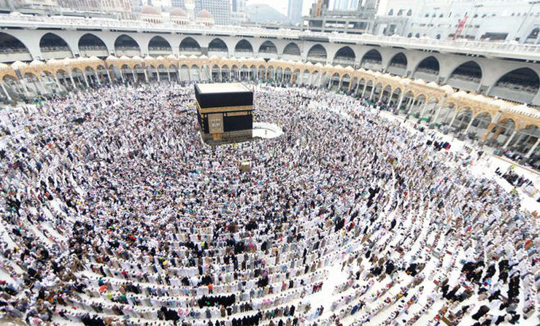
makkah

In a uniform voice, ambassadors in the capital slammed the attack. The missile was intercepted by Saudi ground forces and downed 65 km from the holy city of Makkah.

German Ambassador Dieter W. Haller said: “We condemn this kind of attacks in strongest possible terms.” He said it is important for all stakeholders on Yemen to resume peace talks to find a solution according to the UN resolutions as proposed by its envoy Ismail Ould Cheikh Ahmed.

Speaking to Arab News on telephone from the US, Norwegian Ambassador Rolf Willy Hansen said the attack would be condemned by all peace-loving people. “I sincerely feel that these matters could be settled at a negotiating table peacefully.”

Finland’s Ambassador Pekka Voutilainen said: “That kind of missile attack on Saudi soil has to be condemned in the strongest possible words. It is not acceptable.” He said the UN has come with a road map to restore peace in Yemen. Houthi militias doing this will disturb the peace process, which is important to restore the political stability.

Indian Ambassador Ahmad Javed said: “Targeting a holy place must be strongly denounced.”

Belgian Ambassador Geert Criel said: “We are shocked by the attack on Saudi territory by the Houthi militias. This is absolutely unacceptable.” He said he hoped the cease-fire would continue in order to achieve the goal of the UN peace talks to restore political stability in Yemen.

Pakistan Ambassador Manzoor Ul Haq said: “The news of a missile attack targeting the holy city is shocking for every Muslim. We strongly condemn any attack against Makkah or any other part of the Kingdom.”

Turkish Ambassador Yunis Demirer said: “We strongly condemn the missile launch by Houthi militias toward Makkah, the most sacred place for Muslims ... We are relieved by the fact that the Saudi defense forces were able to intercept and destroy the missile.” He added: “Our Foreign Ministry also issued a separate statement condemning this attack.”

Bangladesh Ambassador Golam Moshi told Arab News that his country strongly condemns the heinous act of the Houthis. “This is not an attack on Saudi Arabia, it is willful aggression on Islam,” he said.

“Under the able leadership of Premier Sheikh Hasina, Bangladesh is prepared to send its troops to protect the holy cities of Makkah and Madinah,” the envoy said.

Meanwhile, Saudi Foreign Minister Adel Al-Jubeir said the attack has not only violated the peace agreement but also targeted Makkah, where Muslims from all parts of the world come for pilgrimage.

Arab coalition spokesman Brig. Gen. Ahmed Al-Assiri said: “Targeting the holiest place on the earth with a ballistic missile last night reveals the fake slogans of Houthi militias.”

Gulf Cooperation Council (GCC) Secretary-General Abdullatif Al-Zayani expressed the bloc’s strong condemnation of the attack.

“The GCC considers the brutal assault, which violates the sanctity of this country, a provocation for Muslims. It shows the Houthi disregard for Islamic holy sites. It is evident of the Houthi refusal to follow the will of the international community and their decisions to reach a political solution to the crisis,” Al-Zayani said in a statement.

Ahmed Aboul Gheit, secretary-general of the Arab League, pointed out that the attack was an unacceptable violation of the sanctity of the holy land. In a statement, Aboul Gheit said this is a serious escalation by the Houthi militias.

Describing the attack as a gross violation of the sanctity of the House of Allah, Shoura Council Speaker Abdullah Al-Asheikh said it is a blatant attack supported by the Iranian regime’s agents in Yemen. Al-Asheikh pledged the council’s support to all measures taken by the Saudi government to protect the sovereignty, security and stability of the country.

The Muslim World League said the attack has violated the sanctity of the holy place and also hurt the sentiments of the world Muslims.

UAE Foreign Minister Abdullah bin Zayed tweeted: “The Iranian regime supports a terrorist group which targets the holy city of Makkah. Is this an Islamic regime as it claims?”

Jordanian government spokesman Mohammed Al-Momani said that “such heinous acts serve neither the Yemeni cause, nor the Arab and Muslim causes.”

“Any attack against holy places would expand the cycle of violence,” Al-Momani said, while reiterating calls to adhere to legitimacy and restore security of Yemen.

Bahrain Foreign Minister Khaled bin Ahmad Al-Khalifah said: “Targeting Makkah is not only a violation of all international covenants, but it’s the biggest crime ever.”

Qatar’s Foreign Ministry said: “This is an outrageous aggression against the sanctity of the holiest Islamic shrine and a provocation for the religious sentiments of millions of Muslims around the world.”

Doha reiterated support to relentless Saudi efforts to ensure regional security and stability and its efforts to achieve peace in Yemen.

Egypt described the attack as “a dangerous development which targeted the innocent people who came for the pilgrimage.”

Comments

Add new comment

  • Coastaldigest.com reserves the right to delete or block any comments.
  • Coastaldigset.com is not responsible for its readers’ comments.
  • Comments that are abusive, incendiary or irrelevant are strictly prohibited.
  • Please use a genuine email ID and provide your name to avoid reject.
News Network
January 6,2020

Riyadh, Jan 6: Saudi Arabia was not consulted by its ally Washington over a US drone strike that killed a top Iranian general, an official said Sunday, as the kingdom sought to defuse soaring regional tensions.

Saudi Arabia is vulnerable to possible Iranian reprisals after Tehran vowed "revenge" following the strike on Friday that killed powerful commander Qasem Soleimani in Baghdad.

"The kingdom of Saudi Arabia was not consulted regarding the US strike," a Saudi official told AFP, requesting anonymity.

"In light of the rapid developments, the kingdom stresses the importance of exercising restraint to guard against all acts that may lead to escalation, with severe consequences," the official added.

Saudi Arabia's foreign ministry made a similar call for restraint at the weekend and King Salman emphasised the need for measures to defuse tensions in a phone call on Saturday with Iraqi President Barham Saleh.

In a separate phone call with Iraq's Prime Minister Adel Abdel Mahdi, Saudi Crown Prince Mohammed bin Salman stressed "the need to make efforts to calm the situation and de-escalate tensions", the official Saudi Press Agency reported.

The crown prince has instructed Prince Khalid bin Salman, his younger brother and deputy defence minister, to travel to Washington and London in the next few days to urge restraint, the pan-Arab Asharq al-Awsat newspaper reported.

Prince Khalid will meet White House and US defence officials, the paper said, citing unnamed sources.

The killing of Soleimani, seen as the second most powerful man in Iran, is the most dramatic escalation yet in spiralling tensions between Washington and Tehran and has prompted fears of a major conflagration in the Middle East.

US President Donald Trump, who ordered the drone strike, has warned that Washington will hit Iran "very fast and very hard" if the Islamic republic attacks American personnel or assets.

The American embassy in Riyadh on Sunday warned its citizens living close to military bases and oil and gas installations in the kingdom of a "heightened risk of missile and drone attacks".

A string of attacks blamed on Iran has caused anxiety in recent months, as Riyadh and Washington deliberated over how to react.

In particular, devastating strikes against Saudi oil installations last September led Riyadh and Abu Dhabi to adopt a more conciliatory approach aimed at avoiding confrontation with Tehran.

Analysts warn that pro-Iran groups have the capacity to carry out attacks on US bases in Gulf states as well as against shipping in the Strait of Hormuz -- the strategic waterway that Tehran could close at will.

"Expect Iranian reprisals (directly or through partner groups in Iraq, Lebanon or elsewhere) to target US partners in the region including Saudi Arabia," said Thomas Juneau, an assistant professor at the University of Ottawa.

"Given the climate in the US, where support for Saudi in the media and Congress is at an all time low, it will be difficult for Trump to commit significant resources to come to its aid."

Yemen's pro-Iran Huthi rebels, locked in a five-year conflict with a Saudi-led military coalition, have also called for swift reprisals for Soleimani's killing.

"The aggression... will not go without a response," said Huthi political council member Mohammed Al-Bukhaiti.

"How the response is going to be, when and where will be determined by Iraq and Iran, and we will stand with them as a hub for the resistance."

It was unclear if the Huthi warning was directed in part at Saudi Arabia, which has stepped up efforts to end Yemen's conflict amid a lull in Huthi attacks on the kingdom.

Saudi Arabian military commanders recently met with counterparts from "friendly countries" to formulate a new strategy to tackle the Yemeni rebels, particularly those "opposing" a political solution, according to Asharq al-Awsat.

Riyadh has said it will host a separate meeting of foreign ministers of Arab and African coastal states on Monday.

Comments

Add new comment

  • Coastaldigest.com reserves the right to delete or block any comments.
  • Coastaldigset.com is not responsible for its readers’ comments.
  • Comments that are abusive, incendiary or irrelevant are strictly prohibited.
  • Please use a genuine email ID and provide your name to avoid reject.
Agencies
February 27,2020

Riyadh, Feb 27: Saudi Arabia on Thursday halted travel to the holiest sites in Islam over fears about a new viral epidemic just months ahead of the annual hajj pilgrimage, a move coming as the Mideast has over 220 confirmed cases of the illness.

The extraordinary decision by Saudi Arabia stops foreigners from reaching the holy city of Mecca and the Kaaba, the cube-shaped structure the world's 1.8 billion Muslims pray toward five times a day. It also said travel was suspended to Prophet Muhammad's mosque in Medina.

The decision showed the worry about the outbreak potentially spreading into Saudi Arabia, whose oil-rich monarchy stakes its legitimacy on protecting Islam's holy sites. The epicenter in the Mideast's most-affected country, Iran, appears to be in the holy Shiite city of Qom, where a shrine there sees the faithful reach out to kiss and touch it in reverence.

"Saudi Arabia renews its support for all international measures to limit the spread of this virus, and urges its citizens to exercise caution before traveling to countries experiencing coronavirus outbreaks," the Saudi Foreign Ministry said in a statement announcing the decision.

"We ask God Almighty to spare all humanity from all harm." Disease outbreaks always have been a concern surrounding the hajj, required of all able-bodied Muslims once in their life, especially as pilgrims come from all over the world.

The earliest recorded outbreak came in 632 as pilgrims fought off malaria. A cholera outbreak in 1821, for instance, killed an estimated 20,000 pilgrims. Another cholera outbreak in 1865 killed 15,000 pilgrims and then spread worldwide.

More recently, Saudi Arabia faced a danger from a related coronavirus that caused Middle East respiratory syndrome, or MERS. The kingdom increased its public health measures in 2012 and 2013, though no outbreak occurred.

While millions attend the 10-day hajj, this year set for late July into early August, millions more come during the rest of the year to the holy sites in the kingdom.

"It is unprecedented, at least in recent times, but given the worldwide spread of the virus and the global nature of the umrah, it makes sense from a public health and safety point of view," said Kristian Ulrichsen, a research fellow at the James A Baker III Institute for Public Policy at Rice University. "Especially since the Iranian example illustrates how a religious crossroads can so quickly amplify the spread and reach of the virus." The virus that causes the illness named COVID-19 has infected more than 80,000 people globally, mainly in China. The hardest-hit nation in the Mideast is Iran, where Health Ministry spokesman Kianoush Jahanpour said 19 people have died among 139 confirmed cases.

Experts are concerned Iran may be underreporting cases and deaths, given the illness's rapid spread from Iran across the Persian Gulf. For example, Iran still has not confirmed any cases in Mashhad, even though a number of cases reported in Kuwait are linked to the Iranian city.

In Bahrain, which confirmed 33 cases as of Thursday morning, authorities halted all flights to Iraq and Lebanon. It separately extended a 48-hour ban overflights from Dubai and Sharjah in the United Arab Emirates, through which infected travellers reached the island kingdom off the coast of Saudi Arabia.

Iranian President Hassan Rouhani said there were no immediate plans to quarantine cities but acknowledged it may take "one, two or three weeks” to get control of the virus in Iran.

As Iran's 80 million people find themselves increasingly isolated in the region by the outbreak, the country's sanctions-battered economy saw its currency slump to its lowest level against the US dollar in a year on Wednesday.

Comments

Add new comment

  • Coastaldigest.com reserves the right to delete or block any comments.
  • Coastaldigset.com is not responsible for its readers’ comments.
  • Comments that are abusive, incendiary or irrelevant are strictly prohibited.
  • Please use a genuine email ID and provide your name to avoid reject.
News Network
February 28,2020

Riyadh, Feb 28: Saudi Arabia on Thursday (Feb 27) suspended visas for visits to Islam's holiest sites for the "umrah" pilgrimage, an unprecedented move triggered by coronavirus fears that raises questions over the annual hajj.

The kingdom, which hosts millions of pilgrims every year in the cities of Mecca and Medina, also suspended visas for tourists from countries with reported infections as fears of a pandemic deepen.

Saudi Arabia, which so far has reported no cases of the virus but has expressed alarm over its spread in neighbouring countries, said the suspensions were temporary. It provided no timeframe for when they will be lifted.

"The kingdom's government has decided to take the following precautions: suspending entry to the kingdom for the purpose of umrah and visit to the Prophet's mosque temporarily," the foreign ministry said in a statement.

"Suspending entry into the kingdom with tourist visas for those coming from countries, in which the spread of the new coronavirus (COVID-19) is a danger."

The move comes as Gulf countries implement a raft of measures, including flight suspensions and school closures, to curb the spread of the disease from people returning from pilgrimages to Iran.

Even as the number of fresh coronavirus cases declines at the epicentre of the disease in China, there has been a sudden increase across the Middle East.

Since its outbreak, the United Arab Emirates has reported 13 coronavirus cases, Kuwait has recorded 43, Bahrain has 33 and Oman is at four cases.

Iran has emerged as a major hotspot in the region, with 19 fatalities from 139 infections - the highest death toll outside China, where COVID-19 originated.

While no cases have been reported in Saudi Arabia, one citizen is reported to be infected in Kuwait along with four Saudi women in Bahrain - all of whom had returned from Iran.

'UNPRECEDENTED' MOVE

The umrah, which refers to the Islamic pilgrimage to Mecca that can be undertaken at any time of year, attracts millions of devout Muslims from all over the globe each year.

There was no clarity over how the move would affect the annual hajj pilgrimage due to start in late July.

Some 2.5 million faithful travelled to Saudi Arabia from across the world to take part in last year's hajj - one of the five pillars of Islam.

The event is a key rite of passage for Muslims and a massive logistical challenge for Saudi authorities, with colossal crowds cramming into relatively small holy sites.

"This move by Saudi Arabia is unprecedented," Ghanem Nuseibeh, founder of London-based risk consultancy Cornerstone Global Associates, told news agency.

"The concern for Saudi authorities would be Ramadan, which starts at the end of April, and hajj afterwards, should the coronavirus become a pandemic."

The holy fasting month of Ramadan is considered a favourable period by Muslim pilgrims to perform the umrah.

Saudi Arabia's custodianship of Mecca and Medina - Islam's two holiest sites - is seen as the kingdom's most powerful source of political legitimacy.

But a series of deadly disasters over the years has prompted criticism of the Sunni kingdom's management of the pilgrimage.

In September 2015, a stampede killed up to 2,300 worshippers - including hundreds of Iranians - in the worst disaster ever to strike the pilgrimage.

The pilgrimage forms a crucial source of revenue for the government, which hopes to welcome 30 million pilgrims annually to the kingdom by 2030.

De facto ruler Crown Prince Mohammed bin Salman's Vision 2030 reform plan seeks to shift the economy of Saudi Arabia - the world's top crude exporter - away from oil dependency towards other sources of revenue, including religious tourism.

Comments

Whether this virus is also created by Allah the powerful? If yes then Muslims need not fear, they should continue to go the Mecca, on the Non-muslims should fear because allah hates them. &


And if the Virus not created by Allah, then Who created it?  Is there anyone else other than Allah?


You Fool Go-vind...there is no logic in your statement.

will you touch burning fire for 2 min if you are fearless...foolish right


GOD is not magic...its logical


God never helped any Human beigh with magic to conver to his religion,

he would have done then all will be worshipping him alone..


this is test for all human being


he created all human beign and he loves every human being but he loves only those who good to another human.


screem how ever you want..but muslim population will increase 100%.

please check your health before cursing other.


So-called powerfull GOD saved all human beign when they sincierly prayed also you.


the more you hate ISLAM the more it become powerful.


HINUD is not religion but it is geographical name

RAM is not god but he is king of ayodya same human beign

Phophet Mohammed Pbuh is not GOD but he is messanger of GOD

Veda says na thasya parathima asti- there is no image of GOD but you make some photo and worship.

the biggest sin in front of GOD which will never be forgiven is  worshipping Idol.

God is one not multi...if god is mutli then there is no meaning in justics


Love human being automatically God loves you


Govind
 - 
Friday, 6 Mar 2020

Fools.. Why they fear virus. If somebody ask them, they say we have fear only on Allah. They should go there.. they should be infected and population should decease. Let their so-called powerful god save them

Logical Indian
 - 
Friday, 6 Mar 2020

Muslims fear only Allah and no body else. then why this fear for the virus. They should trust allah fully and allow pilgirms. "Allah o akbar"

Abdul Rahman
 - 
Friday, 28 Feb 2020

Mecca to b spelled Makkah.

Makkah is the correct spelling

Add new comment

  • Coastaldigest.com reserves the right to delete or block any comments.
  • Coastaldigset.com is not responsible for its readers’ comments.
  • Comments that are abusive, incendiary or irrelevant are strictly prohibited.
  • Please use a genuine email ID and provide your name to avoid reject.