



Google's Star Engineer Is Now Its Enemy Number One

February 24, 2017

Feb 24: In 2013, Anthony Levandowski was the star of Google's self-driving car project. The tall, swaggering engineer was featured in a long New Yorker story about the search engine willing the impossible technology into reality.
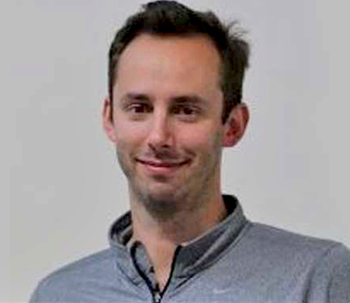
EngineerLess than four years later, he is Google's enemy number one.

On Thursday, Waymo, the Alphabet Inc. company formed from Google's self-driving project, filed a blistering lawsuit accusing Levandowski of taking incredibly valuable intellectual property from Alphabet to his current company, Uber Technologies Inc.

Waymo's lawsuit hinges on a series of alleged moves from Levandowski in the days leading up to his departure from Alphabet in January 2016. His web searches, downloads and access to an external drive left behind digital footprints. When exposed, they were closely scrutinized by his former employer --which is now citing them as central to its lawsuit, a rare intellectual property claim from Alphabet.

The legal case also deepens a growing rift between the two companies, which are becoming bitter rivals in mapping, autonomous vehicles and -- potentially -- Uber's core business of ride-hailing services.

At the center of it all is the six foot seven Levandowski

The prodigious engineer has spent much of his career chasing a dream of placing robotic cars on the road. While at the University of California at Berkeley, he entered a self-driving motorcycle in the 2004 DARPA Grand Challenge, a historic event for the young field.

He also started 510 Systems, a robotics firm building lasers for autonomous vehicles. The startup once ran a stunt with a self-driving pizza car. Levandowski started at Google in 2007, working on its Street View unit, where he played an instrumental role in building its mapping hardware to fit on cars.

After being recruited to its secretive car project, he continued to work on 510 Systems, according to two people familiar with the situation. Google eventually acquired the startup as it pushed deeper into self-driving technology.

Years later, Waymo would detail how Levandowski had secretly plotted his next startup, Otto, while also working for Google. Uber acquired Otto in August for $680 million.

According to Waymo's suit, Levandowski installed "specialized software" on his corporate laptop, in December 2015, loading it with 14,000 confidential files about lidar technology, vital to autonomous driving. "Levandowski took extraordinary efforts to raid Waymo's design server and then conceal his activities," the suit reads.

In January of last year, he began telling Alphabet colleagues about plans to "replicate" its technology at a competitor. The suit says he visited Uber's San Francisco headquarters on January 14, 2016 and the next day he formed a company that would become Otto.

Less than two weeks later, he resigned from Alphabet without notice.

Alphabet's lawsuit comes after a wave of significant departures from its car unit, which has still not delivered a commercial service despite years of work.

Some workers may have had additional impetus to leave. At the onset of its car project, Google set up a pay system that would reward early employees greatly upon departure, as Bloomberg News reported earlier. "Notably," Waymo's lawsuit reads, "Otto announced the acquisition [by Uber] shortly after Mr. Levandowski received his final multi-million dollar compensation payment from Google."

Levandowski was among the first to exit.

In a statement, Uber said: "We take the allegations made against Otto and Uber employees seriously and we will review this matter carefully." Levandowski didn't respond to phone calls seeking comment. "We did not steal any Google IP,'' Levandowski told Forbes last year in comments that were republished Thursday. Just want to make sure, super clear on that. We built everything from scratch and we have all of the logs to make that-just to be super clear.''Uber placed him atop their nascent autonomous vehicle efforts in July. The next month the company unveiled plans to bring self-driving cars to Pittsburgh.Waymo's suit caps a horrendous week for Uber, which is reeling from damning public charges of sexual harassment in its ranks. The company's culture has been slammed and Eric Holder, a former U.S. attorney general, has been hired to investigate.Former Google colleagues described Levandowski as "very driven," with a personality similar to Uber Chief Executive Officer Travis Kalanick.That's a comparison Kalanick made himself when he announced the acquisition of Otto."I feel like we're brothers from another mother," he said at the time.

Comments

Add new comment

  • Coastaldigest.com reserves the right to delete or block any comments.
  • Coastaldigset.com is not responsible for its readers’ comments.
  • Comments that are abusive, incendiary or irrelevant are strictly prohibited.
  • Please use a genuine email ID and provide your name to avoid reject.
Agencies
June 27,2020

Mumbai, Jun 27: The Bombay High Court observed that COVID-19 patients from poor and indigent sections cannot be expected to produce documentary proof to avail subsidised or free treatment while getting admitted to hospitals.

The court on Friday was hearing a plea filed by seven residents of a slum rehabilitation building in Bandra, who had been charged ₹ 12.5 lakh by K J Somaiya Hospital for COVID-19 treatment between April 11 and April 28.

The bench of Justices Ramesh Dhanuka and Madhav Jamdar directed the hospital to deposit ₹10 lakh in the court.

The petitioners had borrowed money and managed to pay ₹10 lakh out of ₹12.5 lakh that the hospital had demanded, after threatening to halt their discharge if they failed to clear the bill, counsel Vivek Shukla informed the court.

According to the plea, the petitioners were also overcharged for PPE kits and unused services.

On June 13, the court had directed the state charity commissioner to probe if the hospital had reserved 20% beds for poor and indigent patients and provided free or subsidised treatment to them.

Last week, the joint charity commissioner had informed the court that although the hospital had reserved such beds, it had treated only three poor or indigent persons since the lockdown.

It was unfathomable that the hospital that claimed to have reserved 90 beds for poor and indigent patients had treated only three such persons during the pandemic, advocate Shukla said.

He further argued that COVID-19 patients, who are in distress, cannot be expected to produce income certificate and such documents as proof.

However, senior advocate Janak Dwarkadas, who represented the hospital, said the petitioners did not belong to economically weak or indigent categories and had not produced documents to prove the same.

A person who is suffering from a disease like COVID-19 cannot be expected to produce certificates from a tehsildar or social welfare officer before seeking admission in the hospital, the bench noted and asked the hospital to deposit ₹10 lakh in court within two weeks.

Comments

Add new comment

  • Coastaldigest.com reserves the right to delete or block any comments.
  • Coastaldigset.com is not responsible for its readers’ comments.
  • Comments that are abusive, incendiary or irrelevant are strictly prohibited.
  • Please use a genuine email ID and provide your name to avoid reject.
Agencies
March 13,2020

Amid the rapid spread of the novel coronavirus (COVID-19), which has infected 73 people in India and killed more than 4,500 individuals globally, doctors have advised that in addition to regularly washing hands, one should also disinfect their smartphone every 90 minutes with alcohol-based hand sanitizer.

Ravi Shekhar Jha, Head of Department at Fortis Escorts Hospital in Faridabad said the best method to disinfect your smartphone is to use regular doctor spirit or the alcohol-based hand sanitizer at least every 90 minutes.

"Avoid touching your eyes, mouth, or nose. The best option is to use a phone cover or a Bluetooth device and try to touch your phone as less as possible. We would also recommend cleaning your phone at least twice a day," Jha told IANS.

According to research, published in 2018 by Insurance2Go, a gadget insurance provider, revealed that smartphone screens have three times more germs than a toilet seat.

One in 20 smartphone users was found to clean their phones less than every six months, said the study.

"In the time of fear of coronavirus, smartphones should also be disinfected with alcohol-based sanitizer rub. Pour few drops of sanitizer on a tiny clean cotton pad and rub it safely on your entire phone," said Jyoti Mutta, Senior Consultant, Microbiology, Sri Balaji Action Medical Institute in New Delhi.

"You can repeat this process every evening coming back home after an entire day out at work and once in the morning before going out," Mutta added.

"Maintain basic cleanliness, and try to avoid using other's phones especially if suffering from respiratory illness or flu-like symptoms as there is no other way to disinfect these regular gadgets," she stressed.

Another study from the University of Surrey in the UK, also found that the home button on your smartphone may be harbouring millions of bacteria - some even harmful.

The World Health Organisation (WHO) declared the novel coronavirus as a global pandemic on Wednesday. The death toll of COVID-19 has crossed the 4,500 marks and confirmed cases globally have touched one lakh as per the reports.

According to Suranjeet Chatterjee, Senior Consultant in Internal Medicine Department of Indraprastha Apollo Hospitals in New Delhi, "We should frequently wash our hands, cover our coughs and it is important to adapt to other good hygiene habits that are most important in such a situation."

"Coronavirus and other germs can live on surfaces like glass, metal or plastics and phones are bacteria-ridden. It is necessary that we sanitize our hands frequently and make sure that our hands are clean all the time," Chatterjee told IANS.

"The emphasis should be laid on sanitising our hands rather than sanitizing the phone - once in a while the phone can be sanitized under the guidance of the makers of the phone," Chatterjee stressed.

According to the global health agency, the most effective way to protect yourself against coronavirus is by frequently cleaning of your hands with alcohol-based hand rub or washing them with soap and water.

The WHO's report showed the virus infects people of all ages, among which older people and those with underlying medical conditions are at a higher risk of getting infected.

People should eat only well-cooked food, avoid spitting in public, and avoid close contact, the WHO said, adding that it is important for people to seek medical care at the earliest if they become sick.

Comments

Add new comment

  • Coastaldigest.com reserves the right to delete or block any comments.
  • Coastaldigset.com is not responsible for its readers’ comments.
  • Comments that are abusive, incendiary or irrelevant are strictly prohibited.
  • Please use a genuine email ID and provide your name to avoid reject.
Agencies
June 29,2020

New Delhi, Jun 29: Witnessing azure skies and breathable air for the last three months, Delhi on Monday recorded deterioration in its air quality, with particulate matter with diameter of 2.5 and 10 microns -- too small to be filtered out of the human body -- standing at 52 and 297 micrograms per cubic respectively.

Gufran Beig, Project Director of System of Air Quality Weather Forecasting and Research (SAFAR), said that the sudden spike in air pollution is due to a mild dust storm blowing from Rajasthan.

"Since the wind direction is changing and moist air is coming in, the air quality in Delhi will become better by tomorrow," Beig told IANS.

Central Pollution Control Board (CPCB) data showed that the overall air quality near Delhi Technical University (DTU) area stood at 326 micrograms per cubic, followed by 308 at Narela and 307 at Mundka.

Out of 36 stations, the AQI in as many as 30 stations was above 200 micrograms per cubic till 1 pm on Monday.

The System of Air Quality Weather Forecasting and Research categorises air quality in the 0-50 range as good, 51-100 as satisfactory, 101-200 as moderate, 201-300 as poor, 301-400 as very poor, and above 400 as severe.

According to SAFAR's website, "PM 10 (coarser dust particle) is the lead pollutant. AQI is likely to improve to moderate category by tomorrow, and further improvement is expected by July 1."

Researchers indicated that PM 10 and PM 2.5 will be 170 and 47 micrograms per cubic on Tuesday.

With no vehicles plying on the roads or industries shut due to the lockdown since March 25, Delhi's air quality had improved drastically.

According to a study conducted by the Indian Institute of Technology (IIT), Delhi, if the low levels of air pollution reached during the lockdown period are maintained, India's annual death toll could reduce by 6.5 lakh.

Comments

Add new comment

  • Coastaldigest.com reserves the right to delete or block any comments.
  • Coastaldigset.com is not responsible for its readers’ comments.
  • Comments that are abusive, incendiary or irrelevant are strictly prohibited.
  • Please use a genuine email ID and provide your name to avoid reject.