



UP govt can't withdraw terror cases without Centre's consent: HC

December 12, 2013

yadav

Lucknow, Dec 12: In a setback to Uttar Pradesh government, the Allahabad High Court today held that it cannot withdraw prosecution in terror cases in which the accused have been booked under central acts without Centre's permission.

The ruling was given by the high court's Lucknow bench of justices Devi Prasad Singh, Ajai Lamba and Ashok Pal Singh on questions raised by a two-judge division bench on a PIL filed by Ranjana Agnihotri and five other local lawyers.

The PIL had sought a direction for quashing the order of the UP government for withdrawal of cases against people accused of blasts and terror activities that included 2007 serial explosions at Lucknow and Gorakhpur.

"Prosecution under central acts cannot be withdrawn without permission of the central government," the three-judge bench said.

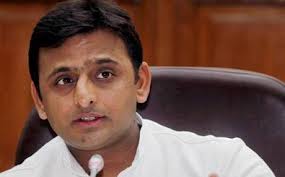
BJP welcomed the court ruling saying it was a "slap" on the Akhilesh Yadav government.

"It is a slap on the Akhilesh Yadav government which is following the policy of Muslim appeasement," state BJP spokesman Vijay Bahadur Pathak said.

"For offences under Unlawful Activities (Prevention) Act, Explosive Substances Act and Arms Act and the offences falling in Chapter VI of IPC or alike offences the executive power of the Union of India extends, hence the permission of the central government with regard to withdrawal of prosecution shall be necessary," the three-judge bench held.

The bench also said that the prosecution cannot be withdrawn without assigning reason.

"If an application is moved for withdrawal from prosecution in a case relating to terrorism and waging of war against the country, specific and special reason has to be assigned," it said.

On June 7 while staying the state government's order to withdraw cases against people accused of terror activities, a division bench of justices Rajeev Sharma and Mahendra Dayal had referred the matter to a larger bench.

The two-judge bench had questioned whether the state government could issue an order for withdrawAl of cases withou any request being there from the public prosecutor.

It had also raised the question whether the prosecution of offence relating to the central act may be withdrawn without taking permission from the central government.

It had further asked, "Whether the state government after giving sanction for prosecution review its own order by issuing orders for withdrawal of the cases."

The larger bench comprising the three judges while answering the questions directed that the case be listed before the appropriate bench.

Comments

Add new comment

  • Coastaldigest.com reserves the right to delete or block any comments.
  • Coastaldigset.com is not responsible for its readers’ comments.
  • Comments that are abusive, incendiary or irrelevant are strictly prohibited.
  • Please use a genuine email ID and provide your name to avoid reject.
News Network
January 21,2020

Jan 21: Indian policymakers may make it easier for companies to tap foreign funding, as a prolonged cash squeeze makes it tough for firms to borrow at home.

Investors are speculating about potential steps Finance Minister Nirmala Sitharaman could unveil when she presents the nation’s budget on Feb. 1. These measures may include freeing up firms to borrow at higher rates and offering tax breaks to global funds.

“The government will need to relax local rules to make it easier for Indian companies to raise debt overseas and tide over the funding crunch in the onshore market,” said Raj Kothari, London-based head of trading at Jay Capital Ltd. “At the same time, they need to ensure that the borrowers tapping offshore markets abide with stricter corporate governance so as to avoid further defaults.”

A prolonged crisis in India’s shadow bank sector and a pile of bad loans at traditional lenders is making it expensive for Indian companies, other than the best-rated firms, to access funding. The government has tried a series of measures to spur domestic credit, including providing so-called credit enhancement and allowing tiny firms to restructure debt.

Here are some steps Sitharaman may consider to spur foreign borrowing:

• She could raise the cap of 450 basis points above Libor, which limits overall foreign debt costs for Indian companies

• This could help lower-rated firms sell bonds abroad. Indian companies rated BBB currently borrow at more than 10%, about 3.8 percentage points more than their top-rated peers;

• Sitharaman could waive the withholding tax foreign investors need to pay on holdings of rupee-denominated debt sold by Indian companies abroad

• The waiver was offered between September 2018 to March 2019, but wasn’t extended as the highest global interest rates since the financial crisis deterred Indian borrowers. Since then, the three-month Libor has dropped by about 1 percentage point

• She could permit Indian property developers and housing finance lenders to sell overseas bonds for reasons beyond affordable housing projects

• New funding lines to the real estate sector, arguably ground zero of India’s economic slowdown, could help kickstart consumption and investment as the industry is the nation’s biggest job-creator.

Comments

Add new comment

  • Coastaldigest.com reserves the right to delete or block any comments.
  • Coastaldigset.com is not responsible for its readers’ comments.
  • Comments that are abusive, incendiary or irrelevant are strictly prohibited.
  • Please use a genuine email ID and provide your name to avoid reject.
News Network
January 13,2020

Jan 13: India lost more than $1.33 billion to internet restrictions in 2019 as Prime Minister Narendra Modi’s government pushed ahead with his party’s Hindu nationalist agenda, raising tensions and sparking nationwide protests.

The worst shutdown has been in Kashmir, where after intermittent closures in the first half of the year, the internet has been cut off since Aug. 5 following the government’s decision to revoke the special autonomous status of the country’s only Muslim-majority state, a study said. The prologued closure was criticized by India’s highest court, which ruled Friday that the “limitless” internet shutdown enforced by the government for the last five months was illegal and asked that it be reviewed.

India imposed more internet restrictions than any other large democracy, according to the Cost of Internet Shutdowns 2019 report released by Top10VPN, a U.K.-based digital privacy and security research group. The South Asian nation recorded the third-highest losses after Iraq and Sudan, which lost $2.31 billion and $1.86 billion respectively to disruptions. Worldwide internet restrictions caused losses worth $8.05 billion, the report said.

The cost of internet blackouts was calculated using indicators from groups including the World Bank, International Telecommunication Union, and the Delhi-based Software Freedom Law Center. It includes social media shutdowns in its calculations.

India’s ministry of information and technology didn’t respond to an email seeking a response to the report’s findings.

‘Conservative Estimates’

Through 2019, India shut access to the internet for over 4,000 hours. The report added shutdowns in India were often narrowly targeted, down to the level of blocking city districts for a few hours to allow security forces to restore order. Many of these incidents were not included in the report.

“These are conservative estimates,” said Simon Migliano, head of research at U.K.-based Top10VPN. “Internet shutdowns are increasing and it shows a damaging trend.”

India’s other major internet disruptions coincided with two moves by the government that affect India’s Muslim minority. The first disruption took place in November in the states of Uttar Pradesh and Rajasthan after the Supreme Court handed a victory to Hindu groups over Muslim petitioners in a long-simmering dispute over a plot of land.

There were further disruptions in December when protests erupted against the introduction of a religion-based law that allows undocumented migrants of all faiths except Islam from neighbouring countries to seek Indian citizenship. The government enforced shutdowns across Uttar Pradesh and some Northeastern states in order to quell the protests, the report said.

Comments

Add new comment

  • Coastaldigest.com reserves the right to delete or block any comments.
  • Coastaldigset.com is not responsible for its readers’ comments.
  • Comments that are abusive, incendiary or irrelevant are strictly prohibited.
  • Please use a genuine email ID and provide your name to avoid reject.
News Network
February 29,2020

Thiruvananthapuram, Feb 29: Kerala Excise department has organized a Tik-Tok competition as part of its drug addiction-free mission.

The contest will be on the effects of drug addiction on people and society. The winner goes will go home with an I-Pad as a prize.

The competition is being organised as part of the Department's intensive campaign titled "Tomorrow's Kerala, Drug and Addiction-free Kerala".

"Those taking part should post the video from their profile with the hashtag #vimukthikerala. Each contestant can post more than one video. They can challenge friends with #vimukthichallenge. The last date of receiving them is March 5," said the spokesperson of the Excise Department.

The number of likes a video gets, its theme and presentation will be the criteria on which the video will be judged.

"As soon as a video is posted on Tik-Tok, it should also be sent on the WhatsApp number 9072588222," added the spokesperson of the Excise Department.

Comments

Add new comment

  • Coastaldigest.com reserves the right to delete or block any comments.
  • Coastaldigset.com is not responsible for its readers’ comments.
  • Comments that are abusive, incendiary or irrelevant are strictly prohibited.
  • Please use a genuine email ID and provide your name to avoid reject.