


Govt to keep Haj infection-free

August 24, 2014

Riyadh, Aug 24: The Ministry of Health announced Saturday mandatory measures for Haj and Umrah pilgrims coming from countries with high rates of infectious diseases.
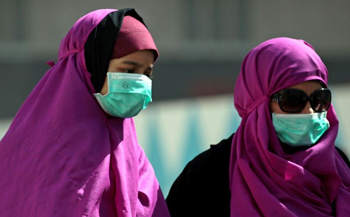
Haj infection-freeThe ministry had already sent out a circular to the Foreign Ministry, which distributed among embassies the notice spelling out health requirements prior to issuing pilgrim visas.

Sami Badawood, Jeddah Health Affairs director, told Arab News on Friday that the Kingdom has been carefully monitoring developments that are taking place around the globe in the field of infectious diseases.

“The requirements stipulated in the circular are in line with World Health Organization (WHO) guidelines on controlling the spread of infection,” he said.

The Kingdom’s focus this year is on the Ebola virus, which has registered the worst outbreak ever.

Ebola is centered in Liberia, Sierra Leone, Nigeria and Guinea but has spread to other countries in recent months.

According to the latest WHO report, 221 laboratory-confirmed and suspected Ebola cases surfaced between Aug. 17 and 18 and a total 106 deaths were reported from these four main endemic countries during the same period.

“Although we do not issue Haj visas for pilgrims coming from endemic countries, we will still be monitoring pilgrims coming from other African countries for Ebola symptoms,” said Badawood.

He said the ministry would also focus on diseases such as yellow fever, meningitis, seasonal influenza, polio and food poisoning.

He added that vaccination should be administered to pilgrims 10 days before the dates of their departure for Makkah and Madinah.

“We have prescribed certain vaccines depending on the country,” he said.

“Ships and aircraft with pilgrims on board should also produce a certificate that carriers are free of mosquitoes.”

Yellow fever-endemic countries are Angola, Benin, Sudan, Senegal, Burkina Faso, Central African Republic (CAR), Cameroon, Burundi, Chad, Uganda, Congo, Côte d’Ivoire, Sierra Leone, Somalia, Ethiopia, Democratic Republic of Congo, Gabon, Gambia, Ghana, Guinea, Equatorial Guinea, Guinea-Bissau, Togo, Kenya, Liberia, Sao Tomé and Principe, Mauritania, Niger, Nigeria, Rwanda, Tanzania, Mali, Ecuador, French Guiana, Guyana, Brazil, Bolivia, Suriname, Peru, Panama, Trinidad and Tobago, Venezuela, Colombia, Argentina and Paraguay.

He said that vaccination against meningitis is mandatory for local as well as foreign pilgrims.

The vaccination should be given 10 days before departure and is valid only for a period of three years.

Badawood pointed out that meningitis may spread during Haj, causing outbreaks, especially among pilgrims coming from endemic areas. He added that congestion and overcrowding exacerbates transmission of diseases.

The meningitis vaccine is given to adults and children over the age of two and it is not administered to pregnant women.

Vaccination for polio is also compulsory for all pilgrims coming from African countries, Pakistan, India, Nepal and Afghanistan.

An oral dose of polio is also compulsory for people coming from Uganda, Kenya, Benin, Angola, Togo, Niger, Burkina Faso, Mali, CAR, Chad, Côte d’Ivoire, Ghana, Democratic Republic of the Congo and Ethiopia.

Upon arrival, pilgrims from these countries will be given another oral dose of polio vaccine irrespective of their age.

Besides these vaccinations, the spokesman advised pilgrims to take precautions against influenza to prevent flu during their stay in the Kingdom.

The flu vaccine is not mandatory but is strongly advised considering present weather conditions and the susceptibility of pilgrims to influenza.

High-risk patients who have chronic ailments, such as diabetes, hypertension and renal diseases, have been advised to take the flu vaccine, which will help them to perform Haj and Umrah rituals more efficiently.

Comments

Add new comment

  • Coastaldigest.com reserves the right to delete or block any comments.
  • Coastaldigset.com is not responsible for its readers’ comments.
  • Comments that are abusive, incendiary or irrelevant are strictly prohibited.
  • Please use a genuine email ID and provide your name to avoid reject.
News Network
April 23,2020

Riyadh, Apr 22: In an extraordinary initiative, the government of the Kingdom of Saudi Arabia has decided to facilitate the travel of expatriates who have an exit and reentry visa or final exit visa to return to their countries.

This is in line with the order of Custodian of the Two Holy Mosques King Salman, according to the Saudi Press Agency.

According to the initiative, called “Auda” (return), expatriates can apply seeking permission for travel to their countries through the Absher portal of the ministry.

Announcing this, Saudi's Ministry of Interior said that the initiative will be implemented in cooperation with a number of relevant government agencies.

Requests for travel from expatriates will be received and approved in coordination with the relevant authorities to complete their travel procedures on board international flights.

As per the initiative, a text message will be sent to the beneficiary stating the travel date, ticket number and reservation details, and by which the beneficiary can obtain his travel ticket and complete the travel procedures.

Clarifying the procedures for the travel, the ministry said that the applicant shall select the icon (Auda) after visiting the Absher portal and fill the following fields: iqama (residency permit) number, date of birth, mobile number, departure city and airport of arrival.

It is not mandatory for the expatriate to have his own Absher account for availing of the service, the ministry said, adding that this facility is to enable expatriates to benefit from this initiative.

The departure will be through the following airports: King Khalid International Airport in Riyadh, King Abdulaziz International Airport in Jeddah, Prince Muhammad International Airport in Madinah, and King Fahd International Airport in Dammam.

Those expatriates who are outside these cities can benefit from the service through entering airport of departure after completion of their travel procedures in sufficient period of time.

Comments

Add new comment

  • Coastaldigest.com reserves the right to delete or block any comments.
  • Coastaldigset.com is not responsible for its readers’ comments.
  • Comments that are abusive, incendiary or irrelevant are strictly prohibited.
  • Please use a genuine email ID and provide your name to avoid reject.
Agencies
June 28,2020

Kuwait, Jun 28: Measures imposed to curb the spread of the novel coronavirus in Kuwait are believed to have increased suicide cases in the country, according to a media report.

Forty suicide cases and 15 failed attempts, mainly among Asian expatriates, have been recorded in Kuwait since late February, Gulf News quoted the Al Qabas newspaper report, citing sources as saying on Saturday.

Investigations into the majority of cases have revealed that those who committed suicide had experienced psychological and economic troubles due to dire financial circumstances after their employers stopped to pay them as a result of economic fallout from the coronavirus-related measures.

In one case, an expat livestreamed his suicide while chatting with his fiancee on a social networking platform, the newspaper report said.

Suicide cases have increased by around 40 per cent since the start of the COVID-19 crisis, according to the sources.

Some 70 to 80 suicide cases are recorded annually in Kuwait. Last year, they reached 80 suicides against 77 in 2018.

"Suicide cases have started to go up in Kuwait during the coronavirus pandemic due to fear, anxiety, isolation and instability experienced by people and absence of daily aims that could help the person to spend time regularly as before," the newspaper quoted social psychology consultant Samira Al Dosari as saying.

Uncertainty for some expatriates, whose countries have refused to take them in, is another motive for attempting suicide, according to Jamil Al Muri, a sociology professor at the Kuwait University.

"This is in addition to greed of the iqamat traders, who have brought into the country workers in names of phantom companies and abandoned them on the streets," he added.

Starting from Tuesday, Kuwait will embark on the second phase of a stepwise plan to bring life to normal, Gulf News reportd.

According to Phase 2, a nationwide night-time curfew will be reduced by one hour to run daily from 8 p.m. until 5 a.m. for three weeks.

Kuwait has so far reported 44,391 COVID-19 cases, with 344 deaths.

Comments

Angry indian
 - 
Tuesday, 30 Jun 2020

YA ALLah save all dispressed people in the earth..

Add new comment

  • Coastaldigest.com reserves the right to delete or block any comments.
  • Coastaldigset.com is not responsible for its readers’ comments.
  • Comments that are abusive, incendiary or irrelevant are strictly prohibited.
  • Please use a genuine email ID and provide your name to avoid reject.
Saudi Gazette
May 27,2020

Riyadh, May 27: Following the announcement of easing of lockdown measures, which includes reopening of all mosques for daily congressional as well as Friday prayers across the Kingdom except the holy city of Makkah, the Ministry of Islamic Affairs, Call and Guidance has set mandatory guidelines.

In a circular issued to mosque staff, Minister of Islamic Affairs, Call and Guidance Sheikh Abdullatif Al-Asheikh has instructed that all mosques must comply with the following precautionary measures and instructions:

1. Open mosques 15 minutes before the Adhan and close them 10 minutes after prayer

2. Reduce the waiting period between the Adhan and Iqamah to 10 minutes

3. Open windows and doors from entering time to the end of the prayer

4. Remove copies of Holy Qur’an and other books temporarily from mosques

5. Ensure attendees keep a distance of two meters between each other

6. Ensure one space is left between each row

7. Close all water coolers and refrigerators

8. Do not allow distribution of water or food in mosques

9. Close toilets and places of ablution

Precautionary measures on Friday prayers are as follows:

1. Open mosques 20 minutes before Friday prayer and closing them 20 minutes after prayer.

2. Friday sermon with prayer should not exceed 15 minutes.

The circular also stipulates to keep the suspension of the religious courses, programs and lectures, as well as the memorizing Holy Qur'an sessions in the mosques and to continue education and lectures remotely until further notice.

The circular pointed out that the imams of mosques should urge the worshipers to take the following precautionary measures:

1. Wear a face mask

2. Bring their own prayer rugs and not leave them after the prayer

3. Prevent accompanying children under 15 years of age from entering mosques

4. Perform ablution at home

5. Avoid crowding when entering or exiting mosques

Meanwhile, the spokesman of the Ministry of Interior clarified later in the day that people are allowed to perform congressional prayers in their locality during the time of curfew.

Comments

Add new comment

  • Coastaldigest.com reserves the right to delete or block any comments.
  • Coastaldigset.com is not responsible for its readers’ comments.
  • Comments that are abusive, incendiary or irrelevant are strictly prohibited.
  • Please use a genuine email ID and provide your name to avoid reject.