



Govt mulls using highways in far-flung areas for flight landing

June 17, 2016

Mumbai, Jun 17: Union Road Minister Nitin Gadkari today said the government was working on a scheme under which highways in far-flung areas can be used for aircraft landings and take-offs, and airports can be made where none exist.flight
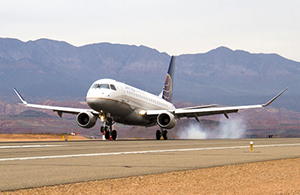
"Along with Defence Ministry, we are thinking on a proposal. We are making our national highways of cement and concrete. We can use them as airports and are identifying sites. The vehicular traffic will be stopped when an aircraft will be landing and once it leaves, the vehicle traffic will resume," Gadkari said at an event by Forum for Integrated National Security (FINS) here.

He clarified that the plan was to use the highway network to handle both civilian and military aircraft movement.

The discussions are being held with the Defence Ministry because many of these sites can be near the border areas, he said.

Even as he declined to disclose the sites which can be used for such aircraft movements or the number of such sites, Gadkari cited pockets in Arunachal Pradesh, which can benefit from such an arrangement.

He added that the traffic was also low in Arunachal Pradesh which can easily facilitate the flight movements as is being envisaged.

When asked if the roads will be able to take the aircraft, Gadkari said a majority of the new highways are being built of cement and concrete, which can comfortably take such loads.

It can be noted that a few years ago, the Indian Air Force had landed one of its frontline fighter aircrafts on a highway in north India to assess defence preparedness.

Gadkari elaborated that separate holding areas can be created along a highway where the aircraft can taxi to after landing, and can come back on the highway for take off after de-boarding and boarding.

He said having such an arrangement, where the road was put to use for multiple uses will be very cheap as compared to erecting a full-fledged airport.

Gadkari said the government has accorded high priority for expanding air connectivity and wants to build 350 airports across the country.

Meanwhile, making a case for ending corrupt practices at ports, Gadkari said the network of "liasoning and servicing agents" which ensure passage of containers should be destroyed. He also welcomed complaints in this regard.

Gadkari also said that the country was interested in building a road in Myanmar, which can be further extended into Thailand and can help serve India's interests deeper in the south east Asia.

Having clinched the Chabahar Port in Iran, India will also be looking at helping create road and rail connectivity in Iran so that its interests in Afghanistan and further into Central Asia can be served, he said.

He said the national highway network, which spans 1.55 lakh kms at present, will touch 2 lakh kms in the next 2-3 months.

Gadkari said he has requested Delhi Chief Minister Arvind Kejriwal to relocate some of the logistic parks on the upcoming bypasses which will help reduce pollution in the national capital.

He said amendments to the Motor Vehicle Act are also being planned and added that one of the plans is to make it compulsory to have air conditioned cabins for trucks, given the large amount of time drivers spend in the vehicles in hot condition.

A car scrapping policy is also in the works, which will come into effect along with switching to lower polluting engines, Gadkari said, adding that the scrapping of cars has the potential to make the country as the number one car manufacturing hub in the world.

While impressing the need for the people to be more aware, Gadkari said accidents like the one on the Mumbai-Pune expressway which killed 17 people could have been avoided if people were not mending a car puncture in the middle of the road.

Comments

arm
 - 
Saturday, 18 Jun 2016

Gadkari thinks this is Sugar Cane Farm, Where he can go and relieve him self.

suleman beary
 - 
Saturday, 18 Jun 2016

Talking non sense.

Add new comment

  • Coastaldigest.com reserves the right to delete or block any comments.
  • Coastaldigset.com is not responsible for its readers’ comments.
  • Comments that are abusive, incendiary or irrelevant are strictly prohibited.
  • Please use a genuine email ID and provide your name to avoid reject.
News Network
April 22,2020

Mangaluru, Apr 22: City Police Commissioner Dr P S Harsha, on Wednesday, interacted with families of Covid-19 warriors of the Police Department through a special video conference to infuse confidence in them.

He spoke to the family members of the police personnel who, along with ASHA workers, are monitoring the home quarantined people and even assist them in supplying essentials and medicines.

Most of the family member of the police personnel were of North Karnataka origin and the Commissioner asked them to stay safe by staying at home and explained to them the good work done by their family members in the Police Department.

Comments

Add new comment

  • Coastaldigest.com reserves the right to delete or block any comments.
  • Coastaldigset.com is not responsible for its readers’ comments.
  • Comments that are abusive, incendiary or irrelevant are strictly prohibited.
  • Please use a genuine email ID and provide your name to avoid reject.
News Network
March 5,2020

Bengaluru, Mar 5: Karnataka is facing unprecedented economic difficulties following a Rs 8,887 crore reduction in the state's share in central taxes, cut in allocation under 15th finance commission and a Rs 3,000 crore hit in GST compensation, Chief Minister B S Yediyurappa indicated on Thursday.

Presenting the state budget for 2020-21 in the Assembly, he said Karnataka's share in central taxes has come down by Rs 8,887 crore in 2019-20 as per the revised budget estimates of the central government. Therefore the state's revenue resources have been reduced. Apart from this, Rs 3,000 crore GST compensation will also be reduced as collection from the GST compensation cess is not as expected, the Chief Minister said. "With all this it has become difficult to reach to reach the 2019-20 budget targets and to manage this situation within the bounds of the Karnataka Fiscal Responsibility Act, an inevitable situation has arisen this year to cut down the expenditure of many departments," he added.

As per the interim report submitted by the 15th finance commission, there is a reduction in the state's share of central taxes to 3.64 per cent compared to 4.71 per cent fixed by the 14th finance commission. In view of this, there will be a reduction of Rs 11,215 crore in the state's share of central taxes in 2020-21 budget, when compared to the previous one.

He, however, noted that the allocation recommendation of the 15th finance commission is limited to one year only and the complete report for the period 2021-22 to 2025-26 will be submitted in October 2020.

"Our government will soon submit a revised memorandum to the commission to set right the loss caused to the state with regard allocation for the year 2020-21 and give more allocation for the remaining period," the Chief Minister said. He also said, when compared to the previous year, there is an increase of approximately Rs 10,000 crore for 2020-21 with regards to government employees salary, pension and interest on government loans, but there is no proportionate increase in resources as compared to committed expenditure. "Due to this reduction of the state's share of central taxes as per the 15th finance commission report and other developments, serious difficulties are being faced in resource mobilisation efforts of the state," Yediyurappa said. "This magnitude of economic difficulties was never faced in the previous years by our state," he added.

However, the state's own tax revenue collection is excellent during this year, he said. As compared to the previous year, there is a growth of 14 per cent in State GST collection. "Based on this, in the new budget, efforts are being made to manage the reduction in the share of central taxes by stabilising the state's own resources more", the Chief Minister said.

Karnataka recorded a gross state domestic product growth rate of 7.8 per cent in 2018-19 and Yediyurappa said for the current financial year it is estimated to be 6.8 per cent.

Comments

Add new comment

  • Coastaldigest.com reserves the right to delete or block any comments.
  • Coastaldigset.com is not responsible for its readers’ comments.
  • Comments that are abusive, incendiary or irrelevant are strictly prohibited.
  • Please use a genuine email ID and provide your name to avoid reject.
News Network
June 26,2020

Bengaluru, Jun 26: The National Restaurant Association of India (NRAI) on Thursday came up with a Standard Operating Procedure (SOP) for restaurants whereby among other physical distancing norms, it has suggested a 2-metre gap between tables.

Formulated in partnership with Releski, a Bengaluru based skill-tech company, the SoP suggests that in case of back-to-back seating, people sitting with their backs towards each other will have their seats divided by 'Plexiglass' divider raised up to 2 meters from the ground.

"In a typical restaurant, the improvised seating plan should have a minimum distance of 2 metres between tables. The distance of 2 metres (6 feet) between tables should measure from one edge of the table to the other table's edge," it said.

In case of loose or free seating such as in banquet style or food court style seating, a minimum 2 meters of distance should be maintained between tables.

The guidelines noted that, to encourage physical distancing, restaurants have to sacrifice their seating capacity, to promote health and safety, and also to gain trust from their patrons.

"In order to perform this, divide your restaurants under different sectors. Pull out your restaurant's floor plan and colour code different sections red and yellow. Red sections are potential areas where maximum footfall or traffic is observed. Yellow sections are areas where the footfalls are average," it said.

All the red sections are encircled or bordered by placing barricades or Q manager and will open at specific points to access the yellow section and all the opening points will have hand sanitisers and sprays, and every guest who walks from red zones to yellow zones will sanitise himself/herself to reduce the chances of contamination.

For air conditioning, the guidelines of CPWD shall be followed which inter alia emphasises that the temperature setting of all air conditioning devices should be in the range of 24-30 degree Celsius, relative humidity should be in the range of 40- 65 per cent, intake of fresh air should be as much as possible and cross ventilation should be adequate, the guidelines suggested.

The industry body has also suggested appointment of a COVID-free Ambassador who would operate as the Chief Health Officer within the restaurant team, preferably from the management team in each shift.

The ambassador's would put the new daily work routines into practice, to monitor compliance with good practice and to lead the preventative measures, adapt to health & safety recommendations and requirements of the restaurant and oversee the implementation of the norms.

Anurag Katriar, President of NRAI and CEO & Executive Director of deGustibus Hospitality, said: "Every restaurant cutting across formats is facing the harsh reality of subdued to shut business volumes in the present and the uncertainty of business environment in the future. One thing is certain that hygiene and safety will be a key differentiator in the post-pandemic restaurant operations."

Comments

Add new comment

  • Coastaldigest.com reserves the right to delete or block any comments.
  • Coastaldigset.com is not responsible for its readers’ comments.
  • Comments that are abusive, incendiary or irrelevant are strictly prohibited.
  • Please use a genuine email ID and provide your name to avoid reject.