



Govt mulls using highways in far-flung areas for flight landing

June 17, 2016

Mumbai, Jun 17: Union Road Minister Nitin Gadkari today said the government was working on a scheme under which highways in far-flung areas can be used for aircraft landings and take-offs, and airports can be made where none exist.flight
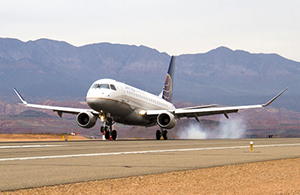
"Along with Defence Ministry, we are thinking on a proposal. We are making our national highways of cement and concrete. We can use them as airports and are identifying sites. The vehicular traffic will be stopped when an aircraft will be landing and once it leaves, the vehicle traffic will resume," Gadkari said at an event by Forum for Integrated National Security (FINS) here.

He clarified that the plan was to use the highway network to handle both civilian and military aircraft movement.

The discussions are being held with the Defence Ministry because many of these sites can be near the border areas, he said.

Even as he declined to disclose the sites which can be used for such aircraft movements or the number of such sites, Gadkari cited pockets in Arunachal Pradesh, which can benefit from such an arrangement.

He added that the traffic was also low in Arunachal Pradesh which can easily facilitate the flight movements as is being envisaged.

When asked if the roads will be able to take the aircraft, Gadkari said a majority of the new highways are being built of cement and concrete, which can comfortably take such loads.

It can be noted that a few years ago, the Indian Air Force had landed one of its frontline fighter aircrafts on a highway in north India to assess defence preparedness.

Gadkari elaborated that separate holding areas can be created along a highway where the aircraft can taxi to after landing, and can come back on the highway for take off after de-boarding and boarding.

He said having such an arrangement, where the road was put to use for multiple uses will be very cheap as compared to erecting a full-fledged airport.

Gadkari said the government has accorded high priority for expanding air connectivity and wants to build 350 airports across the country.

Meanwhile, making a case for ending corrupt practices at ports, Gadkari said the network of "liasoning and servicing agents" which ensure passage of containers should be destroyed. He also welcomed complaints in this regard.

Gadkari also said that the country was interested in building a road in Myanmar, which can be further extended into Thailand and can help serve India's interests deeper in the south east Asia.

Having clinched the Chabahar Port in Iran, India will also be looking at helping create road and rail connectivity in Iran so that its interests in Afghanistan and further into Central Asia can be served, he said.

He said the national highway network, which spans 1.55 lakh kms at present, will touch 2 lakh kms in the next 2-3 months.

Gadkari said he has requested Delhi Chief Minister Arvind Kejriwal to relocate some of the logistic parks on the upcoming bypasses which will help reduce pollution in the national capital.

He said amendments to the Motor Vehicle Act are also being planned and added that one of the plans is to make it compulsory to have air conditioned cabins for trucks, given the large amount of time drivers spend in the vehicles in hot condition.

A car scrapping policy is also in the works, which will come into effect along with switching to lower polluting engines, Gadkari said, adding that the scrapping of cars has the potential to make the country as the number one car manufacturing hub in the world.

While impressing the need for the people to be more aware, Gadkari said accidents like the one on the Mumbai-Pune expressway which killed 17 people could have been avoided if people were not mending a car puncture in the middle of the road.

Comments

arm
 - 
Saturday, 18 Jun 2016

Gadkari thinks this is Sugar Cane Farm, Where he can go and relieve him self.

suleman beary
 - 
Saturday, 18 Jun 2016

Talking non sense.

Add new comment

  • Coastaldigest.com reserves the right to delete or block any comments.
  • Coastaldigset.com is not responsible for its readers’ comments.
  • Comments that are abusive, incendiary or irrelevant are strictly prohibited.
  • Please use a genuine email ID and provide your name to avoid reject.
coastaldigest.com web desk
July 13,2020

Mangaluru, Jul 13: Air India Express flight brought around 170 passengers from Bahrain to Mangaluru under Vande Bharat Mission yesterday. 

This is the first VBM flight from Bahrain to Mangaluru. The flight took off from Bahrain at 10 am on Sunday and landed at Mangaluru International airport at 4.45 pm. 

Even though thousands of Indian expatriates from other gulf countries were brought to Mangaluru in past few weeks, no flight was arranged from Bahrain so far. Hence, several Mangalureans including senior citizens, women and patients were stranded in Bahrain for months together.

Local entrepreneur and president of Indian Overseas Congress (IOC) Mohammed Mansoor, who saw the plight of the hapless Indian expatriates in Bahrain had discussions with the Indian embassy in Bahrain and convinced it to arrange a special Air India Express flight under the Vande Bharat Mission. 

IOC, along with the cooperation of ‘KHK Heroes’ had arranged meal kits for passengers during their flight to Mangaluru. IOC had also contacted all the Mangaluru-based NRIs who wanted to fly back to India and made a list with the help of Indian embassy to avoid any untoward incidents.

IOC had also given details of hotels to be quarantined in Mangaluru and Udupi, names of nodal officers to be contacted and emergency telephone numbers. The passengers were given a warm farewell by the office bearers of IOC from Bahrain international airport.

The effort taken by Mohammed Mansoor, president of IOC is lauded by all. All the passengers who travelled by the flight have thanked IOC and its office bearers whole heartedly.

Comments

Add new comment

  • Coastaldigest.com reserves the right to delete or block any comments.
  • Coastaldigset.com is not responsible for its readers’ comments.
  • Comments that are abusive, incendiary or irrelevant are strictly prohibited.
  • Please use a genuine email ID and provide your name to avoid reject.
News Network
April 19,2020

Kasaragod, Apr 19: Kasaragod, Kerala's COVID-19 hotspot, is the only district in the southern state lacking adequate health infrastructure.

In spite of treating the highest number of COVID-19 patients in the state with meagre infrastructural facilities and even without the support of a medical college in the north Kerala district, no deaths have been reported due to coronavirus.

The state health department views the performance of M Kunhiraman and his team, consisting of Janardhana Naik and Krishna Naik, at the General hospital in Kasaragod as a success story.

"Not only did they control the situation quickly with minimum infrastructure, they also started turning out a large number of negative cases within a few weeks and creditably ensured zero mortality.

This can be showcased as a best global model," Chairman of the Information Education and Communication (IEC) Committee and Project Director Kerala State Aids Control Society, R Ramesh said.

Recalling the ordeal, Janardhana Naik said his first major challenge was the physical examination of a patient with suspected COVID-19.

"Even with the PPE kit, nobody knew how effective they were and it took a whole 30 minutes to wear them properly.

But as time passed, we got accustomed to it," he said.

The traditional method of dealing with a patient involved knowing his or her history, observation and physical examination.

For hundreds of years, the hands-on body approach has been the soul of the doctor-patient relationship -- taking the pulse, tapping on and listening to the chest, feeling lumps.

With the onset of COVID-19 all that has changed.

"In fact, the whole exercise was fraught with grave risks because everything connected with COVID-19 was new.

Doctors have to keep a distance even though the physical examination wearing a Personal Protective Equipment (PPE) is difficult.

Sounds from the body are inaudible, vision is blurred through the smog-covered goggles and a stethoscope seldom has any use," Janardhana Naik said.

It was from March 15 that the hospital started receiving COVID-19 patients, primarily from Dubai.

By the time the first person came, the hospital was ready for him.

Soon, patient numbers began to swell and in a couple of weeks they reached about 91.

From then on, it was teamwork.

Committees were formed for each and every task, including the help desk, IT, treatment, medical board, training, food, waste disposal and data maintenance.

Initially, patients had many misgivings about the hospital.

"Some were disillusioned and even aggressive. Some were not happy with the facilities the hospital had to offer.

But gradually through good treatment and counselling by a psychiatrist, who visited the hospital on alternate days, the confidence and mood of the patients changed and they became friendly with the staff," Naik elaborated.

Counselling was also given to the concerned family members of the patients.

Besides treatment, the medical staff had to spend a considerable amount of time clearing the doubts of patients.

When they got discharged some patients insisted on seeing the faces of the medical staff, who till then were anonymous entities covered from head to toe.

Some even wanted to take selfies with them.

However, the medical team politely turned down their requests and preferred to remain hidden in their work attires.

The mood of the patients also rubbed off on the doctors and hospital staff.

All the physicians and hospital staff are now more confident of dealing with contagious diseases after treating COVID-19 patients.

"Our previous experience of treating H1N1, Chikungunya and Dengue cases helped us a lot.

Words of encouragement from the Health Minister K K Shailaja, Health Principal Secretary Dr Rajan N Khobragade and Health Services Director Dr Sarita R L gave us the impetus to build up confidence.

Moreover, the field health workers did a wonderful job in containing the viral spread," Naik added.

As the number of coronavirus cases rose, the state government on April 5 deputed a 26-member medical team from Thiruvananthapuram to set up a COVID-19 hospital in the district.

They turned a block of the under construction Government Medical College as a hospital-like facility, setting up a 200 bed facility to treat coronavirus patients.

Comments

Add new comment

  • Coastaldigest.com reserves the right to delete or block any comments.
  • Coastaldigset.com is not responsible for its readers’ comments.
  • Comments that are abusive, incendiary or irrelevant are strictly prohibited.
  • Please use a genuine email ID and provide your name to avoid reject.
News Network
February 17,2020

Varanasi, Feb 17: For the first time, the Indian Railways has reserved a seat for a deity on a train. The national transporter, which launched its third IRCTC operated train named Kashi Mahakal Express from Varanasi to Indore, has reserved a seat for Lord Mahakal (Lord Shiva) on board.

Speaking to media, Northern Railway spokesperson Deepak Kumar said: "It is for the first time that a seat has been left reserved for a deity."

"One seat in Kashi Mahakal Express (seat number 64 in B5 coach) has been left reserved for Lord Shiva," he said.

"Even a temple has been drawn on the seat to make people aware that the seat is reserved for Lord Mahakal," he said.

IRCTC's Director, Tourism, Rajni Hasija said that the practice would continue beyond the inaugural run.

Prime Minister Narendra Modi flagged off the Kashi Mahakal Express via video conferencing from Varanasi, where he is all launched several projects worth Rs 1,250 crore during the day's visit to his parliamentary constituency.

The third IRCTC train, after the two Tejas Express trains on New Delhi-Lucknow and Mumbai-Ahmedabad routes, the Kashi Mahakal Express will connect three places -- Jyotirlinga-Omkareshwar (near Indore), Mahakaleshwar (Ujjain) and Kashi Vishwanath (at Varanasi).

Also connecting the industrial and educational hub of Indore, with Bhopal, the train will begin its commercial run from February 20.

"The Kashi Mahakal Express will operate three days in a week and it will be a bi-weekly service through the Sultanpur-Lucknow route and a weekly service via the Prayagraj route," Kumar said.

Elaborating on the two routes from which the train will pass every week, Hasija said: "Once the new train starts its regular run from this week, it will depart from Varanasi at 2.45 p.m. every Tuesday and Thursday to reach Indore at 9.40 a.m. on Wednesday and Friday.

Similarly, the train will start from Indore at 10.55 a.m. every Wednesday and Friday and will reach Varanasi at 6.00 a.m. the next day. This train will have stoppages at Ujjain, Sant Hirdaram Nagar, Bina, Jhansi, Kanpur and Sultanpur stations in both directions.

Meanwhile, in the weekly service via Prayagraj route, the Kashi Mahakal Express will depart from Varanasi at 3.15 p.m. every Sunday to reach Indore at 9.40 a.m. the next day. On the other way, it will depart from Indore at 10.55 a.m. every Monday and reach Varanasi at 5 a.m. the next day.

"This train will halt at Ujjain, Sant Hirdaram Nagar, Bina, Jhansi, Kanpur and Allahabad stations in both directions," Kumar said.

Explaining the fares of the Kashi Mahakal Express, Hasija said, "Kashi Mahakal Express will follow a dynamic fare structure like the other two Tejas Express trains."

One-way journey from Varnasi to Indore will cost Rs 1,951, inclusive of four meals.

According to the IRCTC officials, the Indore-Varanasi Kashi Mahakal Express will be the first private train that will run overnight and for a comfortable long distance journey, will feature a host of facilities. The IRCTC will serve vegetarian food, and provide housekeeping services, on-board security services and bedrolls.

The IRCTC officials said that passengers will also get complementary insurance of Rs 10 lakh.

The train will have an advance reservation period of 120 days and will only have the general and foreign tourist quotas. The current booking will be available to the passengers on the platform itself after preparation of first chart, four hours to five minutes before the scheduled departure of the train.

To facilitate travel for pilgrims, the IRCTC is also introducing special tour packages for passengers who want to see the pilgrim centres enroute. The tour options are; Mahakal Darshan (Ujjain - Omkareshwar), Bhopal-Sanchi-Bhimbetka, Malwa Jyotrilinga Darshan (Ujjain-Omkareshwar- Maheshwar- Indore) and Bhopal-Sanchi-Bhimbetka-Ujjain. Other tour options include Kashi, Ayodhya and Prayag; Kashi Darshan; Kashi, Prayag, Ayodhya; Kashi and Prayag and only Kashi.

The train has silent features like CCTV cameras, which will be monitored online around the clock from the IRCTC centres, whereas for the first time the IRCTC has brought the marshals in the train for passengers safety and also to make people aware to not smoke inside the train as it has smoke and heat sensors installed in the coaches as well as in the bathroom. For the blind passengers, the train coaches have the seat numbers written in Braille, and the catering staff will be dressed in yellow kurta-pyjamas with a rudraksh malas on their necks to promote the train's theme.

Comments

ASIF
 - 
Tuesday, 18 Feb 2020

waw.. good header with superb news..

good going !!

Althaf
 - 
Tuesday, 18 Feb 2020

If you are truthful then go to china and stay with patients of carona virus. The carona virus should not affect you as you are a vegeterian. Prove this first. 

Add new comment

  • Coastaldigest.com reserves the right to delete or block any comments.
  • Coastaldigset.com is not responsible for its readers’ comments.
  • Comments that are abusive, incendiary or irrelevant are strictly prohibited.
  • Please use a genuine email ID and provide your name to avoid reject.