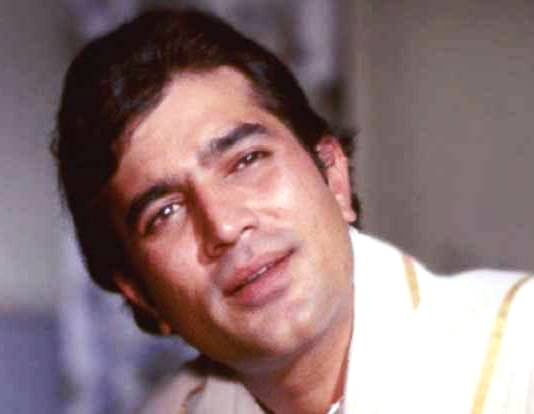
Grandson Aarav lights Rajesh Khanna's pyre

July 19, 2012

Rajesh-Khanna-Dies

Mumbai, July 19: The last rites of Rajesh Khanna were performed by his grandson Aarav at the Vile Parle crematorium Thursday with family, friends and fans bidding the superstar a tearful adieu.

The actor's nine-year-old grandson thrust a torch into the pyre with the help of his actor-father Akshay Kumar, who is married to Rajesh Khanna's elder daughter Twinkle, and the body of the superstar, who became heartthrob of millions since attaining stardom in 1969, was engulfed in flames.

The actor, fondly called Kaka by his family and friends, passed away Wednesday morning following a liver infection. He was 69.

His last journey generated the same frenzy that he did when he attained stardom in the 1970s.

The legend's final journey started around 10 a.m. from his residence Aashirwad in Bandra. His body, in a transparent casket, was placed on a mini-truck decorated with white flowers and the crowd moved along with it.

Thousands, including the superstar's fans, friends, family and film fraternity members gathered to say a tearful goodbye to Rajesh Khanna, signifying the loss of a great star.

The procession started from his Bandra residence and went through Carter Road, Turner Road and S.V. Road before reaching the crematorium. The original plan was to have a longer procession, but due to rain it was kept short, but it didn't deter his fans, who gathered in huge numbers.

The frenzy was perhaps just what the Bollywood's first superstar had been missing all these years.

It was a farewell that the superstar deserved.

With him on his last journey were his estranged wife Dimple, who took care of him in the last days, his younger daughter Rinke and son-in-law, Akshay. Twinkle was missing from the procession as she is in the family way.

Among the Bollywood big wigs who attended his last rites were Amitabh Bachchan, his successor as superstar, Sudhir Mishra, Rani Mukerji, Karan Johar, Sajid Khan, Abhishek Bachchan, Vinod Khanna and Aadesh Shrivastava.

Rajesh started his career with the 1966 film "Akhari Khat" and went on to give hit films like "Aradhana", "Kati Patang", "Anand" and "Amar Prem" that propelled him to dazzling fame.

His last words before his demise, according to megastar Amitabh Bachchan, were "Time to pack up" i true Bollywood-style.


Comments

Add new comment

  • Coastaldigest.com reserves the right to delete or block any comments.
  • Coastaldigset.com is not responsible for its readers’ comments.
  • Comments that are abusive, incendiary or irrelevant are strictly prohibited.
  • Please use a genuine email ID and provide your name to avoid reject.
Agencies
January 16,2020

New Delhi, Jan 16: In trouble brewing for the Gautam Adani-led M/S Adani Enterprises, the Central Bureau of Investigation (CBI) on Thursday said that it has registered a case against former officials of the National Co-operative Consumer Federation (NCCF) and others over alleged irregularities in supply of coal to the Andhra Pradesh Power Generation Corporation (APGENCO) in 2010.

The CBI in its FIR has named Virendra Singh, the then Chairman of the NCCF, G P Gupta, the then MD of the NCCF, S C Singhal, the then Senior Advisor of NCCF, Adani Enterprises Ltd and other unknown public servants and others for criminal conspiracy, cheating and criminal misconduct by public servants.

According to CBI, the case was filed on Wednesday after the preliminary enquiry revealed the crime by the officials named in the FIR and the Adani Enterprises was found to be true.

The FIR alleged that on June 26, 2010, APGENCO floated a tender enquiry for supply of six lakh metric tonnes of imported coal "on free on rail destination" basis to Dr Narla Tata Rao Thermal Station (NTTPS), Vijaywada and Rayalasaleema Thermal Power Plant (RTTP), Kadapa, Andhra Pradesh/RTPP via Kakinada-Vizag-Chennai-Krishnapatnam or any other ports

The same was forwarded by the Chief Engineer, APGENCO to seven PSUs -- PEC Limited, STC Limited, MSTC Limited, NCCF, MMTC, Coal India Limited and SCCL Limited.

The FIR alleged that during the probe, the Adani Enterprises used a proxy company to get the supply contract. It said, "NCCF received bids from six companies -- Adani Enterprises Ltd, Maheshwari Brothers Coal Limited (MBCL), Vyom Trade Links Pvt. Ltd, Swarana Projects Pvt. Ltd, Gupta Coal India Ltd and Kyori Oremen Ltd.

During investigation it was found that Gupta Coal India Ltd had quoted the NCCF margin of 11.3 percent, while the MBCL quoted the margin of 2.25 percent and rest did not quote any margin to the NCCF.

The FIR said the quotes of the Gupta Coal India Ltd, Kyori Oremen Ltd and Swarana Projects Pvt. Ltd were rejected by the NCCF as they were not found to be fulfilling the tender conditions.

"Post tender negotiation was done by senior officials of NCCF to give undue favour to Adani Enterprises Ltd despite it not qualifing the tender (terms)," the FIR said, adding instead of cancelling the bid of Adani Enterprise Ltd, senior management of NCCF conveyed the offer margin to the company through one of its representative -- Munish Sehgal, who was sitting in the NCCF head office. It is prima facie evident that when the bids were being processed at NCCF head office in Delhi, a representative of Adani Enterprises Ltd. was informed regarding their imminent rejection due to non-submission of NCCF margin and also that MBCL was eligible bidder quoted 2.25 percent margin," it alleged.

The CBI in its FIR, further alleged that Adani Enterprises Ltd. had given an unsecured loan of Rs 16.81 crore to Vyom Trade Links Ltd in 2008-09. "And further it was revealed that the bank guarantees of the Adani Enterprises Ltd. and Vyom Trade Links Ltd. were issues by the same branch of the State Bank of India and at the same time," it said.

"It was clear that Adani Enterprises Ltd. presented Vyom Trade Links Ltd. as a proxy company in this particular tender and Vyom Trade Links Ltd. later withdrew its offer on flimsy ground," the CBI FIR said.

"The aforesaid acts of commissions and omissions on the part of the senior management of the NCCF disclose that during their tenure, they acted in a manner unbecoming of public servants and committed irregularities by way of manipulation in the selection of bidders, thereby giving undue favours to Adani Enterprises Ltd. in award of work for supply of coal to APGENCO despite its disqualification," it added.

Comments

Add new comment

  • Coastaldigest.com reserves the right to delete or block any comments.
  • Coastaldigset.com is not responsible for its readers’ comments.
  • Comments that are abusive, incendiary or irrelevant are strictly prohibited.
  • Please use a genuine email ID and provide your name to avoid reject.
News Network
February 19,2020

New Delhi, Feb 19: India will switch to the world's cleanest petrol and diesel from April 1 as it leapfrogs straight to Euro-VI emission compliant fuels from Euro-IV grades now - a feat achieved in just three years and not seen in any of the large economies around the globe.

India will join the select league of nations using petrol and diesel containing just 10 parts per million of sulphur as it looks to cut vehicular emissions that are said to be one of the reasons for the choking pollution in major cities.

Sanjiv Singh, Chairman of Indian Oil Corp (IOC) - the firm that controls roughly half of the country's fuel market, said almost all refineries began producing ultra-low sulphur BS-VI (equivalent to Euro-VI grade) petrol and diesel by the end of 2019 and oil companies have now undertaken the tedious task of replacing every drop of fuel in the country with the new one.

"We are absolutely on track for supplying BS-VI fuel from April 1. Almost all refineries have begun supplying BS-VI fuel and the same has reached storage depots across the country," he said.

From storage depots, the fuel has started travelling to petrol pumps and in the next few weeks all of them will only have BS-VI grade petrol and diesel, he said. "We are 100 per cent confident that fuel that will flow from nozzles at all the petrol pumps in the country on April 1 will be BS-VI emission compliant fuel."

India adopted Euro-III equivalent (or Bharat Stage-III) fuel with a sulphur content of 350 ppm in 2010 and then took seven years to move to BS-IV that had a sulphur content of 50 ppm. From BS-IV to BS-VI it took just three years.

"It was a conscious decision to leapfrog to BS-VI as first upgrading to BS-V and then shifting to BS-VI would have prolonged the journey to 4 to 6 years. Besides, oil refineries, as well as automobile manufacturers, would have had to make investments twice - first to producing BS-V grade fuel and engines and then BS-VI ones," he said.

State-owned oil refineries spent about Rs 35,000 crore to upgrade plants that could produce ultra-low sulphur fuel. This investment is on top of Rs 60,000 crore they spent on refinery upgrades in the previous switchovers.

BS-VI has a sulphur content of just 10 ppm and emission standards are as good as CNG.

Originally, Delhi and its adjoining towns were to have BS-VI fuel supplies by April 2019 and the rest of the country was to get same supplies from April 2020.

But oil marketing companies switched over to supply of BS-VI grade fuels in the national capital territory of Delhi on April 1, 2018.

The supply of BS-VI fuels was further extended to four contiguous districts of Rajasthan and eight of Uttar Pradesh in the National Capital Region (NCR) on April 1, 2019, together with the city of Agra.

BS-VI grade fuels were made available in 7 districts of Haryana from October 1, 2019.

Singh said the new fuel will result in a reduction in NOx in BS-VI compliant vehicles by 25 per cent in petrol cars and by 70 per cent in diesel cars.

The switchover, he said, is a tedious task as every drop of old, higher-sulphur content fuel has to be flushed out in depots, pipelines and tanks before being replaced by BS-VI.

"We are confident of disruption-free switchover to BS-VI supplies across the country," he said. "What we will be supplying is the best quality available anywhere in the world. You don't have any better fuel that is supplied in any part of the world. Perhaps our BS-VI fuel will be better than equivalent fuel in some parts of the US and Europe."

India adopted a fuel upgradation programme in the early 1990s. Low lead gasoline (petrol) was introduced in 1994 in Delhi, Mumbai, Kolkata and Chennai. On February 1, 2000, unleaded gasoline was mandated nationwide.

Similarly, BS-2000 (Euro-I equivalent, BS-1) vehicle emission norms were introduced for new vehicles from April 2000. BS-II (Euro-II equivalent) emission norms for new cars were introduced in Delhi from 2000 and extended to the other metro cities in 2001.

Benzene limits have been reduced progressively from 5 per cent in 2000 to 1 per cent nationwide. Lead content in gasoline was removed in phases and only unleaded gasoline is being produced and sold from February 1, 2000.

The octane number of gasoline signifies the improved performance of the engine. Loss in octane number due to phasing out of lead was made up by installing new facilities in the refinery and changes in refinery operation. RON (Research Octane Number) of gasoline for BS-2000 spec was increased to 88. This has over time been increased to 91.

Singh said sulphur reduction will reduce Particulate Matter (PM) emissions even in the in-use older generation diesel vehicles.


Comments

Add new comment

  • Coastaldigest.com reserves the right to delete or block any comments.
  • Coastaldigset.com is not responsible for its readers’ comments.
  • Comments that are abusive, incendiary or irrelevant are strictly prohibited.
  • Please use a genuine email ID and provide your name to avoid reject.
News Network
March 25,2020

New Delhi, Mar 25: The total number of confirmed coronavirus cases in India rose to 562, according to the Ministry of Health and Family Welfare on Wednesday.
This includes 512 active cases, while 40 infected people have already been cured or discharged.
The Union Health Ministry said that total deaths due to the disease now stand at 9, as the second death reported in Delhi is COVID-19 negative. One patient has also migrated due to the infection.
The Central government has taken several steps to contain the rapid spread of the virus including the screening 15,24,266 passengers at the airports.
Prime Minister Narendra Modi had on Tuesday announced a 21-day lockdown in the entire country effective from midnight to deal with the spread of coronavirus, saying that "social distancing" is the only option to deal with the disease, which spreads rapidly.
In a televised address to the nation, Prime Minister Modi said that it is vital to break the chain of the disease and experts have said that at least 21 days are needed for it.
The Prime Minister, who had also addressed the nation last week, said the lockdown has drawn a "Lakshman Rekha" in every home and people should stay indoors for their own protection and for that of their families. 

Comments

Add new comment

  • Coastaldigest.com reserves the right to delete or block any comments.
  • Coastaldigset.com is not responsible for its readers’ comments.
  • Comments that are abusive, incendiary or irrelevant are strictly prohibited.
  • Please use a genuine email ID and provide your name to avoid reject.