



Gujarat snooping scandal reaches the Supreme Court

November 19, 2013

New Delhi, Nov 19: The Gujarat snooping controversy today reached the Supreme Court with a suspended IAS officer Pradeep Sharma urging it to take cognisance of audio tapes aired by news portals saying it contains proof of how the state government had tried to frame him in "frivolous" cases.
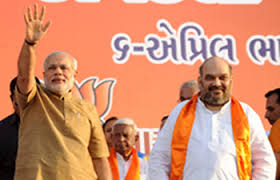
snooping

A bench headed by Chief Justice P Sathasivam asked Sharma to file an affidavit after the Gujarat government counsel submitted that no oral arguments should be allowed to be made till something is placed on record.

At the outset, advocate Prashant Bhushan, appearing for Sharma, submitted that an important development has taken place (referring to audio tapes) since the last hearing and the case needs to be heard urgently.

The bench, also comprising justices Ranjana Prakash Desai and Ranjajan Gogoi, then asked Sharma to file affidavit and posted the case for hearing in the first week of December.

Two investigative portals, Cobrapost and Gulail, had claimed on November 15 that Amit Shah, the former home minister of Gujarat and Modi's close aide, had ordered illegal surveillance of a woman at the behest of one "saheb" and they had released taped conversation between Shah and an IPS officer to back up their claim.

Sharma, a 1984 batch IAS officer, is facing five criminal cases including a case for alleged irregularity in land allotment to private firms in Kutch district in 2008.

In his petition, he had made some references to the personal life of Modi but the court on on May 12, 2011 had directed him to remove those portions, which was accepted.

Sharma, who last served as Bhavnagar Municipal Commissioner, was arrested on January 6, 2010 in a case involving alleged irregularities in Kutch earthquake rehabilitation.

The IAS officer in his petition, however, alleged that he is being targeted by Modi government because his younger brother Kuldip Sharma, a senior IPS officer in the state, has "unmasked" many misdeeds of Modi since Godhra riots. Sharma sought that probe in these cases be handed over to CBI.

"The petitioner happens to be the brother of Kuldip Sharma who has unmasked many misdeeds of Narendra Modi and Amit Shah, the ex-Home Minister, since the 2002 Godhra riots.

"The two siblings have been very close to each other right from childhood and share very strong fraternal bonds. In order to cause prejudice to Kuldip Sharma, the petitioner has been victimised by Chief Minister Narendra Modi and Amit Shah," the petition said.

Comments

Add new comment

  • Coastaldigest.com reserves the right to delete or block any comments.
  • Coastaldigset.com is not responsible for its readers’ comments.
  • Comments that are abusive, incendiary or irrelevant are strictly prohibited.
  • Please use a genuine email ID and provide your name to avoid reject.
News Network
January 10,2020

New Delhi, Jan 10: The Supreme Court while hearing petitions challenging restrictions in Jammu and Kashmir on Friday stated that the right to access the internet is a fundamental right under Article 19 of the Constitution of India.

"It is no doubt that freedom of speech is an essential tool in a democratic setup. The freedom of Internet access is a fundamental right under Article 19(1)(a) of the Constitution," a two-judge bench headed by Justice N V Ramana stated while reading out the judgment.

The top court said that Kashmir has seen a lot of violence and that it will try to maintain a balance between human rights and freedoms with the issue of security.

It also directed the Jammu and Kashmir administration to review the restrictive orders imposed in the region within a week. “The citizens should be provided highest security and liberty,” the apex court added.

The top court made observations and issued directions while pronouncing the verdict on a number of petitions challenging the restrictions and internet blockade imposed in Jammu and Kashmir after the abrogation of Article 370 in August last year.

The Supreme Court had on November 27 reserved the judgment on a batch of petitions challenging restrictions imposed on communication, media and telephone services in Jammu and Kashmir pursuant to revocation of Article 370.

The court heard the petitions filed by various petitioners including Congress leader Ghulam Nabi Azad and Kashmir Times editor Anuradha Bhasin.

The petitions were filed after the central government scrapped Article 370 in August and bifurcated Jammu and Kashmir into two Union Territories -- Jammu and Kashmir and Ladakh. Following this, phone lines and the internet were blocked in the region.

The government had, however, contended that it has progressively eased restrictions.

Comments

Add new comment

  • Coastaldigest.com reserves the right to delete or block any comments.
  • Coastaldigset.com is not responsible for its readers’ comments.
  • Comments that are abusive, incendiary or irrelevant are strictly prohibited.
  • Please use a genuine email ID and provide your name to avoid reject.
Agencies
August 3,2020

The Drugs Controller General of India (DCGI) has given nod to the Serum Institute of India (SII) for conducting phase 2 and 3 human clinical trials of the Oxford University developed Covid-19 vaccine candidate in the country.

Government officials said that the approval for conducting phase 2 and 3 clinical trials by the SII was granted by DCGI Dr V G Somani late Sunday night after a thorough evaluation based on the recommendations of the Subject Expert Committee (SEC) on Covid-19.

"The firm has to submit safety data, evaluated by the Data Safety Monitoring Board (DSMB), to the CDSCO before proceeding to phase 3 clinical trials," a senior official said.

"As per the study design, each subject will be administered two doses four weeks apart (first dose on day one and second dose on day 29) following which the safety and immunogenicity will be assessed at predefined intervals," the official said.

As a rapid regulatory response, the expert panel at the Central Drugs Standard Control Organisation (CDSCO) on Friday, after a detailed deliberation and considering the data generated on the vaccine candidate in phase 1 and 2 of the Oxford University trial, had recommended granting permission for phase 2 and 3 clinical trials of the potential vaccine, 'Covishield', on healthy adults in India,  the officials said.

Currently, phase 2 and 3 clinical trials of the Oxford vaccine candidate is going on in the United Kingdom, phase 3 clinical trial in Brazil and phase 1 and 2 clinical trials in South Africa.

The officials said that the SII had submitted a revised proposal on Wednesday after the SEC on July 28, following deliberation over its application, had asked it to revise its protocol for the phase 2 and 3 clinical trials besides seeking some additional information.

The panel had also recommended that the clinical trial sites which have been proposed for the study be distributed across India.

According to the revised proposal by the SII, 1,600 people aged above 18 years will participate in the trials across 17 selected sites, including AIIMS-Delhi, B J Medical College in Pune, Rajendra Memorial Research Institute of Medical Sciences (RMRIMS) in Patna, Post Graduate Institute of Medical Education and Research in Chandigarh, AIIMS-Jodhpur, Nehru Hospital in Gorakhpur, Andhra Medical College in Visakhapatnam and JSS Academy of Higher Education and Research in Mysore.

"According to the application, it would conduct an observer-blind, randomised controlled study to determine the safety and immunogenicity of 'Covishield' on healthy Indian adults," the official said.

The SII, which has partnered with AstraZeneca, for manufacturing the Oxford vaccine candidate for Covid-19 had submitted its first application to the DCGI on July 25 seeking permission for conducting the phase 2 and 3 trials of the potential vaccine. 

Initial results of the first two-phases of trials of the vaccine conducted in five trial sites in the UK showed that it has an acceptable safety profile and homologous boosting increased antibody response, sources had said.

To introduce the vaccine, SII, the world's largest vaccine maker by number of doses produced and sold, has signed an agreement to manufacture the potential vaccine developed by the Jenner Institute (Oxford University) in collaboration with British-Swedish pharma company AstraZeneca. 

Comments

Add new comment

  • Coastaldigest.com reserves the right to delete or block any comments.
  • Coastaldigset.com is not responsible for its readers’ comments.
  • Comments that are abusive, incendiary or irrelevant are strictly prohibited.
  • Please use a genuine email ID and provide your name to avoid reject.
News Network
May 17,2020

New Delhi, May 17: Spelling out the government’s fourth tranche of initiatives towards achieving Prime Minister Narendra Modi’s vision of ‘Atmanirbhar Bharat’, Union Finance Minister Nirmala Sitharaman on Saturday announced significant structural reforms in eight sectors of the economy — coal, minerals, defense production, aviation, power distribution in Union territories, space and atomic energy.

Addressing her fourth and the second-last press conference, Sitharaman said crucial sectors such as coal production and exploration, defence production and space would see an increased participation from private entities.

Coal sector:

In the realm of coal exploration, the government has decided to liberalise the entry norms for private entities, which would mean that any interested party could bid for a coal block and sell it in the open market. The minister said that the government would do away with all the eligibility conditions at the time of bidding for a coal block, except requiring an “upfront payment with a ceiling.”

Nearly 50 coal blocks would be offered to private players immediately, revealed Sitharaman.

She further said that Rs 50,000 crore would be spent by Centre in creating ‘coal evacuation’ infrastructure, which would expedite the transport of mined product to the destination.

Defence sector:

In defence production, Sitharaman revealed that the government would raise the foreign direct investment (FDI) limit in the sector from current 49 per cent to 74 per cent. Further, the government would also work towards corporatising the ordnance factory boards. “Corporatising doesn’t amount to privatization,” added Sitharaman.

In a bid to boost indigenous production of defence products and gave an impetus to Make in India, Sitharaman said that the government was in a process of notifying a list of weapons/platforms for an import ban with year-wise timelines.

These decisions would also help in reducing huge import bills, the finance minister said.

Privatisation of electricity:

In another announcement that could have an effect on electricity charges in the union territories, Union Finance Minister Nirmala Sitharaman announced on Saturday that power departments and utilities in all the centrally administered territories would be privatised.

Sitharaman said that the proposed move would lead to better service to consumers and improvement in operational and financial efficiency in distribution.

The finance minister said that decision was guided by 'sub-optimal' utilisation of performance of power distribution and supply'.

She said that the move to that effect would provide a model for emulation by other utilities across the country, in what could be an indicator of what's in the pipeline for utilities in other states as well.

Sitharaman said that the privation reform was in line with the tariff policy reforms and would help in enhancing consumer rights, promote industry and improve the overall sustainability of the sector.

Space sector:

Sitharaman also announced the opening up of the space exploration sector for private players. Till date, the government-run Indian Space Research Organisation (ISRO) has held a monopoly on all activities concerning space exploration and satellite launches.

The Indian private sector will be a co-traveller in India's space sector journey, said Sitharaman, while announcing a series of structural reforms in eight crucial areas of the economy. The Union Finance Minister was addressing her fourth press conference in as many days, as a follow-up towards realising Prime Minister Narendra Modi's vision of 'atmanirbhar Bharat', which was spelled out in his video address on May 12.

Sitharaman said that the reforms in the space sector will provide a level-playing field for private companies in satellite launches and space-based services.

She said that the private sector would be allowed to use ISRO facilities and other assets to improve their capacities. Stating that the government would provide predictable policy and regulatory environment to private players, Sitharaman also disclosed that future projects for planetary exploration and outer space travel among others would be opened up for private entities.

Comments

Add new comment

  • Coastaldigest.com reserves the right to delete or block any comments.
  • Coastaldigset.com is not responsible for its readers’ comments.
  • Comments that are abusive, incendiary or irrelevant are strictly prohibited.
  • Please use a genuine email ID and provide your name to avoid reject.