



Hackers strike globally in nearly 100 countries exploiting US spy agency tool

May 13, 2017

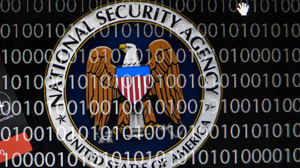
New Delhi, May 13: Hackers exploiting software stolen from the National Security Agency have executed cyberattacks that has hit dozens of countries worldwide, says a report, which has fretted the authorities.
USspy

It is believed that the cyber extortionists have managed to trick victims into opening malicious malware attachments to spam emails that appeared to contain invoices, job offers, security warnings and other legitimate files.

The ransomware encrypted data on the computers, demanding payments of $300 to $600 to restore access.

Security researchers said they observed some victims paying via the digital currency bitcoin, though they did not know what percent had given in to the extortionists.

Researchers with security software maker Avast said they had observed 57,000 infections in 99 countries with Russia, Ukraine and Taiwan the top targets.

The most disruptive attacks were reported in Britain, where hospitals and clinics were forced to turn away patients after losing access to computers.

International shipper FedEx Corp said some of its Windows computers were also infected. "We are implementing remediation steps as quickly as possible," it said in a statement.

Still, only a small number of US-headquartered organizations were hit because the hackers appear to have begun the campaign by targeting organizations in Europe, said Vikram Thakur, research manager with security software maker Symantec.

By the time they turned their attention to the United States, spam filters had identified the new threat and flagged the ransomware-laden emails as malicious, Thakur said.

The US Department of Homeland Security said late on Friday that it was aware of reports of the ransomware, was sharing information with domestic and foreign partners and was ready to lend technical support.

Telecommunications company Telefonica was among many targets in Spain, though it said the attack was limited to some computers on an internal network and had not affected clients or services. Portugal Telecom and Telefonica Argentina both said they were also targeted.

Private security firms identified the ransomware as a new variant of "WannaCry" that had the ability to automatically spread across large networks by exploiting a known bug in Microsoft's Windows operating system.

Comments

Add new comment

  • Coastaldigest.com reserves the right to delete or block any comments.
  • Coastaldigset.com is not responsible for its readers’ comments.
  • Comments that are abusive, incendiary or irrelevant are strictly prohibited.
  • Please use a genuine email ID and provide your name to avoid reject.
News Network
February 21,2020

London, Feb 21: Scientists have discovered a new species of land snail, and have named it Craspedotropis Greta Thunberg in honour of the Swedish activist Greta Thunberg for her efforts to raise awareness about climate change.

According to the study, published in the Biodiversity Data Journal, the newly discovered species belongs to the so-called caenogastropods -- a group of land snails known to be sensitive to drought, temperature extremes, and forest degradation.

The scientists, including evolutionary ecologist Menno Schilthuizen from Naturalis Biodiversity Center in the Netherlands, said the snails were found very close to the research field station at Kuala Belalong Field Studies Centre in Brunei.

They added that the snails were discovered at the foot of a steep hill-slope, next to a river bank, foraging at night on the green leaves of understorey plants.

The effort aided by amateur scientist J.P. Lim, who found the first individual of the snail said, "Naming this snail after Greta Thunberg is our way of acknowledging that her generation will be responsible for fixing problems that they did not create."

"And it's a promise that people from all generations will join her to help," Lim said.

The researchers said they approached Thunberg who said that she would be "delighted" to have this species named after her.

The study work including, fieldwork, morphological study, and classification of identified specimen was carried out in a field centre with basic equipment and no internet access, the scientists said.

According to the study, the work was done by untrained ‘citizen scientists’ guided by experts, on a 10-day taxon expedition.

"While we are aware that this way of working has its limitations in terms of the quality of the output (for example, we were unable to perform dissections or to do extensive literature searches), the benefits include rapid species discovery and on-site processing of materials," the researchers wrote in the study.

Comments

Add new comment

  • Coastaldigest.com reserves the right to delete or block any comments.
  • Coastaldigset.com is not responsible for its readers’ comments.
  • Comments that are abusive, incendiary or irrelevant are strictly prohibited.
  • Please use a genuine email ID and provide your name to avoid reject.
Agencies
January 7,2020

Washington, Jan 7: Facebook will ban deepfake videos ahead of the US elections but the new policy will still allow heavily edited clips so long as they are parody or satire, the social media giant said Tuesday.

Deepfake videos are hyper-realistic doctored clips made using artificial intelligence or programs that have been designed to accurately fake real human movements.

In a blog published following a Washington Post report, Facebook said it would begin removing clips that were edited--beyond for clarity and quality--in ways that "aren't apparent to an average person" and could mislead people.

Clips would be removed if they were "the product of artificial intelligence or machine learning that merges, replaces or superimposes content onto a video, making it appear to be authentic," the statement from Facebook vice-president Monika Bickert said.

However, the statement added: "This policy does not extend to content that is parody or satire, or video that has been edited solely to omit or change the order of words."

US media noted the new guidelines would not cover videos such as the 2019 viral clip -- which was not a deepfake -- of House Speaker Nancy Pelosi that appeared to show her slurring her words.

Facebook also gave no indication on the number of people assigned to identify and take down the offending videos, but said videos failing to meet its usual guidelines would be removed, and those flagged clips would be reviewed by teams of third-party fact-checkers -- among them AFP.

The news agency has been paid by the social media giant to fact-check posts across 30 countries and 10 languages as part of a program starting in December 2016, and including more than 60 organisations.

Content labeled "false" is not always removed from newsfeeds but is downgraded so fewer people see it -- alongside a warning explaining why the post is misleading.

Comments

Add new comment

  • Coastaldigest.com reserves the right to delete or block any comments.
  • Coastaldigset.com is not responsible for its readers’ comments.
  • Comments that are abusive, incendiary or irrelevant are strictly prohibited.
  • Please use a genuine email ID and provide your name to avoid reject.
Agencies
July 4,2020

Twitter has joined efforts to do away with racially loaded terms such as master, slave and blacklist from its coding language in the wake of the death of African-American George Floyd and ensuing Black Lives Matter protests.

The project started even before the current movement for racial justice escalated following the death of 46-year-old George Floyd in police custody in May.

The use of terms such as "master" and "slave" in programming language originated decades ago. While "master" is used to refer to the primary version of a code, "slave" refers to the replicas. Similarly, the term "Blacklist" is used to refer to items which are meant to be automatically denied.

The efforts to change these terms in favour of more inclusive language at Twitter were initiated by Regynald Augustin and Kevin Oliver and the microblogging platform is now backing their efforts.

"Inclusive language plays a critical role in fostering an environment where everyone belongs. At Twitter, the language we have been using in our code does not reflect our values as a company or represent the people we serve. We want to change that. #WordsMatter," Twitter's engineering team said in a post on Thursday.

As per the recommendations from the team, the term "whitelist" could be replaced by "allowlist" and "blacklist" by "denylist".

Similarly, "master/slave" could be replaced by "leader/follower", "primary/replica" or "primary/standby".

Twitter, however, is not the first to start a project to bring inclusivity in programming language.

According to a report in CNET, the team behind the Drupal online publishing software started using "primary/replica" in place of "master/slave" as early as in 2014.

The use of the terms "master/slave" was also dropped by developers of the Python programming language in 2018.

Now similar efforts are underway at Microsoft's Github and LinkedIn divisions as well, said the report.

Comments

Add new comment

  • Coastaldigest.com reserves the right to delete or block any comments.
  • Coastaldigset.com is not responsible for its readers’ comments.
  • Comments that are abusive, incendiary or irrelevant are strictly prohibited.
  • Please use a genuine email ID and provide your name to avoid reject.