



Hackers strike globally in nearly 100 countries exploiting US spy agency tool

May 13, 2017

New Delhi, May 13: Hackers exploiting software stolen from the National Security Agency have executed cyberattacks that has hit dozens of countries worldwide, says a report, which has fretted the authorities.
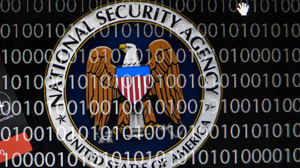
USspy

It is believed that the cyber extortionists have managed to trick victims into opening malicious malware attachments to spam emails that appeared to contain invoices, job offers, security warnings and other legitimate files.

The ransomware encrypted data on the computers, demanding payments of $300 to $600 to restore access.

Security researchers said they observed some victims paying via the digital currency bitcoin, though they did not know what percent had given in to the extortionists.

Researchers with security software maker Avast said they had observed 57,000 infections in 99 countries with Russia, Ukraine and Taiwan the top targets.

The most disruptive attacks were reported in Britain, where hospitals and clinics were forced to turn away patients after losing access to computers.

International shipper FedEx Corp said some of its Windows computers were also infected. "We are implementing remediation steps as quickly as possible," it said in a statement.

Still, only a small number of US-headquartered organizations were hit because the hackers appear to have begun the campaign by targeting organizations in Europe, said Vikram Thakur, research manager with security software maker Symantec.

By the time they turned their attention to the United States, spam filters had identified the new threat and flagged the ransomware-laden emails as malicious, Thakur said.

The US Department of Homeland Security said late on Friday that it was aware of reports of the ransomware, was sharing information with domestic and foreign partners and was ready to lend technical support.

Telecommunications company Telefonica was among many targets in Spain, though it said the attack was limited to some computers on an internal network and had not affected clients or services. Portugal Telecom and Telefonica Argentina both said they were also targeted.

Private security firms identified the ransomware as a new variant of "WannaCry" that had the ability to automatically spread across large networks by exploiting a known bug in Microsoft's Windows operating system.

Comments

Add new comment

  • Coastaldigest.com reserves the right to delete or block any comments.
  • Coastaldigset.com is not responsible for its readers’ comments.
  • Comments that are abusive, incendiary or irrelevant are strictly prohibited.
  • Please use a genuine email ID and provide your name to avoid reject.
Agencies
July 24,2020

Pune, Jul 24: Agile and dexterous, 85-year-old Shantabai Pawar wields sticks with absolute ease as she displays 'lathi-kathi' on the streets of Pune.

A video of her, displaying her skills in the Indian martial art form for livelihood, has gone viral on social media.

Pawar told media persons that she learnt the art form when she was only eight and has been practising it since then. The ancient martial art s believed to be linked to Dombari community, a nomadic tribe in Maharashtra.

"I have been pursuing the art of lathi-kathi since I was eight. I have never left it. It is part of me and it is an honour to practice it. My father taught me this. He taught me to work hard," Pawar told media persons.

In the video, the sari-clad octogenarian takes a warrior-like stride and effortlessly rotates a stick several times in a second in her hand and around her head and then does it with two sticks together with a smile on her face. She also tosses a stick in the air and catches it with ease.

The assembled gathering is impressed and enthused.

"People come and say, 'Well done Daadi!' I practice it to earn money for my children and grandchildren," she said.

Pawar leaves her home in the morning in the conditions created by coronavirus and performs the art form on roads and streets.

"I go to various areas to perform the art form and people give money," she said.

The artiste also uses thali and stick to gather the attention of people as most of them are indoors due to conditions created by COVID-19.

Senior citizens have been advised against venturing out due to their greater susceptibility to coronavirus but Pawar said she is not afraid to step out.

"People do advise me to not go out due to fear of COVID-19 but I am not scared. Whenever I step out, I pray to my God and he has kept me safe so far," she said.

Aishwarya Kale, a dancer and the person who uploaded the video on social media, said that it is "only an artist who can understand what help another artist needs".

"I was in that area shopping for some items and it was then I saw her performing and thought that I should film her and upload her video on social media. But I never thought that the video would go viral and she would receive financial help not just from people in the country but overseas as well," Kale told media persons.

"She is now getting honour for her craft that she couldn't get in the last 85 years. I feel good that through my small video, her art form has become viral," she added. 

Comments

Add new comment

  • Coastaldigest.com reserves the right to delete or block any comments.
  • Coastaldigset.com is not responsible for its readers’ comments.
  • Comments that are abusive, incendiary or irrelevant are strictly prohibited.
  • Please use a genuine email ID and provide your name to avoid reject.
Agencies
July 13,2020

New Delhi, Jul 13: The Telecom Regulatory Authority of India (TRAI) has blocked Bharti Airtel's Platinum and Vodafone Idea's RedX premium plans that offer faster data speeds and priority services to customers as both the plans were violating net neutrality norms.

The telecom watchdog has asked Bharti Airtel to explain within seven days how such a similar plan being launched does not violate the rules of net neutrality.

Vodafone Idea's RedX plan has been in the market since November 2019. They made some modifications in May 2020 and the Bharti Airtel was soon going to launch a similar plan.

According to TRAI, the higher speed for premium customers discriminate against others and violates net neutrality.

Responding to TRAI's move, Airtel spokesperson said: "We are passionate about delivering the best network and service experience to all our customers. This is why we have a relentless obsession to eliminate faults and have been consistently recognised by international agencies as the best network in terms of speed, latency and video experience."

"At the same time, we want to keep raising the bar for our post-paid customers in terms of service and responsiveness. This is an ongoing effort at our end," the spokesperson said.

Comments

Add new comment

  • Coastaldigest.com reserves the right to delete or block any comments.
  • Coastaldigset.com is not responsible for its readers’ comments.
  • Comments that are abusive, incendiary or irrelevant are strictly prohibited.
  • Please use a genuine email ID and provide your name to avoid reject.
Agencies
May 22,2020

Kochi, May 22: During the nationwide COVID-19 lockdown, Kerala recorded the highest number of cyber attacks followed by Punjab and Tamil Nadu, a study by anti-virus software firm K7 Computing said on Thursday.

In a statement issued in Chennai, the company said its K7 Computing's Cyber Threat Report, a comprehensive analysis of cyber attacks during the lockdown has found that Kerala recorded the highest number of cyber attacks during this period. The report analyses various cyber attacks within India during the pandemic and reveals that threat actors targeted the state with COVID-themed attacks aimed at exploiting user trust.

In Kerala, regions like Kottayam, Kannur, Kollam, and Kochi saw the highest hits with 462, 374, 236, and 147 attacks respectively, while the state as a whole saw around 2,000 attacks during the period - the highest thus far in the country.

This was followed by Punjab with 207 attacks and Tamil Nadu with 184 attacks, the company said.

The sudden surge in the frequency of attacks witnessed from February 2020 to mid-April 2020 indicates that scamsters across the world were exploiting the widespread panic around coronavirus at both the individual and corporate level.

These attacks aimed to compromise computers and mobile devices to gain access to users' confidential data, banking details, and cryptocurrency accounts.

The key threats seen during this period ranged from phishing attacks to rogue apps disguised as COVID-19 information apps that targeted users' sensitive data. Phishing attacks were noticed more in Tier-II and Tier-III cities while the metros fared better. Smaller cities saw over 250 attacks being blocked per 10,000 users.

Users from Ghaziabad and Lucknow seem to have faced almost 6 and 4 times the number of attacks as Bengaluru users.

According to the statement, a majority of the recorded attacks were phishing attacks with sophisticated campaigns that could easily snare even the most educated users. These attacks were aimed at heightening users' fears and creating a sense of urgency to take action.

K7 Labs noticed phishing attacks where scamsters posed as representatives of the United States Department of Treasury, the World Health Organization (WHO), and the Centres for Disease Control and Prevention (CDC), the company said.

Users were encouraged to visit links that would automatically download malware on the host computer such as the Agent Tesla keylogger or Lokibot information-stealing malware, infamous banking Trojans such as Trickbot or Zeus Sphinx, and even disastrous ransomware.

Other attacks included infected COVID-19 Android apps like CoronaSafetyMask that scam users with promises of masks for an upfront payment; the spyware app Project Spy; and seemingly genuine apps that are infected with dangerous malware like banking Trojans such as Ginp, Anubis and Cerberus.

"Covid-19 has created an ideal situation for various threat actors to target individuals and enterprises alike. The panic caused by the stringent lockdown measures and rapid spread of this virus has left many people looking for more information on the situation," J. Kesavardhanan, Founder and CEO of K7 Computing was quoted as saying in the statement.

"Threat actors exploit this fear to their advantage and scam users into downloading malicious software and divulging sensitive information like banking codes. The need to be cyber cautious has never been greater. This is more so in the case of corporates who have adopted a work from home policy hurriedly without adequate cyber hygiene. We have seen an increase in attacks on enterprises and SME employees as well," he added.

Such attacks are expected to continue till normalcy returns. Social engineering attacks targeted at winning users' trust will gain momentum.

Healthcare institutions, well-known government offices, and international organisations will continue to be a prime target throughout the pandemic, the statement said.

Comments

Add new comment

  • Coastaldigest.com reserves the right to delete or block any comments.
  • Coastaldigset.com is not responsible for its readers’ comments.
  • Comments that are abusive, incendiary or irrelevant are strictly prohibited.
  • Please use a genuine email ID and provide your name to avoid reject.