


Hajj pilgrim medical teams follow Health Ministry guidelines

Arab News
July 18, 2019

Riyadh, Jul 18: Medical missions accompanying Hajj pilgrims from overseas countries are following Ministry of Health guidelines, according to officials.

The ministry has issued guidelines saying that it requires the teams accompanying pilgrims to comply with technical requirements that include the mission having at least one physician per 1,000 pilgrims and at least 20 percent of the physicians in the medical mission having public health qualifications.

Teams should have a valid medical waste contract with a certified local company that covers the Hajj season, their clinics should include at least one infectious diseases isolation room that meets Health Ministry standards and the medical mission should commit to reporting notifiable infectious diseases to the Saudi health system using approved reporting methods.

Indonesia is sending the largest number of Muslims on Hajj and this year 231,000 Indonesians will visit.

Speaking to Arab News, Dr. Eka Jusup Singka, director of the Hajj Health Center, Ministry of Health, Indonesia, said: “We are following these guidelines.”

“We have a team of 308 health officers that include specialist doctors, general physicians, sanitarian and health promotion staff,” he said.

He added that 231 members of the team are doctors and the rest include pharmacists, paramedics and support staff.

Singka told Arab News that they have clinics in Makkah, Madinah and mobile teams at the airports. “We have brought medicines from Indonesia,” he said.

Asked about having a valid medical waste contract with a certified local company, he said: “Yes, we have arrangements with the local company.”

Regarding clinics including at least one infectious diseases isolation room, Singka said: “We have an infection room, and make such arrangements every year. Our clinics have been inspected by the MoH officials in Makkah and Madinah.”

“We are very happy for all their assistance,” he said. “If there are cases of infectious disease we immediately refer them to the local Saudi hospital for laboratory examination and advance medication.”

“We are very happy with the support from the Saudi health ministry,” he said.

Noor Rahman Sheikh, consul general of India, told Arab News: “We have a team of 638 delegates that include specialist doctors, general physicians and support staff.”

Of the total staff, there are 170 doctors, 185 paramedics and 283 administrative staff supporting the mission. “The government of India sends medicines and we follow the ministry guidelines as required,” he said.

Saudi Arabia last month increased India’s Hajj quota from 170,000 to 200,000, paving the way for 30,000 more pilgrims to visit for the annual event.

Comments

Add new comment

  • Coastaldigest.com reserves the right to delete or block any comments.
  • Coastaldigset.com is not responsible for its readers’ comments.
  • Comments that are abusive, incendiary or irrelevant are strictly prohibited.
  • Please use a genuine email ID and provide your name to avoid reject.
News Network
July 23,2020

Beirut, Jul 23: The pandemic will exact a heavy toll on Arab countries, causing an economic contraction of 5.7% this year, pushing millions into poverty and compounding the suffering of those affected by armed conflict, a U.N. report said Thursday.

The U.N.'s Economic and Social Commission for Western Asia expects some Arab economies to shrink by up to 13%, amounting to an overall loss for the region of $152 billion.

Another 14.3 million people are expected to be pushed into poverty, raising the total number to 115 million — a quarter of the total Arab population, it said. More than 55 million people in the region relied on humanitarian aid before the COVID-19 crisis, including 26 million who were forcibly displaced.

Arab countries moved quickly to contain the virus in March by imposing stay-at-home orders, restricting travel and banning large gatherings, including religious pilgrimages.

Arab countries as a whole have reported more than 830,000 cases and at least 14,717 deaths. That equates to an infection rate of 1.9 per 1,000 people and 17.6 deaths per 1,000 cases, less than half the global average of 42.6 deaths, according to the U.N.

But the restrictions exacted a heavy economic toll, and authorities have been forced to ease them in recent weeks. That has led to a surge in cases in some countries, including Lebanon, Iraq and the Palestinian territories.

Wealthy Gulf countries were hit by the pandemic at a time of low oil prices, putting added strain on already overstretched budgets. Middle-income countries like Jordan and Egypt have seen tourism vanish overnight and a drop in remittances from citizens working abroad.

War-torn Libya and Syria have thus far reported relatively small outbreaks. But in Yemen, where five years of civil war had already generated the world's worst humanitarian crisis, the virus is running rampant in the government-controlled south while rebels in the north conceal its toll.

Rola Dashti, the head of the U.N. commission, said Arab countries need to “turn this crisis into an opportunity” and address longstanding issues, including weak public institutions, economic inequality and over-reliance on fossil fuels.

“We need to invest in survival, survival of people and survival of businesses,” she said.

Comments

Add new comment

  • Coastaldigest.com reserves the right to delete or block any comments.
  • Coastaldigset.com is not responsible for its readers’ comments.
  • Comments that are abusive, incendiary or irrelevant are strictly prohibited.
  • Please use a genuine email ID and provide your name to avoid reject.
Agencies
August 2,2020

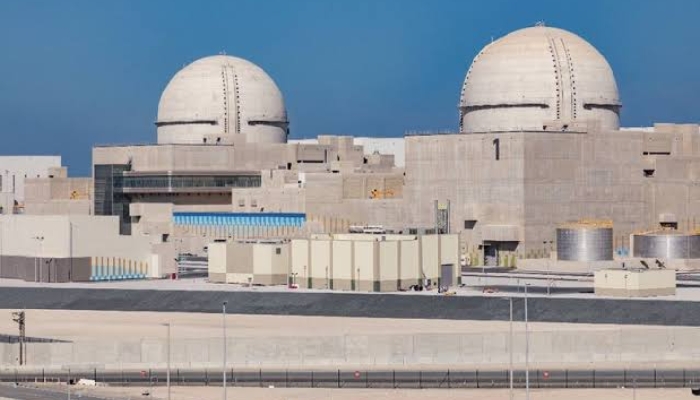
Dubai, Aug 2: The United Arab Emirates (UAE) announced on Saturday that it has started operations in the first of four reactors at the Barakah nuclear power station - the first nuclear power plant in the Arab world.

Emirates Nuclear Energy Corporation (ENEC), which is building and operating the plant with Korea Electric Power Corporation (KEPCO) said in a press release that its subsidiary Nawah Energy Company "has successfully started up Unit 1 of the Barakah Nuclear Energy Plant, located in the Al Dhafrah Region of Abu Dhabi".

That signals that Unit 1, which had fuel rods loaded in March, has achieved "criticality" - a sustained fission chain reaction.

"The start-up of Unit 1 marks the first time that the reactor safely produces heat, which is used to create steam, turning a turbine to generate electricity," said ENEC.

Barakah, which was originally scheduled to open in 2017, has been dogged by delays and is billions of dollars over budget. It has also raised myriad concerns among nuclear energy veterans who are concerned about the potential risks Barakah could visit upon the Arabian Peninsula, from an environmental catastrophe to a nuclear arms race.

Paul Dorfman, an honorary senior research fellow at the Energy Institute, University College London and founder and chair of the Nuclear Consulting Group, has criticised the Barakah reactors' "cheap and cheerful" design that he says cuts corners on safety.

Dorfman authored a report (PDF) last year detailing key safety features Barakah's reactors lack, such as a "core catcher" to literally stop the core of a reactor from breaching the containment building in the event of a meltdown. The reactors are also missing so-called Generation III Defence-In-Depth reinforcements to the containment building to shield against a radiological release resulting from a missile or fighter jet attack.

Both of these engineering features are standard on new reactors built in Europe, says Dorfman.

There have been at least 13 aerial attacks on nuclear facilities in the Middle East - more than any other region on earth.

The vulnerability of critical infrastructure in the Arabian Peninsula was further laid bare last year after Saudi Arabia's oil facilities at Abqaiq and Khurais were attacked by 18 drones and seven cruise missiles - an assault that temporarily knocked out more than half of the kingdom's oil production.

On Saturday, Dorfman reiterated his concern that there is no regional protocol in place to determine liability should an accident or incident at Barakah result in radioactive contamination spreading from the UAE to its neighbours. 

"Given Barakah has started up, because of all the well-rehearsed nuclear safety and security problems, it may be critically important that the Gulf states collectively evolve a Nuclear Accident Liability Convention, so that if anything does go wrong, victim states may have some sort of redress," Dorfman told Al Jazeera. 

The UAE has substantial oil and gas reserves, but it has made huge investments in developing alternative energy sources, including nuclear and solar.

Experts though have questioned why the UAE - which is bathed in sunlight and wind - has pushed ahead with nuclear energy - a far more expensive and riskier option than renewable energy sources.

When the UAE first announced Barakah in 2009, nuclear power was cheaper than solar and wind. But by 2012 - when the Emirates started breaking ground to build the reactors - solar and wind costs had plummeted dramatically.

Between 2009 and 2019, utility-scale average solar photovoltaic costs fell 89 percent and wind fell 43 percent, while nuclear jumped 26 percent, according to an analysis by the financial advisory and asset manager Lazard.

There are also concerns about the potential for Barakah to foment nuclear proliferation in the Middle East - a region rife with geopolitical fault lines and well-documented history of nuclear secrecy.

The UAE has sought to distance itself from the region's bad behaviour by agreeing not to enrich its own uranium or reprocess spent fuel. It has also signed up to the United Nation's nuclear watchdog's Additional Protocol, significantly enhancing inspection capabilities, and secured a 123 Agreement with the United States that allows bilateral civilian nuclear cooperation.

Comments

Add new comment

  • Coastaldigest.com reserves the right to delete or block any comments.
  • Coastaldigset.com is not responsible for its readers’ comments.
  • Comments that are abusive, incendiary or irrelevant are strictly prohibited.
  • Please use a genuine email ID and provide your name to avoid reject.
News Network
April 23,2020

Riyadh, Apr 22: In an extraordinary initiative, the government of the Kingdom of Saudi Arabia has decided to facilitate the travel of expatriates who have an exit and reentry visa or final exit visa to return to their countries.

This is in line with the order of Custodian of the Two Holy Mosques King Salman, according to the Saudi Press Agency.

According to the initiative, called “Auda” (return), expatriates can apply seeking permission for travel to their countries through the Absher portal of the ministry.

Announcing this, Saudi's Ministry of Interior said that the initiative will be implemented in cooperation with a number of relevant government agencies.

Requests for travel from expatriates will be received and approved in coordination with the relevant authorities to complete their travel procedures on board international flights.

As per the initiative, a text message will be sent to the beneficiary stating the travel date, ticket number and reservation details, and by which the beneficiary can obtain his travel ticket and complete the travel procedures.

Clarifying the procedures for the travel, the ministry said that the applicant shall select the icon (Auda) after visiting the Absher portal and fill the following fields: iqama (residency permit) number, date of birth, mobile number, departure city and airport of arrival.

It is not mandatory for the expatriate to have his own Absher account for availing of the service, the ministry said, adding that this facility is to enable expatriates to benefit from this initiative.

The departure will be through the following airports: King Khalid International Airport in Riyadh, King Abdulaziz International Airport in Jeddah, Prince Muhammad International Airport in Madinah, and King Fahd International Airport in Dammam.

Those expatriates who are outside these cities can benefit from the service through entering airport of departure after completion of their travel procedures in sufficient period of time.

Comments

Add new comment

  • Coastaldigest.com reserves the right to delete or block any comments.
  • Coastaldigset.com is not responsible for its readers’ comments.
  • Comments that are abusive, incendiary or irrelevant are strictly prohibited.
  • Please use a genuine email ID and provide your name to avoid reject.