



Dubai's jewellers see better value in 18K push

January 2, 2013

HL

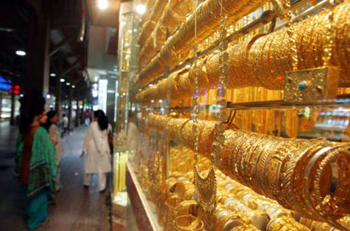
Dubai, Jan 2: Seeking to put the sparkle back into the gold trade after a less than stellar showing in the second half of 2012, Dubai’s jewellers are set to put their marketing muscle behind 18-carat jewellery for the first time. They believe such a move would help considerably improve offtake of jewellery among Western and Chinese shoppers, particularly tourists during the peak holiday season and during DSF.

It also signals a not so subtle shift on the part of Dubai’s jewellery trade which has until now focussed exclusively on 22-carat jewellery and demand from Indian and Pakistani residents and those on visit.

“18K is the most popular caratage in jewellery internationally, especially in Europe; hence it will be appealing to tourists from there,” said Abdul Salam KP, group executive director at Malabar Gold and Diamonds. “It obviously has the advantage of a lower price compared to 22K and offers more design variety as it is acceptable internationally and easier to make in complicated designs.”

On pricing, there is a fairly significant gap between the carats. Yesterday, a gram of 22K was going for Dh180.94 ($49.26) in Dubai, while its 18K counterpart had a less sheen in value terms at Dh147.99 ($40.29) a gram. Moreover, the making charges on 18K are said to be considerably lower.

Apart from the Western tourist, jewellery chains are keeping an equally keen look out for Chinese shoppers. They were quite conspicuous jewellery buyers during DSF 2011, but less so last year. Retailers are hoping for a marked improvement in the upcoming one and expect the 18K push will win them over.

“The Chinese tourist prefer 18K gold jewellery as well as 24K gold bars,” said John Paul Joy Alukkas, executive director, Joyalukkas Group. “The preference for the former is because they can use it more as a day to day rather than special occasion jewellery. The gold bars are with an investment perspective.”

Dubai’s gold trade definitely needs a volume boost and if 18K can provide that, retailers will not mind much. Demand had taken a dent last year after the steady upturn in gold prices through 2011 stalled and went through a bit of volatility.

But a key factor for the subdued demand had to do with events in India, where customs authorities dusted off a long dormant 1967 gold import duty and started applying it vigorously since the second quarter of 2012. This effectively meant that the price differential buying gold jewellery in Dubai as opposed to doing the same in India came down significantly. It also meant that any Indian expat here taking gold back to India would be hit with steep duties. As a case in point, a woman passenger wearing a gold chain weighing 40-gram would have to shell out Rs4,100 as duty on arrival at an Indian airport.

“Implementation of the recent revision in customs duty for gold and the related hassles for passengers has affected the mindset of NRI passengers in a big way,” said Sunny Chittilappilly, chairman of Dubai Gold and Jewellery Group. “As a result gold buying in the Gulf reduced to an extent and demand for 22K Indian jewellery was affected during the high purchase season close to summer.”

Several depositions, both individual and at the industry level, have been made to the Indian authorities for a repeal or a relook at the 1967 provisions. Dubai’s jewellers believe something will come out of the collective action.

In the meantime, they hope the 18K push and DSF 2013 — in which 13 kilos of gold can be won daily - will cut them some slack.

Comments

Add new comment

  • Coastaldigest.com reserves the right to delete or block any comments.
  • Coastaldigset.com is not responsible for its readers’ comments.
  • Comments that are abusive, incendiary or irrelevant are strictly prohibited.
  • Please use a genuine email ID and provide your name to avoid reject.
Agencies
March 16,2020

New Delhi, Mar 16: A recent survey across 140 districts of the country shows that about 54 per cent of Indians are finding travelling to be unsafe as the deadly coronavirus (COVID-19) pandemic sweeps globally.

The big worry that people have is community transmission, something that researchers from around the world have approximated at 10 per cent of total infections and more common in places like Wuhan in China, South Korea, Iran and Italy.

The months of March to June have historically been high travel season for most Indians, largely due to the summer vacations in schools. "But it seems that Indians do not want to take a chance with this rather scary virus and are either cancelling or postponing their travel plans," concluded the survey by LocalCircles.

The survey gathered more than 22,000 responses from participants in tier one, two and three cities. It said 48 per cent Indians plan to cancel their international business travel for the next four months.

Besides, nearly 38 per cent of respondents said they had to pay cancellation fee to the website, travel agent, airline or railways.

"These are testing times for the entire travel and tourism industry -- airlines, hotels, travel agents as well as small tour and taxi operators. The best solution at this point is to adjust cost structures, stay flexible and work with a collective approach to minimise the period of impact to both citizens and business," said LocalCircles.

Comments

Add new comment

  • Coastaldigest.com reserves the right to delete or block any comments.
  • Coastaldigset.com is not responsible for its readers’ comments.
  • Comments that are abusive, incendiary or irrelevant are strictly prohibited.
  • Please use a genuine email ID and provide your name to avoid reject.
Agencies
June 27,2020

After admitting that the world may have a COVID-19 vaccine within one year or even a few months earlier, the World Health Organisation (WHO) on Friday said that UK-based AstraZeneca is leading the vaccine race while US-based pharmaceutical major Moderna is not far behind.

WHO Chief Scientist Soumya Swaminathan stated that the AstraZeneca's coronavirus vaccine candidate is the most advanced vaccine currently in terms of development.

"I think AstraZeneca certainly has a more global scope at the moment in terms of where they are doing and planning their vaccine trials," she told the media.

AstraZeneca's Covid-19 vaccine candidate developed by researchers from the Oxford University will likely provide protection against the disease for one year, the British drug maker's CEO told Belgian radio station Bel RTL this month.

The Oxford University last month announced the start of a Phase II/III UK trial of the vaccine, named AZD1222 (formerly known as ChAdOx1 nCoV-19), in about 10,000 adult volunteers. Other late-stage trials are due to begin in a number of countries.

Last week, Swaminathan had said that nearly 2 billion doses of the COVID-19 vaccine would be ready by the end of next year.

Addressing the media from Geneva, she said that "at the moment, we do not have a proven vaccine but if we are lucky, there will be one or two successful candidates before the end of this year" and 2 billion doses by the end of next year.

Scientists predict that the world may have a COVID-19 vaccine within one year or even a few months earlier, said the Director-General of the World Health Organization even as he underlined the importance of global cooperation to develop, manufacture and distribute the vaccines.

However, making the vaccine available and distributing it to all will be a challenge and will require political will, WHO chief Tedros Adhanom Ghebreyesus said on Thursday during a meeting with the European Parliament's Committee for Environment, Public Health and Food Safety.

One option would be to give the vaccine only to those who are most vulnerable to the virus.

There are currently over 100 COVID-19 vaccine candidates in various stages of development.

Comments

Add new comment

  • Coastaldigest.com reserves the right to delete or block any comments.
  • Coastaldigset.com is not responsible for its readers’ comments.
  • Comments that are abusive, incendiary or irrelevant are strictly prohibited.
  • Please use a genuine email ID and provide your name to avoid reject.
News Network
February 26,2020

New York, Feb 26:  A new wearable sensor that works in conjunction with artificial intelligence (AI) technology could help doctors remotely detect critical changes in heart failure patients days before a health crisis occurs, says a study.

The researchers said the system could eventually help avert up to one in three heart failure readmissions in the weeks following initial discharge from the hospital and help patients sustain a better quality of life.

"This study shows that we can accurately predict the likelihood of hospitalisation for heart failure deterioration well before doctors and patients know that something is wrong," says the study's lead author Josef Stehlik from University of Utah in the US.

"Being able to readily detect changes in the heart sufficiently early will allow physicians to initiate prompt interventions that could prevent rehospitalisation and stave off worsening heart failure," Stehlik added.

According to the researchers, even if patients survive, they have poor functional capacity, poor exercise tolerance and low quality of life after hospitalisations.

"This patch, this new diagnostic tool, could potentially help us prevent hospitalizations and decline in patient status," Stehlik said.

For the findings, published in the journal Circulation: Heart Failure, the researchers followed 100 heart failure patients, average age 68, who were diagnosed and treated at four veterans administration (VA) hospitals in Utah, Texas, California, and Florida.

After discharge, participants wore an adhesive sensor patch on their chests 24 hours a day for up to three months.

The sensor monitored continuous electrocardiogram (ECG) and motion of each subject.

This information was transmitted from the sensor via Bluetooth to a smartphone and then passed on to an analytics platform, developed by PhysIQ, on a secure server, which derived heart rate, heart rhythm, respiratory rate, walking, sleep, body posture and other normal activities.

Using artificial intelligence, the analytics established a normal baseline for each patient. When the data deviated from normal, the platform generated an indication that the patient's heart failure was getting worse.

Overall, the system accurately predicted the impending need for hospitalization more than 80 per cent of the time.

On average, this prediction occurred 10.4 days before a readmission took place (median 6.5 days), the study said.

Comments

Add new comment

  • Coastaldigest.com reserves the right to delete or block any comments.
  • Coastaldigset.com is not responsible for its readers’ comments.
  • Comments that are abusive, incendiary or irrelevant are strictly prohibited.
  • Please use a genuine email ID and provide your name to avoid reject.