



Dubai's jewellers see better value in 18K push

January 2, 2013

HL

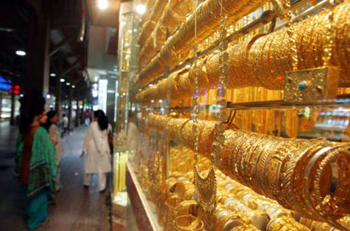
Dubai, Jan 2: Seeking to put the sparkle back into the gold trade after a less than stellar showing in the second half of 2012, Dubai’s jewellers are set to put their marketing muscle behind 18-carat jewellery for the first time. They believe such a move would help considerably improve offtake of jewellery among Western and Chinese shoppers, particularly tourists during the peak holiday season and during DSF.

It also signals a not so subtle shift on the part of Dubai’s jewellery trade which has until now focussed exclusively on 22-carat jewellery and demand from Indian and Pakistani residents and those on visit.

“18K is the most popular caratage in jewellery internationally, especially in Europe; hence it will be appealing to tourists from there,” said Abdul Salam KP, group executive director at Malabar Gold and Diamonds. “It obviously has the advantage of a lower price compared to 22K and offers more design variety as it is acceptable internationally and easier to make in complicated designs.”

On pricing, there is a fairly significant gap between the carats. Yesterday, a gram of 22K was going for Dh180.94 ($49.26) in Dubai, while its 18K counterpart had a less sheen in value terms at Dh147.99 ($40.29) a gram. Moreover, the making charges on 18K are said to be considerably lower.

Apart from the Western tourist, jewellery chains are keeping an equally keen look out for Chinese shoppers. They were quite conspicuous jewellery buyers during DSF 2011, but less so last year. Retailers are hoping for a marked improvement in the upcoming one and expect the 18K push will win them over.

“The Chinese tourist prefer 18K gold jewellery as well as 24K gold bars,” said John Paul Joy Alukkas, executive director, Joyalukkas Group. “The preference for the former is because they can use it more as a day to day rather than special occasion jewellery. The gold bars are with an investment perspective.”

Dubai’s gold trade definitely needs a volume boost and if 18K can provide that, retailers will not mind much. Demand had taken a dent last year after the steady upturn in gold prices through 2011 stalled and went through a bit of volatility.

But a key factor for the subdued demand had to do with events in India, where customs authorities dusted off a long dormant 1967 gold import duty and started applying it vigorously since the second quarter of 2012. This effectively meant that the price differential buying gold jewellery in Dubai as opposed to doing the same in India came down significantly. It also meant that any Indian expat here taking gold back to India would be hit with steep duties. As a case in point, a woman passenger wearing a gold chain weighing 40-gram would have to shell out Rs4,100 as duty on arrival at an Indian airport.

“Implementation of the recent revision in customs duty for gold and the related hassles for passengers has affected the mindset of NRI passengers in a big way,” said Sunny Chittilappilly, chairman of Dubai Gold and Jewellery Group. “As a result gold buying in the Gulf reduced to an extent and demand for 22K Indian jewellery was affected during the high purchase season close to summer.”

Several depositions, both individual and at the industry level, have been made to the Indian authorities for a repeal or a relook at the 1967 provisions. Dubai’s jewellers believe something will come out of the collective action.

In the meantime, they hope the 18K push and DSF 2013 — in which 13 kilos of gold can be won daily - will cut them some slack.

Comments

Add new comment

  • Coastaldigest.com reserves the right to delete or block any comments.
  • Coastaldigset.com is not responsible for its readers’ comments.
  • Comments that are abusive, incendiary or irrelevant are strictly prohibited.
  • Please use a genuine email ID and provide your name to avoid reject.
Agencies
February 4,2020

Despite tremendous advances in treatment of congenital heart disease (CHD), a new global study shows that the chances for a child to survive a CHD diagnosis is significantly less in low-income countries.

The research revealed that nearly 12 million people are currently living with CHD globally, 18.7 per cent more than in 1990.

The findings, published in The Lancet, is drawn from the first comprehensive study of congenital heart disease across 195 countries, prepared using data from the Global Burden of Diseases, Injuries and Risk Factors Study 2017 (GBD).

"Previous congenital heart estimates came from few data sources, were geographically narrow and did not evaluate CHD throughout the life course," said the study authors from Children's National Hospital in the US.

This is the first time the GBD study data was used along with all available data sources and previous publications - making it the most comprehensive study on the congenital heart disease burden to date.

The study found a 34.5 per cent decline in deaths from congenital disease between 1990 to 2017. Nearly 70 per cent of deaths caused by CHD in 2017 (180,624) were in infants less than one year old.

Most CHD deaths occurred in countries within the low and low-middle socio-demographic index (SDI) quintiles.

Mortality rates get lower as a country's Socio-demographic Index (SDI) rises, the study said.

According to the researchers, birth prevalence of CHD was not related to a country's socio-demographic status, but overall prevalence was much lower in the poorest countries of the world.

This is because children in these countries do not have access to life saving surgical services, they added.

"In high income countries like the United States, we diagnose some heart conditions prenatally during the 20-week ultrasound," said Gerard Martin from Children's National Hospital who contributed to the study.

"For children born in middle- and low-income countries, these data draw stark attention to what we as cardiologists already knew from our own work in these countries -- the lack of diagnostic and treatment tools leads to lower survival rates for children born with CHD," said researcher Craig Sable.

"The UN has prioritised reduction of premature deaths from heart disease, but to meet the target of 'ending preventable deaths of newborns and children under 5 years of age,' health policy makers will need to develop specific accountability measures that address barriers and improve access to care and treatment," the authors wrote.

Comments

Add new comment

  • Coastaldigest.com reserves the right to delete or block any comments.
  • Coastaldigset.com is not responsible for its readers’ comments.
  • Comments that are abusive, incendiary or irrelevant are strictly prohibited.
  • Please use a genuine email ID and provide your name to avoid reject.
Agencies
June 30,2020

Between 30-40 per cent of deaths from studies in intensive care units from different countries are people with diabetes, said Paul Zimmet, Professor of Diabetes, Monash University, Australia.

Zimmet, who is President International Diabetes Federation, added that the actual mechanism as to why COVID-19 may cause diabetes is as yet unknown, however, several possibilities exist. "COVID-19 is a very destructive and cunning virus and causes terrible damage to tissues including the lungs and pancreas," said Zimmet. Below are excerpts from an exclusive chat with IANS.

Why do you say Diabetes is dynamite if a person has been infected with COVID-19?

There have been many deaths in many countries, e.g. Italy, China, the UK and US among people with diabetes after infection with COVID-19 (SARS-Cov-2).

The mortality tends to be mainly in older Type 2 diabetics. Between 30-40 per cent of deaths from studies in intensive care units from different countries are people with diabetes. This outcome and other complications from the virus, particularly pneumonia, are more likely in people with diabetes which is poorly controlled with high blood sugars (poor metabolic control).

Diabetes is often associated with other chronic conditions, including obesity, hypertension and heart disease compounding the risk. These latter conditions all convey higher risk to COVID-19 infections.

ACE-2, which binds to SARS-Cov-2 and allows the virus to enter human cells is also located in organs and tissues involved in glucose metabolism. Is there solid evidence that virus after entering tissues may cause multiple and complex impairment of glucose metabolism?

The actual mechanism as to why COVID-19 may cause diabetes is as yet unknown.

However, several possibilities exist. Firstly, COVID-19 is a very destructive and cunning virus and causes terrible damage to tissues, including the lungs and pancreas.

A new study just published showed that in miniature lab-grown pancreas, and other cells such as liver, made using human stem cells, COVID-19 caused destruction of the pancreas beta cells that produce insulin.

It is possible that the virus causes disruption of the cells by disrupting cellular metabolism. This is possibly the way it brings about new-onset diabetes. ACE-2 exists in high concentration in the lung as this also explains the terrible lung side effects of COVID-19 infections.

Can COVID-19 lead to a new mechanism of diabetes? Probably a new form of diabetes or a new form of disease?

The COVID-19 virus has only been with us for about 5 months and there is a huge amount that we still must learn about its cunning and devastating ways. The purpose of the Global COVIDIAB Diabetes Registry, a joint initiative of Monash University in Australia, and King’s College London is to gain a much better understanding of how common is the appearance of COVID-19 related diabetes, what form does it take be it type 1 or type 2 or a new form, and how common are the complications that we already know e.g. diabetic keto-acidosis, hyperosmolar coma and high insulin requirements are causing high rates of ill health and mortality worldwide. The knowledge gained will aid our understanding for developing strategies to prevent and treat this terrible virus that has caused destruction globally.

Diabetes is one of the most prevalent chronic diseases in India. According to a recent study, sugar levels of diabetic persons increased by 20 per cent during nationwide lockdown in India to contain COVID-19 outbreak. Even after lockdown was lifted, many people are confined within their home. Do you think lack of physical activity will create more problems for diabetics?

My own major research has been on studying populations with high rates of diabetes, including ethnic Indian communities including India, Mauritius, and Fiji so I am very well aware of this. It is now well established that along with diabetes, that associated poor metabolic control of their diabetes places these people at the highest risk for COVID infection and its devastating complications and the associated morbidity and mortality. And these communities have high prevalence of heart disease as well.

Lockdown not only has deleterious effects on metabolic control of the diabetes through reduced opportunities for exercise to be protective serious consequences of SARS-CoV-2 infection, lockdown usually results in disruption of the regular medical care and the regular monitoring of metabolic control. This may also be partly due to the stress and poor compliance, or inability to afford their medications such as insulin. It may also be compounded by inability to access the care during the pandemic. Nevertheless, we now know that poor metabolic control heightens their risk as described above.

You have said diabetes is itself a pandemic just like Covid-19, and the two pandemics could be clashing. How could governments address this problem?

These are “The Times of COVID-19”. Most nations of the world were totally unprepared for a pandemic of this magnitude. They underestimated its potential impact and the destructive nature of the viral infection. This should prompt all countries to upgrade their guidelines to take into account the lessons learnt on infection control including training of staff specialising in infectious diseases and improved public education and taking their communities into their confidence about the terrible nature of COVID-19. The risks of COVID-19 infection need a much higher priority in the general community, particularly for people with chronic conditions such as diabetes, obesity, and cardiac conditions.

Governments are faced with chronic diseases (NCDs) like diabetes and communicable diseases (CDs) like viral and enteric diseases and TB. In general WHO gives the highest priority to communicable diseases and much less attention and funding to chronic diseases like diabetes (I was an adviser to WHO for many years (about 30) on diabetes and obesity and it was very frustrating to deal with this situation).

This attitude to diabetes, for example, has a flow down effect so that diabetes funding in countries by governments, rich and poor, suffered and was insufficient.

So now we have a COVID-19 pandemic and who are those at highest risk, yes people with diabetes and other NCDs, it is very important that now the two, Diabetes and COVID-19 are clashing face-to-face. This is a major issue that WHO and national governments have to face with equal priority’

Stressed people suffering from diabetes run a greater risk of poor blood glucose levels, what do you suggest to these people?

As mentioned in the answer above, stress is an important factor in upsetting the blood sugar (metabolic) control of diabetes. Additive to this is poor compliance with medications and diet. These and potential associated comorbidities due to other chronic conditions are part of the dynamic dynamite mixture.

Comments

Add new comment

  • Coastaldigest.com reserves the right to delete or block any comments.
  • Coastaldigset.com is not responsible for its readers’ comments.
  • Comments that are abusive, incendiary or irrelevant are strictly prohibited.
  • Please use a genuine email ID and provide your name to avoid reject.
News Network
May 11,2020

Panaji, May 11: Amid the COVID-19 outbreak, most of the people are more concerned about the health of their near and dear ones than their own well-being, says a study conducted by a leading business school in Goa.

People are now more conscious about any bodily changes, and even mild cold, cough and sneezing, it says.

The study, on public's reaction towards COVID-19 outbreak by gauging their psychological response in terms of anxiety and their coping behaviour, was conducted by the Goa Institute of Management's Dr Divya Singhal and Prof Padhmanabhan Vijayaraghavan.

It took into account inputs from 231 respondents residing in various parts of the country.

"Nearly 82.25 per cent of the respondents were more worried about the health of their loved ones than their own well-being," Singhal said.

"Majority of the respondents have become conscious of any bodily changes, sensations, a mild cold, cough, sneezing and experience concern, and attribute those changes to the symptoms of COVID-19," she said.

Besides, more than 50 per cent of the respondents said their social media usage has gone up as well as their time spent on watching movies and shows through online medium, the official said.

The respondents agreed that their technology usage to connect with friends and relatives has gone up, she said.

The study also indicated that a large group of respondents found it "depressing" to read forwarded messages on the deadly disease.

"An overwhelming majority of the respondentsagreed that they discourage unverified forwarded messages about COVID-19 on social media," says the study.

It also found that 41 per centof the respondents were not doing any physical activity, like yoga, during the lockown period, while another 19 per cent were not sure about engaging themselves in physical activities.

Besides, 57 per cent of the respondents were not engaged in any mind-calming practices like meditation, and 18 per cent were not sure about taking up meditative practices, the study said.

The respondents included 145 men and 86 women, aged 18 and above, with nearly 60 per cent of them residing in non- metro cities and rest from metros.

About 47.62 per cent of the respondents were employed in private or government sectors, and the remaining included students, retired persons and homemakers.

Comments

Add new comment

  • Coastaldigest.com reserves the right to delete or block any comments.
  • Coastaldigset.com is not responsible for its readers’ comments.
  • Comments that are abusive, incendiary or irrelevant are strictly prohibited.
  • Please use a genuine email ID and provide your name to avoid reject.