



Dubai's jewellers see better value in 18K push

January 2, 2013

HL

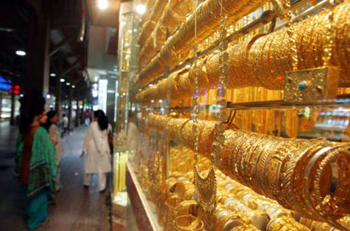
Dubai, Jan 2: Seeking to put the sparkle back into the gold trade after a less than stellar showing in the second half of 2012, Dubai’s jewellers are set to put their marketing muscle behind 18-carat jewellery for the first time. They believe such a move would help considerably improve offtake of jewellery among Western and Chinese shoppers, particularly tourists during the peak holiday season and during DSF.

It also signals a not so subtle shift on the part of Dubai’s jewellery trade which has until now focussed exclusively on 22-carat jewellery and demand from Indian and Pakistani residents and those on visit.

“18K is the most popular caratage in jewellery internationally, especially in Europe; hence it will be appealing to tourists from there,” said Abdul Salam KP, group executive director at Malabar Gold and Diamonds. “It obviously has the advantage of a lower price compared to 22K and offers more design variety as it is acceptable internationally and easier to make in complicated designs.”

On pricing, there is a fairly significant gap between the carats. Yesterday, a gram of 22K was going for Dh180.94 ($49.26) in Dubai, while its 18K counterpart had a less sheen in value terms at Dh147.99 ($40.29) a gram. Moreover, the making charges on 18K are said to be considerably lower.

Apart from the Western tourist, jewellery chains are keeping an equally keen look out for Chinese shoppers. They were quite conspicuous jewellery buyers during DSF 2011, but less so last year. Retailers are hoping for a marked improvement in the upcoming one and expect the 18K push will win them over.

“The Chinese tourist prefer 18K gold jewellery as well as 24K gold bars,” said John Paul Joy Alukkas, executive director, Joyalukkas Group. “The preference for the former is because they can use it more as a day to day rather than special occasion jewellery. The gold bars are with an investment perspective.”

Dubai’s gold trade definitely needs a volume boost and if 18K can provide that, retailers will not mind much. Demand had taken a dent last year after the steady upturn in gold prices through 2011 stalled and went through a bit of volatility.

But a key factor for the subdued demand had to do with events in India, where customs authorities dusted off a long dormant 1967 gold import duty and started applying it vigorously since the second quarter of 2012. This effectively meant that the price differential buying gold jewellery in Dubai as opposed to doing the same in India came down significantly. It also meant that any Indian expat here taking gold back to India would be hit with steep duties. As a case in point, a woman passenger wearing a gold chain weighing 40-gram would have to shell out Rs4,100 as duty on arrival at an Indian airport.

“Implementation of the recent revision in customs duty for gold and the related hassles for passengers has affected the mindset of NRI passengers in a big way,” said Sunny Chittilappilly, chairman of Dubai Gold and Jewellery Group. “As a result gold buying in the Gulf reduced to an extent and demand for 22K Indian jewellery was affected during the high purchase season close to summer.”

Several depositions, both individual and at the industry level, have been made to the Indian authorities for a repeal or a relook at the 1967 provisions. Dubai’s jewellers believe something will come out of the collective action.

In the meantime, they hope the 18K push and DSF 2013 — in which 13 kilos of gold can be won daily - will cut them some slack.

Comments

Add new comment

  • Coastaldigest.com reserves the right to delete or block any comments.
  • Coastaldigset.com is not responsible for its readers’ comments.
  • Comments that are abusive, incendiary or irrelevant are strictly prohibited.
  • Please use a genuine email ID and provide your name to avoid reject.
Agencies
July 5,2020

The deadly coronavirus that entered India while there was still nip in the air has beaten rising mercury, humid conditions, unique Indian genome and has entered monsoon season with more potency as fresh cases are only breaking all records in the country.

India recorded a single-day spike of record 24,850 new coronavirus cases on Sunday, taking its total tally to 6.73 lakh corona-positive cases.

Top Indian microbiologists were hopeful in March that after the 21-day lockdown, as summer approaches, the rise in temperature would play an important role in preventing the drastic spread of COVID-19 virus in India.

Several virologists hinted that by June this year, the impact of COVID-19 would be less than what it appeared in March-April.

The claims have fallen flat as the virus is mutating fast, becoming more potent than ever.

According to experts, the novel coronavirus is a new virus whose seasonality and response to hot humid weather was never fully understood.

"The theory was based on the fact that high temperatures can kill the virus as in sterilisation techniques used in healthcare. But these are controlled environment conditions. There are many other factors besides temperature, humidity which influence the transmission rate among humans," Dr Anu Gupta, Head, Microbiologist and Infection Control, Fortis Escorts Heart Institute, told IANS.

There is no built-up immunity to COVID-19 in humans.

"Also, asymptomatic people might be passing it to many others unknowingly. New viruses tend not to follow the seasonal trend in their first year," Gupta emphasized.

Globally, as several countries are now experiencing hot weather, the World Health Organization (WHO) reported a record hike in the number of coronavirus cases, with the total rising by 2,12,326 in 24 hours in the highest single-day increase since COVID-19 broke out.

So far over 11 million people worldwide have tested positive for the disease which has led to over 5,25,000 deaths, according to data from Johns Hopkins University. The US remained the worst-hit country with over 28 lakh cases, followed by Brazil with 15.8 lakh.

According to Sandeep Nayar, Senior Consultant and HOD, Respiratory Medicine, Allergy & Sleep Disorders, BLK Super Speciality Hospital in New Delhi, whether temperature plays a role in COVID-19 infection is highly debated.

One school of thought said in the tropical regions of South Asia, the virus might not thrive longer.

"On the other hand, another school of thought has found that novel Coronavirus can survive in a hot and humid environment and tropical climate does not make a difference to the virus. According to them, this is what distinguishes the novel coronavirus from other common viruses, which usually wane in hot weather," stressed Nayar.

Not much has been studied in the past and no definite treatment or vaccine is available to date.

"Every day, new properties and manifestation of the disease come up. As of now, the only way to prevent this monster is by taking appropriate precautions. Hand hygiene, social distancing, cough etiquette and face masks definitely reduce spread of COVID-19 infection," Nayar told IANS.

Not just top Indian health experts, even Indian-American scientists had this theory in mind that sunshine and summer may ebb the spread of the coronavirus.

Ravi Godse, Director of Discharge Planning, UPMC Shadyside Pennsylvania in the US told IANS in April: "In the summer, the humidity can go up as well, meaning more water drops in the air. If the air is saturated with water and somebody sneezes virus droplets into such air, it is likely that the droplets will fall to the ground quicker, making them less infectious. So the short answer is yes, summer/sunshine could be bettera.

According to Dr Puneet Khanna, Head of Respiratory Medicine and Pulmonology, Manipal Hospital, Delhi, COVID-19 death rates are not too different in tropical countries but since the disease affected them late it was yet to show its peak in these areas.

"The virus can survive well in hot and humid countries and this is proven now," he stressed.

Comments

Add new comment

  • Coastaldigest.com reserves the right to delete or block any comments.
  • Coastaldigset.com is not responsible for its readers’ comments.
  • Comments that are abusive, incendiary or irrelevant are strictly prohibited.
  • Please use a genuine email ID and provide your name to avoid reject.
Agencies
January 11,2020

Europe, Jan 11: Researchers have revealed the people who drink tea at least three times a week have healthy years of life and longer life expectancy.

The research was published in the European Journal of Preventive Cardiology, a journal of the European Society of Cardiology (ESC).

Dr Xinyan Wang, who is the author of the study, said: "Habitual tea consumption is associated with lower risks of cardiovascular disease and all-cause death. The favourable health effects are the most robust for green tea and for long-term habitual tea drinkers."
The analysis that was conducted included about 100,902 participants of the China-PAR project2 with no history of heart attack, stroke, or cancer.

Participants were classified into two groups: Habitual tea drinkers and never or non-habitual tea drinkers and followed-up for a median of 7.3 years.

The analyses estimated that 50-year-old habitual tea drinkers would develop coronary heart disease and stroke 1.41 years later and live 1.26 years longer than those who never or seldom drank tea. Compared with never or non-habitual tea drinkers, the habitual tea consumers had a 20 per cent lower risk of incident heart disease and stroke, 22 per cent lower risk of fatal heart disease and stroke, and 15 per cent decreased risk of all-cause death.

The potential influence of changes in tea drinking behaviour was suspected in a subset of 14,081 participants with assessments at two-time points. The average duration between the two surveys was 8.2 years, and the median follow-up after the second survey was 5.3 years.

Habitual tea drinkers who maintained their habit in both surveys had a 39 per cent lower risk of incident heart disease and stroke, 56 per cent lower risk of fatal heart disease and stroke, and 29 per cent decreased risk of all-cause death compared to consistent never or non-habitual tea drinkers.

Senior author Dr Dongfeng Gu said: "The protective effects of tea were most pronounced among the consistent habitual tea drinking group. Mechanism studies have suggested that the main bioactive compounds in tea, namely polyphenols, are not stored in the body long-term. Thus, frequent tea intake over an extended period may be necessary for the cardioprotective effect."

In a subanalysis by type of tea, drinking green tea was linked with approximately 25 per cent lower risks for incident heart disease and stroke, fatal heart disease and stroke, and all-cause death. However, no significant associations were observed for black tea.
Dr Gu noted that a preference for green tea is unique to East Asia.

Two factors may be at play. First, green tea is a rich source of polyphenols which protect against cardiovascular disease and its risk factors including high blood pressure and dyslipidaemia. Black tea is fully fermented and during this process, polyphenols are oxidised into pigments and may lose their antioxidant effects. Second, black tea is often served with milk, which previous research has shown may counteract the favourable health effects of tea on vascular function.

Gender-specific analyses showed that the protective effects of habitual tea consumption were pronounced and robust across different outcomes for men, but only modest for women. Dr Wang said: "One reason might be that 48 per cent of men were habitual tea consumers compared to just 20 per cent of women. Secondly, women had a much lower incidence of, and mortality from, heart disease and stroke. These differences made it more likely to find statistically significant results among men."

She said: "The China-PAR project is ongoing, and with more person-years of follow-up among women the associations may become more pronounced."

In conclusion, the authors have found that randomised trials are required to validate the results and to illustrate nutritional guidelines and advice for lifestyle.

Comments

Add new comment

  • Coastaldigest.com reserves the right to delete or block any comments.
  • Coastaldigset.com is not responsible for its readers’ comments.
  • Comments that are abusive, incendiary or irrelevant are strictly prohibited.
  • Please use a genuine email ID and provide your name to avoid reject.
Agencies
May 6,2020

Washington D.C., May 5: Working from home has become the new normal ever since the outbreak of coronavirus and in today's time the work duties can be easily dealt with by means of mobile devices at home.

However, this easy use of technology, mobile devices for that matter, has the potential to blur the fine line between work and the other daily life routines.

But, contrary to the belief, a study at the University of Jyvaskyla reveals that the mixing of work and other daily life routines may have more benefits than previously assumed, and points to the importance of boundary-spanning communication.

A smartphone enables phone calls, email, and file transfers from the comfort of home. The study shows that there may be more effective ways to maximise the benefits of smartphone use, without diminishing employees' flexibility and the use of these technologies.

"People often forget to talk about positive effects, such as autonomy and freedom the employees gain when they have the flexibility to schedule their work," said Postdoctoral Researcher Ward van Zoonen from JYU, who with his colleagues examined the use of smartphones for work matters outside working hours.

The study paid special attention to the benefits of talking about domestic matters with the immediate supervisor outside the working hours given to an employee.

"This reduces the conflict between work and other life," van Zoonen said.

"If people in an organisation strive for more dialogue between employees' different life domains, it is possible to create a functional environment where people can talk about different matters."

The research findings show that when employees communicate across boundaries and talk at work about their life in other respects, they can receive new kinds of support and understanding from their immediate supervisor.

"This kind of communication creates a low threshold for contacting one's supervisor, which helps employees build a balance between the different domains of their lives and strengthens their organisational identification," said Professor Anu Sivunen describing the findings.

This means that tight working time restrictions to protect employees might not be beneficial after all, if they hinder reaching the positive results indicated in this research.

For the study, a survey was taken of 367 employees who were asked questions such as -- how much they talk about their work with their family, and how much they talk about their family with their immediate supervisor.

"Both supervisors and their employees answered the surveys, and the study actually focused on their mutual communication," Sivunen said.

"Usually people at workplaces are interested in how communication within the work community is succeeding. It is often forgotten how an immediate supervisor can take an employer's other life into account and thereby help the employee gain work-related benefits."

"Communication with one's immediate supervisor during flexible working hours, also on matters other than work, could ease the daily lives of many employees if they could share the possible challenges of their family life or free time with their supervisor in these settings," Sivunen added.

According to the study, such a practice could make the supervisor aware of the employee's situation as he/she works from home and the related impacts on their work performances.

Comments

Add new comment

  • Coastaldigest.com reserves the right to delete or block any comments.
  • Coastaldigset.com is not responsible for its readers’ comments.
  • Comments that are abusive, incendiary or irrelevant are strictly prohibited.
  • Please use a genuine email ID and provide your name to avoid reject.