


The kilogram has put on weight

January 8, 2013

kilogram

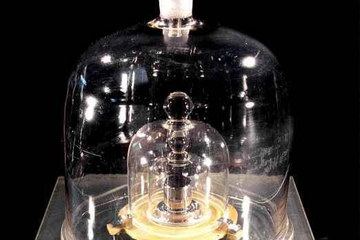
London:Jan 8: The official kilogram - a cylinder-shaped hunk of metal - that defines the fundamental unit of mass, has itself gained weight, scientists say.

Scientists at Newscastle University have found that due to surface contamination the original kilogram is likely to be tens of microgrammes heavier than it was when the first standard was set in 1875.

As a result, each country that has one of these standard masses has a slightly different definition of the kilogram, which could throw off science experiments that require very precise weight measurements or international trade in highly restricted items that are restricted by weight, such as radioactive materials.

The original kilogram - known as the International Prototype Kilogram or the IPK - is the standard against which all other measurements of mass are set.

Stored in the International Bureau of Weights and Measures in Paris, 40 official replicas of the IPK were made in 1884 and distributed around the world in order to standardise mass.

Now Professor Peter Cumpson and Dr Naoko Sano have used cutting-edge X-ray Photoelectron Spectroscopy to analyse surfaces similar to the standard kilogram to assess the build-up of hydrocarbons – and how to remove them.

Ozone and ultraviolet light could be used to clean the kilograms without damaging them, LiveScience reported.

“Statute decrees the IPK is the kilogram,” explained research lead Peter Cumpson, Professor of MicroElectroMechanical Systems at Newcastle University.

“It doesn’t really matter what it weighs as long as we are all working to the same exact standard. The problem is there are slight differences. Around the world, the IPK and its 40 replicas are all growing at different rates, diverging from the original,” Cumpson said.

“We’re only talking about a very small change – less than 100 microgrammes – so, unfortunately, we can’t all take a couple of kilograms off our weight and pretend the Christmas over-indulgence never happened,” Cumpson added.

“But mass is such a fundamental unit that even this very small change is significant and the impact of a slight variation on a global scale is absolutely huge. There are cases of international trade in high-value materials or waste where every last microgramme must be accounted for,” he said.

“What we have done at Newcastle is effectively give these surfaces a suntan. By exposing the surface to a mixture of UV and ozone we can remove the carbonaceous contamination and potentially bring prototype kilograms back to their ideal weight,” he added.

Work is underway internationally in several national measurement institutes to find an alternative to the IPK — a standardised value for the kilogram that is not based on a matchbox—sized piece of metal.

The study was published in the journal of Metrologia.

Comments

Add new comment

  • Coastaldigest.com reserves the right to delete or block any comments.
  • Coastaldigset.com is not responsible for its readers’ comments.
  • Comments that are abusive, incendiary or irrelevant are strictly prohibited.
  • Please use a genuine email ID and provide your name to avoid reject.
Agencies
February 23,2020

Los Angeles, Feb 23: According to researchers, if administered quickly, a common medication that reduces bleeding could be a treatment for bleeding stroke.

The Spot Sign and Tranexamic Acid on Preventing ICH Growth - Australasia Trial (STOP-AUST) was a multicenter, prospective, randomized, double-blind, placebo-controlled, phase 2 clinical trial using the antifibrinolytic agent tranexamic acid in people with intracerebral hemorrhage (ICH).

ICH is a severe form of acute stroke with few treatment options.

Tranexamic acid is currently used to treat or prevent excessive blood loss from trauma, surgery, tooth removal, nosebleeds and heavy menstruation. For this study, one hundred patients with active brain bleeding were given either intravenous tranexamic acid or placebo within 4.5 hours of symptom onset.

Researchers analyzed brain CT scans taken during the 24-hour period after treatment with tranexamic acid or placebo.

Researchers found a trend towards reduced hemorrhage expansion in the group treated with tranexamic acid, especially in those treated within 3 hours of the brain bleed. However, this trend was not statistically significant. The finding was consistent with previous research using the medication.

"Further trials using tranexamic acid are ongoing and focusing on ultra-early treatment - within 2 hours. 

This is where the greatest opportunity for intervention appears to be. Tranexamic acid is inexpensive, safe and widely available. Our results and others provide great impetus for further, focused research using this treatment," Nawaf Yassi said.

Larger trials focused on patient outcomes are required for this therapy to enter routine clinical practice.

Comments

Add new comment

  • Coastaldigest.com reserves the right to delete or block any comments.
  • Coastaldigset.com is not responsible for its readers’ comments.
  • Comments that are abusive, incendiary or irrelevant are strictly prohibited.
  • Please use a genuine email ID and provide your name to avoid reject.
Agencies
May 17,2020

Geneva, May 17: Spraying disinfectant on the streets, as practised in some countries, does not eliminate the new coronavirus and even poses a health risk, the World Health Organization (WHO) warned on Saturday.

In a document on cleaning and disinfecting surfaces as part of the response to the virus, the WHO says spraying can be ineffective. "Spraying or fumigation of outdoor spaces, such as streets or marketplaces, is... not recommended to kill the Covid-19 virus or other pathogens because disinfectant is inactivated by dirt and debris," explains the WHO.

"Even in the absence of organic matter, chemical spraying is unlikely to adequately cover all surfaces for the duration of the required contact time needed to inactivate pathogens." The WHO said that streets and pavements are not considered as "reservoirs of infection" of Covid-19, adding that spraying disinfectants, even outside, can be "dangerous for human health".

The document also stresses that spraying individuals with disinfectants is "not recommended under any circumstances".

"This could be physically and psychologically harmful and would not reduce an infected person's ability to spread the virus through droplets or contact," said the document.

Spraying chlorine or other toxic chemicals on people can cause eye and skin irritation, bronchospasm and gastrointestinal effects, it adds.

The organisation is also warning against the systematic spraying and fumigating of disinfectants on to surfaces in indoor spaces, citing a study that has shown it to be ineffective outside direct spraying areas.

"If disinfectants are to be applied, this should be done with a cloth or wipe that has been soaked in disinfectant," it says.

The SARS-CoV-2 virus, the cause of the pandemic that has killed more than 300,000 people worldwide since its appearance in late December in China, can attach itself to surfaces and objects.

However, no precise information is currently available for the period during which the viruses remain infectious on the various surfaces.

Studies have shown that the virus can stay on several types of surfaces for several days. However, these maximum durations are only theoretical because they are recorded under laboratory conditions and should be "interpreted with caution" in the real-world environment.

Comments

Add new comment

  • Coastaldigest.com reserves the right to delete or block any comments.
  • Coastaldigset.com is not responsible for its readers’ comments.
  • Comments that are abusive, incendiary or irrelevant are strictly prohibited.
  • Please use a genuine email ID and provide your name to avoid reject.
Agencies
February 11,2020

Using smartphone for long hours every day may do you more harm than you can probably think of. Researchers have found that spending a lot of time with the device and on social media may lead to mental distress and suicidality among adolescents.

The findings, published in the journal CMAJ (Canadian Medical Association Journal) contains guidance for physicians, parents and teachers on how to help teenagers manage smartphone and social media use for a healthy balance between sleep, academic work, social activity, interpersonal relationships and online activity.

"Physicians, teachers and families need to work together with youth to decrease possible harmful effects of smartphones and social media on their relationships, sense of self, sleep, academic performance, and emotional well-being," said lead author of the study Elia Abi-Jaoude from Toronto Western Hospital in Canada.

This review of evidence, led by the Hospital for Sick Children (SickKids), focuses on smartphone use and does not consider online gaming.

"For adolescents today, who have not known a world without social media, digital interactions are the norm, and the potential benefits of online access to productive mental health information -- including media literacy, creativity, self-expression, sense of belonging and civic engagement -- as well as low barriers to resources such as crisis lines and Internet-based talking therapies cannot be discounted," the authors wrote.

The researchers recommend that doctors should ask teenagers to reduce social media use rather than eradicate it completely and encourage parents to be part of the conversations.

Parents should discuss appropriate smartphone use with teenagers to determine together how to reduce risks and set boundaries.

A recent poll from the US indicates that 54 per cent of teenagers think they spend too much time on their smartphones and about half said they were cutting back on usage.

"Encouragingly, youth are increasingly recognising the negative impact of social media on their lives and starting to take steps to mitigate it," the authors wrote.

Comments

Add new comment

  • Coastaldigest.com reserves the right to delete or block any comments.
  • Coastaldigset.com is not responsible for its readers’ comments.
  • Comments that are abusive, incendiary or irrelevant are strictly prohibited.
  • Please use a genuine email ID and provide your name to avoid reject.