


The kilogram has put on weight

January 8, 2013

kilogram

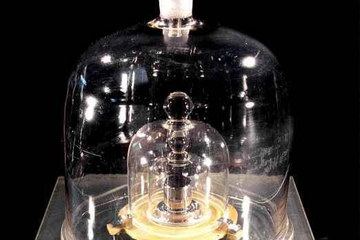
London:Jan 8: The official kilogram - a cylinder-shaped hunk of metal - that defines the fundamental unit of mass, has itself gained weight, scientists say.

Scientists at Newscastle University have found that due to surface contamination the original kilogram is likely to be tens of microgrammes heavier than it was when the first standard was set in 1875.

As a result, each country that has one of these standard masses has a slightly different definition of the kilogram, which could throw off science experiments that require very precise weight measurements or international trade in highly restricted items that are restricted by weight, such as radioactive materials.

The original kilogram - known as the International Prototype Kilogram or the IPK - is the standard against which all other measurements of mass are set.

Stored in the International Bureau of Weights and Measures in Paris, 40 official replicas of the IPK were made in 1884 and distributed around the world in order to standardise mass.

Now Professor Peter Cumpson and Dr Naoko Sano have used cutting-edge X-ray Photoelectron Spectroscopy to analyse surfaces similar to the standard kilogram to assess the build-up of hydrocarbons – and how to remove them.

Ozone and ultraviolet light could be used to clean the kilograms without damaging them, LiveScience reported.

“Statute decrees the IPK is the kilogram,” explained research lead Peter Cumpson, Professor of MicroElectroMechanical Systems at Newcastle University.

“It doesn’t really matter what it weighs as long as we are all working to the same exact standard. The problem is there are slight differences. Around the world, the IPK and its 40 replicas are all growing at different rates, diverging from the original,” Cumpson said.

“We’re only talking about a very small change – less than 100 microgrammes – so, unfortunately, we can’t all take a couple of kilograms off our weight and pretend the Christmas over-indulgence never happened,” Cumpson added.

“But mass is such a fundamental unit that even this very small change is significant and the impact of a slight variation on a global scale is absolutely huge. There are cases of international trade in high-value materials or waste where every last microgramme must be accounted for,” he said.

“What we have done at Newcastle is effectively give these surfaces a suntan. By exposing the surface to a mixture of UV and ozone we can remove the carbonaceous contamination and potentially bring prototype kilograms back to their ideal weight,” he added.

Work is underway internationally in several national measurement institutes to find an alternative to the IPK — a standardised value for the kilogram that is not based on a matchbox—sized piece of metal.

The study was published in the journal of Metrologia.

Comments

Add new comment

  • Coastaldigest.com reserves the right to delete or block any comments.
  • Coastaldigset.com is not responsible for its readers’ comments.
  • Comments that are abusive, incendiary or irrelevant are strictly prohibited.
  • Please use a genuine email ID and provide your name to avoid reject.
Agencies
July 8,2020

Scientists have designed a “catch and kill” air filter which they say can trap the novel coronavirus and neutralise it instantly, an invention that may reduce the spread of COVID-19 in closed spaces such as schools, hospitals and health care facilities, as well as public transit environments like airplanes.

According to the study, published in the journal Materials Today Physics, the device killed 99.8 per cent of the novel coronavirus, SARS-CoV-2, in a single pass through its filter. It said the device, made from commercially available nickel foam heated to 200 degrees Celsius, also killed 99.9 per cent of the spores of the deadly bacterium Bacillus anthracis which causes the anthrax disease.

“This filter could be useful in airports and in airplanes, in office buildings, schools, and cruise ships to stop the spread of COVID-19,” said Zhifeng Ren, a co-author of the study from the University of Houston (UH) in the US.

“Its ability to help control the spread of the virus could be very useful for society,” Ren added.

The researchers said they are also developing a desk-top model for the device which is capable of purifying the air in an office worker’s immediate surroundings. According to the scientists, since the virus can remain in the air for about three hours, a filter that could remove it quickly was a viable plan, and with businesses reopening across the world, they believe controlling the spread in air conditioned spaces was urgent.

The study noted that the novel coronavirus cannot survive temperatures above 70 degrees Celsius, so by making the filter temperature far hotter — about 200 degree Celsius, the researchers said they were able to kill the virus almost instantly.

Ren said the nickel foam met several key requirements. “It is porous, allowing the flow of air, and electrically conductive, which allowed it to be heated. It is also flexible,” the researchers noted in a statement.But they added that nickel foam also had low resistivity, making it difficult to raise the temperature high enough to quickly kill the virus.

The researchers said they solved this problem by folding the foam, connecting multiple compartments with electrical wires to increase the resistance high enough to raise the temperature as high as 250 degrees Celsius. By making the filter electrically heated, rather than heating it from an external source, they said the the amount of heat that escaped from the filter is minimised, allowing air conditioning to function with very low strain.

When the scientists built and tested a prototype for the relationship between voltage/current and temperature, they said it satisfies the requirements for conventional heating, ventilation, and air conditioning (HVAC) systems, and could kill the coronavirus.

“This novel biodefense indoor air protection technology offers the first-in-line prevention against environmentally mediated transmission of airborne SARS-CoV-2, and will be on the forefront of technologies available to combat the current pandemic and any future airborne biothreats in indoor environments,” said Faisal Cheema, another co-author of the study from UH.

The researchers have called for a phased roll-out of the device, “beginning with high-priority venues, where essential workers are at elevated risk of exposure.” They believe the novel device will both improve safety for frontline workers in essential industries and allow nonessential workers to return to public work spaces.

Comments

Add new comment

  • Coastaldigest.com reserves the right to delete or block any comments.
  • Coastaldigset.com is not responsible for its readers’ comments.
  • Comments that are abusive, incendiary or irrelevant are strictly prohibited.
  • Please use a genuine email ID and provide your name to avoid reject.
Agencies
March 11,2020

With the sales of chicken and mutton going down due to the coronavirus scare, it is the humble 'Kathal' (jackfruit) is emerging as an acceptable alternative.

'Kathal' is now selling at ₹120 per kilogram -- an increase of more than 120 per cent over the normal ₹50 per kilogram.

The jackfruit, in fact, is now priced higher than chicken which is selling at ₹80 per kilogram due to poor demand.

"It is better having a 'Kathal' biryani instead of a mutton biryani. It tastes reasonably good. The only problem is that 'Kathal' has been sold out in the vegetable market and is difficult to find," said Purnima Srivastava whose family savours non-vegetarian food on a regular basis.

The corona scare has hit poultry business so hard and the Poultry Farm Association recently organized a Chicken Mela in Gorakhpur to dispel the misconception that birds are carriers of the deadly virus.

"In fact, we gave away plateful of chicken dishes for Rs 30 to encourage people to savour the delicacies. We cooked one thousand kilograms of chicken for the Mela and the entire stock was sold out," said Vineet Singh, head of the Poultry Farm Association.

However, the Mela did not do much to dispel the fears about chicken, mutton or fish consumption amid the virus outbreak.

Comments

Add new comment

  • Coastaldigest.com reserves the right to delete or block any comments.
  • Coastaldigset.com is not responsible for its readers’ comments.
  • Comments that are abusive, incendiary or irrelevant are strictly prohibited.
  • Please use a genuine email ID and provide your name to avoid reject.
News Network
March 6,2020

Mar 6: The spread of the new coronavirus is shining the spotlight on a little-discussed gender split: men wash their hands after using the bathroom less than women, years of research and on-the-ground observations show.

Health officials around the world advise that deliberate, regular handwashing is one of the best weapons against the virus which causes a flu-like respiratory illness that can kill and has spread to around 80 countries.

The Centers for Disease Control and Prevention's online fact sheet "Handwashing: A corporate activity," cites a 2009 study that finds "only 31% of men and 65% of women washed their hands" after using a public restroom.

Social media comments about men's handwashing lapses forced an august British institution to caution visitors about bathroom behaviour this week.

After author Sathnam Sanghera complained on Twitter about "grown," "educated" men in the British Library toilets not washing their hands, the library responded, putting up additional signs reminding patrons to wash their hands in men's and women's bathrooms.

Thanks to "visitor feedback," a spokesman told Reuters, "we have increased further the number of posters in public toilets so that visitors are reminded of the importance of good hygiene at exactly the point where they can wash their hands."

Men and women approach handwashing after using the restroom differently, according to multiple surveys and field studies.

"Women wash their hands significantly more often, use soap more often, and wash their hands somewhat longer than men," according to a 2013 Michigan State University field study conducted by research assistants who observed nearly 4,000 people in restrooms around East Lansing, Michigan.

The study found 14.6% of men did not wash their hands at all after using the bathroom and 35.1% wet their hands but did not use soap, compared to 7.1% and 15.1% of women, respectively.

"If you stand in the men's bathroom at work, and watch men leave, they mostly don't wash their hands if they used the urinal," said one New York City public relations executive, who did not want to be identified for fear of alienating his colleagues.

Since the virus's spread, he's seen an uptick in men's handwashing at work, he noted. "I, for the record, do wash my hands all the time," he added.

Female medical staff in critical care units "washed their hands significantly more often than did their male counterparts after patient contact," a 2001 study published in the American Journal of Infection Control found.

Middle-aged women with some college education had the highest level of knowledge about hand hygiene, a survey published in 2019 by BMC Public Health, an open access public health journal, found.

Early information about coronavirus infection in China shows that men may be more susceptible to the disease. Just over 58% of the more than 1,000 COVID-19 patients reported in China through Jan. 29, 2020, were male, research published in the New England Journal of Medicine shows.

Researchers have not linked the difference to hand hygiene.

Comments

Add new comment

  • Coastaldigest.com reserves the right to delete or block any comments.
  • Coastaldigset.com is not responsible for its readers’ comments.
  • Comments that are abusive, incendiary or irrelevant are strictly prohibited.
  • Please use a genuine email ID and provide your name to avoid reject.