


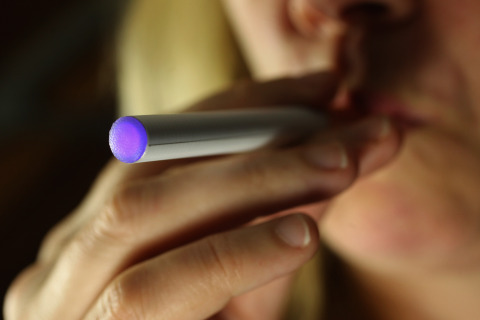
E-cigarettes as good as nicotine patches in helping smokers quit

September 8, 2013

E-cigarettesLondon, Sep 8: Smokers who switch to electronic cigarettes to try to kick their habit are at least as likely to succeed in quitting or cutting down as users of nicotine patches, according to research published on Sunday.

In a first-of-its-kind study, researchers compared electronic, or e-cigarettes, with the more standard nicotine replacement therapy patches.

They found levels of success were comparable, with e-cigarettes - whose effects are a subject of intense debate among health experts - more likely to help smokers who fail to quit cut the amount of tobacco they use.

Some experts fear e-cigarettes may be a "gateway" to nicotine addiction and tobacco smoking, while others view them as the most useful method yet of cutting back and helping would-be quitters.

While the argument rumbles on, smoking continues to kill half of all those who indulge in it.

Tobacco is responsible for 6 million deaths a year and the World Health Organisation estimate that number could rise beyond 8 million by 2030.

As well as causing lung cancer and other chronic respiratory conditions, smoking is also a major contributor to cardiovascular diseases, the world's number-one killer.

'USEFUL WEAPON'

The study, published in The Lancet medical journal and presented at a conference in Spain, was the first to assess whether e-cigarettes are more or less effective than nicotine patches - already recognised as useful in helping people quit.

"While our results don't show any clear-cut differences... in terms of quit success after six months, it certainly seems that e-cigarettes were more effective in helping smokers who didn't quit to cut down," said Chris Bullen of New Zealand's University of Auckland, who led the study.

"It's also interesting that the people who took part in our study seemed to be much more enthusiastic about e-cigarettes than patches, as evidenced by the far greater proportion of people... who said they'd recommend them to family or friends."

Comments

Add new comment

  • Coastaldigest.com reserves the right to delete or block any comments.
  • Coastaldigset.com is not responsible for its readers’ comments.
  • Comments that are abusive, incendiary or irrelevant are strictly prohibited.
  • Please use a genuine email ID and provide your name to avoid reject.
News Network
February 26,2020

New York, Feb 26:  A new wearable sensor that works in conjunction with artificial intelligence (AI) technology could help doctors remotely detect critical changes in heart failure patients days before a health crisis occurs, says a study.

The researchers said the system could eventually help avert up to one in three heart failure readmissions in the weeks following initial discharge from the hospital and help patients sustain a better quality of life.

"This study shows that we can accurately predict the likelihood of hospitalisation for heart failure deterioration well before doctors and patients know that something is wrong," says the study's lead author Josef Stehlik from University of Utah in the US.

"Being able to readily detect changes in the heart sufficiently early will allow physicians to initiate prompt interventions that could prevent rehospitalisation and stave off worsening heart failure," Stehlik added.

According to the researchers, even if patients survive, they have poor functional capacity, poor exercise tolerance and low quality of life after hospitalisations.

"This patch, this new diagnostic tool, could potentially help us prevent hospitalizations and decline in patient status," Stehlik said.

For the findings, published in the journal Circulation: Heart Failure, the researchers followed 100 heart failure patients, average age 68, who were diagnosed and treated at four veterans administration (VA) hospitals in Utah, Texas, California, and Florida.

After discharge, participants wore an adhesive sensor patch on their chests 24 hours a day for up to three months.

The sensor monitored continuous electrocardiogram (ECG) and motion of each subject.

This information was transmitted from the sensor via Bluetooth to a smartphone and then passed on to an analytics platform, developed by PhysIQ, on a secure server, which derived heart rate, heart rhythm, respiratory rate, walking, sleep, body posture and other normal activities.

Using artificial intelligence, the analytics established a normal baseline for each patient. When the data deviated from normal, the platform generated an indication that the patient's heart failure was getting worse.

Overall, the system accurately predicted the impending need for hospitalization more than 80 per cent of the time.

On average, this prediction occurred 10.4 days before a readmission took place (median 6.5 days), the study said.

Comments

Add new comment

  • Coastaldigest.com reserves the right to delete or block any comments.
  • Coastaldigset.com is not responsible for its readers’ comments.
  • Comments that are abusive, incendiary or irrelevant are strictly prohibited.
  • Please use a genuine email ID and provide your name to avoid reject.
Agencies
February 10,2020

Washington D.C, Feb 10: Children's vulnerability towards depression, anxiety, impulsive behaviour, and poor cognitive performance could be determined by considering the hours of sleep they manage to get.

Sleep states are active processes that support the reorganisation of brain circuitry. This makes sleep especially important for children, whose brains are developing and reorganising rapidly.

In a study by researchers from the University of Warwick -- recently published in the journal Molecular Psychiatry -- cases of 11,000 children aged between 9 and 11 years from the Adolescent Brain Cognitive Development dataset were analyzed to find out the relationship between sleep duration and brain structure.

The study was carried out by researchers Professor Jianfeng Feng, Professor Edmund Rolls, Dr. Wei Cheng and colleagues from the University of Warwick's Department of Computer Science and Fudan University.

Measures of depression, anxiety, impulsive behaviour and poor cognitive performance in the children were associated with shorter sleep duration. Moreover, the depressive problems were associated with short sleep duration one year later.

The reduced brain volume of areas such as orbitofrontal cortex, prefrontal, and temporal cortex, precuneus, and supramarginal gyrus was found to be associated with the shorter sleep duration.

Professor Jianfeng Feng, from the University of Warwick's Department of Computer Science, comments: "The recommended amount of sleep for children 6 to 12 years of age is 9-12 hours. However, sleep disturbances are common among children and adolescents around the world due to the increasing demand on their time from school, increased screen time use, and sports and social activities."

A previous study showed that about 60 per cent of adolescents in the United States receive less than eight hours of sleep on school nights.

Professor Jianfeng Feng further added: "Our findings showed that the total score for behavior problems in children with less than 7 hours sleep was 53 per cent higher on average and the cognitive total score was 7.8 per cent lower on average than for children with 9-11 hours of sleep. It highlights the importance of enough sleep in both cognition and mental health in children."

Professor Edmund Rolls from the University of Warwick's Department of Computer Science also commented: "These are important associations that have been identified between sleep duration in children, brain structure, and cognitive and mental health measures, but further research is needed to discover the underlying reasons for these relationships."

Comments

Add new comment

  • Coastaldigest.com reserves the right to delete or block any comments.
  • Coastaldigset.com is not responsible for its readers’ comments.
  • Comments that are abusive, incendiary or irrelevant are strictly prohibited.
  • Please use a genuine email ID and provide your name to avoid reject.
News Network
February 22,2020

Feb 22: The subjective feeling of well-being experienced by many people with the practice of meditation is associated with specific changes in the brain, according to a study which may lead to better clinical recommendations of the practice.

The study, published in the journal Brain and Cognition, examined the effects of the technique known as Transcendental Meditation (TM), which consists of the silent repetition of a meaningless sound.

In the study, the researchers from the IMT School for Advanced Studies Lucca in Italy, enrolled 34 healthy young volunteers and divided them in two groups.

They said the first group practised TM 40 minutes per day in two sessions of 20 minutes each, one in the morning and the other in the evening.

The second group, the scientists said, did not change its daily routine.

Using questionnaires, they also measured the anxiety and stress levels of all the participants at the beginning of the study, as well as the subjects' ability to manage stressful situations.

According to the researchers, the participants were also subjected to a functional magnetic resonance imaging (fMRI) brain scan, in order to measure the organ's activity at rest, and changes in the excitation among different cerebral areas.

They repeated the tests after three months, at the end of the study.

According to the study, the levels of anxiety and stress perceived by the subjects who followed the meditation program were significantly reduced in comparison with those of the volunteers who did not practice TM.

"Magnetic resonance imaging also shows that the reduction of anxiety levels is associated with specific changes in the connectivity between different cerebral areas, such as precuneus, left parietal lobe and insula, which all have an important role in the modulation of emotions and inner states," said study co-author Giulia Avvenuti from the IMT School for Advanced Studies Lucca.

"In the control group, instead, none of these changes was observed. The fact that Transcendental Meditation has measurable effects on the 'dialogue' between brain structures involved in the modulation of affective states opens new perspectives for the understanding of brain-mind relationships," said Pietro Pietrini, IMT School's Director, and co-author of the study.

"It also extends the results of recent research suggesting that drugs therapies and psychotherapy leverage on the same biological mechanism," Pietrini said.

According to the researchers, even a few months of practice of TM can have positive effects which can be correlated with measurable changes in the brain.

Comments

Add new comment

  • Coastaldigest.com reserves the right to delete or block any comments.
  • Coastaldigset.com is not responsible for its readers’ comments.
  • Comments that are abusive, incendiary or irrelevant are strictly prohibited.
  • Please use a genuine email ID and provide your name to avoid reject.