


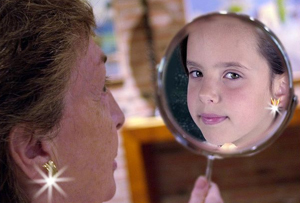
Better to act young than to look young

[email protected] (New York Times )
October 7, 2013

Young_than_to_look_youngJane E Brody, Oct 7: At a party I recently attended, a woman in her 60s proudly announced that her periodic facial treatments “have made me look 10 years younger.” A man of similar vintage said he was considering “facial tucks” to raise his sagging jowls.

Some days it seems everyone I meet is afraid of getting old - or at least of looking as old as they are. Occasionally, I see women who have had so many face lifts that they can barely move their lips when they talk, let alone smile.

Business is booming in the anti-aging market. Plastic surgeons who specialise in lifts, tucks and fillers barely noticed the recent recession. Cosmetics with anti-ageing properties fly off the shelf, and new concoctions appear almost weekly.

I admit to supporting the multi-billion dollar skin care industry with my long use of night creams, as well as a slew of daytime lotions that purport to “smooth out” aging skin while protecting it with sunscreen. I also colour my hair, which in its natural state is now about 80 per cent gray.

But I draw the line at injectable fillers and muscle relaxants, face lifts and tummy tucks. I’ll do everything I can to stay out of an operating room. My anti-aging measures, if and when they are needed, will be limited to cataract removal, a hearing aid and glasses for driving.

I wear clothes that suit my personality and activities, not necessarily my age. Shorts and tank tops anchor my summer wardrobe. And I wear colours near my face that are right for my skin tone, avoiding those (like yellow) that are unflattering. Still, cosmetic fixes go only so far to counter the effects of time.

True youthfulness - or, I should say, appearing younger than your age - is much more than skin-deep. Research has shown that youthfulness must come from within.

In one study, a team at Case Western Reserve University in Cleveland analyzed the facial photographs of 186 pairs of identical twins, determining which sibling looked older and why. Factors that contributed to looking older included smoking, sun exposure, stress and depression (or the use of antidepressants), the researchers reported. Other studies have linked depression to higher levels of inflammatory markers and oxidative stress, which can accelerate aging.

The team also found that among those younger than 40, a woman with a heavier body looked older than her leaner twin, but in subjects older than 40, a higher body mass index was associated with a more youthful appearance. Fat fills out wrinkles and makes the face - and presumably other parts of the body - look younger. But there’s a limit to its benefits: obesity is associated with more rapid biological aging.

Another study published last year by researchers at Brigham and Women’s Hospital in Boston found a biological link between stress and accelerated aging. Dr. Olivia I. Okereke and colleagues examined the chromosomes of 5,243 women ages 42 to 69 participating in the Nurses’ Health Study. They found that women with phobic anxiety - irrational fears of anything from social situations to spiders - had shorter telomeres on their chromosomes.

Telomeres are DNA-protein complexes on the ends of chromosomes that are considered biological markers of aging. Shortened telomeres are thought to underlie many of the adverse health effects of aging, and perhaps even to contribute to looking older than one’s years.

Lifestyle changes

A pilot study published online by The Lancet Oncology last month underscored the benefits of limiting stress. Dr. Dean Ornish and colleagues at the Preventive Medicine Research Institute and the University of California, San Francisco, tested the effects of lifestyle changes on the length of telomeres.

Ten men were asked to make changes that included adopting a whole-foods plant-based diet, moderate exercise, stress management techniques (like yoga and meditation), and seeking greater intimacy and social support. After five years, changes in the length of their telomeres were compared with those among 25 men who were not asked to make such changes.

In the men who made lifestyle changes, telomere length increased by an average of 10 per cent; the more changes the men made, the greater the increase in length. But telomere length decreased in the control group by an average of 3 per cent.

Still, youthfulness is not just a question of biology. People are perceived to be younger than their years if they smile and laugh a lot (be proud of those laugh lines!) and are generally cheerful and upbeat, the kind of people who smile at strangers and wish them a good day.

I occasionally pass an older couple who walk together three times a week. With their dour expressions and grudging acknowledgment of my “good morning,” I thought they were in their mid-90s. So one day I asked, only to learn that she was 80 and he was 83.

It also helps to pursue personal and professional activities you enjoy as you get older. My role models include the actress Estelle Parsons, who continues to perform on stage (and can do yoga headstands) at 85, and Dame Judi Dench, 78, who stars in movies despite having to learn her lines orally because macular degeneration has caused her vision to deteriorate.

My dear friend Margaret Shryer, 86, starred in a documentary about age discrimination and performed a one-woman show she wrote at a theater festival in Minneapolis this summer. Another friend, the award-winning broadcaster Lucy Jarvis, cane in hand at 96, still travels abroad to make television documentaries.

To my mind, it is far better to act young than to look young. Of course, it helps to be physically fit.

Too often, those who spend liberally to counter the superficial signs of age neglect their bodies below the neck and become physically old before their time. Muscle tissue inevitably declines with age, but much can be done to minimize and even reverse a loss of strength.

Try using free weights or resistance machines. If these don’t appeal, lift cans of soup (better for lifting than consuming) and continue to do chores that require strength, like digging in the garden or carrying groceries.

Comments

Add new comment

  • Coastaldigest.com reserves the right to delete or block any comments.
  • Coastaldigset.com is not responsible for its readers’ comments.
  • Comments that are abusive, incendiary or irrelevant are strictly prohibited.
  • Please use a genuine email ID and provide your name to avoid reject.
Agencies
February 11,2020

Using smartphone for long hours every day may do you more harm than you can probably think of. Researchers have found that spending a lot of time with the device and on social media may lead to mental distress and suicidality among adolescents.

The findings, published in the journal CMAJ (Canadian Medical Association Journal) contains guidance for physicians, parents and teachers on how to help teenagers manage smartphone and social media use for a healthy balance between sleep, academic work, social activity, interpersonal relationships and online activity.

"Physicians, teachers and families need to work together with youth to decrease possible harmful effects of smartphones and social media on their relationships, sense of self, sleep, academic performance, and emotional well-being," said lead author of the study Elia Abi-Jaoude from Toronto Western Hospital in Canada.

This review of evidence, led by the Hospital for Sick Children (SickKids), focuses on smartphone use and does not consider online gaming.

"For adolescents today, who have not known a world without social media, digital interactions are the norm, and the potential benefits of online access to productive mental health information -- including media literacy, creativity, self-expression, sense of belonging and civic engagement -- as well as low barriers to resources such as crisis lines and Internet-based talking therapies cannot be discounted," the authors wrote.

The researchers recommend that doctors should ask teenagers to reduce social media use rather than eradicate it completely and encourage parents to be part of the conversations.

Parents should discuss appropriate smartphone use with teenagers to determine together how to reduce risks and set boundaries.

A recent poll from the US indicates that 54 per cent of teenagers think they spend too much time on their smartphones and about half said they were cutting back on usage.

"Encouragingly, youth are increasingly recognising the negative impact of social media on their lives and starting to take steps to mitigate it," the authors wrote.

Comments

Add new comment

  • Coastaldigest.com reserves the right to delete or block any comments.
  • Coastaldigset.com is not responsible for its readers’ comments.
  • Comments that are abusive, incendiary or irrelevant are strictly prohibited.
  • Please use a genuine email ID and provide your name to avoid reject.
Agencies
March 15,2020

Should you let your babies "cry it out" or rush to their side? Researchers have found that leaving an infant to 'cry it out' from birth up to 18 months does not adversely affect their behaviour development or attachment.

The study, published in the Journal of Child Psychology and Psychiatry, found that an infant's development and attachment to their parents is not affected by being left to "cry it out" and can actually decrease the amount of crying and duration.

"Only two previous studies nearly 50 or 20 years ago had investigated whether letting babies 'cry it out' affects babies' development. Our study documents contemporary parenting in the UK and the different approaches to crying used," said the study's researcher Ayten Bilgin from the University of Warwick in the UK.

For the study, the researchers followed 178 infants and their mums over 18 months and repeatedly assessed whether parents intervened immediately when a baby cried or let the baby let it cry out a few times or often.

They found that it made little difference to the baby’s development by 18 months.

The use of parent’s leaving their baby to ‘cry it out’ was assessed via maternal report at term, 3, 6 and 18 months and cry duration at term, 3 and 18 months.

Duration and frequency of fussing and crying was assessed at the same ages with the Crying Pattern Questionnaire.

According to the researchers, how sensitive the mother is in interaction with their baby was video-recorded and rated at 3 and 18 months of age.

Attachment was assessed at 18 months using a gold standard experimental procedure, the strange situation test, which assesses how securely an infant is attached to the major caregiver during separation and reunion episodes.

Behavioural development was assessed by direct observation in play with the mother and during assessment by a psychologist and a parent-report questionnaire at 18 months.

Researchers found that whether contemporary parents respond immediately or leave their infant to cry it out a few times to often makes no difference on the short - or longer term relationship with the mother or the infants behaviour.

This study shows that 2/3 of mum's parent intuitively and learn from their infant, meaning they intervene when they were just born immediately, but as they get older the mother waits a bit to see whether the baby can calm themselves, so babies learn self-regulation.

Comments

Add new comment

  • Coastaldigest.com reserves the right to delete or block any comments.
  • Coastaldigset.com is not responsible for its readers’ comments.
  • Comments that are abusive, incendiary or irrelevant are strictly prohibited.
  • Please use a genuine email ID and provide your name to avoid reject.
Agencies
January 25,2020

Washington D.C., Jan 25: A new study conducted by a team of researchers reveals why individuals who have a history of early life adversity (ELA) are disproportionately prone to opioid addiction.

The study conducted examined how early adversities interact with factors such as increased access to opioids to directly influence brain development and function, causing a higher potential for opioid addiction.

The study was lead by UCI researchers and was published in Molecular Psychiatry.

Tallie Z. Baram, MD, PhD, the Danette Shepard Chair in Neurological Sciences at the UCI School of Medicine and one of the senior researchers for the study, was on the take that the widely known factor genetics that plays major role in addiction vulnerability, cannot be solely held responsible for the recent rise in opioid abuse.

To further clarify, the researchers simulated ELA in rats by limiting bedding and nesting materials during a short, postnatal period of time.

In female rats, this led to striking opioid addiction-like characteristics including an increased relapse- behaviour, for example.

As observed in addicted humans, the rats were willing to work very hard (pay a very high price) to obtain the drug.

Baram said: "Ultimately, we found that conditions during sensitive developmental periods can lead to vulnerability to the addictive effects of opioid drugs, especially in females, which is consistent with the prevalence of ELA in heroin-addicted women."

These findings can be used to highlight the importance given to sex differences in future ELA-related studies on opioid addiction, and in future prevention or intervention strategies being developed to address the growing opioid crisis.

The study conducted examined how early adversities interact with factors such as increased access to opioids to directly influence brain development and function, causing a higher potential for opioid addiction.

The study was lead by UCI researchers and was published in Molecular Psychiatry.

The study found that unpredictable, fragmented early life environments may lead to abnormal maturation of certain brain circuits, which profoundly impacts brain function and persists into adolescence and adulthood.

Tallie Z. Baram, MD, PhD, the Danette Shepard Chair in Neurological Sciences at the UCI School of Medicine and one of the senior researchers for the study, was on the take that the widely known factor genetics that plays major role in addiction vulnerability, cannot be solely held responsible for the recent rise in opioid abuse.

To further clarify, the researchers implanted ELA in rats by limiting bedding and nesting materials during a short, postnatal period of time.

In female rats, this led to striking opioid addiction-like characteristics including an increased relapse- behaviour, for example.

As observed in addicted humans, the rats were willing to work very hard (pay a very high price) to obtain the drug.

Baram said: "Ultimately, we found that conditions during sensitive developmental periods can lead to vulnerability to the addictive effects of opioid drugs, especially in females, which is consistent with the prevalence of ELA in heroin-addicted women."

These findings can be used to highlight the importance given to sex differences in future ELA-related studies on opioid addiction, and in future prevention or intervention strategies being developed to address the growing opioid crisis.

Comments

Add new comment

  • Coastaldigest.com reserves the right to delete or block any comments.
  • Coastaldigset.com is not responsible for its readers’ comments.
  • Comments that are abusive, incendiary or irrelevant are strictly prohibited.
  • Please use a genuine email ID and provide your name to avoid reject.