


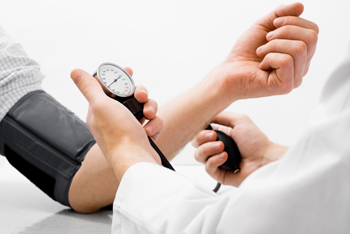
High Blood Pressure in Young Adults Could Mean Heart Trouble in Middle Age

February 5, 2014

High_Blood_PressureFeb 5: Twenty-somethings with even mildly elevated blood pressure may face an increased risk of clogged heart arteries by middle age, a long-term U.S. study finds.

The study, which tracked nearly 4,700 people, found that even "pre-hypertension" in young adulthood was linked to a higher risk of calcium buildup in the heart arteries 25 years later.

Experts said the findings send a message to young adults: Know your blood pressure numbers and, if needed, change your lifestyle to get them in the normal range.

"What you do as a young adult matters," said lead researcher Norrina Allen, an assistant professor of preventive medicine at Northwestern University Feinberg School of Medicine, in Chicago. "We shouldn't wait until middle-age to address blood pressure."

That same message goes for doctors, too, Allen added. "Many doctors might not think a small elevation in blood pressure (in a young adult) even warrants a discussion," she said.

The new study appears in the Feb. 5 issue of the Journal of the American Medical Association.

The good news, Allen noted, is that lifestyle changes can "absolutely" be enough for a healthy young person with moderately elevated blood pressure.

An expert not involved in the study agreed. "Lifestyle changes do work. Even within the span of a few months, blood pressure can dramatically improve," said Dr. George Bakris, a professor of medicine at University of Chicago Medicine who wrote an editorial published with the study.

Diet changes, such as cutting out salty processed foods and getting more fruits and vegetables, are key. So is moderate exercise, like walking, study author Allen said. And if you're overweight, even cutting a few pounds can help lower blood pressure.

Bakris pointed to some steps that are less well known: Watch your drinking, since alcohol can raise blood pressure; and get enough sleep.

"It's important to get at least six hours of uninterrupted sleep each night," Bakris said. "Ideally, you'd get six to eight hours."

In the United States, about one-third of adults have high blood pressure, which is defined as a systolic pressure (the top number) of 140 or higher, or a diastolic pressure (the bottom number) of 90 or higher, according to the U.S. Centers for Disease Control and Prevention. "Normal" blood pressure is anything below 120/80, while numbers that fall in between "normal" and "high" are considered "pre-hypertension."

The new findings are based on 4,681 people from four U.S. cities who were between the ages of 18 and 30 when they entered the study in the mid-1980s. Over the next couple of decades, they had their blood pressure taken periodically. At year 25, they underwent CT scans to look for calcium buildup in the arteries -- which is considered an early sign of heart disease.

Overall, Allen's team found that study participants had five general "trajectories" in blood pressure over time.

Five percent had slightly elevated blood pressure at their first measurement, which then kept increasing over the years. That group had the worst-looking arteries 25 years later: One-quarter had calcium "scores" above 100, which is linked to a higher-than-normal risk of suffering a heart attack in the next several years.

In contrast, among people who had normal blood pressure throughout the study, only 4 percent had calcium scores that high.

But it wasn't only the young people with ever-increasing blood pressure who showed artery trouble later on.

Another 19 percent had blood pressure that was slightly elevated in young adulthood, but stable thereafter -- hovering in the pre-hypertension range over the years. In that group, 17 percent ended up with a calcium score above 100.

Of course, young people with elevated blood pressure might have other health issues, too. But even when Allen's team took into account for other factors -- like smoking, weight and current blood pressure -- a person's lifetime blood-pressure pattern was still important.

According to Bakris, it all suggests that elevated blood pressure, left unchecked, can start taking a toll on the arteries early in life. "If you wait until your 40s or 50s to address it, the damage to the arteries may already be done," he said.

He suggested that most healthy young people have their blood pressure checked every couple of years. But if they have a strong family history of high blood pressure -- such as two parents who developed the condition at a fairly young age -- more-frequent blood pressure checks would be in order, Bakris said.


Comments

Add new comment

  • Coastaldigest.com reserves the right to delete or block any comments.
  • Coastaldigset.com is not responsible for its readers’ comments.
  • Comments that are abusive, incendiary or irrelevant are strictly prohibited.
  • Please use a genuine email ID and provide your name to avoid reject.
Agencies
February 6,2020

Researchers have found the rates of lung cancer are higher in young women than men.

The study, published in the journal Pediatrics, examined lung cancer rates in young adults in 40 countries across five continents and uncovered a trend of higher lung cancer rates in women compared with men in recent years.

The emerging trend was widespread, affecting countries across varied geographic locations and income levels.

The changes appeared to be driven by a rising rate of adenocarcinoma lung cancer among women, said the study researchers from University of Calgary in Canada.

Lung cancer rates have been higher among men than women because men started smoking in large numbers earlier and smoked at higher rates; however, recent studies have reported converging lung cancer incidence rates between sexes.

Among men, age specific lung cancer incidence rates generally decreased in all countries, while in women the rates varied across countries with the trends in most countries stable or declining, albeit at a slower pace compared to those in men.

For the findings, lung and bronchial cancer cases between 30-64 age group from 1993-2012 were extracted from cancer incidence in five continents.

The study found the higher emerging rates of lung cancer in young women compared to young men.

According to the researchers, future studies are needed to identify reasons for the elevated incidence of lung cancer among young women.

Comments

Add new comment

  • Coastaldigest.com reserves the right to delete or block any comments.
  • Coastaldigset.com is not responsible for its readers’ comments.
  • Comments that are abusive, incendiary or irrelevant are strictly prohibited.
  • Please use a genuine email ID and provide your name to avoid reject.
News Network
February 4,2020

Boston, Feb 4: Practising yoga may increase levels of a messenger molecule involved in regulating brain activity, and completing one yoga class per week may maintain elevated levels of this chemical, according to a study which may lead to better ways of mitigating depressive symptoms.

The study, published in the Journal of Alternative and Complementary Medicine, assessed a group of 30 clinically depressed patients who were randomly divided into two groups.

According to the researchers, including those from Boston University in the US, both groups engaged in coherent breathing, and Iyengar yoga -- a form of hatha yoga, developed by B. K. S. Iyengar, emphasising on detail, precision, and alignment in the performance of yoga postures.

The only difference between the groups, the scientists said, was the number of 90 minute yoga sessions, and home sessions in which each group participated.

Over three months, they said, the high-dose group (HDG) was assigned three sessions per week, while the low-intensity group (LIG) engaged in two sessions per week.

The participants underwent magnetic resonance imaging (MRI) scans of their brain before the first and after the last yoga session, and also completed a clinical depression scale to monitor their symptoms, the study noted.

Results of the study revealed that both groups had improvement in depressive symptoms after three months.

Their MRI analysis showed that levels of the brain messenger molecule GABA were elevated after three months of yoga, as compared to the levels before starting yoga.

According to the study, this increase was found for approximately four days after the last yoga session, but the rise was no longer observed after about eight days.

"The study suggests that the associated increase in GABA levels after a yoga session are 'time-limited' similar to that of pharmacologic treatments such that completing one session of yoga per week may maintain elevated levels of GABA," explained study co-author Chris Streeter from Boston University.

Providing evidence-based data may help in getting more individuals to try yoga as a strategy for improving their health and well-being, the scientists said.

"A unique strength of this study is that pairing the yoga intervention with brain imaging provides important neurobiological insight as to the 'how' yoga may help to alleviate depression and anxiety," said study co-author Marisa Silveri from Harvard University.

In this study, we found that an important neurochemical, GABA, which is related to mood, anxiety, and sleep, is significantly increased in association with a yoga intervention," Silveri said.

Comments

Add new comment

  • Coastaldigest.com reserves the right to delete or block any comments.
  • Coastaldigset.com is not responsible for its readers’ comments.
  • Comments that are abusive, incendiary or irrelevant are strictly prohibited.
  • Please use a genuine email ID and provide your name to avoid reject.
Agencies
August 2,2020

Washington, Aug 2: Children under the age of five have between 10 to 100 times greater levels of genetic material of the coronavirus in their noses compared to older children and adults, a study in JAMA Pediatrics said Thursday.

Its authors wrote this meant that young children might be important drivers of Covid-19 transmission within communities -- a suggestion at odds with the current prevailing narrative.

The paper comes as the administration of US President Donald Trump is pushing hard for schools and daycare to reopen in order to kickstart the economy.

Between March 23 and April 27, researchers carried out nasal swab tests on 145 Chicago patients with mild to moderate illness within one week of symptom onset.

The patients were divided into three groups: 46 children younger than five-years-old, 51 children aged five to 17 years, and 48 adults aged 18 to 65 years.

The team, led by Dr Taylor Heald-Sargent of the Ann & Robert H. Lurie Children's Hospital, observed, "a 10-fold to 100-fold greater amount of SARS-CoV-2 in the upper respiratory tract of young children."

15 countries with the highest number of cases, deaths due to the Covid-19 pandemic

The authors added that a recent lab study had demonstrated that the more viral genetic material was present, the more infectious virus could be grown.

It has also previously been shown that children with high viral loads of the respiratory syncytial virus (RSV) are more likely to spread the disease.

"Thus, young children can potentially be important drivers of SARS-CoV-2 spread in the general population," the authors wrote.

"Behavioral habits of young children and close quarters in school and daycare settings raise concern for SARS-CoV-2 amplification in this population as public health restrictions are eased," they concluded.

The new findings are at odds with the current view among health authorities that young children -- who, it has been well established, are far less likely to fall seriously ill from the virus -- don't spread it much to others either.

However, there has been fairly little research on the topic so far.

One recent study in South Korea found children aged 10 to 19 transmitted Covid-19 within households as much as adults, but children under nine transmitted the virus at lower rates.

Comments

Add new comment

  • Coastaldigest.com reserves the right to delete or block any comments.
  • Coastaldigset.com is not responsible for its readers’ comments.
  • Comments that are abusive, incendiary or irrelevant are strictly prohibited.
  • Please use a genuine email ID and provide your name to avoid reject.