



House panel summons defence chiefs

April 10, 2012

New Delhi, April 10: The three defence service chiefs have been summoned by the Parliamentary Standing Committee on Defence, which asked them to appear before it and apprise on the level of the armed forces’ preparedness in case of an enemy attack.

The three chiefs may appear before the panel on April 20, though the date may be changed to ensure their presence.

The committee took this unprecedented step after Army Chief Gen V K Singh's letter to Prime Minister Manmohan Singh, depicting the sorry state of affairs in the Army, found its way to the media.
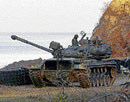
tank

New Delhi, April 10: The House panel on Monday took the decision of calling the chiefs after it heard Defence Secretary Shashi Kant Sharma, who clarified the government's stand on a newspaper report on the movement of two Army units towards the national capital on the same day when Gen Singh moved the Supreme Court challenging the government's stand on his date of birth controversy.

The Army does not need the government's permission to move units, Sharma reportedly informed the committee headed by Congress member Satpal Maharaj. The defence secretary said that the inference drawn in the report – an attempt to stage a coup or muscle flexing by the Army – was completely wrong. Sharma underlined that no standard operating procedures were violated by the Army.

The media report was “misleading” and drew “wrong inferences,” she added. While a some MPs wanted more details, many wanted a closure of the controversy as it dealt with the Army.

Quizzed by the Parliamentarians on the involvement of retired officers in arms deals, Sharma suggested a moratorium of five years for service officers before they were allowed to take up a job in the private sector, BJP MP Uday Singh, who attended the meeting, told Deccan Herald. The MPs wondered why the Defence ministry lowered the cool-off period for service officers from two years previously to one year, which is in vogue at the moment. The Army Chief claimed recently that a retired Lt Gen offered him a bribe of Rs 14 crore to clear a tranche of sub-standard vehicles.

Besides the defence secretary, the House panel also heard Vice-Chief of the Army Lt Gen S K Singh and officials from the Indian Air Force, Defence Research and Development Organisation and Bharat Earth Movers Ltd, to understand the status of preparedness of the armed forces as the committee was discussing the budgetary proposals for defence. Last month the Centre increased the military budget by 17.63 per cent aiming to improve border infrastructure, purchase new equipment and raise new forces. The rise is possibly the highest since Kargil conflicts.

Munition shortage

Deposing before the panel, the Army vice-chief said the force was facing a shortage of certain anti-tank munitions - an issue flagged by the Army chief in his letter. Though there were reports that tank ammunition might be exhausted in 20 days due to poor reserve rather than the buffer period of 40 days, there was no official confirmation on the extent of shortage.

Following the vice-chief's deposition, the committee decided to call all three service chiefs for an ‘interaction’ which may lead to a separate report on defence preparedness, a member said.

This is an extraordinary step as in the recent past, the three service chiefs have appeared before a House panel only once. In January, 2011, the Army and IAF chiefs and the Navy vice-chief appeared before the Public Accounts Committee when it was examining a CAG report on ration supply to soldiers. BEML chief V R S Natarajan informed the panel that the company dealt with the original manufacturer of Tatra trucks and not an agent. All standard processes were followed.

Comments

Add new comment

  • Coastaldigest.com reserves the right to delete or block any comments.
  • Coastaldigset.com is not responsible for its readers’ comments.
  • Comments that are abusive, incendiary or irrelevant are strictly prohibited.
  • Please use a genuine email ID and provide your name to avoid reject.
Agencies
June 6,2020

United Nations, Jun 6: The coronavirus disease has not "exploded" in India, but the risk of that happening remains as the country moves towards unlocking its nationwide lockdown that was imposed in March to contain the Covid-19, according to a top WHO expert.

WHO Health Emergencies Programme Executive Director Michael Ryan on Friday said the doubling time of the coronavirus cases in India is about three weeks at this stage.

“So the direction of travel of the epidemic is not exponential but it is still growing,” he said, adding that the impact of the pandemic is different in different parts of India and varies between urban and rural settings.

“In South Asia, not just in India but in Bangladesh and...in Pakistan, other countries in South Asia, with large dense populations, the disease has not exploded. But there is always the risk of that happening,” Ryan said in Geneva.

He stressed that as the disease generates and creates a foothold in communities, it can accelerate at any time as has been seen in a number of settings.

Ryan noted that measures taken in India such as the nationwide lockdown have had an impact in slowing transmission but the risk of an increase in cases looms as the country opens up.

“The measures taken in India certainly had an impact in dampening transmission and as India, as in other large countries, open up and as people begin to move again, there's always a risk of the disease bouncing back up,” he said.

He added that there are specific issues in India regarding the large amount of migration, the dense populations in the urban environment and the fact that many workers have no choice but to go to work every day.

India went past Italy to become the sixth worst-hit nation by the COVID-19 pandemic.

India saw a record single-day jump of 9,887 coronavirus cases and 294 deaths on Saturday, pushing the nationwide infection tally to 2,36,657 and the death toll to 6,642, according to the health ministry.

The lockdown in India, was first clamped on March 25 and spanned for 21 days, while the second phase of the curbs began on April 15 and stretched for 19 days till May 3. The third phase of the lockdown was in effect for 14 days and ended on May 17. The fourth phase ended on May 31.

The country had registered 512 coronavirus infection cases till March 24.

The nation-wide lockdown in containment zones will continue till June 30 in India but extensive relaxations in a phased manner from June 8 are listed in the Union home ministry's fresh guidelines on tackling the Covid-19 pandemic issued last week.

WHO Chief Scientist Soumya Swaminathan said the over 200,000 current coronavirus cases in India, a country of over 1.3 billion people, "look big but for a country of this size, it's still modest.”

She stressed that it is important for India to keep track of the growth rate, the doubling time of the virus and to make sure that that number doesn't get worse.

She said that India is a “heterogeneous and huge country” with very densely populated cities and much lower density in some rural areas and varying health systems in different states and these offer challenges to the control of Covid-19.

Swaminathan added that as the lockdown and restrictions are lifted, it must be ensured that all precautions are taken by people.

“We've been making this point repeatedly that really if you want behaviour change at a large level, people need to understand the rationale for asking them to do certain things (such as) wearing masks,” she said.

In many urban areas in India, it's impossible to maintain physical distancing, she said adding that it then becomes very important for people to wear appropriate face coverings when they are out, in office settings, in public transport and educational institutions.

“As some states are thinking about opening, every institution, organisation, industry and sector needs to think about what are the measures that need to be put in place before you can allow a functioning and it may never be back to normal.”

She said that in many professions working from home can be encouraged but in several jobs, people have to go to work and in such cases measures must be put in place that allow people to protect themselves and others.

“I think communication and behaviour change is a very large part of this whole exercise,” she added.

Comments

Add new comment

  • Coastaldigest.com reserves the right to delete or block any comments.
  • Coastaldigset.com is not responsible for its readers’ comments.
  • Comments that are abusive, incendiary or irrelevant are strictly prohibited.
  • Please use a genuine email ID and provide your name to avoid reject.
News Network
January 27,2020

Kolkata, Jan 27: The West Bengal government on Monday tabled a resolution against the Citizenship (Amendment) Act in the Assembly.

The resolution appeals to the Union government to repeal the amended citizenship law and revoke plans to implement NRC and update NPR.

As per reports, state Parliamentary Affairs Minister Partha Chatterjee introduced the resolution in the House around 2 pm.

Three states - Kerala, Rajasthan and Punjab - have already passed resolutions against the new citizenship law.

The law has emerged as the latest flashpoint in the state, with the TMC opposing the contentious legislation tooth and nail, and the BJP pressing for its implementation.

The new citizenship law has emerged as the latest flashpoint in the state, with the TMC opposing the contentious legislation tooth and nail, and the BJP pressing for its implementation.

Comments

Add new comment

  • Coastaldigest.com reserves the right to delete or block any comments.
  • Coastaldigset.com is not responsible for its readers’ comments.
  • Comments that are abusive, incendiary or irrelevant are strictly prohibited.
  • Please use a genuine email ID and provide your name to avoid reject.
News Network
January 30,2020

Mumbai, Jan 30: The Uttar Pradesh Special Task Force (STF) has arrested Dr Kafeel Khan from Mumbai airport for allegedly making inflammatory statements at AMU during protests against the Citizenship Amendments Act (CAA) last month, officials said.

Khan was arrested on Wednesday night with assistance from Mumbai Police at the airport when he arrived in the city to attend anti-CAA protests, an official said.

"Officials of the UP STF arrested Dr Kafeel Khan in a case which was registered at Civil Lines Police Station under section 153 A (promoting enmity between different groups) of IPC. Our police team helped our UP counterparts on their request," said an official from Mumbai Police.

He claimed that Khan had made inflammatory statements on December 12 last year during the protest near Bab e Syed Gate outside the Aligarh Muslim University in front of more than 600 students.

The official also alleged that the Gorakhpur doctor had made objectionable comments against Union Home Minister Amit Shah.

The FIR against Khan mentions that Swaraj India's president Yogendra Yadav was also present during the speech at AMU.

Following the arrest in the case, Khan was taken to the Sahar Police Station and after completing formalities he will be taken to UP on transit remand, the official said.

Khan, a paediatrician, had come to the limelight in 2017 when a controversy broke out after the death of over 60 children in less than a week at the BRD Medical College in Gorakhpur, UP.

Comments

Add new comment

  • Coastaldigest.com reserves the right to delete or block any comments.
  • Coastaldigset.com is not responsible for its readers’ comments.
  • Comments that are abusive, incendiary or irrelevant are strictly prohibited.
  • Please use a genuine email ID and provide your name to avoid reject.