



How treating traveler's diarrhoea with antibiotic risks your health

April 1, 2017

Washington, Apr 1: Turns out, antibiotic use for travelers` diarrhoea favours particularly resistant super bacteria, increasing the patients` risk of getting an infection.
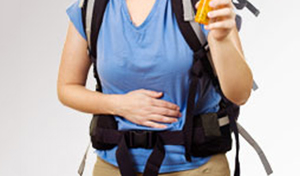
pelancongEvery year, millions of travellers visit countries with poor hygiene, and approximately one third of them return home carrying antibiotic-resistant ESBL intestinal bacteria. Most of them remain unaware of this, as the bacteria cause no symptoms.

High-risk areas for contracting ESBL bacteria are South and South-East Asia, Africa and Latin America.Diarrhoea is the most common health complaint for people who travel to poor regions of the world.

Those contracting diarrhoea have an increased risk of ESBL acquisition, and if they choose to they treat it with antibiotics, the risk becomes multiplied.

A Finnish study led by Anu Kantele and published two years ago showed that among people travelling to high-risk areas, those contracting diarrhoea and taking antibiotics, up to 80 percent brought ESBL super bacteria home with them.

A follow-up study led by Kantele has now established that antibiotics taken while abroad not only render the tourist susceptible to an ESBL infection, but also lead to the most resistant strains of these bacteria being selected.

"ESBL bacteria are resistant to penicillins and cephalosporins, which is why infections caused by them are treated with antibiotics from other groups, such as fluoroquinolones (e.g. ciprofloxacin).

When we analysed the patients with ESBL more closely, we found that among those who had not resorted to using antibiotics, 37 percent had an ESBL strain resistant to fluoroquinolone.

As for the travellers who had taken fluoroquinolone, 95 percent had a strain of ESBL resistant to fluoroquinolone and, indeed, a variety of other antibiotics. Antibiotic use thus implies selecting ESBL strains with the broadest spectrum of resistance," Kantele explained.Kantele noted, "The finding makes sense.

When we take an antibiotic, the bacteria that survive in our digestive system are those resistant to the treatment.

"Antibiotic resistance can be transferred between bacteria through a package containing a variety of resistance genes, meaning that one package may contain resistance to several types of antibiotics.

Indeed, most fluoroquinolone-resistant ESBL strains were also found resistant to certain other types of antibiotics the resistance to which is known to be transferred in the same gene packages that transfer ciprofloxacin resistance.

"In practice this means that travellers pick up the most resistant strains of ESBL, and we are left with dwindling treatment options for ESBL infections," stated Kantele.The study appears in Travel Medicine and Infectious Disease.

Comments

Add new comment

  • Coastaldigest.com reserves the right to delete or block any comments.
  • Coastaldigset.com is not responsible for its readers’ comments.
  • Comments that are abusive, incendiary or irrelevant are strictly prohibited.
  • Please use a genuine email ID and provide your name to avoid reject.
News Network
February 22,2020

Feb 22: The subjective feeling of well-being experienced by many people with the practice of meditation is associated with specific changes in the brain, according to a study which may lead to better clinical recommendations of the practice.

The study, published in the journal Brain and Cognition, examined the effects of the technique known as Transcendental Meditation (TM), which consists of the silent repetition of a meaningless sound.

In the study, the researchers from the IMT School for Advanced Studies Lucca in Italy, enrolled 34 healthy young volunteers and divided them in two groups.

They said the first group practised TM 40 minutes per day in two sessions of 20 minutes each, one in the morning and the other in the evening.

The second group, the scientists said, did not change its daily routine.

Using questionnaires, they also measured the anxiety and stress levels of all the participants at the beginning of the study, as well as the subjects' ability to manage stressful situations.

According to the researchers, the participants were also subjected to a functional magnetic resonance imaging (fMRI) brain scan, in order to measure the organ's activity at rest, and changes in the excitation among different cerebral areas.

They repeated the tests after three months, at the end of the study.

According to the study, the levels of anxiety and stress perceived by the subjects who followed the meditation program were significantly reduced in comparison with those of the volunteers who did not practice TM.

"Magnetic resonance imaging also shows that the reduction of anxiety levels is associated with specific changes in the connectivity between different cerebral areas, such as precuneus, left parietal lobe and insula, which all have an important role in the modulation of emotions and inner states," said study co-author Giulia Avvenuti from the IMT School for Advanced Studies Lucca.

"In the control group, instead, none of these changes was observed. The fact that Transcendental Meditation has measurable effects on the 'dialogue' between brain structures involved in the modulation of affective states opens new perspectives for the understanding of brain-mind relationships," said Pietro Pietrini, IMT School's Director, and co-author of the study.

"It also extends the results of recent research suggesting that drugs therapies and psychotherapy leverage on the same biological mechanism," Pietrini said.

According to the researchers, even a few months of practice of TM can have positive effects which can be correlated with measurable changes in the brain.

Comments

Add new comment

  • Coastaldigest.com reserves the right to delete or block any comments.
  • Coastaldigset.com is not responsible for its readers’ comments.
  • Comments that are abusive, incendiary or irrelevant are strictly prohibited.
  • Please use a genuine email ID and provide your name to avoid reject.
News Network
July 9,2020

Washington, Jul 9: Ayurvedic practitioners and researchers in India and the US are planning to initiate joint clinical trials for Ayurveda formulations against the novel coronavirus, the Indian envoy here has said.

In a virtual interaction with a group of eminent Indian-American scientists, academicians, and doctors on Wednesday, Indian Ambassador to the US Taranjit Singh Sandhu said the vast network of institutional engagements have brought scientific communities between the two countries together in the fight against Covid-19.

 “Our Institutions have also been collaborating to promote Ayurveda through joint research, teaching and training programs. Ayurvedic practitioners and researchers in both the countries are planning to initiate joint clinical trials of Ayurvedic formulations against Covid-19,” Sandhu said.

“Our scientists have been exchanging knowledge and research resources on this front,” he said.

The Indo-US Science Technology Forum (IUSSTF) has always been instrumental in promoting excellence in science, technology, and innovation through collaborative activities.

To address Covid-19-related challenges, the IUSSTF had given a call to support joint research and start-up engagements. A large number of proposals are being reviewed on fast track mode by the experts on both the sides, he said.

“Indian pharmaceutical companies are global leaders in producing affordable low-cost medicines and vaccines and will play an important role in the fight against this pandemic,” Sandhu said.

According to the ambassador, there are at least three ongoing collaborations between Indian vaccine companies with US-based institutions.

These collaborations would be beneficial not just to India and the US, but also for the billions who would need to be vaccinated against Covid-19 across the world, he noted.

Asserting that innovation will be the key driver in pandemic response and recovery, he said tech-companies and start-ups have already begun to take the lead in this direction.

"Telemedicine and telehealth will evolve as will other digital platforms across sectors," he said.

Noting that there has been a longstanding collaboration between India and the US in the health sector, he said scientists have been working together in several programs to understand important diseases at the basic and clinical level.

Many such programs have been focused on translational research to develop new therapeutics and diagnostics.

There are over 200 ongoing NIH funded projects in India involving 20 institutions from NIH network and several eminent institutions in India engaged in a wide spectrum of research areas to create health care solutions, the senior diplomat said.

The collaboration under Vaccine Action Program (VAP) resulted in the development of ROTAVAC vaccine against rotavirus which causes severe diarrhea in children.

The vaccine was developed by an Indian company (Bharat Biotech) at an affordable cost. It has been commercialised and introduced in the Expanded Program on Immunisation.

Development of many other vaccines such as TB, Influenza, Chikungunya are also in progress under the VAP, he said.

 “As I speak, the VAP meeting is in progress where experts from both countries are deeply engaged in technical discussions to expedite development of Covid-19 vaccine,” Sandhu said in his remarks.

During the interaction, the eminent experts appreciated India's handling of the Covid-19 pandemic and offered their valuable suggestions and best practices in this regard.

They shared their ideas on deepening the knowledge partnership between India and the US.

The experts who took part in the interaction, were drawn from wide-ranging fields including artificial intelligence, quantum information science, biomedical engineering, robotics, mechanical engineering, earth and ocean science, virology, physics, astrophysics, and health sciences.

Prominent among those who attended the virtual interaction were Subhash Kak Regents Professor at Oklahoma State University, Dr Vijay Kuchroo, Samuel L Wasserstrom Professor of Neurology at Harvard Medical School, Dr Ashish M Kamat, Professor of Urology at MD Anderson Cancer Center, Ashutosh Chilkoti, Alan L Kaganov Professor of Biomedical Engineering and Chair of the Department of Biomedical Engineering at Duke University; and Prof Manu Prakash, a professor in Department of Bioengineering at Sandford University, among others.

Comments

Add new comment

  • Coastaldigest.com reserves the right to delete or block any comments.
  • Coastaldigset.com is not responsible for its readers’ comments.
  • Comments that are abusive, incendiary or irrelevant are strictly prohibited.
  • Please use a genuine email ID and provide your name to avoid reject.
Agencies
April 21,2020

The Lockdown is not a cure but a critical strategy to prevent the geographical spread of COVID-19.

While pandemics at this level involves actual life threatening situations for individual's or significant others in one's immediate circle, it envisages a marked disruption in routine life. Even after the pandemic has been contained and will come to pass; it's aftermath will leave a trailblazer which demands planning and implementation of a post pandemic reconstruction of society with potentially traumatic experiences varying in intensity, multiplicity and duration.

Degree of Trauma

It would do well for each one of us to realise that the pandemic is "potentially traumatic", since not everyone will experience COVID -19 as a traumatic event in their lives. Yet, there will be those who may develop post pandemic stress reactions, depression and related dysfunction and pathological reactions while still other exhibit healthy reactions to the same set of circumstances.

"Psychological reactions to the pandemic can be distilled into four distinct prototypical patterns, namely, Resilience, Recovery, Chronic and Delayed patterns which may vary in intensity, multiplicity, and duration. Resilient individual have an ability to bounce back from adversity and experience modest or little disruption in normal functioning and are able to maintain a relatively stable, healthy levels of psychological functioning even after enduring the pandemic. Recovery pattern is characterised by relatively rapid reduction in symptoms and return to normal functioning whereas chronic pattern is characterised by symptoms and dysfunction of a long duration," says Pune-based military psychologist Lt Col Dr Samir Rawat.

Challenges at the Individual and Community Levels

From a psychological perspective, post pandemic reconstruction would entail catering to the problems, concerns and needs of those adversely impacted by the COVID -19 with stress symptoms typically characterised by individual's experiencing an overwhelming trauma of the pandemic (for example, recurring nightmares/ breaking into a cold sweat, flashback of stressful events, increasing irritability, low frustration tolerance or emotional numbing).

It could also manifest in depressive symptoms which may result in lack of interest or diminished pleasure in activities and things which you earlier liked to do, feelings of worthlessness or even survivor guilt in case of a loss of a loved one due to COVID-19, fleeting thoughts of death and suicidal ideation. Physical symptoms, on the other hand could be a decrease in appetite, weight and sleep problems, inability to focus and lack of concentration.

Undoubtedly, the pandemic will cause a financial loss of varying magnitude to many, especially the marginalised and economically disadvantaged strata of daily wage earners; it will also lead to loss of jobs (already beginning to show), homelessness, occupational difficulties and new challenges in interpersonal relations at work and on the home front, besides physical health problems and psychological barriers with new norms of accepted social behaviour (social distancing, handshakes, an obsession for cleanliness to name a few).

Emotional battles

Many factors may influence whether individuals come out stronger and more resilient or surrender to the pandemic. Emotion Regulation is one such long term critical factor that can play an important role in contributing to varying degrees of adaptation with negative or positive outcomes. While we know that primary emotions are fear, anger, disgust, joy, anticipation, acceptance, sadness and surprise, other basic emotions include wonder, love, desire, joy, hatred, sadness, attachment, disgust, rage and even expectancy .

To be able to regulate these emotions and avoid negativity , especially on social media platforms is likely to increase efforts in emotion regulation which involves initiating, increasing or maintaining an emotional response.

This means by regulating or on the other hand by stopping, decreasing or avoiding an emotional response, that is, by down-regulating, depending on the individual's objectives and goals or his /her ability to regulate emotions in the valued and given direction.

"One of the best ways to regulate emotions is through cognitive restructuring wherein we change the way we think; after all it is not the event but the interpretation of the event which is perceived as stressful and finding meaning promotes resilience and reduces risk and vulnerability to stress," advises Dr Rawat.

Adding, "Clearly, we need to have a psychological plan to prevent, mitigate and minimise negative outcomes by post pandemic reconstruction of society at an individual and community level all over the country; this has to be integrated by all leaders across verticals in diverse domains."

Comments

Add new comment

  • Coastaldigest.com reserves the right to delete or block any comments.
  • Coastaldigset.com is not responsible for its readers’ comments.
  • Comments that are abusive, incendiary or irrelevant are strictly prohibited.
  • Please use a genuine email ID and provide your name to avoid reject.