Huawei loses Android licence: New devices won't have Google apps

Agencies
May 20, 2019

Google has cut phone maker Huawei off from some updates to the Android operating system, dealing a blow to the Chinese firm. New Huawei smartphones will also lose access to popular Google apps.

The move comes after the Trump administration added Huawei to a list of companies that American firms cannot trade with unless they have a licence.

In a statement, Google said it was "complying with the order and reviewing the implications".

Huawei has declined to comment. Only about two months ago Richard Yu, the CEO of Huawei's consumer products division had told a German newspaper that the beleaguered Chinese smartphone brand had been prepping a mobile OS as a kind of Plan B if the company ever got cut off by Google from relying on Android, bgr.com reported.

The move by Google, means the company has just lost its Android license, and its devices outside of China will no longer receive Android updates -- nor will its future handsets be able to access Google apps as well as the Google Play Store. Any new Huawei devices would no longer have apps such as YouTube and Maps.

Huawei can still use the version of the Android operating system available through an open source licence, though.

Google, through its Android Twitter profile, assured users that it is complying with all US government requirements, services like Google Play & security from Google Play Protect will keep functioning on your existing Huawei device.

Huawei, in a statement to Android Authority said that it has made substantial contributions to the development and growth of Android around the world.

“As one of Android’s key global partners, we have worked closely with their open-source platform to develop an ecosystem that has benefitted both users and the industry. Huawei will continue to provide security updates and after-sales services to all existing Huawei and Honor smartphone and tablet products, covering those that have been sold and that are still in stock globally. We will continue to build a safe and sustainable software ecosystem, in order to provide the best experience for all users globally.

Ben Wood, from the CCS Insight consultancy, said the move by Google would have "big implications for Huawei's consumer business".

Meanwhile, there has been a significant rise in "Boycott Apple" movement in China. According to BuzzFeed News, there has been a flurry of anti-Apple and anti-Trump messages on Weibo, China's version of Twitter.

China has urged the US to stop "harassing overseas companies" and slammed US President Donald Trump's decision to sign a national emergency order that prohibits American firms from using foreign-made equipment, citing espionage fears.

The US move, which effectively takes aim at Chinese telecom giant Huawei, comes as the two economic superpowers are locked in a bitter unending trade war.

Chinese telecom giant Huawei has said that it is still open to addressing US security concerns.

Comments

Add new comment

  • Coastaldigest.com reserves the right to delete or block any comments.
  • Coastaldigset.com is not responsible for its readers’ comments.
  • Comments that are abusive, incendiary or irrelevant are strictly prohibited.
  • Please use a genuine email ID and provide your name to avoid reject.
Agencies
August 2,2020

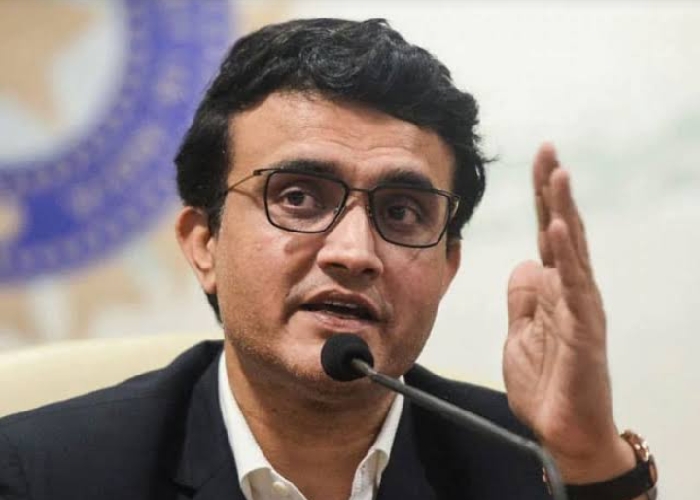
New Delhi, Aug 2: BCCI president Sourav Ganguly on Sunday said the Women's IPL or the Challenger series, as it is better known, is "very much on", ending speculation about the parent body not having a plan for Harmanpreet Kaur and her team.

The men's IPL will be held between September 19 and November 8 or 10 (final date yet to be locked in) in the UAE due to the surge in Covid-19 cases in India. The women's IPL will also be fit in to the schedule, according to the BCCI chief.

"I can confirm to you that the women's IPL is very much on and we do have a plan in place for the national team also," Ganguly told PTI ahead of the IPL Governing Council meeting later on Sunday.

The BCCI president, who is awaiting a Supreme Court verdict on waiver of the cooling-off period to continue in the position, did not divulge details but another senior official privy to the development said that women's Challenger will be held during the last phase of IPL like last year.

"The women's Challenger series is likely to be held between November 1-10 and there could be a camp before that," the source said.

The former India captain also said that the centrally contracted women players will have a camp which has been delayed due to the prevailing situation in the country.

"We couldn't have exposed any of our cricketers -- be it male or female to health risk. It would have been dangerous," Ganguly said.

"The NCA also remained shut because of Covid-19. But we have a plan in place and we will have a camp for women, I can tell you that," he added.

The BCCI's cricket operations team is chalking up a schedule where Indian women are likely to have two full-fledged white-ball series against South Africa and the West Indies before playing the ODI World Cup in New Zealand. 

Comments

Add new comment

  • Coastaldigest.com reserves the right to delete or block any comments.
  • Coastaldigset.com is not responsible for its readers’ comments.
  • Comments that are abusive, incendiary or irrelevant are strictly prohibited.
  • Please use a genuine email ID and provide your name to avoid reject.
News Network
June 26,2020

Washington, Jun 26: The US is reviewing its global deployment of forces to ensure it is postured appropriately to counter the People's Liberation Army, given the increasing threat posed by China to Asian countries like India, Malaysia, Indonesia, and the Philippines, Secretary of State Mike Pompeo said on Thursday.

Mr Pompeo made those remarks in response to a question during the virtual Brussels Forum 2020 of the German Marshall Fund.

"We're going to make sure we're postured appropriately to counter the PLA. We think that the challenge of our times, and we're going to make sure we have resources in place to do that," Mr Pompeo said.
 
The force posture review is being done at the direction of President Donald Trump, as part of which the US is reducing the number of its troops in Germany from about 52,000 to 25,000, he said.

Mike Pompeo said that the force posture would be dictated by the ground realities.

"In certain places there will be fewer American resources. There'll be other places - I just talked about the threat from the Chinese Communist Party, so now threats to India, threats to Vietnam, threats to Malaysia, Indonesia, South China Sea challenges, the Philippines," he said.

"To the extent that that changed, the difference in what the US decided to do impacts adversely a threat some place, it may be that other nations need to step up and take responsibility for their own defense in ways that they hadn't done previously. So, we want to do this in full consultation with all of our partners all around the world, and certainly our friends in Europe," Mr Pompeo said.

President Trump is being criticised for reducing troops from Germany. His critics say that this will increase the threat from Russia to Europe.

Mike Pompeo, however, did not agree with that argument.

It has been a long time since there has been a strategic review of our force posture all across the world. The US undertook that starting about 2.5 years ago, whether that was our forces in Africa, our forces in Asia, the force we have in the Middle East and in Europe, he said.

"We began to say these are often decisions that were made in a different time. Should we reallocate those a different way? Should we have a different composition of those forces? Everyone always wants to talk about ground troops. I get it. I was a young tank officer. You described that. There's nothing I like as much as a good M1 tank.

"But it's often the case that the capacity to deter Russia or other adversaries isn''t determined any longer by just having a bunch of folks garrisoned someplace. So, we really went to back fundamentally relook, what is the nature of the conflict, what''s the nature of the threat, and how should we allocate our resources, whether that''s our resources in the intelligence community, our resources from the Air Force or the Marines and Army," Mr Pompeo said.

Last week, Mike Pompeo criticised the Chinese Army for "escalating" the border tension with India and militarising the strategic South China Sea. He also described the ruling Communist Party of China (CPC) as a "rogue actor".

"Our broad set of allocation of security apparatus, our ability to counter cyber threats, how do we allocate them? What''s the best way to do this? And the decision that you see the president made with respect to Germany is an outcome from a collective set of decisions about how we''re going to posture our resources around the world," said the top American diplomat on Thursday.

Changes in force posture is being taken in consultations with allies and friends, Mr Pompeo said.

"President Trump has spoken to this. (Defense) Secretary (Mark) Esper will be in London today and in Brussels tomorrow. We''ll talk about our plan and how we''re thinking about delivering it," he said.

"But you should understand this, and I hope our European partners will understand this as well. When you see what we ultimately conclude, how we ultimately deliver on the statements of the president made, that they''re aimed squarely at what we believe to be democracies'' fundamental interest and certainly America's most fundamental interest," Mr Pompeo said.

Earlier this month, Mike Pompeo had said that China's actions, be it on the India border, or in Hong Kong or in the South China Sea, were part of the behaviour of the ruling Communist Party in Beijing in the recent past.

China has been fast expanding military and economic influence in the Indo-Pacific region, triggering concern in various countries of the region and beyond.

China is engaged in hotly contested territorial disputes in both the South China Sea and the East China Sea. Beijing has built up and militarised many of the islands and reefs it controls in the region. Both areas are stated to be rich in minerals, oil and other natural resources and are vital to global trade.

Comments

Add new comment

  • Coastaldigest.com reserves the right to delete or block any comments.
  • Coastaldigset.com is not responsible for its readers’ comments.
  • Comments that are abusive, incendiary or irrelevant are strictly prohibited.
  • Please use a genuine email ID and provide your name to avoid reject.
News Network
January 13,2020

Jan 13: India lost more than $1.33 billion to internet restrictions in 2019 as Prime Minister Narendra Modi’s government pushed ahead with his party’s Hindu nationalist agenda, raising tensions and sparking nationwide protests.

The worst shutdown has been in Kashmir, where after intermittent closures in the first half of the year, the internet has been cut off since Aug. 5 following the government’s decision to revoke the special autonomous status of the country’s only Muslim-majority state, a study said. The prologued closure was criticized by India’s highest court, which ruled Friday that the “limitless” internet shutdown enforced by the government for the last five months was illegal and asked that it be reviewed.

India imposed more internet restrictions than any other large democracy, according to the Cost of Internet Shutdowns 2019 report released by Top10VPN, a U.K.-based digital privacy and security research group. The South Asian nation recorded the third-highest losses after Iraq and Sudan, which lost $2.31 billion and $1.86 billion respectively to disruptions. Worldwide internet restrictions caused losses worth $8.05 billion, the report said.

The cost of internet blackouts was calculated using indicators from groups including the World Bank, International Telecommunication Union, and the Delhi-based Software Freedom Law Center. It includes social media shutdowns in its calculations.

India’s ministry of information and technology didn’t respond to an email seeking a response to the report’s findings.

‘Conservative Estimates’

Through 2019, India shut access to the internet for over 4,000 hours. The report added shutdowns in India were often narrowly targeted, down to the level of blocking city districts for a few hours to allow security forces to restore order. Many of these incidents were not included in the report.

“These are conservative estimates,” said Simon Migliano, head of research at U.K.-based Top10VPN. “Internet shutdowns are increasing and it shows a damaging trend.”

India’s other major internet disruptions coincided with two moves by the government that affect India’s Muslim minority. The first disruption took place in November in the states of Uttar Pradesh and Rajasthan after the Supreme Court handed a victory to Hindu groups over Muslim petitioners in a long-simmering dispute over a plot of land.

There were further disruptions in December when protests erupted against the introduction of a religion-based law that allows undocumented migrants of all faiths except Islam from neighbouring countries to seek Indian citizenship. The government enforced shutdowns across Uttar Pradesh and some Northeastern states in order to quell the protests, the report said.

Comments

Add new comment

  • Coastaldigest.com reserves the right to delete or block any comments.
  • Coastaldigset.com is not responsible for its readers’ comments.
  • Comments that are abusive, incendiary or irrelevant are strictly prohibited.
  • Please use a genuine email ID and provide your name to avoid reject.