



Humans eating wild mammals into extinction: study

October 20, 2016

Paris, Oct 20: Some 300 wild mammal species in Asia, Africa and Latin America are being driven to extinction by humanity's voracious appetite for bushmeat, according to a world-first assessment released today.
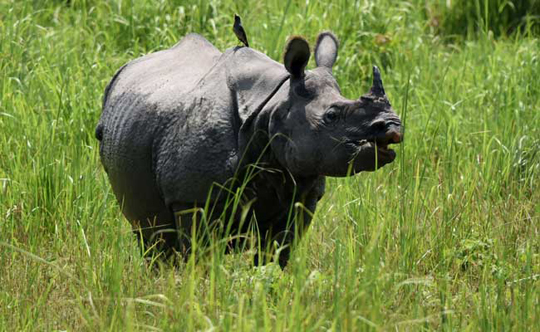
mammals

The species at risk range from rats to rhinoceros, and include docile, ant-eating pangolins as well as flesh-ripping big cats.

The findings, published in the journal Royal Society Open Science, are evidence of a "global crisis" for warm-blooded land animals, 15 top conservation scientists concluded.

"Terrestrial mammals are experiencing a massive collapse in their population sizes and geographical ranges around the world," the study warned.

This decline, it said, was part of a larger trend known as a "mass extinction event," only the sixth time in half a billion years that Earth's species are dying out at more than 1,000 times the usual rate.

Besides eating them, humans are robbing mammals of their natural habitats through agriculture and urbanisation, and decimating them through pollution, disease and climate change.

According to the Union for the Conservation of Nature's (IUCN) Red List of endangered species, a quarter of 4,556 land mammals assessed are on the road to annihilation.

For 301 of these threatened species, "hunting by humans" - mainly for food, but also as purported health and virility boosters, and trophies such as horns or pelts - is the main threat, according to the comprehensive review of scientific literature.

The likelihood of extinction, the team found, depends on body size: the bigger the animals, the greater the danger.

More than 100 primates, including gorillas and snub-nosed monkeys, and dozens of hooved animals from oxen to antelope, are at dire risk from hunting.

"These species will continue to decline unless there is major global action to save them," Bill Ripple, a professor at Oregon State University and lead author of the study, told AFP.

All 301 species identified are found exclusively in developing countries, with the highest concentration in southeast Asia (113), followed by Africa (91), the rest of Asia (61) and Latin America (38).

The countries with the most native species under siege from hunting were Madagascar (46), Indonesia (37), the Philippines (14) and Brazil (10).

The scale of the problem is daunting: some 89,000 tonnes of wild meat - with a market value of about USD 200 million (180 million euros) - is butchered every year from the Brazilian Amazon alone, the study found.

On current trends, the prospects for these and other mammals is not bright, the authors said.

"Forty of these species were already classed as critically endangered by 1996, indicating that there has been little or no conservation progress in reversing their fate," they note.

Comments

Add new comment

  • Coastaldigest.com reserves the right to delete or block any comments.
  • Coastaldigset.com is not responsible for its readers’ comments.
  • Comments that are abusive, incendiary or irrelevant are strictly prohibited.
  • Please use a genuine email ID and provide your name to avoid reject.
Agencies
January 10,2020

Indian enterprises were flooded with a whopping 14.6 crore malware threats in 2019 - a growth of 48 per cent (year-on-year) compared to 2018, a new report said on Friday.

Manufacturing, BFSI (banking, financial services and insurance), education, healthcare, IT/ITES, and the government were the most at-risk industries in the country, said the report from Seqrite, the enterprise arm of Pune-based IT security firm Quick Heal Technologies.

Interestingly, almost a quarter (23 per cent) of the threats were identified through 'Signatureless behaviour-based' detection by Seqrite, indicating how a growing number of cybercriminals were deploying new or previously unknown threat vectors to compromise enterprise security.

"With the latest Seqrite annual threat report, we want to empower CIOs, CISOs, business leaders and all key public stakeholders with the insights they need to combat the growing complexity of the threat landscape," said Sanjay Katkar, Joint Managing Director and CTO, Quick Heal Technologies.

The most prominent trend was the drastic increase in the volume, intensity, and sophistication of cyber-attack campaigns targeting Indian enterprises in 2019.

The rapid integration of IoT devices, BYOD (bring your own device), and third-party APIs into enterprise networks has created newer security vulnerabilities that might go unnoticed until a major breach occurs.

Threat researchers at Seqrite observed several large-scale advanced persistent threats (APT) attacks deployed against organisations in the government sector.

"The entry of nation-states and organised cybercrime cells into the fray is expected to add more complication to this situation and will require Indian government bodies and corporate enterprises to shore up their cyber defence strategies in 2020 and beyond," the report noted.

More alarming, however, was the continued lack of security awareness amongst enterprises and government organisations.

"Unsecured Remote Desktop Protocol (RDP) and Server Message Block (SMB) protocols continued to be targeted through brute-force attacks," said the report.

Spear phishing attack campaigns leveraging Office exploits and infected macros were also used extensively by cybercriminals to gain access to enterprise networks and steal critical data.

"India's digital journey depends on ensuring robust cybersecurity for all stakeholders within the enterprise ecosystem," said Katkar.

The sharp spike should be a cause of concern for CIOs and CISOs in the country, especially given the growing digital penetration within their enterprise networks.

"With network vulnerabilities and potential entry points increasing at a rapid pace, threat actors are expected to leverage artificial intelligence (AI) capabilities to power their malware campaigns in the future to capitalise on newer attack vectors," the report added.

Comments

Add new comment

  • Coastaldigest.com reserves the right to delete or block any comments.
  • Coastaldigset.com is not responsible for its readers’ comments.
  • Comments that are abusive, incendiary or irrelevant are strictly prohibited.
  • Please use a genuine email ID and provide your name to avoid reject.
Agencies
July 9,2020

Twitter has hinted that it is planning a paid subscription platform that can be reused by other teams in the future.

The news that the micro-blogging platform is building a subscription platform with a team codenamed "Gryphon" resulted in Twitter stock rising over 8% on Wednesday.

Twitter revealed its plan via a job listing that seeks a full-stack senior software engineer in New York to join "Gryphon".

Interestingly, Twitter "edited" the job listing once the news broke, removing the part about "Gryphon" and any mention of their internal team or their subscription feature. The listing said the company is looking for an Android engineer to "work on a bevy of backend engineering teams to build components that allow for experimentation to deliver the best experience possible to all of our users".

Later, Twitter users noticed that the company restored the earlier job listing that mentioned the upcoming subscription platform and "Gryphon".

A spokesperson for Twitter told CNN on Wednesday that it's only a job posting, not a product announcement.

This is not the first time Twitter has thought of a paid product. 

In 2017, it sent out a survey to users and a preview of what a premium offering of its TweetDeck app might look like, including breaking news alerts and more analytics, according to The Verge.

"We're conducting this survey to assess the interest in a new, more enhanced version of Tweetdeck. We regularly conduct user research to gather feedback about people's Twitter experience and to better inform our product investment decisions, and we're exploring several ways to make TweetDeck even more valuable for professionals," a Twitter spokesperson had said at that time.

Comments

Add new comment

  • Coastaldigest.com reserves the right to delete or block any comments.
  • Coastaldigset.com is not responsible for its readers’ comments.
  • Comments that are abusive, incendiary or irrelevant are strictly prohibited.
  • Please use a genuine email ID and provide your name to avoid reject.
News Network
March 18,2020

San Francisco, Mar 18: Facebook said a bug in its anti-spam system temporarily blocked the publication of links to news stories about the coronavirus. Guy Rosen, Facebook's vice president of integrity, said on Twitter Tuesday that the company was working on a fix for the problem.

Users complained that links to news stories about school closings and other information related to the virus outbreak were blocked by the company's automated system.

Later on Tuesday, Rosen tweeted that Facebook had restored all the incorrectly deleted posts, which also covered topics beyond the coronavirus.

Rosen said the problems were unrelated to any changes in Facebook's content-moderator workforce. The company reportedly sent its human moderators home this week because of the coronavirus outbreak.

A representative for Facebook did not immediately respond to questions on the status of Facebook's content moderators, many of whom do not work directly for the company and are not always able to work from home.

Comments

Add new comment

  • Coastaldigest.com reserves the right to delete or block any comments.
  • Coastaldigset.com is not responsible for its readers’ comments.
  • Comments that are abusive, incendiary or irrelevant are strictly prohibited.
  • Please use a genuine email ID and provide your name to avoid reject.