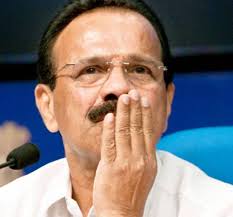
I can understand Siddu's pain, I too have lost my son: Sadananda Gowda

[email protected] (CD Network)
July 30, 2016

Mangaluru, Jul 30: Even as hundreds of Sangh Parivar activist continued to post sadistic comments on social media celebrating the untimely death of Karnataka chief minister Siddaramaiah's elder son Rakesh, a senior BJP leader, who too had lost his son 13 years ago, has expressed deep condolences over the sad demise of 39-year-old budding leader.

1gowda“The grief of having lost a child can be known only by a father who has lost one and I fully understand CM's grief,” said former chief minister DV Sadananda Gowda, who is currently a union minister.

"I can understand his pain, I too have lost my son," said Mr Gowda, recalling the death of his own elder son — Kaushik Gowda, who died following a road accident in Puttur in 2003. Mr Gowda was a member of parliament representing Dakshina Kannada then.

Mr Gowda also took to twitter to express his shock: “I am shocked at the sad demise of Sri Rakesh Son of @CMofKarnataka Sri Siddaramaiaha ji .. No words to explain my feelings at this time,” he tweeted.

Speaking to media persons in Mangaluru, Mr Gowda said that at this situation Mr Siddaramiah not only manage the turmoil that is going on within the family, but also discharge his duties towards society as the head of the state.

Now the only option is that CM should see his departed son in the youth of the state and work towards their welfare, he added.

Also Read:

Karnataka CM Siddaramaiah's son Rakesh, 39, dies in Belgium hospital

Son dead, but they' show no sympathy for CM Siddaramaiah

Comments

Add new comment

  • Coastaldigest.com reserves the right to delete or block any comments.
  • Coastaldigset.com is not responsible for its readers’ comments.
  • Comments that are abusive, incendiary or irrelevant are strictly prohibited.
  • Please use a genuine email ID and provide your name to avoid reject.
News Network
February 28,2020

The Karnataka BJP, which faced action on Twitter earlier this month over incendiary tweets, this time has passed the blame of Sangh Parivar sponsored Delhi violence to the victims.

In an insensitive tweet on Friday, it dubbed the protests against the notorious Citizenship Amendment Act (CAA) as "fake" and added that the violence that followed was "the most well-planned assault on the Idea of India," in an apparent attempt to portray the victims as villains.

The handle, notorious for tweets targeting Muslims, blamed the clashes that erupted in Delhi between people demonstrating for and against the CAA on "so called 'Peacefuls'" - a known right-wing slur for Muslims.

Many people on social media called out the tweet for misleading people and covering up the role of Delhi BJP leader Kapil Mishra's provocative speech for triggering the violence or the failure of the Delhi Police, which reports to the former BJP chief and Union Home Minister Amit Shah, in controlling the riots.

Earlier this month, the Karnataka BJP had tweeted a video of Muslim women standing in queue to vote in the Delhi elections, showing their voter ID cards, with the snarky caption: "Keep the documents safe, you will need to show them again during NPR (National Population Register) exercise."

Soon after, the party unit's Twitter handle was blocked by the social media platform for 24 hours after many accused it of encouraging Islamophobia.

NPR has been widely criticised by opposition parties as a precursor to the government's planned NRC or National Register of Citizens which intends to make Indians prove their citizenship with documents that many poor or illiterate do not possess.

Many fear that combined with the already imposed CAA - which promises citizenship to only non-Muslim refugees from Pakistan, Afghanistan and Bangladesh - the NRC can be used to make millions of Muslims stateless.

The government has denied the allegation and said the CAA only intends to help those who have faced religious persecution. In recent weeks, it has gone back on its rhetoric on the NRC which was announced by Amit Shah in parliament as "it will certainly happen".

The CAA, which was cleared by parliament in December, has triggered deadly protests in the country which left at least 25 dead till Sunday. Since then, at least 42 more people have been killed as large-scale violence erupted in northeast Delhi and hundreds of homes and shops have been burned to the ground.

Comments

Add new comment

  • Coastaldigest.com reserves the right to delete or block any comments.
  • Coastaldigset.com is not responsible for its readers’ comments.
  • Comments that are abusive, incendiary or irrelevant are strictly prohibited.
  • Please use a genuine email ID and provide your name to avoid reject.
Agencies
May 8,2020

Washington D.C., May 8: The prime time for brain development in a child's life is the first year, where the infant spends most of the time asleep. It is the time when neural connections form and sensory memories are encoded.

However, when sleep is disrupted, as occurs more often among children with autism, brain development may be affected, too.

New research led by the University of Washington finds that sleep problems in a baby's first 12 months may not only precede an autism diagnosis but also may be associated with altered growth trajectory in a key part of the brain, the hippocampus.

The study, which was published in the American Journal of Psychiatry, researchers report that in a sample of more than 400 taken of 6- to 12-month-old infants, those who were later diagnosed with autism were more likely to have had difficulty falling asleep.

It also states that this sleep difficulty was associated with altered growth trajectories in the hippocampus.

"The hippocampus is critical for learning and memory, and changes in the size of the hippocampus have been associated with poor sleep in adults and older children.

As many as 80 per cent of the children with autism spectrum disorder have sleep problems," said Annette Estes, director of the UW Autism Center and senior author of the study.

"In our clinical experience, parents have a lot of concerns about their children's sleep, and in our work on early autism intervention, we observed that sleep problems were holding children and families back," added Estes, who is also a UW professor of speech and hearing sciences.

"It could be that altered sleep is part-and-parcel of autism for some children. One clue is that behavioural interventions to improve sleep don't work for all children with autism, even when their parents are doing everything just right. This suggests that there may be a biological component to sleep problems for some children with autism," said Estes.

To consider links among sleep, brain development, and autism, researchers at the IBIS Network looked at MRI scans of 432 infants, surveyed parents about sleep patterns, and measured cognitive functioning using a standardized assessment.

At the outset of the study, infants were classified according to their risk for developing autism: Those who were at higher risk of developing autism -- about two-thirds of the study sample -- had an older sibling who had already been diagnosed.

Infant siblings of children with autism have a 20 per cent chance of developing autism spectrum disorder -- a much higher risk than children in the general population.

In the current study, 127 of the 432 infants were identified as "low risk" at the time the MRI scans were taken because they had no family history of autism.

They later evaluated all the participants at 24 months of age to determine whether they had developed autism. Of the roughly 300 children originally considered "high familial risk," 71 were diagnosed with autism spectrum disorder at that age.

Problems with sleep were more common among the infants later diagnosed with an autism spectrum disorder, as were larger hippocampi. No other subcortical brain structures were affected, including the amygdala, which is responsible for certain emotions and aspects of memory, or the thalamus, a signal transmitter from the spinal cord to the cerebral cortex.

The authors note that while parents reported more sleep difficulties among infants who developed autism compared to those who did not, the differences were very subtle and only observed when looking at group averages across hundreds of infants.

Sleep patterns in the first years of life change rapidly as infants transition from sleeping around the clock to a more adult-like sleep/wake cycle. Until further research is completed, Estes said, it is not possible to interpret challenges with sleep as an early sign of increased risk for autism.


Comments

Add new comment

  • Coastaldigest.com reserves the right to delete or block any comments.
  • Coastaldigset.com is not responsible for its readers’ comments.
  • Comments that are abusive, incendiary or irrelevant are strictly prohibited.
  • Please use a genuine email ID and provide your name to avoid reject.
News Network
March 30,2020
Mangaluru, Mar 30: Kanachur Institute of Medical Sciences, Natekal, has started online tele-consultation service in the constituent Kanachur Hospital & Research Centre amid fear of corona spread.
 
A statement issued here on Monday said, under this service people can contact the doctors sitting in their home. The doctors will give tele-consultation and medical advice for their health problems through WhatsApp. As per the Kanachur Hospital announcement for this purpose the specialist doctors of nine departments will give their tele-consultation from 0900 hrs to 1600 hrs.
 
The people who are not having the social media service (WhatsApp) from rural areas they can directly contact the concerned department specialists over phone by informing the disease details and obtain advises from the doctors through the hospital landline number 0824-2888000.

Comments

Add new comment

  • Coastaldigest.com reserves the right to delete or block any comments.
  • Coastaldigset.com is not responsible for its readers’ comments.
  • Comments that are abusive, incendiary or irrelevant are strictly prohibited.
  • Please use a genuine email ID and provide your name to avoid reject.