



IIT scientists use waste onion skin to generate electricity

Agencies
December 18, 2017

New Delhi, Dec 18: Scientists at IIT Kharagpur have used waste onion skins to develop an inexpensive device that can generate 'green' electricity from body movements and may power pacemakers, smart pills and wearable electronics.

The non-toxic, biodegradable and biocompatible device takes advantage of the suitable piezoelectric properties of the onion skin, researchers said.

Piezoelectric materials have the ability to convert energy from everyday mechanical motions into electricity.

"This homespun inexpensive innovative finding can be a breakthrough scientific research in a new direction; even common people can generate energy in any circumstances using this simple novel cost-effective idea," Bhanu Bhusan Khatua, a professor at Indian Institute of Technology (IIT) Kharagpur in West Bengal said.

Increasing population, industrialisation, and ubiquitous use of electronics and vehicles are playing a huge role in destroying the environment day by day.

The rising burden on fossil fuels and depletion of natural resources has made the development of sustainable and alternative green energy technologies a pressing requirement in current energy deficiency world, researchers said.

Piezoelectric materials can be used to convert simple body movements into green energy without adding any pollution to our environments.

However, piezoelectric nanogenerators are difficult to synthesise and are often very expensive. They are also usually highly toxic or pose environmental hazards, which means their use in real life application remains limited.

These drawbacks prompted researchers at IIT Kharagpur and Pohang University of Science and Technology in South Korea to develop a non-toxic, biodegradable and biocompatible piezoelectric nanogenerator (BPNG).

Among various cellulose containing bio-materials, onion skin is the most abundant bio-waste, said Khatua.

"This motivated us to study the piezoelectric coefficient of the onion skin and its suitability as a bio- piezoelectric material," Khatua said.

"The uniqueness of our work lies in the novelty of utilising naturally abundant biocompatible and biodegradable onion skin directly as efficient piezoelectric material, which is thrown as tonne-scale garbage in every day worldwide," he said.

The device could be used in various biomedical applications such as pacemakers powered by heartbeats or edible devices that can track health from inside the body.

Researchers estimate that the device could be manufactured easily at a cost of less than a rupee, with existing technologies. This would make the system accessible to people the economically weaker sections of the society.

To build the device, the researchers coated an onion skin with a thin layer of gold and added copper wires with silver paste. It was then encapsulated in polymers.

The nanogenerator is capable of harvesting several types of mechanical energies, including body movements, wind flow and even machine vibrations.

The device developed by researchers has an output of 18 volts and can turn on 30 green LEDs under repeated human finger touch response, according to the study published in the journal NanoEnergy.

The device could withstand repeated cycles of pressing and releasing for up to five months. The voltage generated remained almost unchanged even after long cycles, indicating good mechanical stability of the device for bio-medical applications, researchers said.

"We also studied the durability of the device under sewing machine vibration for 10,000 cycles. From the result it can easily be said that the device had enough mechanical durability and chemical stability for realistic applications," Khatua said.

The researchers, including Sumanta Kumar Karan and Sandip Maiti from IIT, are optimistic about commercialising the technology soon, although more research is required before it can be realised in practical applications.

Comments

Add new comment

  • Coastaldigest.com reserves the right to delete or block any comments.
  • Coastaldigset.com is not responsible for its readers’ comments.
  • Comments that are abusive, incendiary or irrelevant are strictly prohibited.
  • Please use a genuine email ID and provide your name to avoid reject.
Agencies
July 29,2020

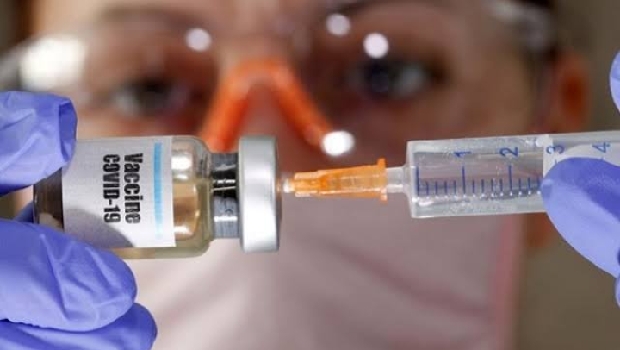
If everything goes as Russia’s expectation, it will be world’s first country to approve a coronavirus vaccine for widespread in the second week of August despite safety and efficacy concerns, according to a report. The adenoviral vector-based vaccine developed by Russian military and government researchers is currently in phase 2 trials.

According to a report from CNN, Russian officials are hoping to get approval for the COVID-19 vaccine developed by the Moscow-based Gamaleya Institute on Agust 10 or even before that. The officials told the outlet that the vaccine will be approved for public use with frontline healthcare workers receiving it first.

“It’s a Sputnik moment,” said Kirill Dmitriev, head of Russia’s sovereign wealth fund, which is financing Russian vaccine research, referring to the successful 1957 launch of the world’s first satellite by the Soviet Union, according to CNN.

“Americans were surprised when they heard Sputnik’s beeping. It’s the same with this vaccine. Russia will have got there first,” he was quoted as saying.

However, Russia is yet to release the scientific data on its coronavirus vaccine trials, hence, questions remain about the safety and efficacy of the vaccine, said the report. The vaccine is in the second phase of testing with developers planning to launch the phase 3 trials sometime after August 3.

Earlier, Interfax reported, citing Health Minister Mikhail Murashko, that the vaccine will be widely used in parallel with phase 3 trials. He said the country plans to vaccinate medics who are at high-risk for COVID-19 next month before clinical trials are completed.

Murashko added that individuals at higher risk of getting infected with the coronavirus such as older people or those with health conditions will also be prioritised for the vaccine, although he did not estimate or reveal when that would happen. The minister added 800 people will be recruited for the phase 3 trials.

Meanwhile, health officials were more cautious considering the fact that human testing of the vaccine is incomplete, and the state registration is expected to begin after August 3, reported The Moscow Times.

On Monday, Moderna and Pfizer announced the commencement of the final phase 3 trials of their candidate vaccines against the SARS-CoV-2 virus, which has so far claimed at least 654,477 lives and infected 16,514,500 people worldwide. 

Researchers will recruit up to 30,000 volunteers in separate trials both backed by the US government. India's first indigenous coronavirus vaccine, COVAXIN, is undergoing phase 1 human clinical trials across the country. More than 150 COVID-19 vaccines are being developed all over the world with at least six candidates already in late-stage clinical trials.

Comments

Add new comment

  • Coastaldigest.com reserves the right to delete or block any comments.
  • Coastaldigset.com is not responsible for its readers’ comments.
  • Comments that are abusive, incendiary or irrelevant are strictly prohibited.
  • Please use a genuine email ID and provide your name to avoid reject.
News Network
February 10,2020

New Delhi, Feb 10: Former Jammu and Kashmir chief minister Omar Abdullah's sister on Monday moved the Supreme Court to challenge his detention under the Public Safety Act.

Senior advocate Kapil Sibal, appearing for the petitioner, mentioned the matter for urgent listing before a bench headed by Justice N V Ramana.

Sibal told the bench that they have filed a habeas corpus petition challenging the detention of Abdullah under the PSA and the matter should be heard this week.

The bench agreed for urgent listing of the matter.

Comments

Add new comment

  • Coastaldigest.com reserves the right to delete or block any comments.
  • Coastaldigset.com is not responsible for its readers’ comments.
  • Comments that are abusive, incendiary or irrelevant are strictly prohibited.
  • Please use a genuine email ID and provide your name to avoid reject.
News Network
March 21,2020

New Delhi, Mar 21: Novel coronavirus cases in India rose to 258 on Saturday after 35 fresh cases were reported in various parts of the country, according to the Health Ministry.

Among the 258 are 39 foreign nationals, including 17 from Italy, three from the Philippines, two from the UK, one each belonging to Canada, Indonesia and Singapore.

The total figure also includes four deaths reported from Delhi, Karnataka, Punjab and Maharashtra.

"The total number of active COVID-19 cases across India stands at 231 so far," the ministry said, adding that 23 others have been cured/discharged/migrated while four have died.

Delhi has, so far, reported 26 positive cases, which include one foreigner, while Uttar Pradesh has recorded 24 cases, including one foreigner.

Maharashtra has 52 cases, including three foreigners, while Kerala has recorded 40 cases, which include seven foreign nationals.

Karnataka has 15 coronavirus patients. The number of cases in Ladakh rose to 13 and Jammu & Kashmir four. Telangana has reported 19 cases, which include 11 foreigners.

Rajasthan has also reported 17 cases, including two foreigners. Gujarat has reported seven cases so far.

Tamil Nadu, Andhra Pradesh and Uttarakhand have reported three cases each.

West Bengal, Odisha and Punjab each reported two cases while Puducherry, Chhattisgarh and Chandigarh reported one case each.

In Haryana, there are 17 cases, which include 14 foreigners.

Comments

Add new comment

  • Coastaldigest.com reserves the right to delete or block any comments.
  • Coastaldigset.com is not responsible for its readers’ comments.
  • Comments that are abusive, incendiary or irrelevant are strictly prohibited.
  • Please use a genuine email ID and provide your name to avoid reject.