Illegal expat workers back on Jeddah streets

January 15, 2014

Jeddah, Jan 15: Jeddawis noted illegal expatriates disappeared from the streets during the first weeks that followed the end of the amnesty period to avoid being deported, but now with the crackdown campaigns receding they are back at their old places in various parts of the city.
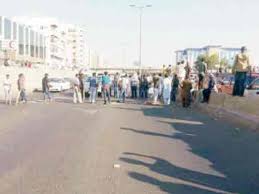
However, sources from the Ministry of Interior stressed that the campaigns against the violating expatriates were continuing with the same intensity. Many illegal expatriates are being detained and deported daily, they claimed.

jeddah2

Makkah Police’s head of information and public relations Lt. Col. Atti Bin Attiya Al-Qurashi told an Arabic language daily newspaper that the crackdown campaign against expatriates violating the system of residence and work is continuing unabated. “We know very well where to look for the violators to detain them,” he said. But many residents don’t agree.

“The violating expatriates are back at their old places offering cheap manual labor. We can now see the peddlers pulling their carts in the streets, car washers doing their job peacefully in the parks of shopping centers and near the government departments and beggars gathering around traffic lights,” said Omar Al-Faidi, a Saudi.

Abdullah Al-Ahmari, another Saudi, was surprised to see a large number of illegal workers in many areas including Bani Malik, Al-Thamaneen Street, Kilo 8 and the Al-Harazat district. He said: “You will see many of these workers sitting in front of houses waiting for any citizen to seek their services. The families are scared of them, fearing a repetition of the incidents that took place at Riyadh’s Manfuhah district where illegal Ethiopians clashed with police and citizens.”

Ahmed Al-Aydi, a resident of Bani Malk, questioned why the crackdown campaign appeared to stop. He said illegal workers have become more daring than they were before.

“The car washers are now doing their work right in front of my house and the beggars will not hesitate to knock on my door in broad daylight. The situation is simply unbearable,” said Al-Aydi.

Mahmoud Al-Omari, a citizen from Quwaiza, said he informed the passport police several times about the presence of illegal workers in the district but nothing was done. “Why has the crackdown campaign receded? What can we do to end this phenomenon, which has now become more conspicuous than before?” he questioned.

Abdul Mohsen Falahi, an owner of a shop selling building materials in the Binladen district, said illegal workers are selling their goods right in front of his shop.

He said he had corrected the status of all his workers but is now considering closing down his shop because business is suffering due to these expatriates’ activities.

Bashir, a Pakistani construction worker who sits in a certain place on Palestine Street, said illegal expatriates locked themselves inside their homes after the end of the amnesty period but they came out again when they noted that the crackdown campaign was not as intense as expected.

“The campaign did not last more than five days, after which we were back at our old places,” he said.

Hussain Hassanain, an Egyptian plumber, said he usually sits near the so-called Workers’ Bridge waiting for possible customers. He said he rarely sees Jawazat cars and when he does, he hides or runs away.  “I only saw the security patrols approaching the area once or twice and I ran away with the others in what we called the ‘Great Escape’,” Hassanain said.

Aleemullah, a Pakistani electrician who is working in the Kilo 8 district, said he came to the Kingdom about two months ago on a free work visa for which he had paid SR14,000. “My sponsor does not have any job for me so I have to go out on the street to earn my living and get back the money I paid for the visa,” he said.

Osman, a Sudanese construction worker, believed the crackdown campaign was not serious and was only announced to frighten illegal workers. He said: “The situation is gradually going back to what it was before. The streets of Jeddah are now replete with illegal workers.”

Fareed Abd Rabbo, an Egyptian mason, said he would not remain locked at his home and would go on the streets anyway to earn his living.

“What is destined to happen will happen regardless of any precaution,” he said.

Comments

Add new comment

  • Coastaldigest.com reserves the right to delete or block any comments.
  • Coastaldigset.com is not responsible for its readers’ comments.
  • Comments that are abusive, incendiary or irrelevant are strictly prohibited.
  • Please use a genuine email ID and provide your name to avoid reject.
News Network
March 11,2020

Mar 11: Energy giant Saudi Aramco on Wednesday said it plans to raise its crude production capacity by one million barrels per day to 13 million bpd as a price war with Russia intensifies.

"Saudi Aramco announces that it received a directive from the ministry of energy to increase its maximum sustainable capacity from 12 million bpd to 13 million bpd," the company said in a statement to the Saudi Stock Exchange.

The decision comes a day after the world's top exporter, Saudi Arabia, decided to hike production by at least 2.5 million bpd to a record 12.3 million from April.

The Saudi moves come after the collapse of an oil production reduction agreement between OPEC and non-OPEC producers, including Russia.

The deal proposed by Saudi Arabia called for additional output cuts of 1.5 million bpd to cope with the severe economic impact of the coronavirus which has sharply reduced world demand for crude.

Boosting production capacity normally takes a long time and requires billions of dollars of investment.

Several years ago, the kingdom had shelved plans to boost its crude production capacity beyond 12 million bpd after demand for OPEC oil declined in the face of stiff competition from North American shale oil and other sources.

Russia on Tuesday said it was open to renewing cooperation with the OPEC cartel even as its kingpin Saudi Arabia escalated a price war with Moscow by announcing it would flood markets with new supplies.

The oil price war broke out after OPEC and a group of non-member countries dominated by Russia -- the world's second largest producer -- on Friday failed to agree on production cuts.

Saudi Arabia responded by announcing unilateral price cuts. This prompted the oil price to plummet and fuelled huge falls on stock markets around the world on Monday.

Comments

Add new comment

  • Coastaldigest.com reserves the right to delete or block any comments.
  • Coastaldigset.com is not responsible for its readers’ comments.
  • Comments that are abusive, incendiary or irrelevant are strictly prohibited.
  • Please use a genuine email ID and provide your name to avoid reject.
Agencies
July 31,2020

Dubai, Jul 31: The Custodian of the Two Holy Mosques, King Salman bin Abdulaziz of Saudi Arabia tweeted early on Friday sending congratulations to everyone on Eid Al Adha.

"I congratulate everyone on the blessed Eid Al Adha. May Allah [grant us another Eid where we will be in] good, blessings, health, and wellness," King Salman said.

"We also ask [God] to accept the pilgrimage of those who completed Haj, and [to accept] Muslims' prayers, and to remove the coronavirus pandemic in our countries," he added.

King Salman left King Faisal hospital in Riyadh after recovering on Thursday, the Saudi Press Agency (SPA) reported on Thursday.

Comments

Add new comment

  • Coastaldigest.com reserves the right to delete or block any comments.
  • Coastaldigset.com is not responsible for its readers’ comments.
  • Comments that are abusive, incendiary or irrelevant are strictly prohibited.
  • Please use a genuine email ID and provide your name to avoid reject.
Agencies
April 8,2020

Riyadh, Apr 8: Saudi Arabia's health minister has warned the number of COVID-19 cases in the country could reach 200,000 in coming weeks.

As of Tuesday, the kingdom registered a total of 2,795 coronavirus infections, including 41 deaths.

"Within the next few weeks, studies predict the number of infections will range from a minimum of 10,000 to a maximum of 200,000," health minister Tawfiq al-Rabiah was cited as saying by the official Saudi Press Agency on Tuesday.

On Monday, Saudi Arabia extended the duration of daily curfews in four governorates and five cities to 24 hours.

The kingdom imposed round-the-clock lockdowns in the capital Riyadh, Tabuk, Dammam, Dhahran and Hofuf, the interior ministry said on Twitter.

The same measures were also imposed on the governorates of Jeddah, Taif, Qatif and Khobar, the ministry added.

Authorities had already sealed off the holy cities of Mecca and Medina, barring people from entering and exiting as well as prohibiting movement between all provinces.

Last month, Saudi Arabia suspended the year-round "Umrah" pilgrimage over fears of the coronavirus pandemic spreading to Islam's holiest cities.

Authorities are yet to announce whether they will proceed with this year's Hajj, scheduled for the end of July. Last week, authorities urged Muslims to temporarily defer preparations for the annual pilgrimage.

Last year, about 2.5 million people travelled to Saudi Arabia to take part in the Hajj, which all Muslims must perform at least once in their lives if able.

The Arab world's biggest economy has also closed down cinemas, malls and restaurants and halted flights as it steps up efforts to contain the virus.

King Salman has warned of a "more difficult" fight ahead against the virus, as the kingdom faces the economic double blow of virus-led shutdowns and crashing oil prices

Comments

Add new comment

  • Coastaldigest.com reserves the right to delete or block any comments.
  • Coastaldigset.com is not responsible for its readers’ comments.
  • Comments that are abusive, incendiary or irrelevant are strictly prohibited.
  • Please use a genuine email ID and provide your name to avoid reject.