



India enters age of 3D printed body parts

February 26, 2017

Gurgaon, Feb 26: 3D printed body parts have become a reality in India, a game changer which promises to alter the medical landscape in India.3d
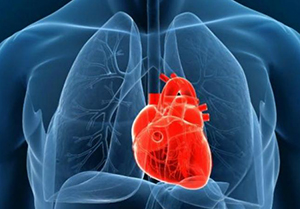
The courage of a school teacher has ushered in almost unnoticed a quiet medical revolution in India with links that spread from Bareilly to Gurgaon.

A doctor from Metro Hospital, Noida said, "3D printing is indeed an upcoming innovation offering personalised medicine."

Efforts are also being made to master the same technique on living tissue to replace full organs but that is still some distance away. Imagine printing a copy of your own kidney to replace a damaged one!

Earlier this month, a team of young doctors from Medanta: The Medicity in Gurgaon on the outskirts of the capital successfully performed a surgery on the failing spine of a woman and inserted for the first time a 3D printed titanium implant giving the woman a completely new lease of life.

Almost miraculously four days after the surgery, the woman was walking. Had traditional surgical techniques been adopted, according to the doctors she would have walked after months.

Dr Naresh Trehan, founder of Medanta, said, "3D printing technology has opened up whole new vista to re-create body parts to save lives."

After a school teacher suffered a debilitating collapse of her neck vertebra due to TB, doctors from Medanta claimed to have used Indias first 3D printed titanium implant to bring the patient back from near collapse to near normal life.

Last month, walking and talking were a Herculean task for the 32-year-old patient who is also a dancer and singer, her neck was collapsing, as the TB bug had slowly consumed the second and third vertebra in her neck.

Once the spinal cord started getting compressed, the woman started losing sensation on all her limbs, making life very difficult.

After a first-of-its-kind surgery in India, she can now hope to lead a near normal life. Having undergone a 10-hour surgery of February 3, the patient who does want to be identified, said, "Im better now, but towards the end I had a lot of problem. I was not able to walk, I could not sleep at night because of the pain nor could I do anything. Now I am feeling much better."

Faced with this complex medical problem, a team of 10 health specialists decided to deploy for the first time a custom made ultra-modern 3D printed titanium implant to replace the two infected vertebra in her neck.

The other option would have been to use a piece of bone from the patients own leg but that would have, according to the medical team, kept her in the bed for more than 6 months after the surgery.

Comments

Add new comment

  • Coastaldigest.com reserves the right to delete or block any comments.
  • Coastaldigset.com is not responsible for its readers’ comments.
  • Comments that are abusive, incendiary or irrelevant are strictly prohibited.
  • Please use a genuine email ID and provide your name to avoid reject.
News Network
January 31,2020

Jan 31: Cervical cancer could be eliminated worldwide as a public health issue within the next 100 years, according to two studies which may lead to better strategies for screening and vaccination against the malignant disease.

According to the studies, published in the journal The Lancet, more than 74 million cervical cancer cases, and 60 million deaths could be averted, and the disease eliminated in the 78 countries which have the highest disease burden.

The researchers, including those from Laval University in Canada, said cervical cancer is the second most frequent cancer among women in low-income and lower-middle-income countries (LMICs) with 2,90,000 (51 per cent) of the 5,70,000 new cases worldwide reported in women living in LMICs.

In the current studies, the scientists used the WHO draft strategy of cervical cancer elimination which defines plans for vaccination against the disease's causative agent, the human papillomavirus (HPV).

These plans, they explained, call for 90 per cent of girls to be vaccinated against HPV by 2030, and for 70 per cent of women to be screened for cervical cancer once or twice in their lifetime.

About 90 per cent of women with precancerous lesions, or cervical cancer are also advised to receive appropriate treatment, according to the WHO draft strategy, the scientists said.

In the second study, the research team analysed the impact of three elements of the WHO strategy on deaths from cervical cancer -- modelling the impact of scaling up cancer treatment, as well as vaccination and screening

"Our findings emphasise the importance of acting immediately to combat cervical cancer on all three fronts," said Karen Canfell from the University of Sydney in Australia, who co-led both the studies.

"In just 10 years, it's possible to reduce deaths from the disease by a third and, over the next century, more than 60 million women's lives could be saved. This would represent an enormous gain in terms of both quality of life, and lives saved," Canfell said.

By adding the two screening tests, and with the treatment of precancerous cervical lesions, cases of the cancer may drop by 97 per cent, and 72 million cervical cancer cases could be averted over the next century, the researchers said.

Scaling-up of appropriate cancer treatment could avert 62 million cervical cancer deaths, the study noted.

"For the first time, we've estimated how many cases of cervical cancer could be averted if WHO's strategy is rolled out and when elimination might occur," said Marc Brisson, study co-author from Laval University.

"Our results suggest that to eliminate cervical cancer it will be necessary to achieve both high vaccination coverage, and a high uptake of screening and treatment, especially in countries with the highest burden of the disease," Brisson added.

Based on the results of the studies, WHO's cervical cancer elimination strategy has been updated which will be presented for adoption at the World Health Assembly in May 2020, the scientists noted.

"If the strategy is adopted and applied by member states, cervical cancer could be eliminated in high income countries by 2040, and across the globe within the next century, which would be a phenomenal victory for women's health," Brisson said.

"However, this can only be achieved with considerable international financial and political commitment, in order to scale-up prevention and treatment," he added.

Comments

Add new comment

  • Coastaldigest.com reserves the right to delete or block any comments.
  • Coastaldigset.com is not responsible for its readers’ comments.
  • Comments that are abusive, incendiary or irrelevant are strictly prohibited.
  • Please use a genuine email ID and provide your name to avoid reject.
Agencies
February 27,2020

Washington D.C, Feb 27: New research shows that adults who have low fruit and vegetable intake are more likely to be diagnosed with an anxiety disorder.

"For those who consumed less than 3 sources of fruits and vegetables daily, there was at least at 24% higher odds of anxiety disorder diagnosis," says the lead author of the Canadian Longitudinal Study, Karen Davison, who is a health science faculty member, nutrition informatics lab director at Kwantlen Polytechnic University, (KPU) and North American Primary Care Research Group Fellow.

"This may also partly explain the findings associated with body composition measures. As levels of total body fat increased beyond 36%, the likelihood of anxiety disorder was increased by more than 70%," states co-author Jose Mora-Almanza, a Mitacs Globalink intern who worked with the study at KPU.

"Increased body fat may be linked to greater inflammation. Emerging research suggests that some anxiety disorders can be linked to inflammation," says Davison.

In addition to diet and body composition measures, the prevalence of anxiety disorders also differed by gender, marital status, income, immigrant status and several health issues.

An important limitation of the study was that the assessment of anxiety disorders was mostly based upon self-reporting of a medical diagnosis.

"It is estimated that 10% of the global population will suffer from anxiety disorders which are a leading cause of disability," says Karen Davison

"Our findings suggest that comprehensive approaches that target health behaviours, including diet, as well as social factors, such as economic status, may help to minimize the burden of anxiety disorders among middle-aged and older adults, including immigrants," she concluded.

Comments

Add new comment

  • Coastaldigest.com reserves the right to delete or block any comments.
  • Coastaldigset.com is not responsible for its readers’ comments.
  • Comments that are abusive, incendiary or irrelevant are strictly prohibited.
  • Please use a genuine email ID and provide your name to avoid reject.
Agencies
April 4,2020

Washington D.C., Apr 4: While consuming a high-diet salt can result in high blood pressure, a recent study has revealed a link between salt-rich diet and weaker immune system.

The study was conducted under the leadership of the University Hospital Bonn, and the results were published in the journal Science Translational Medicine.

The research was conducted on mice that were fed a high-salt diet. Later, they were found to suffer from much more severe bacterial infections.

Human volunteers who consumed an additional six grams of salt per day also showed pronounced immune deficiencies.

The World Health Organization (WHO) has recommended a maximum amount of five grams of salt a day.

It corresponds approximately to one level teaspoon. In reality, however, many Germans exceed this limit considerably. 

Figures from the Robert Koch Institute suggest that on average men consume ten, and women more than eight grams a day.

This means that we reach for the salt shaker much more than is good for us. After all, sodium chloride, which is its chemical name, raises blood pressure and thereby increases the risk of heart attack or stroke.

"We have now been able to prove for the first time that excessive salt intake also significantly weakens an important arm of the immune system," said Prof. Dr. Christian Kurts from the Institute of Experimental Immunology at the University of Bonn.

This finding is unexpected, as some studies point in the opposite direction. For example, infections with certain skin parasites in laboratory animals heal significantly faster if these consume a high-salt diet.

The study also sheds light on the fact that the skin serves as a salt reservoir.

"Our results show that this generalization is not accurate," emphasized Katarzyna Jobin, lead author of the study.

The body keeps the salt concentration in the blood and in the various organs largely constant. Otherwise important biological processes would be impaired. The only major exception is the skin which functions as a salt reservoir of the body. This is why the additional intake of sodium chloride works so well for some skin diseases.

However, other parts of the body are not exposed to the additional salt consumed with food. Instead, it is filtered out by the kidneys and excreted in the urine.

"We examined volunteers who consumed six grams of salt in addition to their daily intake," said Prof. Kurts. This is roughly the amount contained in two fast-food meals, i.e. two burgers and two portions of French fries.

After one week, from the results, it showed that the immune cells coped much worse with bacteria after the test subjects had started to eat a high-salt diet.

In human volunteers, excessive salt intake also resulted in increased glucocorticoid levels.

Comments

Add new comment

  • Coastaldigest.com reserves the right to delete or block any comments.
  • Coastaldigset.com is not responsible for its readers’ comments.
  • Comments that are abusive, incendiary or irrelevant are strictly prohibited.
  • Please use a genuine email ID and provide your name to avoid reject.