



Mumbai/New Delhi, Jun 5: India could allow global online retailers such as Amazon.com Inc to sell their own products as early as next month, removing restrictions that have held back competition in one of the world's biggest, and most price-sensitive, retail markets.
The decision, which is likely to be announced in or alongside the budget, is one of the first tangible signs of economic reform by the business-friendly government of Prime Minister Narendra Modi, who was sworn in 10 days ago.
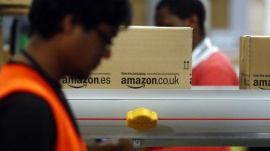 The move could allow the government to circumvent political opposition to opening up India's $500 billion retail sector to global retail giants such as Wal-Mart Stores Inc.
Four people privy to discussions within the government told Reuters that officials believed a more robust online retail sector would spur manufacturing and consumption, helping revive an economy that has grown at below 5 percent for two years, the longest period of sub-par expansion since the late 1980s.
"Most stakeholders support FDI (foreign direct investment)," said a senior government official, referring to e-commerce. "We have pitched for opening it up completely."
Industry surveys say e-commerce could contribute up to 4 percent to India's economy by 2020 from under one percent now.
The official, like others who spoke to Reuters on the move, declined to be named because the matter was confidential. When asked about the decision, a spokesman for India's commerce and industry ministry declined to comment.
Although New Delhi has been discussing opening up the sector since last year, the sources said a decision was imminent.
"The way the government is initiating discussion, it is very clear that they are extremely serious about it," said an executive with a global online retailer who was invited to a meeting two weeks ago between the government and foreign and domestic companies.
"They understand this will help small traders to grow their business, expand and reach out to a larger market," he said.
While Modi's Bharatiya Janata Party (BJP) has been a vocal critic of the country's multi-brand retail policy, it has remained quiet on the proposal to open up the e-commerce sector.
On the campaign trail, Modi had asked small traders not to feel intimated by big online retail chains.
"We should not worry about these things. Our children have taken IT to the world. We'll have to embrace it," he told a gathering of small traders in February.
Modi will eventually decide investment guidelines as well as the foreign ownership cap, but the sources said the rules will be clearer and better than those for foreign investment in the supermarket sector.
For example, implementation of the policy will not be left at the discretion of individual states, they said. But local sourcing and investment in the supply chain will be required.
An Amazon spokesperson said opening up the sector would be good for consumers and Indian businesses and spur infrastructure development.
"It would allow us to partner with local manufacturers to source products not carried by other sellers on the marketplace, giving Indian consumers unique and wider choices at lower prices."
Deepa Thomas, spokeswoman for eBay in India, said it was excited about the opportunity and believed in the need for a carefully calibrated approach to opening up the sector.
"I can't speculate on what might happen going forward, but I can tell you that we're very pleased about the launch of the business so far out there," Peter Faricy, Amazon's global head of marketplaces, said on Wednesday when asked about the potential impact of that change in India.
CONSUMPTION-LED GROWTH
The industry ministry that drafts FDI rules recently met officials from companies including Amazon, Google, eBay Inc, Wal-Mart and Indian e-tailer Flipkart to finalise the investment guidelines, the people said.
Global online retailers like Amazon and eBay are currently banned from selling products they have sourced themselves, and must rely on third-party suppliers. Their platforms, which they own fully, are marketplaces for these outside suppliers.
The government is likely to end this ban, paving the way for global retailers to bring their formidable supply chain, and cheaper goods, into India, potentially boosting consumption and benefiting small manufacturers and traders.
Politically influential small-scale traders have traditionally opposed any foreign direct investment in retail, fearing they would be eclipsed by larger global rivals.
The BJP is also against such investments, but the sources said the government supported the online retail expansion as global e-commerce firms would still have to rely on small traders to generate business.
Opening up the online retail business for foreign direct investment is also widely expected to eliminate middlemen, leading to lower transaction, overhead, inventory and labour costs, industry officials said.
Modi, who last month won the first outright parliamentary majority in three decades in Asia's third-largest economy, wants to kick start the sluggish economy by winning back domestic and foreign investor confidence.
Regulatory uncertainty under the previous government prevented foreign supermarket chains from setting up shop in the country. So far, only Britain's Tesco PLC has announced an investment. In its election manifesto, the ruling BJP vowed to ban foreign supermarkets.
LIFELINE TO LOCAL ONLINE RETAILERS?
E-commerce is growing at the compound annual growth rate of 34 percent in India, according to a report from Digital-Commerce, IAMAI-IMRB.
Online travel services currently account for over 70 percent of consumer e-commerce transactions. Online sales of retail goods were $1.6 billion last year, according to research firm Forrester. But they will swell to $76 billion by 2021, predicts consultancy Technopak.
By comparison, China's business and consumer e-commerce sales are projected to surpass $180 billion this year.
If approved, the policy will not only allow foreign retailers to expand in India, but will also give local online businesses access to much-needed foreign capital.
The companies vying for a bigger slice of the Indian online retail market include the country's largest e-tailer Flipkart, marketplace Snapdeal and fashion retailers Myntra and Jabong.
All retailers in the business are losing money due to high costs owing to high-voltage advertising campaigns, heavy discounts and an underdeveloped logistics network.
Only 18 of the 52 e-commerce start-ups in India - which raised $700 million in venture capital funding in the three years ending 2012 - were able to raise follow-on investments last year, investment bank Allegro Advisors said.
Most Indian e-tailers are aggressively scaling up in an effort to have the muscle to compete with Amazon, which slashed prices and improved delivery standards after entering India last year and is looking to acquire smaller retailers.

Comments
Add new comment