India Signs Agreement With World Bank To Improve Technical Education

February 2, 2017

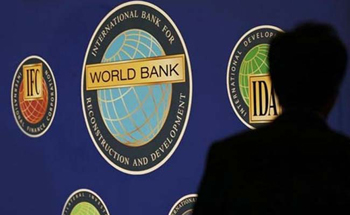
New Delhi, Feb 2: India has signed a $201.50 million financing agreement with the World Bank to improve the quality of technical education in the country.

worldbank"Financing agreement for credit of $201.50 million for the 'Third Technical Education Quality Improvement Programme (TEQIP III)' was signed with the World Bank here on Tuesday," the Finance Ministry said in a statement.

The project aims at improving quality and equity in engineering institutes in the states and take initiatives to strengthen sector governance and performance, it said.

"The objective of the programme is to enhance quality and equity in participating engineering education institutes and improve the efficiency of the engineering education systems in Uttarakhand, Himachal Pradesh, Bihar, Uttar Pradesh, Madhya Pradesh, Chhattisgarh, Rajasthan, the eight north-eastern states and Andaman and Nicobar Islands," the statement said.

"The project has been designed as a disbursement-linked one, that is, the World Bank loan will be disbursed on achievement of specific outcomes," it added.

Comments

Add new comment

  • Coastaldigest.com reserves the right to delete or block any comments.
  • Coastaldigset.com is not responsible for its readers’ comments.
  • Comments that are abusive, incendiary or irrelevant are strictly prohibited.
  • Please use a genuine email ID and provide your name to avoid reject.
Agencies
July 2,2020

Leiden, Jul 2: Astronomers have discovered a luminous galaxy caught in the act of reionizing its surrounding gas only 800 million years after the Big Bang.

The research, led by Romain Meyer, PhD student at UCL in London, UK, has been presented at the virtual annual meeting of the European Astronomical Society (EAS).

Studying the first galaxies that formed 13 billion years ago is essential to understanding our cosmic origins. One of the current hot topics in extragalactic astronomy is 'cosmic reionization,' the process in which the intergalactic gas was ionized (atoms stripped of their electrons).

Cosmic reionization is similar to an unsolved murder: We have clear evidence for it, but who did it, how and when? We now have strong evidence that hydrogen reionization was completed about 13 billion years ago, in the first billion years of the universe, with bubbles of ionized gas slowly growing and overlapping.

The objects capable of creating such ionized hydrogen bubbles have however remained mysterious until now: the discovery of a luminous galaxy in which 60-100 percent of ionizing photons escape, is likely responsible for ionizing its local bubble. This suggests the case is closer to being solved.

The two main suspects for cosmic reionization are usually 1) a population of numerous faint galaxies leaking ~10 percent of their energetic photons, and 2) an 'oligarchy' of luminous galaxies with a much larger percentage (>50 percent) of photons escaping each galaxy.

In either case, these first galaxies were very different from those today: galaxies in the local universe are very inefficient leakers, with only <2-3 percent of ionizing photons escaping their host. To understand which galaxies governed cosmic reionization, astronomers must measure the so-called escape fractions of galaxies in the reionization era.

The detection of light from excited hydrogen atoms (the so-called Lyman-alpha line) can be used to infer the fraction of escaping photons. On the one hand, such detections are rare because reionization-era galaxies are surrounded by neutral gas which absorbs that signature hydrogen emission.

On the other hand, if this hydrogen signal is detected it represents a 'smoking gun' for a large ionized bubble, meaning we have caught a galaxy reionizing its surroundings. The size of the bubble and the galaxy's luminosity determines whether it is solely responsible for creating this ionized bubble or if unseen accomplices are necessary.

The discovery of a luminous galaxy 800 million years after the Big Bang supports the scenario where an 'oligarchy' of bright leakers emits most of the ionizing photons.

"It is the first time we can point to an object responsible for creating an ionized bubble, without the need for a contribution from unseen galaxies.

Additional observations with the upcoming James Webb Space Telescope will enable us to study further what is likely one of the best suspects for the unsolved case of cosmic reionization," said Meyer.


Comments

Add new comment

  • Coastaldigest.com reserves the right to delete or block any comments.
  • Coastaldigset.com is not responsible for its readers’ comments.
  • Comments that are abusive, incendiary or irrelevant are strictly prohibited.
  • Please use a genuine email ID and provide your name to avoid reject.
Agencies
March 7,2020

New Delhi, Mar 7: The Union government has issued a Global Invite for Expression of Interest for disinvestment in Bharat Petroleum Corporation Limited (BPCL) from prospective bidders with a minimum net worth of $10 billion as of Saturday.

The EoI submissions can be made till May 2, whereas investor queries will be entertained till April 4.

Another condition pertains to a maximum of four members are permitted in a consortium, and the lead member must hold 40 per cent in proportion. Other members of the consortium must have a minimum $1 billion net worth.

The EOI allows changes in the consortium within 45 days, though the lead member cannot be changed.

The GoI proposes to disinvest its entire shareholding in BPCL comprising 1,14,91,83,592 equity shares held through the Ministry of Petroleum and Natural Gas, which constitutes 52.98 per cent of BPCL's equity share capital, along with the transfer of management control to the strategic buyer (except BPCL's equity shareholding of 61.65 per cent in Numaligarh Refinery Limited (NRL) and management control thereon).

The shareholding of BPCL in NRL will be transferred to a Central Public Sector Enterprise operating in the oil and gas sector under the Ministry and accordingly is not a part of the proposed transaction.

Comments

Add new comment

  • Coastaldigest.com reserves the right to delete or block any comments.
  • Coastaldigset.com is not responsible for its readers’ comments.
  • Comments that are abusive, incendiary or irrelevant are strictly prohibited.
  • Please use a genuine email ID and provide your name to avoid reject.
Agencies
June 5,2020

With the scrapping of Mitron and Remove China Apps from its Play Store gaining a lot of attention in India, Google on Thursday said that it removed a video app "for a number of technical policy violations", while adding that it also does not allow an app that "encourages or incentivizes users into removing or disabling third-party apps".

Both the apps became immensely popular in India within a short span of time due to the prevailing anti-China sentiment amid border tensions between India and China in Ladakh and calls by Indian activists to boycott Chinese products.

Reports suggested that the Mitron app is a repackaged version of TicTic, which is a TikTok clone.

The Remove China Apps was designed to help users identify applications of Chinese origin.

Without naming the apps, Google hinted that the Mitron app may make a comeback on the Play Store once it fixes some technical issues, but the chances of the Remove China Apps are thin.

"We have an established process of working with developers to help them fix issues and resubmit their apps. We've given this developer (of the video app) some guidance and once they've addressed the issue the app can go back up on Play," Sameer Samat, Vice President, Android and Google Play, said in a statement.

Google said that its Android app store was designed to provide a safe and secure experience for the consumers while also giving developers the platform and tools they need to build sustainable businesses.

Samat said that Google Play recently suspended a number of apps for violating the policy that it does not allow an app that "encourages or incentivizes users into removing or disabling third-party apps or modifying device settings or features unless it is part of a verifiable security service".

"This is a longstanding rule designed to ensure a healthy, competitive environment where developers can succeed based upon design and innovation. When apps are allowed to specifically target other apps, it can lead to behaviour that we believe is not in the best interest of our community of developers and consumers," Samat said.

"We've enforced this policy against other apps in many countries consistently in the past - just as we did here," he added.

Comments

Add new comment

  • Coastaldigest.com reserves the right to delete or block any comments.
  • Coastaldigset.com is not responsible for its readers’ comments.
  • Comments that are abusive, incendiary or irrelevant are strictly prohibited.
  • Please use a genuine email ID and provide your name to avoid reject.