



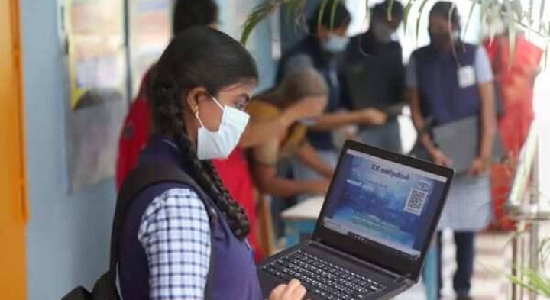
New national education policy: Here are some of the key highlights

Agencies
July 29, 2020

New Delhi, Jul 29: The new National Education Policy (NEP) approved by the Union Cabinet on Wednesday is set to usher in a slew of changes with the vision of creating an education system that contributes directly to transforming the country, providing high-quality education to all, and making India a global knowledge superpower.

The draft of the NEP by a panel headed by former Indian Space Research Organisation (ISRO) chief Kasturirangan and submitted to the Union Human Resource Development Minister Ramesh Pokhriyal when he took charge last year. The new NEP replaces the one formulated in 1986.

Some of the key highlights of the New Education Policy are:-

The policy aims to enable an individual to study one or more specialized areas of interest at a deep level, and also develop character, scientific temper, creativity, spirit of service, and 21st century capabilities across a range of disciplines including sciences, social sciences, arts, humanities, among others.

It identified the major problems facing the higher education system in the country and suggested changes such as moving towards multidisciplinary universities and colleges, with more institutions across India that offer medium of instruction in local/Indian languages, a more multidisciplinary undergraduate education, among others. 

The governance of such institutions by independent boards having academic and administrative autonomy has also been suggested.

Under the suggestions for institutional restructuring and consolidation, it has suggested that by 2040, all higher education institutions (HEIs) shall aim to become multidisciplinary institutions, each of which will aim to have 3,000 or more students, and by 2030 each or near every district in the country there will be at least one HEI.

The aim will be to increase the Gross Enrolment Ratio in HEIs including vocational education from 26.3 per cent (2018) to 50 per cent by 2035.

Single-stream HEIs will be phased out over time, and all will move towards becoming vibrant multidisciplinary institutions or parts of vibrant multidisciplinary HEI clusters.

It also pushes for more holistic and multidisciplinary education to be provided to the students.

Comments

Add new comment

  • Coastaldigest.com reserves the right to delete or block any comments.
  • Coastaldigset.com is not responsible for its readers’ comments.
  • Comments that are abusive, incendiary or irrelevant are strictly prohibited.
  • Please use a genuine email ID and provide your name to avoid reject.
News Network
June 18,2020

New Delhi, Jun 18: Sonia Gandhi on Wednesday removed Sanjay Jha as a party spokesperson, days after he wrote a newspaper article criticising the party. She also approved the appointment of Abhishek Dutt and Sadhna Bharti as national media panelists for the Congress.

"Congress president has also approved that Sanjay Jha be dropped as AICC spokesperson with immediate effect," the party said in an official statement.

In the article published a few days ago, Mr Jha had said, "The Congress has demonstrated extraordinary lassitude, and its lackadaisical attitude towards its own political obsolescence is baffling..."

"I would like to call a spade a spade here and a shovel: there has been no serious effort to get the party up and running with any sense of urgency," he had said in the article in a national newspaper.

"There are many in the party who cannot comprehend this perceptible listlessness. For someone like me, for instance, permanently wedded to Gandhian philosophy and Nehruvian outlook that defines the Congress, it is dismaying to see its painful disintegration," he had said.

Comments

Add new comment

  • Coastaldigest.com reserves the right to delete or block any comments.
  • Coastaldigset.com is not responsible for its readers’ comments.
  • Comments that are abusive, incendiary or irrelevant are strictly prohibited.
  • Please use a genuine email ID and provide your name to avoid reject.
News Network
May 24,2020

New Delhi, May 24: The Indian economy is likely to slip into recession in the third quarter of this fiscal as loss in income and jobs and cautiousness among consumers will delay recovery in consumer demand even after the pandemic, says a report.

According to Dun & Bradstreet's latest Economic Observer, the country's economic recovery will depend on the efficacy and duration of implementation of the government's stimulus package.

"The multiplier effect of the stimulus measures on the economy will depend on three key aspects i.e. the time taken for effecting the withdrawal of the lockdown, the efficacy of implementation and duration of execution of the measures announced," Dun & Bradstreet India Chief Economist Arun Singh said.

The report noted that the government's larger-than-expected stimulus package is likely to re-start economic activities.

Besides, measures taken by the Reserve Bank of India like reducing the repo rate by a further 40 basis points to 4 per cent, extending the moratorium period by three months and facilitating working capital financing will also help stimulate the momentum.

Singh said while the measures announced by the government are "positive", most of them have been directed towards strengthening the supply side of the economy, and "it is to be noted that supply needs to be matched with demand", he said.

Besides, "in the absence of cash-in-hand benefits under the government's stimulus package, demand for goods and services is expected to remain depressed", he added.

He further said the loss in income and employment opportunities, and cautiousness among consumers, will lead to a delayed recovery in consumer demand, even after the pandemic. As debt and bad loan levels increase, the banking sector might face challenges.

The report further noted that even as the monetary stimulus is expected to inject liquidity and stimulate demand for a wider section of the economy, the channelisation of funds from the financial institutions will be subjected to several constraints.

The foremost concern being increase in risk averseness, as the balance sheets of firms, households, and banks/NBFCs have weakened considerably and low demand for funds by firms as production activities have been on a standstill during the lockdown period, Singh said.

India has been under lockdown since March 25 to contain the spread of the coronavirus, resulting in supply disruptions and demand compression.

Prime Minister Narendra Modi imposed a nationwide lockdown to control the spread of coronavirus on March 25. It has been extended thrice, with some relaxations. The fourth phase of the lockdown is set to expire on May 31. 

Comments

Add new comment

  • Coastaldigest.com reserves the right to delete or block any comments.
  • Coastaldigset.com is not responsible for its readers’ comments.
  • Comments that are abusive, incendiary or irrelevant are strictly prohibited.
  • Please use a genuine email ID and provide your name to avoid reject.
News Network
January 14,2020

New Delhi, Jan 14: The curative petitions of Vinay Sharma and Mukesh, who were sentenced to death in the Nirbhaya gang rape and murder case, was on Tuesday rejected by a five-judge Supreme Court Bench led by Justice N.V. Ramana.

In a three-page order, the Bench concluded, after an in chamber consideration that began about 1.45 p.m., that there was no merit in their pleas to spare them from the gallows.

“We have gone through the curative petitions and relevant documents. In our opinion, no case is made out within the parameters indicated in the decision of this Court in Rupa Ashok Hurra versus Ashok Hurra. Hence, the curative petitions are dismissed,” the court held.

Curative is a rare remedy devised by a Constitution Bench of the Supreme Court in its judgment in the Rupa Ashok Hurra case in 2002. A party can take only two limited grounds in a curative petition - one, he was not heard by the court before the adverse judgment was passed, and two, the judge was biased. A curative plea, which follows the dismissal of review petition, is the last legal avenue open for convicts in the Supreme Court. Sharma was the first among the four convicts to file a curative.

The Bench also rejected their pleas to stay the execution of their death sentence and for oral hearing in open court.

Besides Justice Ramana, the Bench comprised Arun Mishra, Rohinton Nariman, R. Banumathi and Ashok Bhushan.

Curative petitions were filed in the Supreme Court by both convicts on January 9. The petitions had come just days after a Delhi sessions court schedulled the execution of all the four convicts in Tihar jail on January 22.

Sharma and Mukesh, in separate curative petitions, argued that there was a “sea change” in the death penalty jurisprudence since their convictions. Carrying out the death sentence on such changed circumstances would be a “gross miscarriage of justice”.

In his plea, Sharma said the Court had commuted the death penalty in several rape and murder cases since 2017, when it first confirmed the death penalty to the Nirbhaya convicts.

“fter the pronouncement of judgment in 2017, there have been as many as 17 cases involving rape and murder in which various three-judge Benches of the Supreme Court have commuted the sentence of death,” the petition contended.

The Supreme Court recently dismissed a review petition filed by Akshay Singh, another of the four four condemned men, to review its May 5, 2017 judgment confirming the death penalty. It also refused his plea to grant him three weeks' time to file a mercy petition before the President of India.

A Bench led by Justice R. Banumathi had said it was open for the Nirbhaya case convicts to avail whatever time the law prescribes for the purpose of filing a mercy plea.

Akshay (33), Mukesh (30), Pawan Gupta (23) and Sharma (24) had brutally gang-raped a 23-year-old paramedical student in a moving bus on the intervening night of December 16-17, 2012. She died of her injuries a few days later.

The case shocked the nation and led to the tightening of anti-rape laws. Rape, especially gang rape, is now a capital crime.

One of the accused in the case, Ram Singh, allegedly committed suicide in the Tihar jail. A juvenile, who was among the accused, was convicted by a juvenile justice board. He was released from a reformation home after serving a three-year term.

Comments

Add new comment

  • Coastaldigest.com reserves the right to delete or block any comments.
  • Coastaldigset.com is not responsible for its readers’ comments.
  • Comments that are abusive, incendiary or irrelevant are strictly prohibited.
  • Please use a genuine email ID and provide your name to avoid reject.