Indian Elephant and Chinese Dragon Must Dance Together, Not Fight Each Other: China

Agencies
March 8, 2018

Beijing, Mar 8:  The Chinese dragon and Indian elephant must not fight but dance with each other, China's Foreign Minister Wang Yi said today as he called on the two nations to shed mental inhibitions, manage differences and meet each other half way to enhance bilateral ties.

Mr Wang's remarks came during his annual press conference on the sidelines of the parliamentary session.

Asked how China views relations with India this year after turbulence in ties in 2017 due to a number of issues including the Doklam standoff, Mr Wang said, "Despite some tests and difficulties, the China-India relationship continues to grow".

Bilateral ties were affected by a number of issues last year, including the China-Pakistan Economic Corridor which passes through Pakistan-occupied Kashmir, China blocking efforts at the United Nations to list terror group Jaish-e-Mohammed chief Masood Azhar as a global terrorist as well as India's entry into the Nuclear Suppliers Group or NSG.

Troops of India and China were locked in a 73-day-long standoff in Doklam in the Sikkim sector. The standoff ended on August 28 after the Chinese military stopped the illegal construction of a road close to India's strategic 'chicken's neck' corridor connecting the northeastern states to the rest of the country.

Mr Wang, however, said the two countries must shed mental inhibitions, manage differences and meet each other half way.

"China is upholding its rights and legitimate interests and taking care to preserve the relationship with India," he said.

"Chinese and Indian leaders have developed a strategic vision for the future of our relations. The Chinese dragon and Indian elephant must not fight each other but dance with each other," he said.

"If China and India are united, one plus one will become eleven instead of two," he said.

Speaking for the first time on bilateral ties this year, Mr Wang said the international situation is experiencing its biggest change in a century and China and India must do everything to emphasise this and support each other and avoid mutual suspicion and attrition.

He said mutual trust is the most precious commodity in the China-India relations.

"With political trust, not even the Himalayas can stop us from friendly exchanges," he said.

"A shared understanding far outstrip our differences. Our common interests far outweigh our frictions. China is willing and ready to inherit and take forward our traditional friendship and be a friend and partner of the Indian people."

"I hope the two sides will be free from mental inhibitions and meet each other halfway. Let us replace suspicion with trust, manage differences with dialogue and build a future with cooperation," he said.

Mr Wang reacted strongly to a question whether the Indo-Pacific strategy being furthered by India, the US, Japan and Australia will affect China's Belt and Road Initiative (BRI).

He said there was "no shortage of headline grabbing ideas" but they were "like the foam on the sea" that "gets attention but will soon dissipate".

Contrary to claims made by some academics and media outlets that the strategy is aimed at containing China, the four countries have made it clear that it targets no one, Mr Wang said. "I hope they mean what they say," he said.

"Let us not forget that the Belt and Road Initiative has received the support of over 100 countries. Nowadays stroking a new Cold War is out of sync with the times and inciting confrontation will find no market," he said.

Touted as Chinese President Xi Jinping's ambitious project, the Belt and Road Initiative focuses on improving connectivity and cooperation among Asian countries, Africa, China and Europe.

The Belt and Road Initiative also includes the China-Pakistan Economic Corridor or CPEC which India strongly opposes as it passes through Pakistan-occupied Kashmir.

Comments

Add new comment

  • Coastaldigest.com reserves the right to delete or block any comments.
  • Coastaldigset.com is not responsible for its readers’ comments.
  • Comments that are abusive, incendiary or irrelevant are strictly prohibited.
  • Please use a genuine email ID and provide your name to avoid reject.
Agencies
April 14,2020

The US Commission on International Religious Freedom (USCIRF) has reprimanded the Imran Khan government for denying food aid to Hindus and Christians in Pakistan amid the coronavirus pandemic and warned that it will trigger an additional crisis due to religious discrimination.

The USCIRF is an independent federal government entity set up by the US Congress to monitor and report on religious freedom in the world.

Pakistan continues to be in the tier one of the USCIRF list of the countries whose record on religious freedom remains abysmal.

In a statement issue on Monday, the USCIRF said it was troubled by the reports of food aid being denied to Hindus and Christians in Pakistan amid pandemic.

Citing one of the examples of religious discrimination, the USCIRF said that in Karachi, the Saylani Welfare International Trust, a non-government organization set up to help the homeless and seasonal workers, has been refusing food aid to Hindus and Christians and providing it only Muslims.

Describing such actions "reprehensible", the USCIRF commissioner Anurima Bhargava said: "As COVID-19 continues to spread, vulnerable communities within Pakistan are fighting hunger and to keep their families safe and healthy. Food aid must not be denied because of one's faith."
One of the USCIRF commissioners, Johnnie Moore warned that if the Khan government continued with such policies, Pakistan would add an additional crisis.

"In a recent address by Prime Minister Khan to the international community, he highlighted that the challenge facing governments in the developing world is to save people from dying of hunger while also trying to halt the spread of COVID-19. This is a monumental task laying before many countries.

"Prime Minister Khan's government has the opportunity to lead the way but they must not leave religious minorities behind. Otherwise, they may add on top of it all one more crisis, created by religious discrimination and inter-communal strife."

The organization which makes foreign policy recommendations to the US President, the Secretary of State, and Congress, urged the Pakistani government to ensure that food aid from distributing organizations is shared equally with Hindus, Christians, and other religions minorities.

Last year, in its annual report, the USCIRF had noted that Hindus and Christians in Pakistan "face continued threats to their security and are subjected to various forms of harassment and social exclusion".

Comments

Add new comment

  • Coastaldigest.com reserves the right to delete or block any comments.
  • Coastaldigset.com is not responsible for its readers’ comments.
  • Comments that are abusive, incendiary or irrelevant are strictly prohibited.
  • Please use a genuine email ID and provide your name to avoid reject.
News Network
February 22,2020

Washington, Feb 22: US President Donald Trump will raise the issue of religious freedom with Prime Minister Narendra Modi during his visit to India next week, the White House said on Friday, noting that the US has great respect for India's democratic traditions and institutions.

"President Trump will talk about our shared tradition of democracy and religious freedom both in his public remarks and then certainly in private. He will raise these issues, particularly the religious freedom issue, which is extremely important to this administration," a senior official told reporters in a conference call.

The official was responding to a question on whether the president was planning to speak to Modi on the Citizenship (Amendment) Act or the National Register of Citizens.

"We do have this shared commitment to upholding our universal values, the rule of law. We have great respect for India's democratic traditions and institutions, and we will continue to encourage India to uphold those traditions," the official said, requesting anonymity.

"And we are concerned with some of the issues that you have raised," the senior administration official said, in response to the question on CAA and NRC.

"I think the President will talk about these issues in his meetings with Prime Minister Modi and note that the world is looking to India to continue to uphold its democratic traditions, respect for religious minorities," the official said.

"Of course, it's in the Indian constitution -- religious freedom, respect for religious minorities, and equal treatment of all religions. So this is something that is important to the president and I'm sure it will come up," said the official.

Pointing out that India has a strong democratic foundation, the official said India is a country rich in religious, linguistic, and cultural diversity.

"In fact, it's the birthplace of four major world religions," the official noted.

Comments

Add new comment

  • Coastaldigest.com reserves the right to delete or block any comments.
  • Coastaldigset.com is not responsible for its readers’ comments.
  • Comments that are abusive, incendiary or irrelevant are strictly prohibited.
  • Please use a genuine email ID and provide your name to avoid reject.
News Network
July 27,2020

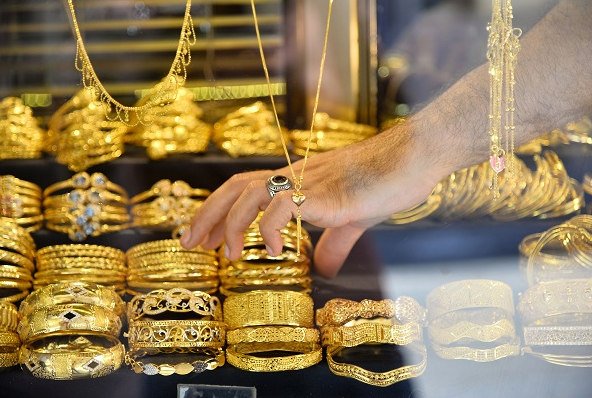
Tokyo, Jul 27: Gold hit an all-time high on Monday as tit-for-tat consulate closures in China and the United States rattled investors, boosting the allure of safe-haven assets, although sentiment was mixed with tech gains supporting some Asian stocks.

MSCI's ex-Japan Asia-Pacific index rose 1.3 percent as Taiwan's TSMC, Asia's third-largest company by market capitalisation, rose almost 10 percent.

The chipmaker's gains boosted other tech stocks in the region and came after rival Intel signalled it may give up manufacturing its own components due to delays in new 7-nanometer chip technology.

Also soothing sentiment, Chinese shares eked out gains after big falls late last week, with CSI300 index rising 0.5 percent.

S&P500 futures were last up 0.4 percent in choppy trade while Japan's Nikkei fell 0.5 percent, resuming trade after a long weekend and catching up with falls in global shares late last week.

Global shares had lost steam last week after Washington ordered China's consulate in Houston to close, prompting Beijing to react in kind by closing the US consulate in Chengdu.

US Secretary of State Mike Pompeo took fresh aim at China last week, saying Washington and its allies must use "more creative and assertive ways" to press the Chinese Communist Party to change its ways.

"US President (Donald) Trump used to say China's President Xi Jinping is a great leader. But now Pompeo's wording is becoming so aggressive that markets are starting to worry about further escalation," said Norihiro Fujito, chief investment strategist at Mitsubishi Securities.

Gold rose 1.0 percent to a record high of $1,920.9 per ounce, surpassing a peak touched in September 2011, as Sino-US tensions boosted the allure of safe-haven assets, especially those not tied to any specific country.

The yellow metal is also helped by aggressive monetary easing adopted by many central banks around the world since the pandemic plunged the global economy into a recession.

Some investors fret such an unprecedented level of money-printing could eventually lead to inflation.

MORE STIMULUS

Hopes of a quick US economic recovery are fading as coronavirus infections showed few signs of slowing.

That means the economy could capitulate without fresh support from the government, with some of earlier steps such as enhanced jobless benefits due to expire this month.

Investors hope US Congress will agree on a deal before its summer recess but there are some sticking points including the size of the stimulus and enhanced unemployment benefits.

US Treasury Secretary Steve Mnuchin said the package will contain extended unemployment benefits with 70 percent "wage replacement".

Democrats, who control the House of Representatives, want enhanced benefits of $600 per week to be extended and look to much bigger stimulus compared with the Republicans' $1 trillion plan.

Investors are looking to corporate earnings from around the world for hints on the pace of recovery in the global economy.

"It looks like rising coronavirus cases are starting to slow down recovery in many countries," said Masahiro Ichikawa, senior strategist at Sumitomo Mitsui DS Asset Management.

Concerns about the US economic outlook started to weigh on the dollar, reversing its inverse correlation with the economic well-being over the past few months.

The dollar index dropped 0.3 percent to its lowest level in nearly two years.

The euro gained 0.3 percent to $1.1693, hitting a 22-month high of $1.16590 as sentiment on the common currency improved after European leaders reached a deal on a recovery fund in a major step towards more fiscal co-operation.

Against the yen, the dollar slipped 0.5 percent to 105.605 yen, a four-month low while the British pound hit a 4 1/2-month high of $1.2832.

Oil prices dipped on worries about the worsening Sino-US relations.

Brent futures fell 0.46 percent to $43.14 per barrel while US crude futures lost 0.44 percent to $41.11.

Comments

Add new comment

  • Coastaldigest.com reserves the right to delete or block any comments.
  • Coastaldigset.com is not responsible for its readers’ comments.
  • Comments that are abusive, incendiary or irrelevant are strictly prohibited.
  • Please use a genuine email ID and provide your name to avoid reject.