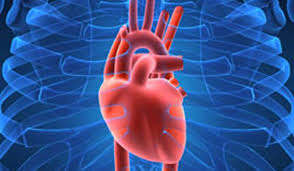
Indian-origin doctor in US implants first leadless pacemaker inside patient's heart

February 9, 2014

Pacemaker_inside_patients_heartNew York, Feb 9: An Indian-origin doctor in the US has implanted the first miniature-sized, leadless cardiac pacemaker directly inside a patient's heart without surgery.

The leads-free pacemaker is implanted directly inside the heart during a catheter-guided procedure through the groin via the femoral artery.

The device implanted by Vivek Reddy from The Mount Sinai Hospital, resembles a small metal silver tube, and is only a few centimetres in length, making it less than ten per cent the size of a traditional pacemaker.

The Nanostim device, made by St Jude Medical, is being tested for safety and efficacy in an international, multicentre clinical trial called LEADLESS II, which is planning to enroll 670 patients at 50 centres across the US, Canada, and Europe.

"This clinical research trial will be testing the latest innovative, non-surgical pacemaker option for patients experiencing a slowed heart beat," said Reddy, the study's co-investigator.

"This new-age, tiny pacemaker may ultimately be safer for patients because it doesn't have leads or have to be inserted under the skin of a patient's chest, like a traditional cardiac pacemaker," Reddy said.

Similar to other cardiac pacemakers, the Nanostim device treats a heart rate that is too slow called bradycardia.

It works by closely monitoring the heart's electrical rhythms and if the heart beat is too slow it provides electrical stimulation therapy to regulate it.

More than 4 million patients globally have a pacemaker, and 700,000 new patients receive one each year, researchers said.

The possible advantages of the leadless pacemaker include the elimination of a surgical pocket and no visible pacemaker device under a patient's chest skin, no incision scar on the chest, no connector wires or leads, and no restrictions on a patient's activities.

The device's benefits may also allow for less patient discomfort, infections, and device complications and dysfunction.

In addition, the free-standing, battery-operated pacemaker device is designed to be fully retrievable from the heart.

"The same cardiac pacing results for patients may be available with this smaller leads-free device with the added benefits of a non-surgical procedure and less complication risks," said Srinivas Dukkipati, who is the study's principal investigator.

Comments

Add new comment

  • Coastaldigest.com reserves the right to delete or block any comments.
  • Coastaldigset.com is not responsible for its readers’ comments.
  • Comments that are abusive, incendiary or irrelevant are strictly prohibited.
  • Please use a genuine email ID and provide your name to avoid reject.
Agencies
May 8,2020

As Europe and the US loosen their lockdowns against the coronavirus, health experts are expressing growing dread over what they say is an all-but-certain second wave of deaths and infections that could force governments to clamp back down.

"We are risking a backslide that will be intolerable," said Dr Ian Lipkin of Columbia University's Center for Infection and Immunity.

Around the world, German authorities began drawing up plans in case of a resurgence of the virus. Experts in Italy urged intensified efforts to identify new victims and trace their contacts. And France, which has not yet eased its lockdown, has already worked up a "reconfinement plan" in the event of a new wave.

"There will be a second wave, but the problem is to which extent. Is it a small wave or a big wave? It is too early to say," said Olivier Schwartz, head of the virus unit at France's Pasteur Institute.

In the US, with about half of the states easing their shutdowns to get their economies restarted and cellphone data showing that people are becoming restless and increasingly leaving home, public health authorities are worried.

Many states have not put in place the robust testing that experts believe is necessary to detect and contain new outbreaks. And many governors have pressed ahead before their states met one of the key benchmarks in the Trump administration's guidelines for reopening -- a 14-day downward trajectory in new illnesses and infections.

"If we relax these measures without having the proper public health safeguards in place, we can expect many more cases and, unfortunately, more deaths," said Josh Michaud, associate director of global health policy with the Kaiser Family Foundation in Washington.

Cases have continued to rise steadily in places such as Iowa and Missouri since the governors began reopening, while new infections have yo-yoed in Georgia, Tennessee and Texas.

Lipkin said he is most worried about two things: the reopening of bars, where people crowd together and lose their inhibitions, and large gatherings such as sporting events, concerts and plays. Preventing outbreaks will require aggressive contact tracing powered by armies of public health workers hundreds of thousands of people strong, which the US does not yet have, Lipkin said.

Worldwide the virus has infected more than 36 lakh people and killed over a quarter-million, according to a tally by Johns Hopkins University that experts agree understates the dimensions of the disaster because of limited testing, differences in counting the dead and concealment by some governments.

The US has recorded over 70,000 deaths and 12 lakh confirmed infections, while Europe has reported over 140,000 dead.

This week, the researchers behind a widely cited model from the University of Washington nearly doubled their projection of deaths in the US to around 134,000 through early August, in large part because of the easing of state stay-at-home restrictions. Newly confirmed infections per day in the US exceed 20,000 and deaths per day are running well over 1,000.

In hard-hit New York City, which has managed to bring down deaths dramatically even as confirmed infections continue to rise around the rest of the country, Mayor Bill de Blasio warned that some states may be reopening too quickly.

"My message to the rest of the country is learn from how much effort, how much discipline it took to finally bring these numbers down and follow the same path until you are sure that it is being beaten back," he said on CNN, "or else, if this thing boomerangs, you are putting off any kind of restart or recovery a hell of a lot longer."

A century ago, the Spanish flu epidemic's second wave was far deadlier than its first, in part because authorities allowed mass gatherings from Philadelphia to San Francisco.

"It is clear to me that we are in a critical moment of this fight. We risk complacency and accepting the preventable deaths of 2,000 Americans each day," epidemiologist Caitlin Rivers, a professor at Johns Hopkins, told a House subcommittee in Washington.

President Donald Trump, who has pressed hard to ease the restrictions that have throttled the economy and thrown more than three crore Americans out of work, pulled back Wednesday on White House plans revealed a day earlier to wind down the coronavirus task force.

He tweeted that the task force will continue meeting indefinitely with a "focus on SAFETY & OPENING UP OUR COUNTRY AGAIN".

Underscoring those economic concerns, the European Union predicted the worst recession in its quarter-century history. And the US unemployment rate for April, which comes out on Friday, is expected to hit a staggering 16 per cent, a level last seen during the Great Depression of the 1930s.

Governors continue to face demands, even lawsuits, to reopen. In Michigan, where armed demonstrators entered the Capitol last week, the Republican-led Legislature sued Democratic Governor Gretchen Whitmer, asking a judge to declare invalid her stay-at-home order, which runs at least through May 15.

In hard-hit Italy, which has begun easing restrictions, Dr Silvio Brusaferro, president of the Superior Institute of Health, urged "a huge investment" of resources to train medical personnel to monitor possible new cases of the virus, which has killed about 30,000 people nationwide.

He said that contact-tracing apps which are being built by dozens of countries and companies are not enough to manage future waves of infection.

German Chancellor Angela Merkel said after meeting with the country's 16 governors that restaurants and other businesses will be allowed to reopen in the coming weeks but that regional authorities will have to draw up a "restriction concept" for any county that reports 50 new cases for every 100,000 inhabitants within a week.

Lothar Wieler, head of Germany's national disease control centre, said scientists "know with great certainty that there will be a second wave" of infections.

Britain, with over 30,000 dead, the second-highest death toll in the world behind the US, plans to extend its lockdown but has begun recruiting 18,000 people to trace contacts of those infected.

In other developments, the US Centers for Disease Control and Prevention said nearly 5,000 coronavirus illnesses and at least 88 deaths have been reported among inmates in American jails and prisons. An additional 2,800 cases and 15 deaths were reported among guards and other staff members.


Comments

Add new comment

  • Coastaldigest.com reserves the right to delete or block any comments.
  • Coastaldigset.com is not responsible for its readers’ comments.
  • Comments that are abusive, incendiary or irrelevant are strictly prohibited.
  • Please use a genuine email ID and provide your name to avoid reject.
Agencies
June 24,2020

New Delhi, Jun 24: Expanding the testing criterion for coronavirus, the Indian Council of Medical Research has said it should be made widely available to all symptomatic individuals across the country.

"Since test, track and treat' is the only way to prevent spread of infection and save lives, it is imperative that testing should be made widely available to all symptomatic individuals in every part of the country and contact tracing mechanisms for containment of infection are further strengthened," it said in an advisory on 'Newer Additional Strategies for COVID-19 Testing' on Tuesday.

In its revised testing strategy for COVID-19 issued on May 18, the Indian Council of Medical Research (ICMR) had advised testing for all symptomatic Influenza-like illness (ILI) among returnees and migrants within seven days of illness.

All hospitalised patients who develop ILI symptoms, symptomatic individuals living within hotspots or containment zones and healthcare and frontline workers involved in containment and mitigation of coronavirus were also advised testing.

The apex health research body has also advised authorities to enable all government and private hospitals, offices and public sector units to perform antibody-based COVID-19 testing for surveillance to help allay fears and anxiety of healthcare workers and office employees.

The earlier advisories on rapid antibody testing advisories had focused on areas reporting clusters (containment zones), large migration gatherings/evacuees centers and testing of symptomatic ILI individuals at facility level.

Besides, the ICMR on Tuesday also recommended deployment of rapid antigen detection tests for COVID-19 in combination with RT-PCR tests in all containment zones, all central and state government medical colleges and government hospitals, all private hospitals approved by the National Accreditation Board for Hospitals and Healthcare (NABH), all NABL-accredited and ICMR approved private labs, for COVID-19 testing.

All hospitals, laboratories and state governments intending to perform the point-of-care antigen tests need to register with ICMR to obtain the login credentials for data entry.

"ICMR advises all state governments, public and private institutions concerned to take required steps to scale up testing for COVID-19 by deploying combination of various tests as advised," the advisory added.

Comments

Add new comment

  • Coastaldigest.com reserves the right to delete or block any comments.
  • Coastaldigset.com is not responsible for its readers’ comments.
  • Comments that are abusive, incendiary or irrelevant are strictly prohibited.
  • Please use a genuine email ID and provide your name to avoid reject.
Agencies
March 25,2020

The practice of washing your hands for 20 seconds is one of the best preventive measures you can take to avoid the spread of any virus including coronavirus as recommended by the WHO.

The modern day concept of handwashing was introduced by Hungaraian doctor Ignaz Semmelweis, in 19-th century Vienna. Semmelweis proposed the practice of washing hands with chlorinated lime solutions in 1847 while working in the city's general hospital.

Decades later, in the modern times too the practise has not lost it's relevance. To connect with savvy consumers the message is being sent through social media? But social media can also be a dark place where misinformation is rampant; consumers can end up being misguided and compromised on sensitive issues like health and hygiene.

Dettol, recently kickstarted its #HandWashChallenge on TikTok aiming to raise awareness on four simple steps of handwashing. Strategically aimed at creating awareness among audience, a unique song has been created pairing it extremely well with the hashtag #HandWashChallenge. The hashtag filter has a branded Dettol strip across the top with the hashtag and names the steps involved in washing hands. The user can dance out the steps to the challenge and share it with their friends to further amplify the message on hygiene and safety.

Commenting on the same, Pankaj Duhan, Chief Marketing Officer, RB Health South Asia said, "We are elated with the response to the #HandWashChallenge, it has definitely become one of the most successfully led initiatives by any of our brands at RB. Understanding the consumer's mindset is of the utmost importance to us, therefore our campaign communication is built in a way that creates meaningful conversations to drive awareness amongst consumers. The participation by TikTok users across India has helped deliver the right message in a more engaging and interactive manner.

"I personally would like to encourage more and more people to join this global health & hygiene educational exercise. Together, let us all build a healthier nation, four steps at a time."

He further said, "Over the past couple of weeks we have witnessed a lot of misinformation floating around hygiene practices, especially over the internet. Realizing the gravity of the issue and being the responsible brand, we felt it was our prerogative to initiate this awareness campaign."

The campaign witnessed several quirky activities on each day leading to increased consumer interest. Joining the force were some of Bollywood's popular celebrities like Kartik Aaryan and Urvashi Rautela among several other TikTok influencers who have millions of followers on the platform. As part of Phase II, Dettol plans to take the challenge global by encouraging more users to participate while the audience worldwide.

The challenge has witnessed over 18 Billion views and generated over 123K user participation videos in one week of starting the campaign.

Comments

Add new comment

  • Coastaldigest.com reserves the right to delete or block any comments.
  • Coastaldigset.com is not responsible for its readers’ comments.
  • Comments that are abusive, incendiary or irrelevant are strictly prohibited.
  • Please use a genuine email ID and provide your name to avoid reject.