



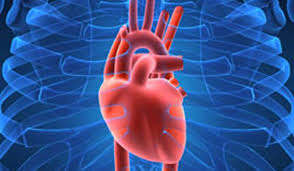
Indian-origin doctor in US implants first leadless pacemaker inside patient's heart

February 9, 2014

Pacemaker_inside_patients_heartNew York, Feb 9: An Indian-origin doctor in the US has implanted the first miniature-sized, leadless cardiac pacemaker directly inside a patient's heart without surgery.

The leads-free pacemaker is implanted directly inside the heart during a catheter-guided procedure through the groin via the femoral artery.

The device implanted by Vivek Reddy from The Mount Sinai Hospital, resembles a small metal silver tube, and is only a few centimetres in length, making it less than ten per cent the size of a traditional pacemaker.

The Nanostim device, made by St Jude Medical, is being tested for safety and efficacy in an international, multicentre clinical trial called LEADLESS II, which is planning to enroll 670 patients at 50 centres across the US, Canada, and Europe.

"This clinical research trial will be testing the latest innovative, non-surgical pacemaker option for patients experiencing a slowed heart beat," said Reddy, the study's co-investigator.

"This new-age, tiny pacemaker may ultimately be safer for patients because it doesn't have leads or have to be inserted under the skin of a patient's chest, like a traditional cardiac pacemaker," Reddy said.

Similar to other cardiac pacemakers, the Nanostim device treats a heart rate that is too slow called bradycardia.

It works by closely monitoring the heart's electrical rhythms and if the heart beat is too slow it provides electrical stimulation therapy to regulate it.

More than 4 million patients globally have a pacemaker, and 700,000 new patients receive one each year, researchers said.

The possible advantages of the leadless pacemaker include the elimination of a surgical pocket and no visible pacemaker device under a patient's chest skin, no incision scar on the chest, no connector wires or leads, and no restrictions on a patient's activities.

The device's benefits may also allow for less patient discomfort, infections, and device complications and dysfunction.

In addition, the free-standing, battery-operated pacemaker device is designed to be fully retrievable from the heart.

"The same cardiac pacing results for patients may be available with this smaller leads-free device with the added benefits of a non-surgical procedure and less complication risks," said Srinivas Dukkipati, who is the study's principal investigator.

Comments

Add new comment

  • Coastaldigest.com reserves the right to delete or block any comments.
  • Coastaldigset.com is not responsible for its readers’ comments.
  • Comments that are abusive, incendiary or irrelevant are strictly prohibited.
  • Please use a genuine email ID and provide your name to avoid reject.
Agencies
January 26,2020

High-protein diets may help people lose weight and build muscle, but there is a downside to it --a greater heart attack risk. Researchers now report that high-protein diets boost artery-clogging plaque.

The research in mice showed that high-protein diets spur unstable plaque -- the kind most prone to rupturing and causing blocked arteries.

More plaque buildup in the arteries, particularly if it's unstable, increases the risk of heart attack.

"There are clear weight-loss benefits to high-protein diets, which has boosted their popularity in recent years," said senior author Babak Razani, associate professor at Washington University School of Medicine in St. Louis, Missouri.

"But animal studies and some large epidemiological studies in people have linked high dietary protein to cardiovascular problems. We decided to take a look at whether there is truly a causal link between high dietary protein and poorer cardiovascular health," Razani added.

The researchers studied mice who were fed a high-fat diet to deliberately induce atherosclerosis, or plaque buildup in the arteries.

Some of the mice received a high-fat diet that was also high in protein. And others were fed a high-fat, low-protein diet for comparison.

The mice on the high-fat, high-protein diet developed worse atherosclerosis -- about 30 per cent more plaque in the arteries -- than mice on the high-fat, normal-protein diet, despite the fact that the mice eating more protein did not gain weight, unlike the mice on the high-fat, normal-protein diet.

"A couple of a scoop of protein powder in a milkshake or smoothie adds something like 40 grams of protein -- almost equivalent to the daily recommended intake," Razani said.

"To see if protein has an effect on cardiovascular health, we tripled the amount of protein that the mice receive in the high-fat, high-protein diet -- keeping the fat constant. Protein went from 15 per cent to 46 per cent of calories for these mice".

Plaque contains a mix of fat, cholesterol, calcium deposits and dead cells. Past work by Razani's team and other groups has shown that immune cells called macrophages work to clean up plaque in the arteries.

But the environment inside plaque can overwhelm these cells, and when such cells die, they make the problem worse, contributing to plaque buildup and increasing plaque complexity.

"In mice on the high-protein diet, their plaques were a macrophage graveyard," Razani informed.

To understand how high dietary protein might increase plaque complexity, Razani and his colleagues also studied the path protein takes after it has been digested -- broken down into its original building blocks, called amino acids.

"This study is not the first to show a telltale increase in plaque with high-protein diets, but it offers a deeper understanding of the impact of high protein with the detailed analysis of the plaques," said Razani.

"This work not only defines the critical processes underlying the cardiovascular risks of dietary protein but also lays the groundwork for targeting these pathways in treating heart disease," he added.

Comments

Add new comment

  • Coastaldigest.com reserves the right to delete or block any comments.
  • Coastaldigset.com is not responsible for its readers’ comments.
  • Comments that are abusive, incendiary or irrelevant are strictly prohibited.
  • Please use a genuine email ID and provide your name to avoid reject.
Agencies
May 5,2020

The lockdown forced by the coronavirus in India has had some unexpected but positive fallouts: It has brought families together and reduced corporate politics, says an expert working in the field for the past decade.

"Today the whole world is on lockdown because of COVID-19, and all that we read, talk and hear is about life and death. We can't deny that the times are tough and the future is uncertain. But I would like to turn the coin and see the other side: the positive side," Shikha Mittal, Founder Director of Be.artsy told IANS in an interview.

Be.artsy is one of India's leading social awareness enterprises which deals with emotions at work and promotes arts as a communication tool for workplaces.

"In the 21st century, personally and professionally, people are practising politics over humanity, competition over collaboration, and have lost touch with themselves due to materialistic desires. During the lockdown, we are forced to confront our existing daily lives, and two interesting things that we can ponder upon, have emerged.

"First, have we ever looked at our family with the same lens as we are using today? What is it that we are doing differently with family today, and what can we do to carry our actions of today into our tomorrow? This is the premise of the #aajjaisakalcontest" that Be.artsy has launched across India.

The aim is "to encourage people to share one habit or life skill that they never practiced earlier, but post Covid-19 would like to continue and enjoy".

How did Be.artsy come about?

"I used to be in the corporate world, earning promotions and greater responsibility. However, the work conditions in those days were unfriendly to women and I had faced many instances of sexual harassment and workplace harassment in the six years of my corporate career. And that's when I had an epiphany."

Be.artsy's most popular programmes are on Prevention of Sexual Harassment (POSH) and on Financial Literacy which makes young people financially independent and better prepared to face the corporate world. "We know that a stitch in time (of planning for the future) saves nine (debt trap, dependence, health emergencies, expenses exceeding income, no savings, families without support, retirement in poverty, lost dreams, extravagance). This can only be achieved by sensitisation," Mittal explained.

Comments

Add new comment

  • Coastaldigest.com reserves the right to delete or block any comments.
  • Coastaldigset.com is not responsible for its readers’ comments.
  • Comments that are abusive, incendiary or irrelevant are strictly prohibited.
  • Please use a genuine email ID and provide your name to avoid reject.
Agencies
February 26,2020

Feb 26: While too much stress can be toxic to your health, a new study suggests that despite its negative side effects, it may also lead to a surprising social benefit.

The research, published in the journal Stress & Health, found that experiencing stress made people both more likely to give and receive emotional support from another person.

This was true on the day they experienced the stressor as well as the following day.

"Our findings suggest that just because we have a bad day, that doesn't mean it has to be completely unhealthy," said study researcher David Almeida from Penn State University in the US.

"If stress can actually connect us with other people, which I think is absolutely vital to the human experience, I think that's a benefit. Stress could potentially help people deal with negative situations by driving them to be with other people," Almeida added.

For the study, the researchers interviewed 1,622 participants every night for eight nights. They asked the participants about their stressors and whether they gave or received emotional support on that day.

Stressors included arguments, stressful events at work or school, and stressful events at home.

The researchers found that on average, participants were more than twice as likely to either give or receive emotional support on days they experienced a stressor.

Additionally, they were 26 per cent more likely to give or receive support the following day.

The researchers said that while this effect, on average, was found across the participants, it differed slightly between men and women.

"Women tended to engage in more giving and receiving emotional support than men," said study researcher Hye Won Chai.

"In our study, men were also more likely to engage in emotional support on days they were stressed, but to a lesser extent than women," Chai added.

The researchers said they were surprised that stress was linked to people not just receiving emotional support, but giving it, as well.

"We saw that someone experiencing a stressor today actually predicted them giving emotional support the next day," Almeida said.

"This made me think that it's actually possible that stress helps to drive you to other people and allows it to be ok to talk about problems -- your problems, my problems," Almeida added.

Comments

Add new comment

  • Coastaldigest.com reserves the right to delete or block any comments.
  • Coastaldigset.com is not responsible for its readers’ comments.
  • Comments that are abusive, incendiary or irrelevant are strictly prohibited.
  • Please use a genuine email ID and provide your name to avoid reject.