



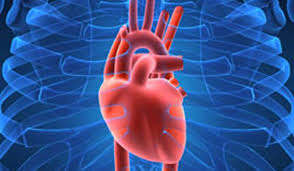
Indian-origin doctor in US implants first leadless pacemaker inside patient's heart

February 9, 2014

Pacemaker_inside_patients_heartNew York, Feb 9: An Indian-origin doctor in the US has implanted the first miniature-sized, leadless cardiac pacemaker directly inside a patient's heart without surgery.

The leads-free pacemaker is implanted directly inside the heart during a catheter-guided procedure through the groin via the femoral artery.

The device implanted by Vivek Reddy from The Mount Sinai Hospital, resembles a small metal silver tube, and is only a few centimetres in length, making it less than ten per cent the size of a traditional pacemaker.

The Nanostim device, made by St Jude Medical, is being tested for safety and efficacy in an international, multicentre clinical trial called LEADLESS II, which is planning to enroll 670 patients at 50 centres across the US, Canada, and Europe.

"This clinical research trial will be testing the latest innovative, non-surgical pacemaker option for patients experiencing a slowed heart beat," said Reddy, the study's co-investigator.

"This new-age, tiny pacemaker may ultimately be safer for patients because it doesn't have leads or have to be inserted under the skin of a patient's chest, like a traditional cardiac pacemaker," Reddy said.

Similar to other cardiac pacemakers, the Nanostim device treats a heart rate that is too slow called bradycardia.

It works by closely monitoring the heart's electrical rhythms and if the heart beat is too slow it provides electrical stimulation therapy to regulate it.

More than 4 million patients globally have a pacemaker, and 700,000 new patients receive one each year, researchers said.

The possible advantages of the leadless pacemaker include the elimination of a surgical pocket and no visible pacemaker device under a patient's chest skin, no incision scar on the chest, no connector wires or leads, and no restrictions on a patient's activities.

The device's benefits may also allow for less patient discomfort, infections, and device complications and dysfunction.

In addition, the free-standing, battery-operated pacemaker device is designed to be fully retrievable from the heart.

"The same cardiac pacing results for patients may be available with this smaller leads-free device with the added benefits of a non-surgical procedure and less complication risks," said Srinivas Dukkipati, who is the study's principal investigator.

Comments

Add new comment

  • Coastaldigest.com reserves the right to delete or block any comments.
  • Coastaldigset.com is not responsible for its readers’ comments.
  • Comments that are abusive, incendiary or irrelevant are strictly prohibited.
  • Please use a genuine email ID and provide your name to avoid reject.
Agencies
January 4,2020

Washington D.C., Jan 3: A new study has found out that diet significantly affects the mental health and well being of an individual.

The study was published in the journal European Neuropsychopharmacology.

"We have found that there is increasing evidence of a link between a poor diet and the worsening of mood disorders, including anxiety and depression. However, many common beliefs about the health effects of certain foods are not supported by solid evidence," said the lead researcher, Professor Suzanne Dickson.

According to the researchers, the link between diet and mental health can be firmly established in certain cases like that of the ability of a ketogenic diet being helpful for children with epilepsy and the impact of vitamin B12 deficiency on poor memory, depression and fatigue.

"With individual conditions, we often found very mixed evidence. With ADHD for example, we can see an increase in the quantity of refined sugar in the diet seems to increase ADHD and hyperactivity, whereas eating more fresh fruit and vegetables seems to protect against these conditions," said Dickson

But there are comparatively few studies, and many of them don't last long enough to show long-term effects," added Dickson.

The study further concludes that some food items can be associated with treatment and the betterment of certain mental health conditions.

Comments

Add new comment

  • Coastaldigest.com reserves the right to delete or block any comments.
  • Coastaldigset.com is not responsible for its readers’ comments.
  • Comments that are abusive, incendiary or irrelevant are strictly prohibited.
  • Please use a genuine email ID and provide your name to avoid reject.
Agencies
July 24,2020

Colorado, Jul 24: A new study has found that physical stress in one's job may be associated with faster brain ageing and poorer memory.

Aga Burzynska, an assistant professor in the Department of Human Development and Family Studies, and her research team connected occupational survey responses with brain-imaging data from 99 cognitively normal older adults, age 60 to 79. They found that those who reported high levels of physical stress in their most recent job had smaller volumes in the hippocampus and performed poorer on memory tasks. The hippocampus is the part of the brain that is critical for memory and is affected in both normal ageing and in dementia.

Their findings were published this summer in Frontiers in Human Neuroscience under the research topic 'Work and Brain Health Across the Lifespan.'

"We know that stress can accelerate physical ageing and is the risk factor for many chronic illnesses," Burzynska said. "But this is the first evidence that occupational stress can accelerate brain and cognitive ageing."

She added that it is important to understand how occupational exposures affect the ageing of our brains.

"An average American worker spends more than eight hours at work per weekday, and most people remain in the workforce for over 40 years," Burzynska said. "By pure volume, occupational exposures outweigh the time we spend on leisure social, cognitive and physical activities, which protect our ageing minds and brains."

Physical demands at work

Burzynska explained that the association between "physical stress" and brain/memory were driven by physical demands at work. These included excessive reaching, or lifting boxes onto shelves, not necessarily aerobic activity. This is important because earlier work by Burzynska and her colleagues showed that leisure aerobic exercise is beneficial for brain health and cognition, from children to very old adults. Therefore, the researchers controlled for the effects of leisure physical activity and exercise.

As expected, leisure physical activity was associated with greater hippocampal volume, but the negative association with physical demands at work persisted.

"This finding suggests that physical demands at work may have parallel yet opposing associations with brain health," Burzynska explained. "Most interventions for postponing cognitive decline focus on leisure, not on your job. It's kind of unknown territory, but maybe future research can help us make some tweaks to our work environment for long-term cognitive health."

She added that the results could have important implications for society.

"Caring for people with cognitive impairment is so costly, on economic, emotional and societal levels," Burzynska said. "If we can support brain health earlier, in middle-aged workers, it could have an enormous impact."

The researchers considered and corrected for several other factors that could be related to work environment, memory and hippocampus, such as age, gender, brain size, educational level, job title, years in the occupation and general psychological stress.

One piece of the puzzle

"The research on this topic is so fragmented," Burzynska said. "One previous study linked mid-life managerial experience with greater hippocampus volume in older age. Another showed that taxi drivers had larger hippocampi than a city's bus drivers, presumably due to the need to navigate. In our study, job complexity and psychological stress at work were not related to hippocampal volume and cognition. Clearly, our study is just one piece of the puzzle, and further research is needed."

The magnetic resonance imaging (MRI) data used for the study was collected at the University of Illinois Urbana-Champaign between 2011 and 2014.

CSU researchers now can collect MRI data with the new 3T scanner at the University's Translational Medicine Institute.

With this new capability, Burzynska, along with Michael Thomas and Lorann Stallones of CSU's Department of Psychology, is launching a new project, "Impact of Occupational Exposures and Hazards on Brain and Cognitive Health Among Aging Agricultural Workers," which will involve collecting MRI brain scans and identifying risk and protective factors that could help the agricultural community age successfully. The project recently obtained funding as an Emerging Issues Short-Term Project from the High Plains Intermountain Center for Agricultural Health and Safety.

The Department of Human Development and Family Studies is part of CSU's College of Health and Human Sciences.

Comments

Add new comment

  • Coastaldigest.com reserves the right to delete or block any comments.
  • Coastaldigset.com is not responsible for its readers’ comments.
  • Comments that are abusive, incendiary or irrelevant are strictly prohibited.
  • Please use a genuine email ID and provide your name to avoid reject.
Agencies
May 2,2020

Clinician-scientists have found that Irish patients admitted to hospital with severe coronavirus (COVID-19) infection are experiencing abnormal blood clotting that contributes to death in some patients.

The research team from the Royal College of Surgeons in Ireland found that abnormal blood clotting occurs in Irish patients with severe COVID-19 infection, causing micro-clots within the lungs.

According to the study, they also found that Irish patients with higher levels of blood clotting activity had a significantly worse prognosis and were more likely to require ICU admission.

"Our novel findings demonstrate that COVID-19 is associated with a unique type of blood clotting disorder that is primarily focussed within the lungs and which undoubtedly contributes to the high levels of mortality being seen in patients with COVID-19," said Professor James O'Donnell from St James's Hospital in Ireland.

In addition to pneumonia affecting the small air sacs within the lungs, the research team has also hundreds of small blood clots throughout the lungs.

This scenario is not seen with other types of lung infection and explains why blood oxygen levels fall dramatically in severe COVID-19 infection, the study, published in the British Journal of Haematology said.

"Understanding how these micro-clots are being formed within the lung is critical so that we can develop more effective treatments for our patients, particularly those in high-risk groups," O'Donnell said.

"Further studies will be required to investigate whether different blood-thinning treatments may have a role in selected high-risk patients in order to reduce the risk of clot formation," Professor O'Donnell added.

According to the study, emerging evidence also shows that the abnormal blood-clotting problem in COVID-19 results in a significantly increased risk of heart attacks and strokes.

As of Friday morning, the cases increased to 20,612 cases in Ireland, with 1,232 deaths so far, according to the Johns Hopkins University.

Comments

Add new comment

  • Coastaldigest.com reserves the right to delete or block any comments.
  • Coastaldigset.com is not responsible for its readers’ comments.
  • Comments that are abusive, incendiary or irrelevant are strictly prohibited.
  • Please use a genuine email ID and provide your name to avoid reject.