



Indian spy's role alleged in Sri Lankan president's election defeat

January 18, 2015

Lankan president

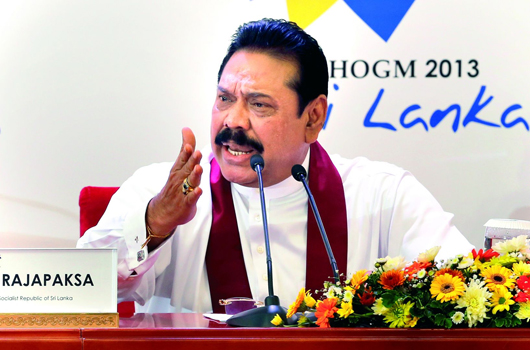
Colombo/New Delhi, Jan 18: Sri Lanka expelled the Colombo station chief of India's spy agency in the run-up to this month's presidential election, political and intelligence sources said, accusing him of helping the opposition oust President Mahinda Rajapaksa.

An Indian foreign ministry spokesman denied any expulsion and said that transfers were routine decisions. Rajapaksa, voted out of office in the Jan 8 election, told Reuters he did not know all the facts while the new government in Colombo has said it is aware of the reports but cannot confirm them.

But several sources in both Colombo and New Delhi said India was asked to recall the agent in December for helping gather support for joint opposition candidate Maithripala Sirisena after persuading him to ditch Rajapaksa's cabinet.

A sketchy report in Sri Lanka's Sunday Times newspaper on December 28 said that "links with the common opposition" had cost India's Research and Analysis Wing (RAW) station chief his job in Colombo.

India has often been involved in the internal politics of the small island nation off its southern coast - it sent troops there in 1987 in a botched effort to broker peace between the government and Tamil Tiger rebels.

Rajapaksa's unexpected defeat after two terms in office coincided with growing concern in India that it was losing influence in Sri Lanka because of the former president's tilt toward regional rival China.

The concern turned to alarm late last year when Rajapaksa allowed two Chinese submarines to dock in Sri Lanka without warning New Delhi as he should have under a standing agreement, the sources said.

Sirisena, the new president, has said he will visit New Delhi on his first foreign trip next month and has said India is the "first, main concern" of his foreign policy.

An Indian official said the RAW agent was recalled after complaints that he had worked with Sri Lanka's usually fractious opposition parties to agree on a joint contender for the election. Then, he was accused of facilitating meetings to encourage several lawmakers, among them Sirisena, to defect from Rajapaksa's party, the official said.

The agent was accused of playing a role in convincing the main leader of the opposition and former prime minister Ranil Wickremasinghe not to contest against Rajapaksa in the election and stand aside for someone who could be sure of winning, said the officer and a Sri Lankan lawmaker who also maintains close contacts with India.

The agent was also in touch with former president Chandrika Kumaratunga, who was a key player in convincing Sirisena to stand, said the officer and the lawmaker, who also confirmed that the agent had been asked to leave.

"They actively were involved, talking to Ranil, getting those things organised, talking to Chandrika," the lawmaker told Reuters.

"Certain Things You Don't Talk About"

Wickremasinghe, who is now prime minister again in Sirisena's government, met "two or three times" with the man identified as the agent in the months before the vote, as well as with the Indian high commissioner, or ambassador, the prime minister's spokesman said.

"They discussed the current political situation," Wickremasinghe's spokesman said, but he denied that the Indians had advised him. "He does not know if he advised other politicians."It was not clear if Wickremasinghe was aware at the time that he was meeting with an intelligence official. India's RAW officers are usually given diplomatic posts when assigned to foreign missions.

Former president Kumaratunga did not respond to requests for comment.

Rajapaksa declined to confirm the involvement of India in the campaign against him.

"I don't know, I won't suspect anybody until I get my real facts," he said at his party headquarters.

"There are certain things you don't talk about," a close associate of the Rajapaksa family said, but added that "there were clear signs of a deep campaign by foreign elements."

Sri Lanka's then defence secretary Gotabaya Rajapaksa - a brother of the former president - complained about the agent's activities to Indian National Security Adviser Ajit Doval in November when Doval was visiting the island nation for a defence seminar, the Indian official said.

Another Indian official, who monitors the region for security threats, said New Delhi had been watching Beijing's growing influence and heavy investments in Sri Lanka under Rajapaksa, who visited China seven times since becoming president in 2005.

But India was stunned and angry last year when the Chinese submarines docked in Sri Lanka on two separate occasions, a step New Delhi saw as part of Beijing's "string of pearls" strategy to secure a foothold in South Asia and maritime access through the Indian Ocean.

"The turning point in the relationship was the submarines. There was real anger," the Indian security official said.

Indian military officials said that New Delhi reminded Sri Lanka it was obliged to inform its neighbours about such port calls under a maritime pact, and Indian Prime Minister Narendra Modi raised the issue with Rajapaksa at a meeting in New York.

In a possible sign of shifting allegiances, India's top envoy in Colombo, High Commissioner Y.K. Sinha, presented Sirisena with a large bouquet of flowers just hours after the results were announced on Jan 9. China's ambassador was only able to meet the new president six days later.

Comments

Add new comment

  • Coastaldigest.com reserves the right to delete or block any comments.
  • Coastaldigset.com is not responsible for its readers’ comments.
  • Comments that are abusive, incendiary or irrelevant are strictly prohibited.
  • Please use a genuine email ID and provide your name to avoid reject.
Agencies
July 29,2020

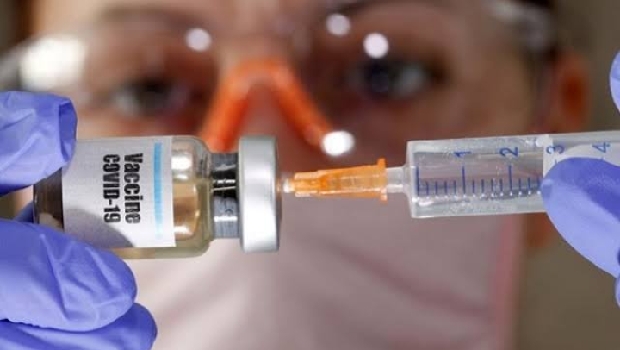
If everything goes as Russia’s expectation, it will be world’s first country to approve a coronavirus vaccine for widespread in the second week of August despite safety and efficacy concerns, according to a report. The adenoviral vector-based vaccine developed by Russian military and government researchers is currently in phase 2 trials.

According to a report from CNN, Russian officials are hoping to get approval for the COVID-19 vaccine developed by the Moscow-based Gamaleya Institute on Agust 10 or even before that. The officials told the outlet that the vaccine will be approved for public use with frontline healthcare workers receiving it first.

“It’s a Sputnik moment,” said Kirill Dmitriev, head of Russia’s sovereign wealth fund, which is financing Russian vaccine research, referring to the successful 1957 launch of the world’s first satellite by the Soviet Union, according to CNN.

“Americans were surprised when they heard Sputnik’s beeping. It’s the same with this vaccine. Russia will have got there first,” he was quoted as saying.

However, Russia is yet to release the scientific data on its coronavirus vaccine trials, hence, questions remain about the safety and efficacy of the vaccine, said the report. The vaccine is in the second phase of testing with developers planning to launch the phase 3 trials sometime after August 3.

Earlier, Interfax reported, citing Health Minister Mikhail Murashko, that the vaccine will be widely used in parallel with phase 3 trials. He said the country plans to vaccinate medics who are at high-risk for COVID-19 next month before clinical trials are completed.

Murashko added that individuals at higher risk of getting infected with the coronavirus such as older people or those with health conditions will also be prioritised for the vaccine, although he did not estimate or reveal when that would happen. The minister added 800 people will be recruited for the phase 3 trials.

Meanwhile, health officials were more cautious considering the fact that human testing of the vaccine is incomplete, and the state registration is expected to begin after August 3, reported The Moscow Times.

On Monday, Moderna and Pfizer announced the commencement of the final phase 3 trials of their candidate vaccines against the SARS-CoV-2 virus, which has so far claimed at least 654,477 lives and infected 16,514,500 people worldwide. 

Researchers will recruit up to 30,000 volunteers in separate trials both backed by the US government. India's first indigenous coronavirus vaccine, COVAXIN, is undergoing phase 1 human clinical trials across the country. More than 150 COVID-19 vaccines are being developed all over the world with at least six candidates already in late-stage clinical trials.

Comments

Add new comment

  • Coastaldigest.com reserves the right to delete or block any comments.
  • Coastaldigset.com is not responsible for its readers’ comments.
  • Comments that are abusive, incendiary or irrelevant are strictly prohibited.
  • Please use a genuine email ID and provide your name to avoid reject.
News Network
February 18,2020

Washington, Feb 18: The upcoming visit of President Donald Trump to India later this month has the potential to usher in a new era of bilateral ties between the two countries, a top American business advocacy group has said.

President Trump will pay a state visit to India on February 24 and 25 at the invitation of Prime Minister Narendra Modi. He would be accompanied by First Lady Melania Trump.

This would be the president's first bilateral visit in the third decade of the 21st century and also the first after his acquittal by the Senate in the impeachment trial.

"I believe President Trump's upcoming visit to India has the potential to usher in a new era of our bilateral ties," Mukesh Aghi, President of the US India Strategic and Partnership Forum (USISPF) said in a statement on Monday.

On the sidelines of the visit, the USISPF, in collaboration with the Federation of Indian Chambers of Commerce and Industry (FICCI) and the ORF, has announced to organise a program entitled "US-India Forum: Partners for Growth".

The full-day discussion will focus on the key pillars defining India and the US' strategic, economic, and cultural partnership over the next decade.

"We have an opportunity before us to make real progress on multiple aspects of the relationship— whether it is upholding peace and security in the Indo-Pacific region; building upon an already strong energy partnership; developing co-production and co-development opportunities in the defense space; or strengthening bilateral trade," Aghi said.

"We look forward to an extremely successful visit and some concrete outcomes from the visit," he said.

The day-long programme on February 25 in New Delhi, will bring together over 500 senior business executives, members of the US-India think tank community and leading figures of the Indian diaspora to set the agenda for this strategic partnership.

Discussions during the day will touch upon areas, including the Indo-Pacific Strategy and Maritime Security; the US-India Defence Partnership, the US-India Energy Partnership, Elevating US-India Trade and Investment and Role of the Indian Diaspora in US-India Relations.

Comments

Add new comment

  • Coastaldigest.com reserves the right to delete or block any comments.
  • Coastaldigset.com is not responsible for its readers’ comments.
  • Comments that are abusive, incendiary or irrelevant are strictly prohibited.
  • Please use a genuine email ID and provide your name to avoid reject.
Agencies
January 11,2020

Washington, Jan 11: US President Donald Trump has signed an executive order imposing another set of crippling sanctions against Iran, targeting several of its top leaders, military commanders, and its infrastructure industry, according to a statement from the White House on Friday.

Trump said the executive order authorises the imposition of sanctions against any individual or entity operating in the construction, manufacturing, textiles, or mining sectors of the Iranian economy or anyone assisting those who engage in this sanctioned business.

The sanctions are the latest in a series of retaliatory measures between the two nations.

Iran's powerful military commander Qasem Soleimani was killed last Friday in US drone strikes, ordered by President Trump, bringing the entire Gulf region close to a full-blown conflict.

Regional tensions remained high after Iran on Wednesday fired missiles at two bases in Iraq used by US forces.

"Today, I am holding the Iranian regime responsible for attacks against United States personnel and interests by denying it substantial revenue that may be used to fund and support its nuclear program, missile development, terrorism and terrorist proxy networks, and malign regional influence," said Trump on Friday, after signing the executive order.

"This order will have a major impact on the Iranian economy, authorising powerful secondary sanctions on foreign financial institutions.

"The Iranian regime has threatened United States military service members, diplomats, and civilians, as well as the citizens and interests of our allies and partners, through military force and proxy groups. The United States will continue to counter the Iranian regime's destructive and destabilising behaviour," the president said.

Trump said the economic sanctions will remain till the Iranian regime changes its behaviour.

Earlier at a White House news conference, Treasury Secretary Steven Mnuchin, along with cabinet colleague Secretary of State Mike Pompeo, said the US will continue its economic and diplomatic sanctions on Iran till Tehran announces it will not pursue the nuclear weapons program and stop its destabilising behaviour in the region.

The eight senior Iranian regime officials against whom sanctions have been issued include Ali Shamkhani, the Secretary of Iran's Supreme National Security Council, Mohammad Reza Ashtiani, the Deputy Chief of Staff of Iranian armed forces, and Gholamreza Soleimani, the head of the Basij militia of the Islamic Revolutionary Guards Corps (IRGC).

The sanction on the Iranian officials would mean denial of visa to the US and seizure of assets, among others.

In addition, the treasury designated 17 Iranian metals producers and mining companies, a network of three China-and Seychelles-based entities, and a vessel involved in the purchase, sale, and transfer of Iranian metals products, as well as in the provision of critical metals production components to Iranian metal producers.

"The United States is targeting senior Iranian officials for their involvement and complicity in Tuesday's ballistic missile strikes," Mnuchin said.

"We are also designating Iran's largest metals manufacturers, and imposing sanctions on new sectors of the Iranian economy including construction, manufacturing, and mining. These sanctions will continue until the regime stops the funding of global terrorism and commits to never having nuclear weapons," he added.

Pompeo told reporters that Iran was planning "broad, large-scale attacks" against American interests in the Middle East, including embassies.

The latest round of sanctions are aimed at striking at the heart of Iran's internal security apparatus, he said.

"The president has been very clear: we will continue to apply economic sanctions until Iran stops its terrorist activities and commits that it will never have nuclear weapons," Mnuchin said.

Comments

Add new comment

  • Coastaldigest.com reserves the right to delete or block any comments.
  • Coastaldigset.com is not responsible for its readers’ comments.
  • Comments that are abusive, incendiary or irrelevant are strictly prohibited.
  • Please use a genuine email ID and provide your name to avoid reject.