



India's first halal cosmetics firm set to expand outlets

May 2, 2015

Ahmedabad, May 2: Mauli Teli has people coming up to her often and asking what 'halal' has to do with cosmetics. "Are such cosmetics only for Muslims?" they sometimes enquire.
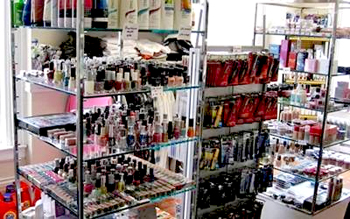
halal cosmeticsTeli is not a Muslim, but the smart, suave, CEO of a company whose Iba product - India's first halal-certified cosmetic brand - is more than ready with her answers. Thanks to this, Iba's consumer base is growing steadily, and not just among the Muslim community.

"Halal has a deep meaning. It means it's pure, safe, and healthy. What it means in terms of our cosmetics range is that our products are organic, free of animal fat and animal-derived products like keratin, collagen and gelatine, and alcohol free. They are free of any harsh chemicals and animal cruelty. Therefore they are good for everyone," Mauli explained in an telephonic interview .

In 2012 Mauli and her sister Grishma Teli started their company, Ecotrail, which was a manufacturing unit and research lab. In September 2014, after a thorough market research and talks with consumers, salon owners and others, the duo launched Iba Halal Care.

"I moved back to India in 2011 after studying and working in the US for seven-and-a-half years. I have a technical background and was into management consulting. My sister had studied biotechnology in the UK. Both of us have always wanted to start something on our own...that we come from a family of entrepreneurs helped a lot," Mauli said.

Personal care products, she said, were of interest to both the sisters. Their father is into equipment manufacturing for the cosmetics industry.

"Since I had worked with (market research agency) AC Nielson, I knew that the field of personal care was very competitive and in order to succeed we had to make a unique proposition. In the US, natural, ethical products are much sought after and we found that halal cosmetics was a niche field that could be explored," she said.

Considering that India has a large Muslim population, the sisters realised that there was a need for such products.

"Halal certified products are popular in Southeast Asia like Malaysia. Britain also has a few small brands. But, in the Indian context, we had to take care that ours was not a high-end brand, but something that the market could bear."

As they launched Iba with their first stand-alone store in Ahmedabad it triggered a lot of interest.

"People were curious. They would come and ask me all kinds of questions. Sometimes even Muslims did not understand what halal had to do with cosmetics. Once we told them about the fat free lipsticks and alcohol free perfumes, they understood," Mauli said.

The concept also appealed to people from the Jain community and those who opt for a vegan way of life. "Actually, 35 percent of our consumers are non-Muslims, and the interest is increasing," Mauli said.

Her products - priced between Rs.40 and Rs.250 - are no less effective on the skin or hair, she says. They have the same look and feel like any other modern cosmetic product with no side effects, she adds. From lipsticks, face sprays and face creams to shampoos, conditioners and perfumes, it's a wide range.

With two stand alone stores in Gujarat, they are now opening outlets in Aurangabad in Maharashtra, before venturing into Mumbai, Bengaluru, Hyderabad, Baroda and Surat. They are getting into the franchise model as well as have their products available online, on shopping portals like Amazon and Flipkart.

Comments

Bradley
 - 
Thursday, 31 Mar 2016

Oh! by the method Amanda, There are a couple of however reliable and great online traders on the market these days.Whom
ever you pick, you should never ever signed with
somebody who charges more than 10 dollars per
trade. Even if you only do one trade a month.Most have unique deals (open markets,
etc) if you have $25,000 to invest.Some recommend everything free with actual time cutting-edge platform if you
have a quarter of million to invest. But never ever more than $10
a trade for the low budget plan investor.Good luck!Simon LeeLikeLike

Also visit my web page: bankruptcy attorneys: http://www.google.com

Add new comment

  • Coastaldigest.com reserves the right to delete or block any comments.
  • Coastaldigset.com is not responsible for its readers’ comments.
  • Comments that are abusive, incendiary or irrelevant are strictly prohibited.
  • Please use a genuine email ID and provide your name to avoid reject.
Agencies
July 25,2020

In a study conducted in 117 countries, researchers have found that the world is experiencing the most dramatic reduction in the seismic noise (the hum of vibrations in the planet's crust) in recorded history due to global COVID-19 lockdowns.

Measured by instruments called seismometers, seismic noise is caused by vibrations within the Earth, which travel like waves and the waves can be triggered by earthquakes, volcanoes, and bombs - but also by daily human activity like travel and industry.

This quiet period was likely caused by the total global effect of social distancing measures, closure of services and industry, and drops in tourism and travel, the study published in the journal Science, reported.

The new research, led by the Royal Observatory of Belgium and five other institutions around the world including Imperial College London (ICL), showed that the dampening of 'seismic noise' caused by humans was more pronounced in more densely populated areas.

"Our study uniquely highlights just how much human activities impact the solid Earth, and could let us see more clearly than ever what differentiates human and natural noise," said study co-author Stephen Hicks from ICL in the UK.

For the findings, the research team looked at seismic data from a global network of 268 seismic stations in 117 countries and found significant noise reductions compared to before any lockdown at 185 of those stations.

Researchers tracked the 'wave' of quietening between March and May as worldwide lockdown measures took hold.

The largest drops in vibrations were seen in the most densely populated areas, like Singapore and New York City, but drops were also seen in remote areas like Germany's the Black Forest and Rundu in Namibia.

Citizen-owned seismometers, which tend to measure more localised noise, noted large drops around universities and schools around Cornwall, UK and Boston, US - a drop in noise 20 per cent larger than seen during school holidays.

The findings showed that countries like Barbados, where lockdown coincided with the tourist season, saw a 50 per cent decrease in noise.

"The changes have also given us the opportunity to listen in to the Earth's natural vibrations without the distortions of human input," the study authors wrote.

Earlier in April, a study published in the journal Nature, reported at least a 30 per cent reduction in that amount of ambient human noise since lockdown began in Belgium.

Comments

Add new comment

  • Coastaldigest.com reserves the right to delete or block any comments.
  • Coastaldigset.com is not responsible for its readers’ comments.
  • Comments that are abusive, incendiary or irrelevant are strictly prohibited.
  • Please use a genuine email ID and provide your name to avoid reject.
Agencies
March 3,2020

Facebook on Monday launched a new consumer marketing campaign in India titled 'More Together'. India is the first country in the Asia Pacific region where such a campaign is being rolled out.

It is also the first time that Facebook is rolling out a 'high decibel campaign of this stature in India', the company said in a statement.

It is also the first time that Facebook is rolling out a 'high decibel campaign of this stature in India', the company said in a statement.

"India is at the heart of Facebook and one of our focus areas this year is to tell the exciting story of a service that is deeply embedded in the fabric of India," said Ajit Mohan, Vice President and Managing Director, Facebook India.

The campaign would have multiple campaigns over the next few weeks in eight languages and the one will be set in the context of Holi.

Facebook in 2019 introduced a new company logo to further distinguish the company from the Facebook app.

The company recently announced the appointment of Avinash Pant as the Marketing Director for India operations, to drive the consumer marketing efforts across the family of apps.

Comments

Add new comment

  • Coastaldigest.com reserves the right to delete or block any comments.
  • Coastaldigset.com is not responsible for its readers’ comments.
  • Comments that are abusive, incendiary or irrelevant are strictly prohibited.
  • Please use a genuine email ID and provide your name to avoid reject.
Agencies
July 4,2020

The Mars Colour Camera (MCC) onboard ISRO's Mars Orbiter Mission has captured the image of Phobos, the closest and biggest moon of Mars.

The image was taken on July 1 when MOM was about 7,200 km from Mars and 4,200 km from Phobos.

"Spatial resolution of the image is 210 m.

This is a composite image generated from 6 MCC frames and has been color corrected," ISRO said in an update along with the image.

Phobos is largely believed to be made up of carbonaceous chondrites.

According to ISRO, "the violent phase that Phobos has encountered is seen in the large section gouged out from a past collision (Stickney crater) and bouncing ejecta."

"Stickney, the largest crater on Phobos along with the other craters (Shklovsky, Roche & Grildrig) are also seen in this image," it said.

The mission also known as Mangalyaan was initially meant to last six months, but subsequently ISRO had said it had enough fuel for it to last "many years."

The country had on September 24, 2014 successfully placed the Mars Orbiter Mission spacecraft in orbit around the red planet, in its very first attempt, thus breaking into an elite club.

ISRO had launched the spacecraft on its nine-month- long odyssey on a homegrown PSLV rocket from Sriharikota in Andhra Pradesh on November 5, 2013.

It had escaped the earth's gravitational field on December 1, 2013.

The Rs 450-crore MOM mission aims at studying the Martian surface and mineral composition as well as scan its atmosphere for methane (an indicator of life on Mars).

The Mars Orbiter has five scientific instruments - Lyman Alpha Photometer (LAP), Methane Sensor for Mars (MSM), Mars Exospheric Neutral Composition Analyser (MENCA), Mars Colour Camera (MCC) and Thermal Infrared Imaging Spectrometer

Comments

Add new comment

  • Coastaldigest.com reserves the right to delete or block any comments.
  • Coastaldigset.com is not responsible for its readers’ comments.
  • Comments that are abusive, incendiary or irrelevant are strictly prohibited.
  • Please use a genuine email ID and provide your name to avoid reject.