


Indrani Mukerjea claims to have paid $5 million to P Chidambaram, son Karti in bribe, says CBI chargesheet

Agencies
October 19, 2019

New Delhi, Oct 19: Indrani Mukerjea has claimed to have paid a bribe of US $5 million to former Finance Minister and Congress leader P. Chidambaram and his son Karti Chidambaram through offshore payments in Singapore, Mauritius, Bermuda, the UK and Switzerland, the Central Bureau of Investigation stated in the chargesheet filed in a special court on Friday in the INX Media case.

The CBI also stated that it is awaiting response to its Letters Rogatory (formal request to a foreign court for judicial assistance) sent to five countries.

The agency filed a chargesheet against four entities and ten people under sections 120B (criminal conspiracy), 420 (cheating), 468 (forgery), 471 (signing a forged document as genuine) of Indian Penal Code and Section 9 (taking gratification, for exercise of personal influence with public servant), 13(1)(d) (abusing one’s position as a public servant) of 13(2) (public servant who commits criminal misconduct) of Prevention of Corruption Act.

The four entities charged are INX Media Private Limited (currently 9X Media Private Limited), INX News Private Limited (Direct News), Chess Management Services Private Limited and Advantage Strategic Consulting Private Limited (ASCPL).

The agency has charged P Chidambaram, then finance minister, his son Karti P Chidambaram, Ajeet Kumar Dungdung, the then section officer of Foreign Investment Promotion Board (FIPB) unit at Ministry of Finance, Rabindra Prasad, then under secretary at FIPB unit, Pradeep Kumar Bagga, then officer on special duty at Department of Economic Affairs, Prabodh Saxena, then director FIPB, Anup K Pujari, then Joint Secretary (Foreign Trade) Department of Economic Affairs, Sindhushree Khullar, then additional secretary, S Bhaskararaman, Chartered Accountant, and Peter Mukherjea, then director INX Media Limited.

The CBI has made Indrani Mukerjea, who is currently in jail in Mumbai in connection with the murder of her daughter Sheena Bora, approver in the case. She in her statement to CBI also stated that a meeting with P. Chidambaram to discuss the modalities of illegal gratification was held between March/April 2007.

The agency stated that CBI had registered a case in May 2017 to investigate corruption in INX Media Private Limited which had received foreign investment Rs 403.07 crore against approved foreign direct investment (FDI) of Rs 4.62 crore.

Further, this company illegally invested Rs 40.91 crore in its sister concern INX News Pvt Limited from the received FDI amount without approval from FIPB in violation of provisions of Foreign Exchange Maintenance Act.

During investigation, it was found that Indrani and Peter, directors of INX Media Private Limited, entered into a criminal conspiracy with the then finance minister P Chidambaram and his son Karti Chidambaram (the then director Chess Management Services Pvt Limited) and the then public servants of FIPB unit, Department of Economic Affairs for getting the issue settled without any penal action against them.

“This caused undue pecuniary advantage to the companies concerned in terms of possible penalty under FEMA which could have been up to three times the total amount received,” said a senior CBI officer.

The chargesheet stated that Karti had floated a front company, ASCPL, for receiving illegal payoffs in the guise of various consultancies and other fees and payments.INX Media had also made a payment of Rs 9.96 lakh into the account of ASCPL.

“An illegal payoff without delivering any service,” said CBI adding that further probe into the matter is on.

The Enforcement Directorate (ED) too had filed a money laundering case against Chidambaram in this regard in 2017. In the case, a Delhi court on Thursday sent P. Chidambaram to custodial interrogation by the Enforcement Directorate till October 24.

Comments

Add new comment

  • Coastaldigest.com reserves the right to delete or block any comments.
  • Coastaldigset.com is not responsible for its readers’ comments.
  • Comments that are abusive, incendiary or irrelevant are strictly prohibited.
  • Please use a genuine email ID and provide your name to avoid reject.
News Network
March 2,2020

New Delhi, Mar 2: As communal violence spiked in north-east Delhi earlier this week, Hindu, Muslim and Sikh residents of a colony came together and stood guard against frenzied mobs which ran riot in nearby areas vandalising homes, shops and torching cars.

They have not let their guard down even as the situation is limping back to normalcy following four days of violence that has claimed at least 42 lives and left over 200 injured.

The B-Block colony in Yamuna Vihar has a Hindu-dominated Bahjanpura on one side and Muslim populated Ghonda on the other.

People from all faiths in the locality sit outside their homes at night and deal with any suspected outsider, Arib, a dentist in his 30s, said.

"It is the sloganeering by mobs that causes panic in the dead of night. Such slogans are from both sides and we hear groups of people moving forward towards our area.

"This is where we let the Muslim locals deal with Muslim groups and Hindu residents deal with Hindu groups coming from outside," he said.

Businessmen, doctors and people working at government offices stuck together as violence reached its crest on Monday and Tuesday, and have been guarding the locality round the clock.

Earlier, the locals had claimed inadequate police deployment in the area, but were satisfied as patrolling by security personnel increased in the last two days.

Charanjeet Singh, a Sikh who owns a transport firm, said residents have ensured that not too many people gather to guard the colony at night. It has been decided not use sticks or rods, an idea which seems to have worked in maintaining peace, he said.

"I was 10 years old when we came to this locality from Uttar Pradesh's Meerut in 1982. There were riots in 1984 and tension in 2002, but even then our area remained peaceful. We have always been united and that is the way we have helped each other," Singh, who is now in his 50s, told PTI.

Faisal, a businessman in his 30s, said after two days of major violence, there was palpable tension in the area. "Nobody could sleep in the neighbourhood even on Wednesday and Thursday when the situation was brought under control," he said.

Faisal said around 4 am on Wednesday, three to four miscreants had torched a car, but were chased away by vigilant residents. They raised an alarm and others gathered, saving other vehicles parked nearby from being damaged, he added.

On the idea of not keeping sticks while guarding B-Block, Singh said, "Violence begets violence, crowd begets crowd. We thought if somebody would see sticks or rods in our hands from a distance and large crowds standing guard, it is likely they would want to come prepared. This could fuel violence."

"Now, if there is some young man returning late in the night, we identify if he belongs to our area. If not, we normally inform him about the situation and guide him to his destination, if required," he added.

Seventy-year-old V K Sharma said people in his colony never had any trouble with each other, as he blamed "outside elements" for the violence in north-east Delhi.

"Some people have some problem with symbols. If they find a particular religion's symbol on a shop, home or a car, they vandalise it.

"This is on both sides, Hindus as well as Muslims. But not all people in all religion are like that. There are good people who outnumber these handful people involved in violence," he said.

The violence happened for two days but it would take months for fear to subside, Sharma said, as he took out his two granddaughters, aged nine and two, out for ice cream.

"I cannot reduce the tension outside my home, but at least I can make these kids feel good by reducing their craving for ice cream,” he added.

Colony resident Shiv Kumar, a property consultant, and Wasim, a government official, said they too were members of this voluntary guards' team of the colony which stays up at night to fend off miscreants.

Comments

Add new comment

  • Coastaldigest.com reserves the right to delete or block any comments.
  • Coastaldigset.com is not responsible for its readers’ comments.
  • Comments that are abusive, incendiary or irrelevant are strictly prohibited.
  • Please use a genuine email ID and provide your name to avoid reject.
News Network
May 27,2020

Bengaluru, May 27: Karnataka Chief Minister Yediyurappa on Wednesday said that his government will re-open temples, mosques and churches in the state after May 31.

"We are going to open temples, mosques and churches in the state after May 31, he said while speaking to media in Bengaluru.

The Chief Minister added that the "guidelines will be followed" as suggested by experts for opening the worship places.

"We have no objections to open malls and cinema halls, but we are waiting for the guidelines of the central government, Prime Minister will take decisions to allow malls and cinemas to open," he added.

Yediyurappa has said that people from Gujarat, Maharashtra, Kerala and Tamil Nadu will not be allowed in the state till May 31.

Comments

Add new comment

  • Coastaldigest.com reserves the right to delete or block any comments.
  • Coastaldigset.com is not responsible for its readers’ comments.
  • Comments that are abusive, incendiary or irrelevant are strictly prohibited.
  • Please use a genuine email ID and provide your name to avoid reject.
Agencies
July 30,2020

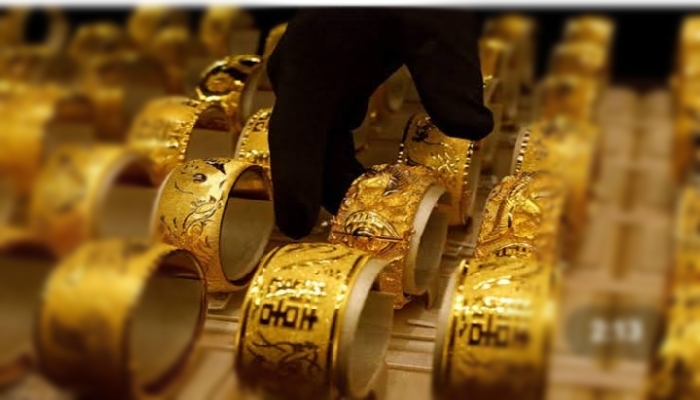
New Delhi, Jul 30: India's gold demand in 2020 is expected to fall to the lowest level in 26 years with domestic bullion prices hitting a record high and as falling disposable incomes could curtail retail purchases, the World Gold Council (WGC) said on Thursday.

Lower demand by the world's second-biggest bullion consumer could limit a rally in global prices, which hit a record high earlier this month, although it could also reduce India's trade deficit and support the ailing rupee.

"Fast rising gold prices could act as headwinds," said Somasundaram PR, the managing director of WGC's Indian operations.

Local gold futures have jumped 35% so far this year after rising a quarter in 2019.

India's gold consumption in the first half of 2020 plunged 56% on-year to 165.6 tonnes. Meanwhile, the coronavirus-triggered lockdown also slashed demand by 70% in the June quarter to 63.7 tonnes, the lowest in more than a decade, the WGC said in a report published on Thursday.

Millions of Indians have lost their jobs or taken a pay cut after the country imposed a lockdown on its 1.3 billion people to curb the spread of the virus that has infected more than 1.5 million Indians.

Consumption is generally high during the June quarter due to weddings and key festivals such as Akshaya Tritiya, but lockdown restrictions kept shoppers indoors this year.

The weak demand in the first half could drag down India's gold consumption in 2020 to the lowest since 1994, when demand stood at 415 tonnes, Somasundaram said, adding that it is still difficult to provide an estimate for full-year demand as the coronavirus crisis is still unfolding.

"Indian demand has previously jumped as much as 300 tonnes in a quarter. Latent demand could come out in the second half," Somasundaram said.

Comments

Add new comment

  • Coastaldigest.com reserves the right to delete or block any comments.
  • Coastaldigset.com is not responsible for its readers’ comments.
  • Comments that are abusive, incendiary or irrelevant are strictly prohibited.
  • Please use a genuine email ID and provide your name to avoid reject.