



Instagram, Snapchat most detrimental to mental health: report

May 19, 2017

London, May 19: Instagram and Snapchat are the most detrimental to young people's mental health and wellbeing, according to a new report on social media platforms which also found that YouTube had the most positive effect.
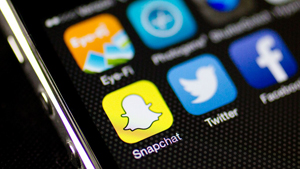
snapchatThe new report by Royal Society for Public Health (RSPH) in the UK examined the positive and negative effects of social media on young people's health.

Researchers conducted a survey of almost 1,500 people (aged 14-24) from across the UK. The survey asked them to score how each of the social media platforms they use impacts upon 14 health and wellbeing-related issues which were identified by experts as the most significant such as anxiety, loneliness and depression.

Based on the ratings given to each platform for the health and wellbeing-related issues, the five most popular platforms were given a net average score. YouTube topped the table, followed by Twitter and Facebook.

Snapchat and Instagram were found to have most negative impact on mental health.

"Social media has been described as more addictive than cigarettes and alcohol, and is now so entrenched in the lives of young people that it is no longer possible to ignore it when talking about young people's mental health issues," said Shirley Cramer, Chief Executive at RSPH.

"It is interesting to see Instagram and Snapchat ranking as the worst for mental health and wellbeing - both platforms are very image-focused and it appears they may be driving feelings of inadequacy and anxiety in young people," Cramer said.

"It is important that we have checks and balances in place to make social media less of a wild west when it comes to young people's mental health and wellbeing," she said.

"For young people, using social media and digital technologies as a tool to help with mental health make sense for many reasons," said Becky Inkster, Honorary Research Fellow at the University of Cambridge in the UK.

"It might help improve psychoeducation, increase self- awareness of mental health and act as a preventative measure. Young people sometimes feel more comfortable talking about personal issues online," Inkster said.

Comments

Add new comment

  • Coastaldigest.com reserves the right to delete or block any comments.
  • Coastaldigset.com is not responsible for its readers’ comments.
  • Comments that are abusive, incendiary or irrelevant are strictly prohibited.
  • Please use a genuine email ID and provide your name to avoid reject.
Agencies
April 17,2020

New Delhi, Apr 17: The Indian Railways turned 167 years old on Thursday and for the first time ever, its trains did not carry any passengers on its birthday and instead stood idle in the yards waiting for the nationwide lockdown to end.

On this day 167 years ago, the wheels of the first passenger train in the country from Mumbai to Thane started rolling.

In 1974, Indians experienced life without trains for the first time. In May 1974 during the strike of the railways that lasted for around three weeks, drivers, station masters, guards, track staff and many others went on 'chakka jam' demanding fixed working hours for train drivers and an across-the-board pay hike.

"I can recall those times vividly. I remember that our leader George Fernandes had almost secured a deal with the then railway minister, but it fell through when it was taken to the then Prime Minister Indira Gandhi," All India Railwaymens Federation General Secretary Shiv Gopal Mishra, who was an apprentice in the railways at that time, told PTI.

"Fernandes was arrested in Lucknow. The workers went through a lot at that time. But those were days that angry workers had refused to give in and took great risks to get their demands met," he said.

However, just like this time, four decades ago too freight trains carrying essential supplies were run and the unions agreed to let some passenger trains run on the trunk routes like the Kalka Mail from Howrah to Delhi.

"Never ever in its history, there has been such a long interruption of services. Not during the World Wars, not during the 1974 railway strike, or any other national calamity or natural disaster," a railway spokesperson said.

The first Indian Railways passenger train was flagged off on April 16, 1853, from Mumbai to nearby Thane.

On Thursday, the Railway Ministry wished the railways a happy birthday on Twitter - "Today, 167 years ago with the zeal of 'never to stop' the wheels of the first passenger train from Mumbai to Thane started rolling. For the first time, passenger services are stopped for your safety. Stay indoors & make the nation victorious," it said.

Railway has suspended all passenger services since March 25 till May 3 due to the coronavirus outbreak. Around 15,523 trains run by the railways have been affected including 9,000 passenger trains and 3,000 mail express services which are run daily. It caters to over 20 million passengers every day.

According to the Union health ministry, the death toll due to coronavirus rose to 414 and the number of cases to 12,380 in the country on Thursday.

Comments

Add new comment

  • Coastaldigest.com reserves the right to delete or block any comments.
  • Coastaldigset.com is not responsible for its readers’ comments.
  • Comments that are abusive, incendiary or irrelevant are strictly prohibited.
  • Please use a genuine email ID and provide your name to avoid reject.
Agencies
March 8,2020

Consumer watchdog Which? has claimed that more than one billion Android phones and tablets are vulnerable to hackers as they no longer supported by security updates.

According to the research report, the most at-risk phones are any that run Android 4 or older and those smartphones running Android 7.0 which can not be updated are also at risk.

Based on data from Google analysed by Which?, two in five android device users around the world are no longer receiving the important updates. Currently, those devices are unlikely to have issues, but the lack of security leaves them open to attack.

"It is very concerning that expensive Android devices have such a short shelf life before they lose security support, leaving millions of users at risk of serious consequences if they fall victim to hackers," Kate Bevan editor Which? said in a statement.

"Google and phone manufacturers need to be upfront about security updates with clear information about how long they will last and what customers should do when they run out. The government must also push ahead with planned legislation to ensure manufacturers are far more transparent about security updates for smart devices and their impact on consumers," Kate added.

Android phone released around 2012 or earlier, including popular models like the Samsung Galaxy S3 and Sony Xperia S, are particularly at risk to hackers.

Which? has made suggestions to Android users on what to consider if they have an older phone that may be at risk.

Any Android device which is more than two years old, check whether it can be updated to a newer version of the operating system. If it is on an earlier version than Android 7.0 Nougat, try to update via Settings> System>Advanced System update.

In case a user is not able tto update the phone, the device could be at risk of being hacked if it is running a version of Android 4 or lower.

A user also need to be careful about downloading apps outside the Google Play store and should also install a mobile anti-virus via an app.

Comments

Add new comment

  • Coastaldigest.com reserves the right to delete or block any comments.
  • Coastaldigset.com is not responsible for its readers’ comments.
  • Comments that are abusive, incendiary or irrelevant are strictly prohibited.
  • Please use a genuine email ID and provide your name to avoid reject.
Agencies
May 27,2020

Due to impacts of COVID-19, shipments of total mobile phones are forecast to decline 14.6% in 2020, while smartphone shipments will achieve a slightly slower decline of 13.7 % year over year to total 1.3 billion units this year, according to a Gartner forecast on Tuesday.

"While users have increased the use of their mobile phones to communicate with colleagues, work partners, friends and families during lockdowns, reduced disposable income will result in fewer consumers upgrading their phones," Ranjit Atwal, Senior Research Director at Gartner, said in a statement.

"As a result, phone lifetimes will extend from 2.5 years in 2018 to 2.7 years in 2020," said Atwal.

In 2020, affordable 5G phones were expected to be the catalyst to increase phone replacements, but now it is unlikely to be the case.

5G phones are now forecast to represent only 11% of total mobile phone shipments in 2020.

"The delayed delivery of some 5G flagship phones is an ongoing issue," said Annette Zimmermann, Research Vice President at Gartner.

"Moreover, the lack of 5G geographical coverage along with the increasing cost of the 5G phone contract will impact the choice of a 5G phone."

Overall, spending on 5G phones will be impacted in most regions apart from China, where continued investment in 5G infrastructure is expected, allowing providers in China to effectively market 5G phones.

The combined global shipments PCs, tablets and mobile phones are on pace to decline 13.6% in 2020, according to the forecast.

PC shipments are expected to decline 10.5% this year. Shipments of notebooks, tablets and Chromebooks are forecast to decline slower than the PC market overall in 2020.

"The forecasted decline in the PC market in particular could have been much worse," said Atwal.

"However, government lockdowns due to COVID-19 forced businesses and schools to enable millions of people to work from home and increase spending on new notebooks, Chromebooks and tablets for those workers. Education and government establishments also increased spending on those devices to facilitate e-learning."

Gartner said that 48 per cent of employees will likely work remotely at least part of the time after the COVID-19 pandemic, compared to 30 % pre-pandemic.

Overall, the work from home trend will make IT departments shift to more notebooks, tablets and Chrome devices for work.

"This trend combined with businesses required to create flexible business continuity plans will make business notebooks displace desk based PCs through 2021 and 2022," said Atwal.

Comments

Add new comment

  • Coastaldigest.com reserves the right to delete or block any comments.
  • Coastaldigset.com is not responsible for its readers’ comments.
  • Comments that are abusive, incendiary or irrelevant are strictly prohibited.
  • Please use a genuine email ID and provide your name to avoid reject.