


Iran, Saudi Arabia lock horns over Yemen

April 11, 2015

Apr 11: Tensions between Iran and Saudi Arabia deepened on Thursday as Iranian leaders lashed out with rare vehemence against the continuing Saudi air campaign in Yemen, even hurling personal insults at the young Saudi prince who is leading the fight.

Ayatollah Ali Khamenei, the supreme leader of Iran, denounced the Saudi airstrikes in Yemen as “a crime” and “a genocide” while all but taunting Saudi Arabia that its war in Yemen was doomed to fail.
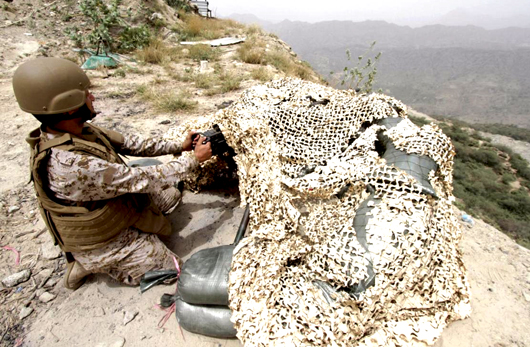
Iran Saudi

A regional coalition led by Saudi Arabia extended its bombing campaign for a 16th night in its effort to stop the Houthi movement and its allies from dominating Yemen. The Houthis nonetheless continued their advance, and aid groups warned of a compounding humanitarian catastrophe, particularly in the port city of Aden.

US Secretary of State John Kerry sharply warned Iran over its backing for the other side of the conflict in Yemen, in the first explicit US accusation that Iran has been providing military aid to the Houthis. Washington was “not going to stand by while the region is destabilised,” Kerry said in an interview with “PBS NewsHour” on Wednesday night.

“There are obviously supplies that have been coming from Iran,” he added. “There are a number of flights every single week that have been flying in. We trace those flights, and we know this. We are well aware of the support that Iran has been giving to Yemen.”

The US has recently increased the provision of logistical support, intelligence and weapons to the Saudi campaign, just days after the announcement of a framework for a nuclear deal with Iran. Kerry said he was seeking to reassure allies, including Saudi Arabia, that the US could “do two things at the same time.”

The US could help push back against Iranian attempts to project its influence around the region, he argued, while at the same time negotiating a deal that would reward Tehran for providing guarantees that it was not building nuclear weapons.

Saudi Arabia has said it is bombing the Houthis because it sees them as an instrument of Iranian power, but Western diplomats and independent experts have said that while Iran has supported the Houthis financially, it has no direct control over the group.

The back-and-forth insults and threats raised fears that the Yemeni conflict could further inflame the rivalry between the two regional heavyweights, Iran and Saudi Arabia, already fighting each other through sectarian proxies in Syria and in less overt struggles across Iraq, Lebanon and Bahrain.

Some analysts suggested that the battle for Yemen may further complicate the delicate politics of a deal with the Western powers to restrain Iran’s nuclear programme. But others argued that the deal had instead emboldened Iran to flex its muscles against Saudi Arabia.

“Deep down, the Iranians know that they are winning,” said Michael Stephens, the head of the Royal United Services Institute in Doha, Qatar. Kerry appeared forced into a difficult balance, reassuring Saudi Arabia of US support against Iran without antagonising Iranian hard-liners severely enough to fuel opposition to the nuclear deal.

The ayatollah’s diatribe only added to the challenge. In rare direct criticism of Iran’s rival by name, Khamenei said that Saudi Arabia was departing from a history of acting with dignity in foreign affairs. “Now few inexperienced youth have taken over the affairs of the state and are replacing dignity with barbarity.”

His comments were a jab at the Saudi defence minister, Prince Mohamed bin Salman, who Saudi diplomats say is about 30. He is also a son of King Salman, who ascended to the throne this year and promptly named him to the powerful dual roles of demesne minister and chief of the royal court.

The Saudi news media has been cheering Mohamed as the architect and overseer of the Yemeni campaign despite a light résumé, raising eyebrows among rivals in the royal family and setting him up for embarrassment if it is deemed to have failed.

In a statement, Khamenei warned the Saudis “they must cease their crimes in Yemen,” and that failure there was all but inevitable. “They will be harmed and incur losses in this issue in which they will under no circumstances triumph. The Saudis’ face will be rubbed in the ground in Yemen,” he said, comparing the Saudi actions to Israel’s campaigns against Palestinian militants in the Gaza Strip.

Stephens, of the Royal Unity Services Institute, said the extraordinary barbed comments appeared designed to provoke and inflame. “It is almost like the Iranians are baiting the Saudis, trying to find every pressure point, to make the Saudis feel emasculated, and then stand back and watch as the Saudis get in deeper and deeper,” he said.

But at the same time, he argued, the Iranians were sending a message of support to their Yemeni allies, the Houthis. “They have decided to show that they are willing to stand behind the Houthis,” Stephens said. “The Iranians are making a sort of a guarantee to their allies that, whatever happens, they are going to make sure that the Houthis are at the table for the talks.”

Saudi Arabia’s warning

Saudi Arabia, which is leading a regional coalition against the Houthis, issued its own warning to Iran, saying that two Iranian warships that recently arrived in the waters off Yemen should steer clear of Yemeni waters. “If the ships seek to aid the Houthis, the coalition has the right to choose the proper answer,” said a spokesman, Brig Gen Ahmad Asseri.

In another provocation, Saudi Arabia denied permission for an Iranian plane filled with pilgrims to land in Mecca. The Houthis, a group based in northern Yemen that follows a strain of Shiite Islam, have fought a half-dozen conflicts with the Yemeni government since 2004, including a fight in 2009 that drew Saudi Arabia into border skirmishes. Only since that time, scholars say, has the movement received support from Iran, the region’s main Shiite Muslim power as well as Saudi Arabia’s rival.

Since the fall, however, the Houthis have teamed with major units of the Yemeni security forces still loyal to the former strongman, Ali Abdullah Saleh. Those units have helped the Houthi-allied forces capture the capital, Sanaa, and much of Yemen.

At the United Nations, Secretary-General Ban Ki-moon, whose efforts to restart a political dialogue in Yemen have collapsed, implored the Houthis to halt their expansion. But he also has been critical of the Saudi-led military campaign. “The coalition air raids – and the continuing attempts by the Houthis and their allied armed groups to expand their power, have turned an internal political crisis into a violent conflict that risks deep and long-lasting regional repercussions,” Ban said.

“The last thing the region and our world need is more of the chaos and crimes we have seen in Libya and Syria,” he said.

Comments

Add new comment

  • Coastaldigest.com reserves the right to delete or block any comments.
  • Coastaldigset.com is not responsible for its readers’ comments.
  • Comments that are abusive, incendiary or irrelevant are strictly prohibited.
  • Please use a genuine email ID and provide your name to avoid reject.
News Network
April 27,2020

Riyadh, Apr 27: The government of Saudi Arabia has signed a SR995 million (approx. Dh972m) contract with China to provide Covid-19 tests for nine million people in the Kingdom.

The Saudi Press Agency, SPA, reported that the decision came "as a result of a phone call made today (Sunday) between the Custodian of the Two Holy Mosques King Salman bin Abdulaziz Al Saud and Chinese President Xi Jinping."

The contract includes providing necessary equipment and supplies, making available of 500 Chinese specialists and technicians who are specialised in performing tests, establishing six large regional laboratories throughout the Kingdom; including a mobile laboratory with a capacity of performing 10,000 tests per day. Saudi cadres will also be trained to conduct daily tests and comprehensive field tests, under the new agreement

The contract was co-signed by the National Unified Procurement Company and Chinese company Huo-yan Laboratories by Dr. Abdullah Al Rabeeah, Advisor at the Royal Court, on behalf of the Government of Saudi Arabia, and Chinese Ambassador to the Kingdom Chen Weiqing, as a representative of the Chinese Government.

The contract is one of the largest contracts that will provide diagnostic tests for the novel Coronavirus.

Tests were also purchased from several other companies from the United States, Switzerland and South Korea, bringing the number of available tests to 14.5 million, covering around 40 percent of Saudi Arabia's population, SPA added.

Comments

Add new comment

  • Coastaldigest.com reserves the right to delete or block any comments.
  • Coastaldigset.com is not responsible for its readers’ comments.
  • Comments that are abusive, incendiary or irrelevant are strictly prohibited.
  • Please use a genuine email ID and provide your name to avoid reject.
News Network
July 9,2020

Dubai, Jul 9: The Government of India has announced an additional 104 special repatriation flights from the UAE to India as part of the Vande Bharat Mission, Phase 4 from July 15 - 31.

According to a flight schedule listed on the Ministry of External Affairs (MEA) website, national carriers Air India and Air India Express flights have been scheduled to various cities in 10 Indian states. Each flight has a capacity of 177 passengers.

Vande Bharat Phase 4 officially began on July 3, and in an earlier press briefing Anurag Srivastava, spokesperson of India's Ministry of External Affairs had said 'Phase 4 will focus on repatriation of Gulf-based Indians.

The new additional flights have been organised to cities in Tamil Nadu, Maharashtra, Delhi, Telangana, Punjab, Haryana, Kerala, Uttar Pradesh, Karnataka, and Rajasthan, according to the MEA schedule. To the joy of expats from Maharashtra, at least seven flights have been planned to Mumbai, which has been a less serviced state since the start of the Vande Bharat Mission.

Consul Press, Information, and Culture, Consulate General of India in Dubai Neeraj Agarwal said, "Approximately 100 repatriation flights are planned for the next 23 days, including 50 from Dubai and Sharjah each. If all flights are full, we are looking to evacuate anything between 17,000 to 18,000 passengers in the coming days."

Booking for the newly announced flights will open soon, said Agarwal. "Some of them are already open, and others will be open in the next few days. However, a few flights are subject to slot approvals," he explained.

Commenting on the possibility of flights from India to the UAE, Agarwal said, "We express hope that this too will happen soon."  The flight schedule can be seen here: https://www.mea.gov.in/phase-4.htm

Comments

Hurrah, that's what I was exploring for, what a information! existing here
at this blog, thanks admin of this web site.

Add new comment

  • Coastaldigest.com reserves the right to delete or block any comments.
  • Coastaldigset.com is not responsible for its readers’ comments.
  • Comments that are abusive, incendiary or irrelevant are strictly prohibited.
  • Please use a genuine email ID and provide your name to avoid reject.
Agencies
August 2,2020

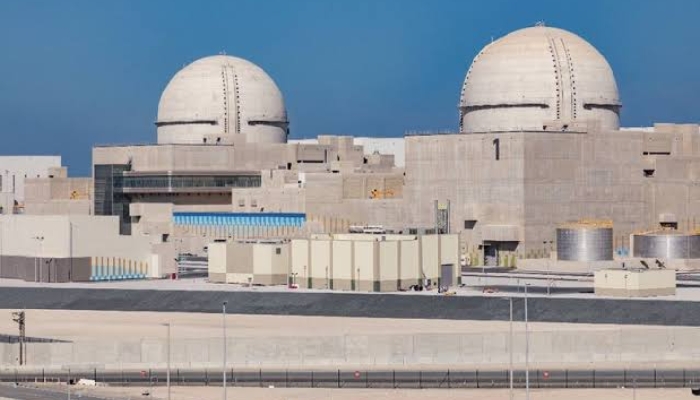
Dubai, Aug 2: The United Arab Emirates (UAE) announced on Saturday that it has started operations in the first of four reactors at the Barakah nuclear power station - the first nuclear power plant in the Arab world.

Emirates Nuclear Energy Corporation (ENEC), which is building and operating the plant with Korea Electric Power Corporation (KEPCO) said in a press release that its subsidiary Nawah Energy Company "has successfully started up Unit 1 of the Barakah Nuclear Energy Plant, located in the Al Dhafrah Region of Abu Dhabi".

That signals that Unit 1, which had fuel rods loaded in March, has achieved "criticality" - a sustained fission chain reaction.

"The start-up of Unit 1 marks the first time that the reactor safely produces heat, which is used to create steam, turning a turbine to generate electricity," said ENEC.

Barakah, which was originally scheduled to open in 2017, has been dogged by delays and is billions of dollars over budget. It has also raised myriad concerns among nuclear energy veterans who are concerned about the potential risks Barakah could visit upon the Arabian Peninsula, from an environmental catastrophe to a nuclear arms race.

Paul Dorfman, an honorary senior research fellow at the Energy Institute, University College London and founder and chair of the Nuclear Consulting Group, has criticised the Barakah reactors' "cheap and cheerful" design that he says cuts corners on safety.

Dorfman authored a report (PDF) last year detailing key safety features Barakah's reactors lack, such as a "core catcher" to literally stop the core of a reactor from breaching the containment building in the event of a meltdown. The reactors are also missing so-called Generation III Defence-In-Depth reinforcements to the containment building to shield against a radiological release resulting from a missile or fighter jet attack.

Both of these engineering features are standard on new reactors built in Europe, says Dorfman.

There have been at least 13 aerial attacks on nuclear facilities in the Middle East - more than any other region on earth.

The vulnerability of critical infrastructure in the Arabian Peninsula was further laid bare last year after Saudi Arabia's oil facilities at Abqaiq and Khurais were attacked by 18 drones and seven cruise missiles - an assault that temporarily knocked out more than half of the kingdom's oil production.

On Saturday, Dorfman reiterated his concern that there is no regional protocol in place to determine liability should an accident or incident at Barakah result in radioactive contamination spreading from the UAE to its neighbours. 

"Given Barakah has started up, because of all the well-rehearsed nuclear safety and security problems, it may be critically important that the Gulf states collectively evolve a Nuclear Accident Liability Convention, so that if anything does go wrong, victim states may have some sort of redress," Dorfman told Al Jazeera. 

The UAE has substantial oil and gas reserves, but it has made huge investments in developing alternative energy sources, including nuclear and solar.

Experts though have questioned why the UAE - which is bathed in sunlight and wind - has pushed ahead with nuclear energy - a far more expensive and riskier option than renewable energy sources.

When the UAE first announced Barakah in 2009, nuclear power was cheaper than solar and wind. But by 2012 - when the Emirates started breaking ground to build the reactors - solar and wind costs had plummeted dramatically.

Between 2009 and 2019, utility-scale average solar photovoltaic costs fell 89 percent and wind fell 43 percent, while nuclear jumped 26 percent, according to an analysis by the financial advisory and asset manager Lazard.

There are also concerns about the potential for Barakah to foment nuclear proliferation in the Middle East - a region rife with geopolitical fault lines and well-documented history of nuclear secrecy.

The UAE has sought to distance itself from the region's bad behaviour by agreeing not to enrich its own uranium or reprocess spent fuel. It has also signed up to the United Nation's nuclear watchdog's Additional Protocol, significantly enhancing inspection capabilities, and secured a 123 Agreement with the United States that allows bilateral civilian nuclear cooperation.

Comments

Add new comment

  • Coastaldigest.com reserves the right to delete or block any comments.
  • Coastaldigset.com is not responsible for its readers’ comments.
  • Comments that are abusive, incendiary or irrelevant are strictly prohibited.
  • Please use a genuine email ID and provide your name to avoid reject.