


Iran, Saudi Arabia lock horns over Yemen

April 11, 2015

Apr 11: Tensions between Iran and Saudi Arabia deepened on Thursday as Iranian leaders lashed out with rare vehemence against the continuing Saudi air campaign in Yemen, even hurling personal insults at the young Saudi prince who is leading the fight.

Ayatollah Ali Khamenei, the supreme leader of Iran, denounced the Saudi airstrikes in Yemen as “a crime” and “a genocide” while all but taunting Saudi Arabia that its war in Yemen was doomed to fail.
Iran Saudi

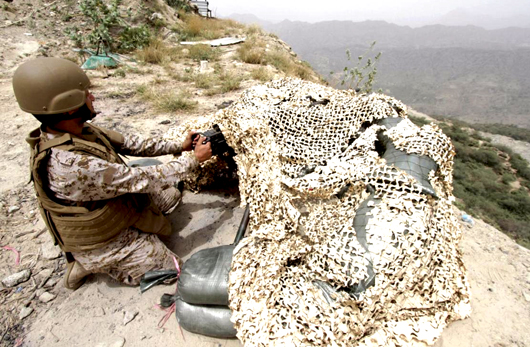
A regional coalition led by Saudi Arabia extended its bombing campaign for a 16th night in its effort to stop the Houthi movement and its allies from dominating Yemen. The Houthis nonetheless continued their advance, and aid groups warned of a compounding humanitarian catastrophe, particularly in the port city of Aden.

US Secretary of State John Kerry sharply warned Iran over its backing for the other side of the conflict in Yemen, in the first explicit US accusation that Iran has been providing military aid to the Houthis. Washington was “not going to stand by while the region is destabilised,” Kerry said in an interview with “PBS NewsHour” on Wednesday night.

“There are obviously supplies that have been coming from Iran,” he added. “There are a number of flights every single week that have been flying in. We trace those flights, and we know this. We are well aware of the support that Iran has been giving to Yemen.”

The US has recently increased the provision of logistical support, intelligence and weapons to the Saudi campaign, just days after the announcement of a framework for a nuclear deal with Iran. Kerry said he was seeking to reassure allies, including Saudi Arabia, that the US could “do two things at the same time.”

The US could help push back against Iranian attempts to project its influence around the region, he argued, while at the same time negotiating a deal that would reward Tehran for providing guarantees that it was not building nuclear weapons.

Saudi Arabia has said it is bombing the Houthis because it sees them as an instrument of Iranian power, but Western diplomats and independent experts have said that while Iran has supported the Houthis financially, it has no direct control over the group.

The back-and-forth insults and threats raised fears that the Yemeni conflict could further inflame the rivalry between the two regional heavyweights, Iran and Saudi Arabia, already fighting each other through sectarian proxies in Syria and in less overt struggles across Iraq, Lebanon and Bahrain.

Some analysts suggested that the battle for Yemen may further complicate the delicate politics of a deal with the Western powers to restrain Iran’s nuclear programme. But others argued that the deal had instead emboldened Iran to flex its muscles against Saudi Arabia.

“Deep down, the Iranians know that they are winning,” said Michael Stephens, the head of the Royal United Services Institute in Doha, Qatar. Kerry appeared forced into a difficult balance, reassuring Saudi Arabia of US support against Iran without antagonising Iranian hard-liners severely enough to fuel opposition to the nuclear deal.

The ayatollah’s diatribe only added to the challenge. In rare direct criticism of Iran’s rival by name, Khamenei said that Saudi Arabia was departing from a history of acting with dignity in foreign affairs. “Now few inexperienced youth have taken over the affairs of the state and are replacing dignity with barbarity.”

His comments were a jab at the Saudi defence minister, Prince Mohamed bin Salman, who Saudi diplomats say is about 30. He is also a son of King Salman, who ascended to the throne this year and promptly named him to the powerful dual roles of demesne minister and chief of the royal court.

The Saudi news media has been cheering Mohamed as the architect and overseer of the Yemeni campaign despite a light résumé, raising eyebrows among rivals in the royal family and setting him up for embarrassment if it is deemed to have failed.

In a statement, Khamenei warned the Saudis “they must cease their crimes in Yemen,” and that failure there was all but inevitable. “They will be harmed and incur losses in this issue in which they will under no circumstances triumph. The Saudis’ face will be rubbed in the ground in Yemen,” he said, comparing the Saudi actions to Israel’s campaigns against Palestinian militants in the Gaza Strip.

Stephens, of the Royal Unity Services Institute, said the extraordinary barbed comments appeared designed to provoke and inflame. “It is almost like the Iranians are baiting the Saudis, trying to find every pressure point, to make the Saudis feel emasculated, and then stand back and watch as the Saudis get in deeper and deeper,” he said.

But at the same time, he argued, the Iranians were sending a message of support to their Yemeni allies, the Houthis. “They have decided to show that they are willing to stand behind the Houthis,” Stephens said. “The Iranians are making a sort of a guarantee to their allies that, whatever happens, they are going to make sure that the Houthis are at the table for the talks.”

Saudi Arabia’s warning

Saudi Arabia, which is leading a regional coalition against the Houthis, issued its own warning to Iran, saying that two Iranian warships that recently arrived in the waters off Yemen should steer clear of Yemeni waters. “If the ships seek to aid the Houthis, the coalition has the right to choose the proper answer,” said a spokesman, Brig Gen Ahmad Asseri.

In another provocation, Saudi Arabia denied permission for an Iranian plane filled with pilgrims to land in Mecca. The Houthis, a group based in northern Yemen that follows a strain of Shiite Islam, have fought a half-dozen conflicts with the Yemeni government since 2004, including a fight in 2009 that drew Saudi Arabia into border skirmishes. Only since that time, scholars say, has the movement received support from Iran, the region’s main Shiite Muslim power as well as Saudi Arabia’s rival.

Since the fall, however, the Houthis have teamed with major units of the Yemeni security forces still loyal to the former strongman, Ali Abdullah Saleh. Those units have helped the Houthi-allied forces capture the capital, Sanaa, and much of Yemen.

At the United Nations, Secretary-General Ban Ki-moon, whose efforts to restart a political dialogue in Yemen have collapsed, implored the Houthis to halt their expansion. But he also has been critical of the Saudi-led military campaign. “The coalition air raids – and the continuing attempts by the Houthis and their allied armed groups to expand their power, have turned an internal political crisis into a violent conflict that risks deep and long-lasting regional repercussions,” Ban said.

“The last thing the region and our world need is more of the chaos and crimes we have seen in Libya and Syria,” he said.


Comments

Add new comment

  • Coastaldigest.com reserves the right to delete or block any comments.
  • Coastaldigset.com is not responsible for its readers’ comments.
  • Comments that are abusive, incendiary or irrelevant are strictly prohibited.
  • Please use a genuine email ID and provide your name to avoid reject.
News Network
April 26,2020

Abu Dhabi, Apr 26: Indian Ambassador to the UAE Pavan Kapoor says he is appalled after the bodies of three Indians flown back to India were returned to Abu Dhabi on Friday.

The three deceased Indian nationals had died of non-coronavirus causes and were flown to Delhi on Thursday but were promptly returned by authorities there.

“We are appalled at what has happened,” Kapoor told Gulf News. “We do not know if the bodies were returned because of coronavirus-related restrictions, but we are obviously not sending the remains of people [who have passed away from COVID-19],” he added.

“[As we understand], it happened because of new protocols at the airport and we are trying to sort it out,” he said.

Sent back a few hours later

“The remains were not offloaded from the plane, and were sent back a few hours later,” Kapoor explained.

The deceased were Kamlesh Bhatt, who passed away on April 17, and Sanjeev Kumar and Jagsir Singh who both died on April 13.

According to reports in Indian media, Kamlesh Bhat was 23 years old, and hailed from Tehri Garhwal district. He allegedly died of cardiac arrest. Along with the remains Kumar and Singh, Bhatt’s body was initially repatriated on an Etihad Airways flight, then sent back, even though his relatives had been on their way to collect them.

Kapoor explained the procedure through which remains are normally returned to family members back home, saying that the worker’s employer typically makes arrangements with cargo companies to repatriate bodies on cargo aircraft.

The employer applies for a No Objection Certificate from the Indian Embassy, which is granted once the Embassy ensures that all local formalities have been completed. The cargo company then applies for airport clearance, and the airline obtains approvals from the receiving airport.

“If airport protocols have changed, it means cargo companies have to be more careful about the clearance they’re getting,” Kapoor advised.

Additional costs
The ambassador added there may eventually be additional costs to repatriate the bodies but that it is first necessary to sort out the concerns.

The global coronavirus outbreak has spawned difficulties in repatriating mortal remains as a result of the travel restrictions imposed by countries. Remains of people dying from COVID-19 are not being sent back, but the caution surrounding the handling of bodies often affects the repatriation of those who succumb to other causes.

As Gulf News reported, Kerala chief minister Pinarayi Vijayan reached out to Indian Prime Minister Narendra Modi on Friday for intervention in bringing back the bodies of Keralites who have died in the Gulf from non-COVID-19 causes.

“I would like to draw your attention to the grievances received from Non-resident Keralites Associations (NRKs) in the Gulf Cooperation Council (GCC) countries on the delay caused in bringing home the mortal remains of NRKs who had expired due to reasons other than the COVID-19 infection,” read the letter by the CM.

“It is learnt that a ‘clearance certificate’ from the Indian Embassies is required to process the application of bringing home the mortal remains of the dead. The Embassies are [further] insisting on the production of a no-objection certificate from the Ministry of Home Affairs (MHA), New Delhi. To enable to bring back the bodies of the NRIs whose deaths occurred due to reasons other than COVID-19 infection, without necessary procedural hassles, I request your kind intervention,” Vijayan has requested.

Comments

Add new comment

  • Coastaldigest.com reserves the right to delete or block any comments.
  • Coastaldigset.com is not responsible for its readers’ comments.
  • Comments that are abusive, incendiary or irrelevant are strictly prohibited.
  • Please use a genuine email ID and provide your name to avoid reject.
Agencies
August 2,2020

Kuwait, Aug 2: Kuwait has barred entry of foreign passengers from over 30 countries including India and China.

A circular from the Director General Civil Aviation, State of Kuwait directed all airlines operating at Kuwait International Airport to adhere to the instructions in this regard.

"Based on the decision of the Health Authority in State of Kuwait, no foreign passenger coming from the down listed countries will be allowed to enter the State of Kuwait," the circular read.

These include- India, Iran, China, Brazil, Colombia, Armenia, Bangladesh, Philippines, Syria, Spain, Singapore, Bosnia and Herzegovina, Sri Lanka, Nepal, Iraq, Mexico, Indonesia, Chile, Pakistan, Egypt, Lebanon, Hong Kong, Italy, North Macedonia, Moldova, Panama, Beirut ,Serbia Montenegro, Dominican Republic and Kosovo.

The circular stated that such restriction will also include the passengers were present 14 days before the date of travel until further notice.

The ban was announced the same day Kuwait began a partial resumption of commercial flights according to Khaleej Times, which quoted authorities stating that Kuwait International Airport would run at about 30 per cent capacity from Saturday, gradually increasing in coming months.

According to the latest data from Johns Hopkins University, Kuwait has reported 67,448 cases of coronavirus while the fatalities related to the virus stand at 453.

Comments

Add new comment

  • Coastaldigest.com reserves the right to delete or block any comments.
  • Coastaldigset.com is not responsible for its readers’ comments.
  • Comments that are abusive, incendiary or irrelevant are strictly prohibited.
  • Please use a genuine email ID and provide your name to avoid reject.
Agencies
May 28,2020

Sharjah, May 28: The Ministry of Interior has warned the public against visiting wadis during bad weather conditions, including rainy seasons, to avoid the risk of getting caught in flash floods that could endanger their lives.

A video posted on its official Instagram account depicted several such incidents involving cars being swept away by floods.

The warning comes after four people were found dead this week in Sharjah's Wadi Al Helo, an area hit by floods during heavy rains that lashed the emirate, authorities said.

The National Search and Rescue Centre (NSRC) found the bodies as it conducted an operation to look for seven people who were reported missing amid the unstable weather conditions.

In a separate incident yesterday, 20 passengers of a bus that got stuck in Wadi Hatta's Umm Al Nosor area in Dubai were also rescued by police after their vehicle was swept away by floods.

The ministry urged the public to follow the directives issued for their own safety.

Comments

Add new comment

  • Coastaldigest.com reserves the right to delete or block any comments.
  • Coastaldigset.com is not responsible for its readers’ comments.
  • Comments that are abusive, incendiary or irrelevant are strictly prohibited.
  • Please use a genuine email ID and provide your name to avoid reject.