



Iranian deal offers no relief to India on oil imports

November 24, 2013

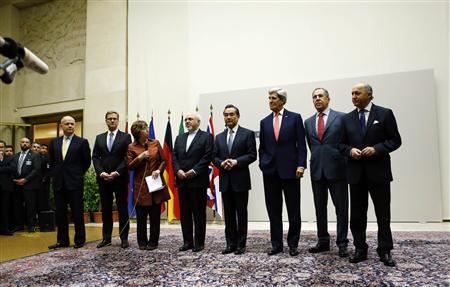
Nuclear_dealWashington, Nov 24: Countries like India would have to continue reducing oil imports from Iran despite a deal with the world powers over its controversial nuclear programme, according to a US fact sheet which also said Tehran would get a relief of USD 7 billion under the agreement.

Under the agreement reached in Geneva, Iran has committed to halt enrichment above five per cent, neutralise its stockpile of near-20 per cent uranium and halt progress on its enrichment capacity, to halt progress on the growth of its 3.5 per cent stockpile and committed to no further advances of its activities at Arak and to halt progress on its plutonium track.

In response, the US and five other major world powers have agreed to provide limited, temporary, targeted, and reversible relief while maintaining the vast bulk of the sanctions, including the oil, finance, and banking sanctions architecture. "If Iran fails to meet its commitments, we will revoke the relief," the US fact sheet said.

"Sanctions affecting crude oil sales will continue to impose pressure on Iran's government. Working with our international partners, we have cut Iran's oil sales from 2.5 million barrels per day (bpd) in early 2012 to 1 million bpd today, denying Iran the ability to sell almost 1.5 million bpd," the fact sheet said.

"That's a loss of more than USD 80 billion since the beginning of 2012 that Iran will never be able to recoup. Under this first step, the EU crude oil ban will remain in effect and Iran will be held to approximately 1 million bpd in sales, resulting in continuing lost sales worth an additional USD 4 billion per month, every month, going forward," it said.

India has slashed import of crude oil from Iran by over 26.5 per cent in the financial year ended March 31 as US and European sanctions made it difficult to ship oil from the Persian Gulf nation.

India imported about 13.3 million tonnes of crude oil from Iran in 2012-13 fiscal, down from 18.1 million tonnes shipped in the previous financial year.

Oil sanctions alone will result in approximately USD 30 billion in lost revenues to Iran – or roughly USD 5 billion per month – compared to what Iran earned in a six month period in 2011, before these sanctions took effect.

Iran used to be India's second-largest supplier, but is now fifth or sixth. The US said the approximately USD 7 billion in relief is a fraction of the costs that Iran will continue to incur during this first phase under the sanctions that will remain in place.

The vast majority of Iran's approximately USD 100 billion in foreign exchange holdings are inaccessible or restricted by sanctions.

In the next six months, Iran's crude oil sales cannot increase.

While Iran will be allowed access to USD 4.2 billion of its oil sales, nearly USD 15 billion of its revenues during this period will go into restricted overseas accounts.

"In summary, we expect the balance of Iran's money in restricted accounts overseas will actually increase, not decrease, under the terms of this deal," the US said.

Further sanctions affecting petroleum product exports to Iran, which result in billions of dollars of lost revenue, will remain in effect.

The vast majority of Iran's approximately USD 100 billion in foreign exchange holdings remain inaccessible or restricted by the sanctions.

The P5+1 countries have committed not impose new nuclear-related sanctions for six months, if Iran abides by its commitments under this deal, to the extent permissible within their political systems; and suspend certain sanctions on gold and precious metals, Iran's auto sector, and Iran's petrochemical exports, potentially providing Iran approximately USD 1.5 billion in revenue.

It also agreed to license safety-related repairs and inspections inside Iran for certain Iranian airlines and allow purchases of Iranian oil to remain at their currently significantly reduced levels – levels that are 60 per cent less than two years ago. USD 4.2 billion from these sales will be allowed to be transferred in installments if, and as, Iran fulfills its commitments.

"The concessions Iran has committed to make as part of this first step will also provide us with increased transparency and intrusive monitoring of its nuclear programme. In the past, the concern has been expressed that Iran will use negotiations to buy time to advance their program," the US said.

Comments

Add new comment

  • Coastaldigest.com reserves the right to delete or block any comments.
  • Coastaldigset.com is not responsible for its readers’ comments.
  • Comments that are abusive, incendiary or irrelevant are strictly prohibited.
  • Please use a genuine email ID and provide your name to avoid reject.
Agencies
February 17,2020

Islamabad, Feb 17: Prime Minister Imran Khan on Monday warned that Pakistan may face another refugee crisis if the international community failed to take notice of the current situation in India.

Speaking at the two-day refugee summit in Islamabad on 40 years of hosting Afghan refugees in Pakistan, he said India’s "ultranationalist ideology going unchecked could lead to destruction and the region could become a flashpoint", The Express Tribune quoted him as saying.

Khan said if the international community does not take notice of this situation, it will create another refugee crisis for Pakistan as Muslims of India will move to Pakistan.

"This is not the India of Jawaharlal Nehru and Mahatma Gandhi. The United Nations (UN) must play its role otherwise it will become a very big problem in the future," Duniya News quoted Khan as saying.

He said said that Prime Minister Narendra Modi’s statement that India can destroy Pakistan in 11 days is not a responsible statement by a premier of a nuclear state with a huge population, the paper reported.

Khan made the statement in the presence of visiting UN Secretary General Antonio Guterres, who was also attending the summit.

He said because of the "Hindutva" ideology, Kashmiris have been lockdown for over 200 days. He alleged under the same ideology, the BJP-led government passed two discriminatory nationalistic legislations, targeting 200 million Muslims in India.

Khan was referring to India's Citizenship (Amendment) Act and the revocation of the special status to Jammu and Kashmir.

The new citizenship law passed by the Indian Parliament in December 2019 offers citizenship to non-Muslim persecuted religious minorities from Pakistan, Bangladesh and Afghanistan.

The Indian government has maintained that the CAA is an internal matter of the country and stressed that the goal is to protect the oppressed minorities of neighbouring countries.

India revoked Jammu and Kashmir's special status on August 5. Reacting to India's move, Pakistan downgraded diplomatic ties with New Delhi and expelled the Indian High Commissioner.

India has always maintained that Jammu and Kashmir is its integral part and ruled out any third party mediation, including either from the UN or the US, saying it is a bilateral issue with Pakistan.

Comments

Add new comment

  • Coastaldigest.com reserves the right to delete or block any comments.
  • Coastaldigset.com is not responsible for its readers’ comments.
  • Comments that are abusive, incendiary or irrelevant are strictly prohibited.
  • Please use a genuine email ID and provide your name to avoid reject.
News Network
July 24,2020

Kathmandu, Jul 24: At least 132 people lost their lives as a result of heavy rains triggering landslides, and flash floods in Nepal.

"132 people dead, 128 injured, 53 missing and 998 families affected due to rainfall, landslides and floods in the country as of 23rd July," Nepal Disaster Risk Reduction and Management Authority Within the last two weeks, the Myagdi district of western Nepal was the worst affected with 27 reported deaths.

Search and rescue operations are being conducted continuously with officials and police personnel who are looking through the debris to find missing people.

Monsoon-induced disasters are common in Nepal owing to the country's mountainous topography. Hundreds have been displaced as landslides have swept away their homes. They ended up taking refuge in local schools and community centers.

Nepal's Meteorological Forecasting Division earlier last week had predicted heavy downpour across the country. The Division had warned of monsoon winds being near the low-pressure line in the Terai belt, which would consequently cause more rainfall.

Comments

Add new comment

  • Coastaldigest.com reserves the right to delete or block any comments.
  • Coastaldigset.com is not responsible for its readers’ comments.
  • Comments that are abusive, incendiary or irrelevant are strictly prohibited.
  • Please use a genuine email ID and provide your name to avoid reject.
News Network
May 29,2020

Washington, May 29: Reiterating his offer to mediate on the border dispute between India and China, US President Donald Trump has said that he spoke with Narendra Modi about the "big conflict" and asserted that the Indian Prime Minister is not in a "good mood" over the latest flare-ups between the two countries.

Speaking with the reporters in the Oval Office of the White House on Thursday, Trump said a "big conflict" was going on between India and China.

"I like your prime minister a lot. He is a great gentleman," the president said.

"Have a big conflict …India and China. Two countries with 1.4 billion people (each). Two countries with very powerful militaries. India is not happy and probably China is not happy," he said when asked if he was worried about the border situation between India and China.

"I can tell you; I did speak to Prime Minister Modi. He is not in a good mood about what is going on with China," Trump said.

A day earlier, the president offered to mediate between India and China.

Trump on Wednesday said in a tweet that he was "ready, willing and able to mediate" between the two countries.

Responding to a question on his tweet, Trump reiterated his offer, saying if called for help, "I would do that (mediate). If they thought it would help" about "mediate or arbitrate, I would do that," he said.

India on Wednesday said it was engaged with China to peacefully resolve the border row, in a carefully crafted reaction to Trump's offer to arbitrate between the two Asian giants to settle their decades-old dispute.

"We are engaged with the Chinese side to peacefully resolve it," External Affairs Ministry Spokesperson Anurag Srivastava said, replying to a volley of questions at an online media briefing.

While the Chinese Foreign Ministry is yet to react to Trump's tweet which appears to have caught Beijing by surprise, an op-ed in the state-run Global Times said both countries did not need such a help from the US President.

"The latest dispute can be solved bilaterally by China and India. The two countries should keep alert on the US, which exploits every chance to create waves that jeopardise regional peace and order," it said.

In Beijing, Chinese Foreign Ministry spokesman Zhao Lijian said on Wednesday that both China and India have proper mechanisms and communication channels to resolve the issues through dialogue and consultations.

Trump previously offered to mediate between India and Pakistan on the Kashmir issue, a proposal which was rejected by New Delhi.

The situation in eastern Ladakh deteriorated after around 250 Chinese and Indian soldiers were engaged in a violent face-off on the evening of May 5 which spilled over to the next day before the two sides agreed to "disengage" following a meeting at the level of local commanders.

Over 100 Indian and Chinese soldiers were injured in the violence.

The incident in Pangong Tso was followed by a similar incident in north Sikkim on May 9.

Comments

Add new comment

  • Coastaldigest.com reserves the right to delete or block any comments.
  • Coastaldigset.com is not responsible for its readers’ comments.
  • Comments that are abusive, incendiary or irrelevant are strictly prohibited.
  • Please use a genuine email ID and provide your name to avoid reject.