



Iranian deal offers no relief to India on oil imports

November 24, 2013

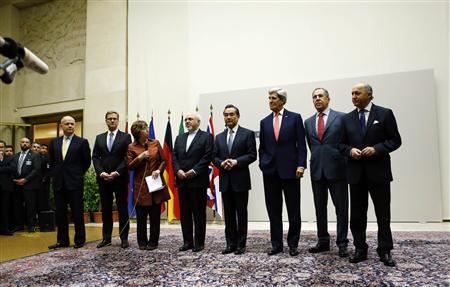
Nuclear_dealWashington, Nov 24: Countries like India would have to continue reducing oil imports from Iran despite a deal with the world powers over its controversial nuclear programme, according to a US fact sheet which also said Tehran would get a relief of USD 7 billion under the agreement.

Under the agreement reached in Geneva, Iran has committed to halt enrichment above five per cent, neutralise its stockpile of near-20 per cent uranium and halt progress on its enrichment capacity, to halt progress on the growth of its 3.5 per cent stockpile and committed to no further advances of its activities at Arak and to halt progress on its plutonium track.

In response, the US and five other major world powers have agreed to provide limited, temporary, targeted, and reversible relief while maintaining the vast bulk of the sanctions, including the oil, finance, and banking sanctions architecture. "If Iran fails to meet its commitments, we will revoke the relief," the US fact sheet said.

"Sanctions affecting crude oil sales will continue to impose pressure on Iran's government. Working with our international partners, we have cut Iran's oil sales from 2.5 million barrels per day (bpd) in early 2012 to 1 million bpd today, denying Iran the ability to sell almost 1.5 million bpd," the fact sheet said.

"That's a loss of more than USD 80 billion since the beginning of 2012 that Iran will never be able to recoup. Under this first step, the EU crude oil ban will remain in effect and Iran will be held to approximately 1 million bpd in sales, resulting in continuing lost sales worth an additional USD 4 billion per month, every month, going forward," it said.

India has slashed import of crude oil from Iran by over 26.5 per cent in the financial year ended March 31 as US and European sanctions made it difficult to ship oil from the Persian Gulf nation.

India imported about 13.3 million tonnes of crude oil from Iran in 2012-13 fiscal, down from 18.1 million tonnes shipped in the previous financial year.

Oil sanctions alone will result in approximately USD 30 billion in lost revenues to Iran – or roughly USD 5 billion per month – compared to what Iran earned in a six month period in 2011, before these sanctions took effect.

Iran used to be India's second-largest supplier, but is now fifth or sixth. The US said the approximately USD 7 billion in relief is a fraction of the costs that Iran will continue to incur during this first phase under the sanctions that will remain in place.

The vast majority of Iran's approximately USD 100 billion in foreign exchange holdings are inaccessible or restricted by sanctions.

In the next six months, Iran's crude oil sales cannot increase.

While Iran will be allowed access to USD 4.2 billion of its oil sales, nearly USD 15 billion of its revenues during this period will go into restricted overseas accounts.

"In summary, we expect the balance of Iran's money in restricted accounts overseas will actually increase, not decrease, under the terms of this deal," the US said.

Further sanctions affecting petroleum product exports to Iran, which result in billions of dollars of lost revenue, will remain in effect.

The vast majority of Iran's approximately USD 100 billion in foreign exchange holdings remain inaccessible or restricted by the sanctions.

The P5+1 countries have committed not impose new nuclear-related sanctions for six months, if Iran abides by its commitments under this deal, to the extent permissible within their political systems; and suspend certain sanctions on gold and precious metals, Iran's auto sector, and Iran's petrochemical exports, potentially providing Iran approximately USD 1.5 billion in revenue.

It also agreed to license safety-related repairs and inspections inside Iran for certain Iranian airlines and allow purchases of Iranian oil to remain at their currently significantly reduced levels – levels that are 60 per cent less than two years ago. USD 4.2 billion from these sales will be allowed to be transferred in installments if, and as, Iran fulfills its commitments.

"The concessions Iran has committed to make as part of this first step will also provide us with increased transparency and intrusive monitoring of its nuclear programme. In the past, the concern has been expressed that Iran will use negotiations to buy time to advance their program," the US said.

Comments

Add new comment

  • Coastaldigest.com reserves the right to delete or block any comments.
  • Coastaldigset.com is not responsible for its readers’ comments.
  • Comments that are abusive, incendiary or irrelevant are strictly prohibited.
  • Please use a genuine email ID and provide your name to avoid reject.
News Network
May 12,2020

Washington, May 12: The US Federal Bureau of Investigation and cybersecurity experts believe Chinese hackers are trying to steal research on developing a vaccine against coronavirus, two newspapers reported Monday.

The FBI and Department of Homeland Security are planning to release a warning about the Chinese hacking as governments and private firms race to develop a vaccine for COVID-19, the Wall Street Journal and New York Times reported.

The hackers are also targeting information and intellectual property on treatments and testing for COVID-19.

US officials alleged that the hackers are linked to the Chinese government, the reports say.

The official warning could come within days.

In Beijing Foreign Affairs ministry spokesman Zhao Lijian rejected the allegation, saying China firmly opposes all cyber attacks.

"We are leading the world in COVID-19 treatment and vaccine research. It is immoral to target China with rumors and slanders in the absence of any evidence," Zhao said.

Asked about the reports, President Donald Trump did not confirm them, but said: "What else is new with China? What else is new? Tell me. I'm not happy with China."

"We're watching it very closely," he added.

A US warning would add to a series of alerts and reports accusing government-backed hackers in Iran, North Korea, Russia and China of malicious activity related to the pandemic, from pumping out false news to targeting workers and scientists.

The New York Times said it could be a prelude to officially-sanctioned counterattacks by US agencies involved in cyber warfare, including the Pentagon's Cyber Command and the National Security Agency.

Last week in a joint message Britain and the United States warned of a rise in cyber attacks against health professionals involved in the coronavirus response by organised criminals "often linked with other state actors."

Britain's National Cyber Security Centre and the US Cybersecurity and Infrastructure Security Agency said they had detected large-scale "password spraying" tactics -- hackers trying to access accounts through commonly used passwords -- aimed at healthcare bodies and medical research organisations.

Comments

Add new comment

  • Coastaldigest.com reserves the right to delete or block any comments.
  • Coastaldigset.com is not responsible for its readers’ comments.
  • Comments that are abusive, incendiary or irrelevant are strictly prohibited.
  • Please use a genuine email ID and provide your name to avoid reject.
News Network
June 3,2020

Washington, Jun 3: US President Donald Trump's administration on Tuesday announced investigations into foreign digital services taxes it says are aimed squarely at American tech firms.

Following a similar trade investigation against France last year, the US Trade Representative office now is looking into taxes in Britain and the European Union, as well as Indonesia, Turkey and India.

"President Trump is concerned that many of our trading partners are adopting tax schemes designed to unfairly target our companies," USTR Robert Lighthizer said in a statement.

"We are prepared to take all appropriate action to defend our businesses and workers against any such discrimination."

Washington opposes the efforts to tax revenues from online sales and advertising, saying they single out US tech giants like Google, Apple, Facebook, Amazon and Netflix.

The US and France have agreed to negotiate till the end of the year over a digital services tax Paris approved in 2019, after USTR found them to be discriminating and threatened retaliatory duties of up to 100 percent on French imports such as champagne and camembert cheese.

Trump has embroiled the US in numerous trade disputes since taking office in 2017, including a months-long trade war with China that cooled with the signing of a partial deal in January.

Comments

Add new comment

  • Coastaldigest.com reserves the right to delete or block any comments.
  • Coastaldigset.com is not responsible for its readers’ comments.
  • Comments that are abusive, incendiary or irrelevant are strictly prohibited.
  • Please use a genuine email ID and provide your name to avoid reject.
News Network
June 13,2020

Jun 13: Requiring the wearing of masks to prevent the spread of the novel coronavirus in areas at the epicenter of the global pandemic may have prevented tens of thousands of infections, a new study suggests.

Mask-wearing is even more important for preventing the virus' spread and the sometimes deadly COVID-19 illness it causes than social distancing and stay-at-home orders, researchers said, in the study published in PNAS: The Proceedings of the National Academy of Sciences of the USA.

Infection trends shifted dramatically when mask-wearing rules were implemented on April 6 in northern Italy and April 17 in New York City - at the time among the hardest hit areas of the world by the health crisis - the study found.

"This protective measure alone significantly reduced the number of infections, that is, by over 78,000 in Italy from April 6 to May 9 and over 66,000 in New York City from April 17 to May 9," researchers calculated.

When mask-wearing went into effect in New York, the daily new infection rate fell by about 3% per day, researchers said. In the rest of the country, daily new infections continued to increase.

Direct contact precautions - social distancing, quarantine and isolation, and hand sanitizing - were all in place before mask-wearing rules went into effect in Italy and New York City. But they only help minimize virus transmission by direct contact, while face covering helps prevent airborne transmission, the researchers say.

"The unique function of face covering to block atomization and inhalation of virus-bearing aerosols accounts for the significantly reduced infections," they said. That would indicate "that airborne transmission of COVID-19 represents the dominant route for infection."

The U.S. Center for Disease Control and Prevention on Friday urged organizers of large gatherings that involve "shouting, chanting or singing to strongly encourage the use of cloth face coverings to lower the risk of spreading the coronavirus."

Comments

Add new comment

  • Coastaldigest.com reserves the right to delete or block any comments.
  • Coastaldigset.com is not responsible for its readers’ comments.
  • Comments that are abusive, incendiary or irrelevant are strictly prohibited.
  • Please use a genuine email ID and provide your name to avoid reject.