



Iranian deal offers no relief to India on oil imports

November 24, 2013

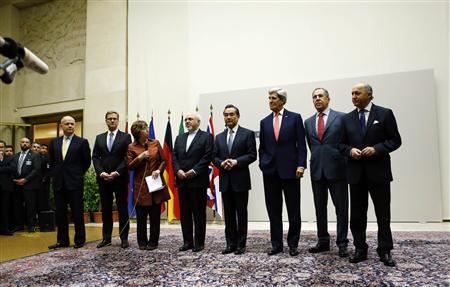
Nuclear_dealWashington, Nov 24: Countries like India would have to continue reducing oil imports from Iran despite a deal with the world powers over its controversial nuclear programme, according to a US fact sheet which also said Tehran would get a relief of USD 7 billion under the agreement.

Under the agreement reached in Geneva, Iran has committed to halt enrichment above five per cent, neutralise its stockpile of near-20 per cent uranium and halt progress on its enrichment capacity, to halt progress on the growth of its 3.5 per cent stockpile and committed to no further advances of its activities at Arak and to halt progress on its plutonium track.

In response, the US and five other major world powers have agreed to provide limited, temporary, targeted, and reversible relief while maintaining the vast bulk of the sanctions, including the oil, finance, and banking sanctions architecture. "If Iran fails to meet its commitments, we will revoke the relief," the US fact sheet said.

"Sanctions affecting crude oil sales will continue to impose pressure on Iran's government. Working with our international partners, we have cut Iran's oil sales from 2.5 million barrels per day (bpd) in early 2012 to 1 million bpd today, denying Iran the ability to sell almost 1.5 million bpd," the fact sheet said.

"That's a loss of more than USD 80 billion since the beginning of 2012 that Iran will never be able to recoup. Under this first step, the EU crude oil ban will remain in effect and Iran will be held to approximately 1 million bpd in sales, resulting in continuing lost sales worth an additional USD 4 billion per month, every month, going forward," it said.

India has slashed import of crude oil from Iran by over 26.5 per cent in the financial year ended March 31 as US and European sanctions made it difficult to ship oil from the Persian Gulf nation.

India imported about 13.3 million tonnes of crude oil from Iran in 2012-13 fiscal, down from 18.1 million tonnes shipped in the previous financial year.

Oil sanctions alone will result in approximately USD 30 billion in lost revenues to Iran – or roughly USD 5 billion per month – compared to what Iran earned in a six month period in 2011, before these sanctions took effect.

Iran used to be India's second-largest supplier, but is now fifth or sixth. The US said the approximately USD 7 billion in relief is a fraction of the costs that Iran will continue to incur during this first phase under the sanctions that will remain in place.

The vast majority of Iran's approximately USD 100 billion in foreign exchange holdings are inaccessible or restricted by sanctions.

In the next six months, Iran's crude oil sales cannot increase.

While Iran will be allowed access to USD 4.2 billion of its oil sales, nearly USD 15 billion of its revenues during this period will go into restricted overseas accounts.

"In summary, we expect the balance of Iran's money in restricted accounts overseas will actually increase, not decrease, under the terms of this deal," the US said.

Further sanctions affecting petroleum product exports to Iran, which result in billions of dollars of lost revenue, will remain in effect.

The vast majority of Iran's approximately USD 100 billion in foreign exchange holdings remain inaccessible or restricted by the sanctions.

The P5+1 countries have committed not impose new nuclear-related sanctions for six months, if Iran abides by its commitments under this deal, to the extent permissible within their political systems; and suspend certain sanctions on gold and precious metals, Iran's auto sector, and Iran's petrochemical exports, potentially providing Iran approximately USD 1.5 billion in revenue.

It also agreed to license safety-related repairs and inspections inside Iran for certain Iranian airlines and allow purchases of Iranian oil to remain at their currently significantly reduced levels – levels that are 60 per cent less than two years ago. USD 4.2 billion from these sales will be allowed to be transferred in installments if, and as, Iran fulfills its commitments.

"The concessions Iran has committed to make as part of this first step will also provide us with increased transparency and intrusive monitoring of its nuclear programme. In the past, the concern has been expressed that Iran will use negotiations to buy time to advance their program," the US said.

Comments

Add new comment

  • Coastaldigest.com reserves the right to delete or block any comments.
  • Coastaldigset.com is not responsible for its readers’ comments.
  • Comments that are abusive, incendiary or irrelevant are strictly prohibited.
  • Please use a genuine email ID and provide your name to avoid reject.
Agencies
April 25,2020

From loudspeakers on the roof of a Minnesota mosque, the Islamic call to prayer echoed for the first time ever throughout a Minneapolis neighbourhood late on Thursday as the Muslim community there prepared to begin the holy month of Ramadan.

It echoed again on Friday morning and will continue five times a day during the holy month. 

The simple, short call - known as the adhan - marked an historical moment for Minneapolis and major cities across the United States, community members said. While the adhan is commonly broadcast throughout the Middle East, North Africa and other places, for many Muslims in the US, it is only heard inside mosques or community centres.

"There's definitely a lot of excitement," said Imam Abdisalam Adam, who is on the board of the Dar al-Hijrah mosque, from where the adhan will be broadcast.
"Some people see it as historic," Adam told Al Jazeera. "To the point ... that they're not doing it, able to see it in their lifetime." 

Recited by different representatives from mosques around the city, the call to prayer is expected to reach thousands in the Cedar-Riverside neighbourhood in Minneapolis, according to Jaylani Hussein, the executive director of Minnesota's Council on American-Islamic Relations (CAIR).

While Hussein says the community had discussed broadcasting the call for years, it became even more pressing this year when the coronavirus pandemic forced mosques to shut their doors and residents to stay inside. The coronavirus has infected more than 870,000 people nationwide and killed at least 50,000.
"We wanted to touch those individuals who frequent this mosque and this community," Hussein said. "If we cannot be physically together, at least this echo, this voice, this call to prayer can be an extension of us being together at this difficult time. To give some people some solace."
Ramadan - Minnesota.

The Dar al-Hijrah mosque in the Cedar-Riverside neighbourhood of Minneapolis, Minnesota [Courtesy of Abdisalem Adam] 
Ramadan is traditionally a time when Muslims worldwide regularly attend mosques for daily prayers and break their fasts together. But this year, most have been told to pray at home and forgo community iftars in favour of staying safe from the COVID-19 crisis.

Adam, the imam, said while the Muslim community is experience loss this Ramadan, they hope the call to prayer broadcast will create a "semblance of normalcy".

"With the loss of Friday prayers and the regular congregational prayers, we are hoping that this will give a sense of solace and connection to the spiritual needs of community members," he added. 

An avenue to greater investment?

The Cedar-Riverside neighbourhood is a densely populated area of Minneapolis that has historically been an entry point for many immigrants and today is home to large Somali and Oromo communities.

Ramla Bile, a Somali American who lives in a neighbourhood adjacent to Cedar-Riverside, has been active in the community for years. She welcomed the broadcast of the call to prayer, saying it will help people "feel the spirit of Ramadan in a way that is meaningful".

But she also hopes the city of Minneapolis, which provided the noise permit for the broadcast, will make bigger strides to invest in the community in even more tangible ways.

"There's been a lot of need and a lot hurt in the community in light of the COVID-19 pandemic. And then there's the ongoing conversation you've been having," she said, pointing to deep-seated Islamophobia, systemic racism and the need for infrastructure projects like sprinkler systems in high-rise buildings. 

"We need to see greater investments to support the most vulnerable members of our community," Bile said referring to the neighbourhood's elders, undocumented individuals, low-income families and others.

"Right now, we're waiting for a bailout for our micro-businesses who comprise our Somali malls, or a rent freeze for neighbourhood residents," she added.

For CAIR's Hussein and Imam Adam, they hope this Ramadan's call to prayer helps encourage other communities around the US to take similar steps.

"This will hopefully inspire others … to think about what could happen in future Ramadans and beyond," Hussein said.

Adam added that while the virus has devastated communities and upended daily life, it has also shown that "we're in this together".

"It just shows the significance of the global village and how interconnected and interdependent we are as a world community," he said. "I think that there will be a lot of change in our way of life for the better. I hope so."


Comments

Add new comment

  • Coastaldigest.com reserves the right to delete or block any comments.
  • Coastaldigset.com is not responsible for its readers’ comments.
  • Comments that are abusive, incendiary or irrelevant are strictly prohibited.
  • Please use a genuine email ID and provide your name to avoid reject.
News Network
April 16,2020

Islamabad, Apr 16: The number of coronavirus cases in Pakistan topped 6000 while the death toll due to the virus has reached 117, Dawn reported citing official data on Wednesday.

Over 1,446 people have recovered in the country from the deadly virus that has killed over 1.3 lakh people worldwide.

The total number of cases in the country has reached 6297 with Punjab being the worst affected province with 3,016 cases. Meanwhile, Sindh has 1,688 cases of the deadly virus.

Khyber Pakhtunkhwa has reported 47 new cases of the coronavirus, taking the provincial total to 912. Most of the new cases are of Tableeghi Jamaat members who have travel history.

Balochistan has reported four new cases of COVID-19, taking the provincial total to 281 according to provincial government spokesperson Liaquat Shahwani.

On Tuesday, Prime Minister Imran Khan had announced the extension of the nationwide lockdown with relaxation to some sectors.

Addressing the media in Islamabad on Tuesday, Khan said, "We made the hard decision of imposing lockdown in the country which was very well implemented due to cooperation of the people."

The countrywide lockdown was imposed last month in a bid to stem the spread of coronavirus. Later, a two-week extension was announced in the restrictions until April 14.

Comments

Add new comment

  • Coastaldigest.com reserves the right to delete or block any comments.
  • Coastaldigset.com is not responsible for its readers’ comments.
  • Comments that are abusive, incendiary or irrelevant are strictly prohibited.
  • Please use a genuine email ID and provide your name to avoid reject.
News Network
April 24,2020

Washington, Apr 24: The number of coronavirus cases in the US has surpassed 850,000, Johns Hopkins University Coronavirus Resource Center data revealed on Thursday (local time).
The country now has registered 8,56,209 cases overall, according to the data, including 47,272 deaths.

The US currently leads the world in the number of reported COVID-19 deaths and confirmed cases.

There are more than 2.6 million COVID-19 cases around the world and more than 1,85,000 deaths, according to the data.

Comments

Add new comment

  • Coastaldigest.com reserves the right to delete or block any comments.
  • Coastaldigset.com is not responsible for its readers’ comments.
  • Comments that are abusive, incendiary or irrelevant are strictly prohibited.
  • Please use a genuine email ID and provide your name to avoid reject.