Israel calls for military coalition against Iran

PressTV
June 5, 2018

Israel has proposed that “a military coalition” be formed against Iran in case Tehran pursues “military-grade” uranium enrichment, suggesting that the military force would comprise of the Israeli regime, the US, the Western states and their Arab allies.

Speaking to media on Tuesday, Israeli Intelligence Minister Yisrael Katz claimed that Iran had once been running an “unsupervised” enrichment scheme with the potential of arming the country with nuclear weapons.

The allies will need to issue a statement against the Islamic Republic “if the Iranians don't surrender now, and try to return,” he said, adding that the statement would be threatening Iranians that “a military coalition will be formed against them.”

“There should be a clear statement by the president of the United States and all of the Western coalition” if Iran returns to enriching "military-grade" uranium, the minister said. “The Arabs and Israel surely would be there too,” he added.

Washington and Tel Aviv, and to a lesser extent their Western and Arab partners, have claimed that Tehran’s nuclear energy program harbors military aspects.

Iran has strictly and in all circumstances denied pursuing any military ambitions through its nuclear work.

The country asserts that under a fatwa (religious decree) issued by Leader of the Islamic Revolution Ayatollah Seyyed Ali Khamenei, its long-established policy is to oppose the acquisition, production, stockpiling, and use of nuclear weapons.

In December 2015, the International Atomic Energy Agency’s governing board voted overwhelmingly in favor of a draft resolution, which closed the so-called possible military dimensions (PMD) case in Iran’s nuclear program.

The vote brought an end to a 12-year investigation into the “past and present issues” regarding Iran’s nuclear activities, which the United Nations nuclear watchdog had been probing under pressure from the Israeli regime, the US and their allies.

The vote came after Iran and the P5+1 group of countries signed a nuclear agreement in 2015.

The US, however, withdrew from the accord last month, emboldening Israel in its efforts to try to kill the deal and rally more support for its anti-Iran campaign.

Despite Tel Aviv and Washington’s hostile endeavors, European states have vowed to keep respecting the deal and try their utmost to preserve it.

The Israeli minister’s comments come as Prime Minister Benjamin Netanyahu has embarked on a tour of Europe to persuade European leaders to follow the US and ditch the Iran deal.

This is while Iran is currently in talks with the other signatories on the future of the deal. Tehran has said it will stay in the JCPOA if the Europeans give guarantees that a deal without the US would still protect the Iranian interests.

Comments

Add new comment

  • Coastaldigest.com reserves the right to delete or block any comments.
  • Coastaldigset.com is not responsible for its readers’ comments.
  • Comments that are abusive, incendiary or irrelevant are strictly prohibited.
  • Please use a genuine email ID and provide your name to avoid reject.
Agencies
July 28,2020

Dubai, Jul 28: Abu Dhabi Commercial Bank (ADCB) (ADCB.AD) is letting go hundreds of employees, sources said, the latest in a round of lay-offs by regional banks as pressure mounts to cut costs amid lower oil prices and the coronavirus crisis.

The UAE’s third-biggest lender is laying off 400 employees, two sources familiar with the matter said, after it had committed to not cutting staff because of the crisis.

In a statement, a spokesman said ADCB had pursued efficiency over the last decade by managing out its lowest underachievers after regular reviews, while ensuring talent was deployed in high-growth areas, such as digital banking.

“A certain number of redundancies are therefore expected every year in the normal course of business,” the bank spokesman added.

The sources said the cuts would involve ADCB’s consumer business and several in top management were among those being let go. One source said the bank was looking to close 20 branches.

In March, ADCB had declared, “No employee will be made redundant during 2020 as a result of the COVID-19 pandemic.”

UAE banks have been hit by government measures to rein in the spread of the virus, forcing many businesses to shut temporarily.

Last week, Dubai’s largest bank, Emirates NBD, reported a slump of 58% in profits. In June, sources told Reuters the bank started a new round of hundreds of lay-offs.

In May, ADCB reported a fall of 84% in first-quarter net profit as it took impairments of $292 million on debt exposure to troubled hospital operator NMC Health and payments group Finablr.

It was a major lender, with an exposure of about $981 million, to NMC Health, which went into administration this year after months of turmoil following questions over financial reporting.

Comments

Add new comment

  • Coastaldigest.com reserves the right to delete or block any comments.
  • Coastaldigset.com is not responsible for its readers’ comments.
  • Comments that are abusive, incendiary or irrelevant are strictly prohibited.
  • Please use a genuine email ID and provide your name to avoid reject.
Agencies
August 2,2020

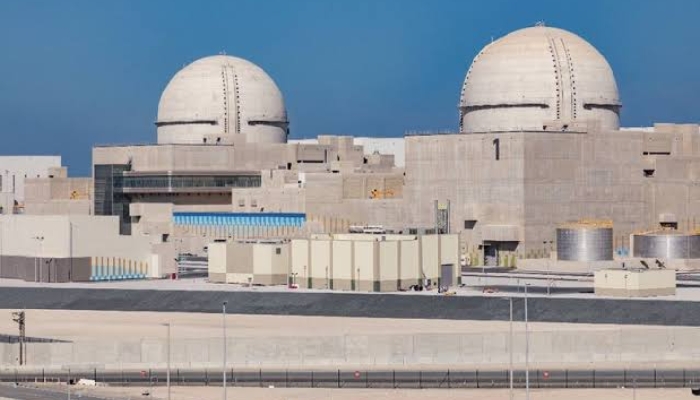
Dubai, Aug 2: The United Arab Emirates (UAE) announced on Saturday that it has started operations in the first of four reactors at the Barakah nuclear power station - the first nuclear power plant in the Arab world.

Emirates Nuclear Energy Corporation (ENEC), which is building and operating the plant with Korea Electric Power Corporation (KEPCO) said in a press release that its subsidiary Nawah Energy Company "has successfully started up Unit 1 of the Barakah Nuclear Energy Plant, located in the Al Dhafrah Region of Abu Dhabi".

That signals that Unit 1, which had fuel rods loaded in March, has achieved "criticality" - a sustained fission chain reaction.

"The start-up of Unit 1 marks the first time that the reactor safely produces heat, which is used to create steam, turning a turbine to generate electricity," said ENEC.

Barakah, which was originally scheduled to open in 2017, has been dogged by delays and is billions of dollars over budget. It has also raised myriad concerns among nuclear energy veterans who are concerned about the potential risks Barakah could visit upon the Arabian Peninsula, from an environmental catastrophe to a nuclear arms race.

Paul Dorfman, an honorary senior research fellow at the Energy Institute, University College London and founder and chair of the Nuclear Consulting Group, has criticised the Barakah reactors' "cheap and cheerful" design that he says cuts corners on safety.

Dorfman authored a report (PDF) last year detailing key safety features Barakah's reactors lack, such as a "core catcher" to literally stop the core of a reactor from breaching the containment building in the event of a meltdown. The reactors are also missing so-called Generation III Defence-In-Depth reinforcements to the containment building to shield against a radiological release resulting from a missile or fighter jet attack.

Both of these engineering features are standard on new reactors built in Europe, says Dorfman.

There have been at least 13 aerial attacks on nuclear facilities in the Middle East - more than any other region on earth.

The vulnerability of critical infrastructure in the Arabian Peninsula was further laid bare last year after Saudi Arabia's oil facilities at Abqaiq and Khurais were attacked by 18 drones and seven cruise missiles - an assault that temporarily knocked out more than half of the kingdom's oil production.

On Saturday, Dorfman reiterated his concern that there is no regional protocol in place to determine liability should an accident or incident at Barakah result in radioactive contamination spreading from the UAE to its neighbours. 

"Given Barakah has started up, because of all the well-rehearsed nuclear safety and security problems, it may be critically important that the Gulf states collectively evolve a Nuclear Accident Liability Convention, so that if anything does go wrong, victim states may have some sort of redress," Dorfman told Al Jazeera. 

The UAE has substantial oil and gas reserves, but it has made huge investments in developing alternative energy sources, including nuclear and solar.

Experts though have questioned why the UAE - which is bathed in sunlight and wind - has pushed ahead with nuclear energy - a far more expensive and riskier option than renewable energy sources.

When the UAE first announced Barakah in 2009, nuclear power was cheaper than solar and wind. But by 2012 - when the Emirates started breaking ground to build the reactors - solar and wind costs had plummeted dramatically.

Between 2009 and 2019, utility-scale average solar photovoltaic costs fell 89 percent and wind fell 43 percent, while nuclear jumped 26 percent, according to an analysis by the financial advisory and asset manager Lazard.

There are also concerns about the potential for Barakah to foment nuclear proliferation in the Middle East - a region rife with geopolitical fault lines and well-documented history of nuclear secrecy.

The UAE has sought to distance itself from the region's bad behaviour by agreeing not to enrich its own uranium or reprocess spent fuel. It has also signed up to the United Nation's nuclear watchdog's Additional Protocol, significantly enhancing inspection capabilities, and secured a 123 Agreement with the United States that allows bilateral civilian nuclear cooperation.

Comments

Add new comment

  • Coastaldigest.com reserves the right to delete or block any comments.
  • Coastaldigset.com is not responsible for its readers’ comments.
  • Comments that are abusive, incendiary or irrelevant are strictly prohibited.
  • Please use a genuine email ID and provide your name to avoid reject.
News Network
July 18,2020

New Delhi, Jul 18: With 34,884 people testing positive for coronavirus in the last 24 hours, India's Covid-19 caseload surged to 10,38,716 while 6,53,750 patients have recovered from the disease so far, according to data by the Union Health Ministry.

The death toll due to Covid-19 rose to 26,273 with 671 fatalities reported in a day, the data updated at 8 am on Saturday showed.

At present, there are 3,58,692 active cases in the country, while 6,53,750 people have recovered so far and one has migrated.

"Around 62.94 per cent of patients have recovered so far," an official said.

The total number of confirmed cases includes foreigners.

This is the third consecutive day when the number of Covid-19 cases increased by more than 30,000.

According to the Indian Council of Medical Research (ICMR), a cumulative total of 1,34,33,742 samples have been tested for COVID-19 up to July 17 with 3,61,024 samples being tested on Friday.

Of the 671 deaths reported in the last 24 hours, 258 are from Maharashtra, 115 from Karnataka, 79 from Tamil Nadu, 42 from Andhra Pradesh, 38 from Uttar Pradesh, 26 each from West Bengal and Delhi, 17 from Gujarat, nine each from Jammu and Kashmir and Punjab, and eight each from Madhya Pradesh and Rajasthan.

Telangana has reported seven fatalities followed by Haryana with five deaths, Jharkhand, Bihar and Odisha reported four each, Assam and Puducherry have registered three each, Chhattisgarh and Goa reported two each while Kerala and Uttarakhand have registered a fatality each.

Of the total 26,273 deaths reported so far, Maharashtra accounted for the highest 11,452 fatalities followed by Delhi with 3,571 deaths, Tamil Nadu 2,315, Gujarat 2,106, Karnataka 1,147, Uttar Pradesh 1,084, West Bengal 1,049, Madhya Pradesh 697 and Rajasthan 546.

So far 534 people have died of COVID-19 in Andhra Pradesh, 403 in Telangana, 327 in Haryana, 239 in Punjab, 231 in Jammu and Kashmir, 201 in Bihar, 83 in Odisha, 51 in Uttarakhand and Assam each, 46 in Jharkhand and 38 in Kerala.

Puducherry has registered 25 deaths, Chhattisgarh 23, Goa 21, Himachal Pradesh and Chandigarh 11 each, Arunachal Pradesh and Tripura three each, Meghalaya and Dadra and Nagar Haveli and Daman and Diu two each while Ladakh has reported one fatality.

The Health Ministry stressed that more than 70 per cent of the deaths occurred due to comorbidities.

Maharashtra has reported the highest number of cases at 2,92,589 followed by Tamil Nadu at 1,60,907, Delhi at 1,20,107, Karnataka at 55,115, Gujarat at 46,430, Uttar Pradesh at 45,163 and Telangana at 42,496.

The number of Covid-19 cases has gone up to 40,646 in Andhra Pradesh, 38,011 in West Bengal, 27,789 in Rajasthan, 24,797 in Haryana, 23,589 in Bihar and 21,081 in Madhya Pradesh.

Assam has instances of 20,646 infections, Odisha 16,110 and Jammu and Kashmir 12,757 cases. Kerala has reported 11,066 novel coronavirus infections so far, while Punjab has 9,442 cases.

A total of 4,964 have been infected by the virus in Chhattisgarh, 4,921 in Jharkhand, 4,102 in Uttarakhand, 3,304 in Goa, 2,366 in Tripura, 1,832 in Puducherry, 1,800 in Manipur, 1,417 in Himachal Pradesh and 1,151 in Ladakh.

Nagaland has recorded 956 Covid-19 cases, Chandigarh 660, Arunachal Pradesh 609 and Dadra and Nagar Haveli and Daman and Diu together have reported 585 cases.

Meghalaya has reported 403 cases, Mizoram 282, Sikkim has registered 266 infections so far, while Andaman and Nicobar Islands has recorded 194 cases.

"Our figures are being reconciled with the ICMR," the ministry said, adding that 163 cases are being reassigned to states.

State-wise distribution is subject to further verification and reconciliation, it added.

Comments

Add new comment

  • Coastaldigest.com reserves the right to delete or block any comments.
  • Coastaldigset.com is not responsible for its readers’ comments.
  • Comments that are abusive, incendiary or irrelevant are strictly prohibited.
  • Please use a genuine email ID and provide your name to avoid reject.