



Israel: ‘Ironclad information' White House behind UN rebuke

December 28, 2016

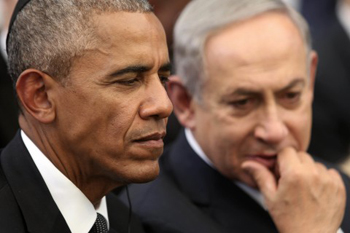
Jerusalem, Dec 28: Doubling down on its public break with the Obama administration, a furious Israeli government on Tuesday said it had received “ironclad” information from Arab sources that Washington actively helped craft last week's UN resolution declaring Israeli settlements in occupied territories illegal. The allegations further poisoned a toxic atmosphere between Israel and the outgoing administration in the wake of Friday's vote, raising questions about whether the White House might take further action against settlements in President Barack Obama's final weeks in office.
Israel7With the US expected to participate in an international peace conference in France next month and Secretary of State John Kerry planning a final policy speech, the Palestinians hope to capitalize on the momentum. Israel's nationalist government is banking on the incoming Trump administration to undo the damage with redoubled support. Although the US has long opposed the settlements, it has generally used its Security Council veto to protect its ally from censure. On Friday, it abstained from a resolution calling settlements a “flagrant violation” of international law, allowing it to pass by a 14-0 margin.

Israeli Prime Minister Benjamin Netanyahu, who has had a cool relationship with Obama, called the resolution “shameful” and accused the US of playing an active role in its passage. On Tuesday, his spokesman went even further. “We have ironclad information that emanates from sources in the Arab world and that shows the Obama administration helped craft this resolution and pushed hard for its eventual passage,” David Keyes said. “We're not just going to be a punching bag and go quietly into the night.”

He did not identify the Arab sources or say how Israel obtained the information. Israel has close security ties with Egypt, the original sponsor of last week's resolution who, as the lone Arab member of the Security Council, was presenting it at the Palestinians' request. Under heavy Israeli pressure, Egypt delayed the resolution indefinitely but other members presented it for a vote a day later. Egypt ended up voting in favor of the measure. The Obama administration has vehemently denied Israel's allegations.

“We did not draft, advance, promote, or even tell any other country how we would vote on this resolution in advance of the Egyptians putting it in blue last week,” said White House deputy national security adviser Ben Rhodes.The Obama administration has acknowledged that it considered the possibility of abstaining on a settlements resolution over the past year as various drafts were circulated by different countries. In announcing the abstention, UN Ambassador Samantha Power referred to continued Israeli settlement construction and a recent effort to retroactively legalize dozens of illegally built settlement outposts.

A White House official said the US was approached repeatedly by countries urging it to let the resolution pass, yet only replied by saying the US would feel forced to veto any resolution that didn't also criticize the Palestinians for inciting violence. The official wasn't authorized to comment by name and requested anonymity. The Palestinians, with strong international backing, seek all of the West Bank and east Jerusalem, territories captured by Israel in 1967, as part of an independent state. They say continued Israeli settlement undermines that goal, since already some 600,000 Israelis live in these areas.

Israel is livid that the resolution does not appear to recognize its claim to any part of the occupied areas, including Jewish holy sites in Jerusalem's Old City, though the resolution leaves the door open to agreed land swaps. The Palestinians did not embrace several past peace offers that would have left them with a state on the vast majority of the land, with a foothold in Jerusalem. Past Security Council resolutions on the issue have been more vague. Critics of Israel argue that by insisting on the settlements, Netanyahu has earned the global impatience.

Netanyahu has made no secret that he is counting on President-elect Donald Trump to contain the damage. Trump has indicated he will be far more sympathetic, and has appointed an ambassador with deep ties to the settler movement. Israeli Culture Minister Miri Regev, a close Netanyahu ally, dismissed Obama. “He is history,” she told Channel 2 TV, “We have Trump.”

The resolution seems largely symbolic, lacking any enforcement mechanism. But Palestinians believe it will strengthen their position as they push on with a campaign to pressure Israel on the international stage. President Mahmoud Abbas said Tuesday he hopes an upcoming Mideast conference in France will lead to concrete measures. “We hope this conference comes up with a mechanism and timetable to end the occupation,” Abbas told a meeting of his Fatah party. “The (resolution) proves that the world rejects the settlements, as they are illegal.”

Husam Zumlot, an adviser to Abbas, told The Associated Press the Palestinians want the resolution to serve as a “foundation” for any future peace talks. He also said the Palestinians would use the text to bolster their case at the International Criminal Court, where they are trying to push a war crimes case against Israel over settlement policies.French officials expect some 70 nations to participate in the Jan. 15 conference. Israel and the Palestinians are not expected to be invited, though officials are considering inviting the Israeli and Palestinian leaders for follow-up talks. Abbas seems open to this, while Netanyahu has chafed, saying international dictates undermine negotiations.

Netanyahu has instead called off a number of diplomatic meetings and visits with countries that supported the resolution. On Wednesday, a Jerusalem municipal council is expected to grant building permits for roughly 600 new homes in Jewish areas of east Jerusalem.Deputy Jerusalem Mayor Meir Turgeman, who heads the zoning committee, also said this week he will push plans for some 5,600 additional housing units in the eastern part. A municipal official, speaking on condition of anonymity because he was not authorized to talk to the media, said those projects are only in their preliminary phases.

Comments

Add new comment

  • Coastaldigest.com reserves the right to delete or block any comments.
  • Coastaldigset.com is not responsible for its readers’ comments.
  • Comments that are abusive, incendiary or irrelevant are strictly prohibited.
  • Please use a genuine email ID and provide your name to avoid reject.
Agencies
June 6,2020

Seoul, Jun 6: South Korea on Saturday reported 51 new cases of COVID-19, mostly in the densely populated capital region, as authorities scramble to stem transmissions among low-income workers who can't afford to stay home.

The figures announced by South Korea's Centers for Disease Control and Prevention brought national totals to 11,719 workers and 273 deaths.

At least 34 of the new coronavirus cases were linked to door-to-door sellers hired by Richway, a Seoul-based health product provider.

Vice Health Minister Kim Gang-lip said the spread of the virus among Richway sellers was particularly alarming as most of them are in their 60s and 70s. He called for officials to strengthen their efforts to find and examine workplaces vulnerable to infections.

More than 120 infections have also been linked to a massive warehouse operated by Coupang, a local e-commerce giant, which has been accused of failing to properly implement preventive measures and having employees work even when sick.

South Korea was reporting around 500 new cases per day in early March due to a massive outbreak surrounding the southern city of Daegu, before officials managed to stabilize the situation with aggressive tracking and testing.

But the recent resurgence of COVID-19 in the greater capital area, where about half of South Korea's 51 million people live, is now threatening to erase some of the country's hard-won gains. It has also led to second-guessing whether officials were too quick to ease social distancing and reopen schools.

Health authorities and hospital officials on Friday participated in a table-top exercise for sharing hospital capacities between Seoul and nearby cities and ensure swift transports of patients so that a spike of cases in one area doesn't overwhelm its hospital system. 

Comments

Add new comment

  • Coastaldigest.com reserves the right to delete or block any comments.
  • Coastaldigset.com is not responsible for its readers’ comments.
  • Comments that are abusive, incendiary or irrelevant are strictly prohibited.
  • Please use a genuine email ID and provide your name to avoid reject.
News Network
June 4,2020

Jun 4: A malaria drug President Donald Trump took to try to prevent COVID-19 proved ineffective for that in the first large, high-quality study to test it in people in close contact with someone with the disease.

Results published Wednesday by the New England Journal of Medicine show that hydroxychloroquine was no better than placebo pills at preventing illness from the coronavirus.

The drug did not seem to cause serious harm, though -- about 40% on it had side effects, mostly mild stomach problems.

 “We were disappointed. We would have liked for this to work,” said the study leader, Dr. David Boulware, an infectious disease specialist at the University of Minnesota.

“But our objective was to answer the question and to conduct a high-quality study,” because the evidence on the drug so far has been inconclusive, he said.

Hydroxychloroquine and a similar drug, chloroquine, have been the subject of much debate since Trump started promoting them in March.

Hydroxychloroquine has long been used for malaria, lupus, and rheumatoid arthritis, but no large studies have shown it or chloroquine to be safe or effective for much sicker patients with coronavirus, and some studies have suggested the drugs may do harm.

Trump took a two-week course of hydroxychloroquine, along with zinc and Vitamin D, after two staffers tested positive for COVID-19, and had no ill effects, according to results of his latest physical released by his doctor Wednesday.

Federal regulators have warned against hydroxychloroquine's use except in hospitals and formal studies because of the risk of side effects, especially heart rhythm problems.

Boulware's study involved 821 people in the United States and Canada living with someone diagnosed with COVID-19 or at high risk of getting it because of their job -- doctors, nurses, ambulance workers who had significant exposure to a sick patient while not wearing full protective gear.

They were randomly assigned to get either the nutrient folate as a placebo or hydroxychloroquine for five days, starting within four days of their exposure. Neither they nor others involved in the research knew who was getting which pills.

After 14 days in the study, 12 per cent on the drug developed COVID-19 symptoms versus 14 per cent in the placebo group, but the difference is so small it could have occurred by chance, Boulware said.

“There's basically no effect. It does not prevent infection,” he said of the drug. Even if it were to give some slim advantage, “we'd want a much larger effect” to justify its use and risk of side effects for preventing illness, he said.

Results were no different among a subgroup of participants who were taking zinc or vitamin C, which some people believe might help make hydroxychloroquine more effective or fight the coronavirus.

There are some big caveats: The study enrolled people through the Internet and social media, relying on them to report their own symptoms rather than having them tracked in a formal way by doctors.

Participants were not all tested for the coronavirus but were diagnosed as COVID-19 cases based on symptoms in many cases. And not all took their medicines as directed.

The results “are more provocative than definitive,” and the drug may yet have prevention benefits if tried sooner or in a different way, Dr. Myron Cohen of the University of North Carolina at Chapel Hill wrote in a commentary in the journal.

Others were glad to see a study that had a comparison group and good scientific methods after so many weaker reports on hydroxychloroquine.

“This fits with everything else we've seen so far which suggests that it's not beneficial," said Dr. Peter Bach, director of a health policy center at Memorial Sloan Kettering Cancer Center in New York.

This study was in younger relatively healthy people, but the results “would make me very discouraged about trying to use this in older people” who are most vulnerable to serious illness from the coronavirus, Bach said.

“If it does work, it doesn't work very well.” Dr. Dan Culver, a lung specialist at the Cleveland Clinic, said there's still a chance that giving the drug sooner than four days after someone's exposure to the virus may help prevent illness.

But the study “takes 'home run' off the table” as far as hopes for the drug, he said.

The study was mostly funded by David Baszucki, founder of Roblox, a California-based game software company, and other private donors and the Minnesota university.

Boulware also is leading a study testing hydroxychloroquine for treating COVID-19. The study is finished and results are being analyzed now.

On Tuesday, the journal Lancet posted an “expression of concern” about a study it published earlier this month of nearly 15,000 COVID-19 patients on the malaria drugs that tied their use to a higher risk of dying in the hospital or developing a heartbeat problem.

Scientists have raised serious questions about the database used for that study, and its authors have launched an independent audit.

That work had a big impact: the World Health Organization suspended use of hydroxychloroquine in a study it is leading, and French officials stopped the drug's use in hospitals. On Wednesday, the WHO said experts who reviewed safety information decided that its study could resume.

Comments

Add new comment

  • Coastaldigest.com reserves the right to delete or block any comments.
  • Coastaldigset.com is not responsible for its readers’ comments.
  • Comments that are abusive, incendiary or irrelevant are strictly prohibited.
  • Please use a genuine email ID and provide your name to avoid reject.
News Network
June 29,2020

Paris, Jun 29: More than half a million people have been killed by the novel coronavirus, nearly two thirds of them in the United States and Europe, according to an news agency tally at 2200 GMT Sunday based on official sources.

The official death count for the disease now stands at 500,390 deaths from 10,099,576 cases recorded worldwide. The United States has suffered the highest death count (125,747), followed by Brazil (57,622) and the United Kingdom (43,550).

The tallies, using data collected by AFP from national authorities and information from the World Health Organization (WHO), probably reflect only a fraction of the actual number of infections.

Many countries are testing only the most serious cases.

Comments

Add new comment

  • Coastaldigest.com reserves the right to delete or block any comments.
  • Coastaldigset.com is not responsible for its readers’ comments.
  • Comments that are abusive, incendiary or irrelevant are strictly prohibited.
  • Please use a genuine email ID and provide your name to avoid reject.