Israeli aggression rapped as Gaza casualties mount

July 11, 2014

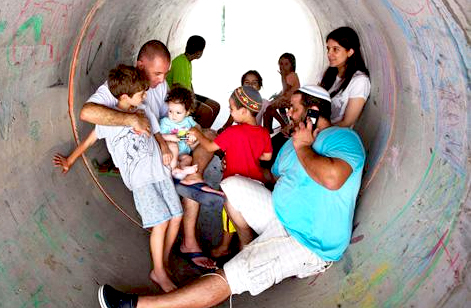
Israeli aggressionGaza City/Palestinian Territories, Jul 11: Israeli warplanes kept up their deadly raids on Gaza Thursday but failed to prevent Hamas from firing rockets at Jerusalem, two of which struck near settlements in the West Bank.

As the violence escalated, with more than 30 Palestinians killed on Thursday alone, UN chief Ban Ki-moon appealed for an immediate cease-fire at an emergency meeting of the Security Council.

“It is now more urgent than ever to try to find common ground for a return to calm and a cease-fire understanding,” he said as the Organization of Islamic Conference lobbied the UN for a crackdown on Israel.

Russian President Vladimir Putin issued a similar plea in a phone call to Israeli Prime Minister Benjamin Netanyahu, urging an immediate end to confrontation and expressing concern over civilian casualties.

And US Secretary of State John Kerry warned the region was facing “dangerous moment” after speaking to both Netanyahu and Palestinian president Mahmud Abbas.

But Israel appeared bent on dealing a fatal blow to Hamas, with Netanyahu reportedly saying talk of a cease-fire was “not even on the agenda.”

Hamas also appeared to have no interest in letting up, striking deep inside Israel over the past 48 hours, with rockets crashing down near Jerusalem and Tel Aviv and even as far away as Hadera, 116 kilometers (72 miles) to the north.

As sirens wailed across Jerusalem for the second time in two days, a series of loud explosions echoed across the city as the Iron Dome anti-missile system shot down two rockets fired from Gaza, the army said.

Another two crashed down in open areas in the occupied West Bank, one hitting near the Maaleh Adumim settlement and the other landing near Ofer, an Israeli military prison just west of Ramallah, causing no damage or injuries, witnesses and security officials told AFP.

Hamas fighters from Ezzedine Al-Qassam took responsibility, saying they had fired “four M75 rockets at Jerusalem.”

Comments

Add new comment

  • Coastaldigest.com reserves the right to delete or block any comments.
  • Coastaldigset.com is not responsible for its readers’ comments.
  • Comments that are abusive, incendiary or irrelevant are strictly prohibited.
  • Please use a genuine email ID and provide your name to avoid reject.
Agencies
July 1,2020

The ILO has warned that if another Covid-19 wave hits in the second half of 2020, there would be global working-hour loss of 11.9 percent - equivalent to the loss of 340 million full-time jobs.

According to the 5th edition of International Labour Organisation (ILO) Monitor: Covid-19 and the world of work, the recovery in the global labour market for the rest of the year will be uncertain and incomplete.

The report said that there was a 14 percent drop in global working hours during the second quarter of 2020, equivalent to the loss of 400 million full-time jobs.

The number of working hours lost across the world in the first half of 2020 was significantly worse than previously estimated. The highly uncertain recovery in the second half of the year will not be enough to go back to pre-pandemic levels even in the best scenario, the agency warned.

The baseline model – which assumes a rebound in economic activity in line with existing forecasts, the lifting of workplace restrictions and a recovery in consumption and investment – projects a decrease in working hours of 4.9 percent (equivalent to 140 million full-time jobs) compared to last quarter of 2019.

It says that in the pessimistic scenario, the situation in the second half of 2020 would remain almost as challenging as in the second quarter.

“Even if one assumes better-tailored policy responses – thanks to the lessons learned throughout the first half of the year – there would still be a global working-hour loss of 11.9 per cent at the end of 2020, or 340 million full-time jobs, relative to the fourth quarter of 2019,” it said.

The pessimistic scenario assumes a second pandemic wave and the return of restrictions that would significantly slow recovery. The optimistic scenario assumes that workers’ activities resume quickly, significantly boosting aggregate demand and job creation. With this exceptionally fast recovery, the global loss of working hours would fall to 1.2 per cent (34 million full-time jobs).

The agency said that under the three possible scenarios for recovery in the next six months, “none” sees the global job situation in better shape than it was before lockdown measures began.

“This is why we talk of an uncertain but incomplete recovery even in the best of scenarios for the second half of this year. So there is not going to be a simple or quick recovery,” ILO Director-General Guy Ryder said.

The new figures reflect the worsening situation in many regions over the past weeks, especially in developing economies. Regionally, working time losses for the second quarter were: Americas (18.3 percent), Europe and Central Asia (13.9 percent), Asia and the Pacific (13.5 percent), Arab States (13.2 percent), and Africa (12.1 percent).

The vast majority of the world’s workers (93 per cent) continue to live in countries with some sort of workplace closures, with the Americas experiencing the greatest restrictions.

During the first quarter of the year, an estimated 5.4 percent of global working hours (equivalent to 155 million full-time jobs) were lost relative to the fourth quarter of 2019. Working- hour losses for the second quarter of 2020 relative to the last quarter of 2019 are estimated to reach 14 per cent worldwide (equivalent to 400 million full-time jobs), with the largest reduction (18.3 per cent) occurring in the Americas.

The ILO Monitor also found that women workers have been disproportionately affected by the pandemic, creating a risk that some of the modest progress on gender equality made in recent decades will be lost, and that work-related gender inequality will be exacerbated.

The severe impact of Covid-19 on women workers relates to their over-representation in some of the economic sectors worst affected by the crisis, such as accommodation, food, sales and manufacturing.

Globally, almost 510 million or 40 percent of all employed women work in the four most affected sectors, compared to 36.6 percent of men, it said.

The report said that women also dominate in the domestic work and health and social care work sectors, where they are at greater risk of losing their income and of infection and transmission and are also less likely to have social protection.

The pre-pandemic unequal distribution of unpaid care work has also worsened during the crisis, exacerbated by the closure of schools and care services.

Even as countries have adopted policy measures with unprecedented speed and scope, the ILO Monitor highlights some key challenges ahead, including finding the right balance and sequencing of health, economic and social and policy interventions to produce optimal sustainable labour market outcomes; implementing and sustaining policy interventions at the necessary scale when resources are likely to be increasingly constrained and protecting and promoting the conditions of vulnerable, disadvantaged and hard-hit groups to make labour markets fairer and more equitable.

“The decisions we adopt now will echo in the years to come and beyond 2030. Although countries are at different stages of the pandemic and a lot has been done, we need to redouble our efforts if we want to come out of this crisis in a better shape than when it started,” Ryder said. 

Comments

Add new comment

  • Coastaldigest.com reserves the right to delete or block any comments.
  • Coastaldigset.com is not responsible for its readers’ comments.
  • Comments that are abusive, incendiary or irrelevant are strictly prohibited.
  • Please use a genuine email ID and provide your name to avoid reject.
Agencies
January 25,2020

Pentagon, Jan 25: Thirty-four US troops had been diagnosed with concussions and traumatic brain injury (TBI) as a result of the January 8 Iranian missile attack on two military bases in Iraq housing American soldiers, the Pentagon said.

"Eight service members who were previously transported to Germany have been brought to the US, they would continue to receive treatment in the US either at Walter Reed or their home bases," Pentagon spokesman Jonathan Hoffman told the media on Friday.

Hoffman said that nine service members were still undergoing treatment in Germany, and the rest of the 17 injured troops have already returned to duty in Iraq, reports Xinhua news agency.

Lat week, the US military had said that 11 service members were treated for concussion symptoms due to the missile attacks.

Hoffman noted that the symptoms "are late developing and manifested over a period of time".

In retaliation for the killing of Iranian Major General Qasem Soleimani in an American drone attack on January 3 in Baghdad, Tehran launched over 13 ballistic missiles on the two military bases in Anbar and near the city of Erbil.

US military initially said that no casualty was reported from the Iranian attack. President Donald Trump then downplayed the seriousness of those injures.

"I heard that they had headaches and a couple of other things, but I would say and I can report that it's not very serious," Trump told reporters on Wednesday at a press conference in Davos, Switzerland.

More than 5,000 US troops are deployed in Iraq to support the country's forces in the battle against Islamic State militants.

Comments

Add new comment

  • Coastaldigest.com reserves the right to delete or block any comments.
  • Coastaldigset.com is not responsible for its readers’ comments.
  • Comments that are abusive, incendiary or irrelevant are strictly prohibited.
  • Please use a genuine email ID and provide your name to avoid reject.
Agencies
June 16,2020

Washington, Jun 16: The United States will reduce its troop strength in Germany from the nearly 52,000 at present to 25,000, President Donald Trump has said in Washington.

In an interaction with reporters at the White House on Monday, Trump attributed the move to high costs and Germany being "delinquent" in its payment to NATO.

"We have 52,000 soldiers in Germany. That's a tremendous amount of soldiers. It's a tremendous cost to the United States and Germany, as you know, is very delinquent in their payments to NATO.

"They are paying one per cent and they're supposed to be a two per cent. And then two percent is very low. It should be much more than that. So they are delinquent of billions of dollars," Trump alleged.

"So, we're putting the number down to 25,000 soldiers. We'll see what happens, but Germany has not been making payments. In addition to that, I was the one that brought it up. Everybody talks about Trump with Russia. Well, I brought this up a long time ago. Why is Germany paying Russia billions of dollars for energy and then we're supposed to protect Germany from Russia? How does that work? It doesn't work," the US president said.

US soldiers, he said, are paid well. "They live in Germany. They spend vast amounts of money in Germany. Everywhere around those bases is very prosperous for Germany. So, Germany takes. And then on top of it, they treat us very badly on trade. We have trade with the EU, Germany being the biggest member, and very, very badly on trade and we are negotiating with them on that. But right now, I'm not satisfied with the deal they want to make," Trump said.

"They've cost the United States hundreds of billions of dollars over the years on trade," he said.

The US protects them and then they take advantage of America on trade, the president said.

"So we are working on a deal with them, but it's very unfair and I would say by far, the worst abuser is Germany," he said.

Comments

Add new comment

  • Coastaldigest.com reserves the right to delete or block any comments.
  • Coastaldigset.com is not responsible for its readers’ comments.
  • Comments that are abusive, incendiary or irrelevant are strictly prohibited.
  • Please use a genuine email ID and provide your name to avoid reject.