



Kachin rebels see more Myanmar attacks, no hope for peace

December 28, 2016

Laiza (Myanmar), Dec 28: Ethnic Kachin rebels long at war with Myanmar troops say the government has only escalated fighting since Aung San Suu Kyi took over as leader, crushing the hopes that had led many ethnic minorities to support her party and leaving them with no confidence in the peace process that Suu Kyi has identified as a priority.myanmer
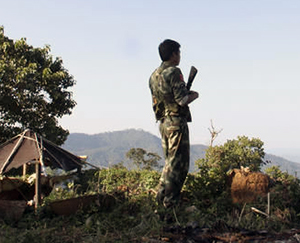
Rebels and observers say government offensives including airstrikes have increased since Suu Kyi and her National League for Democracy party took control in March. Suu Kyi's government has said little about the attacks, and the Kachin Independence Organisation accuses her of cooperating with the military.

"Suu Kyi tried so hard to gain this power for many years and she needs to make deals with the military in order to sustain her power," said La Nan, the chief spokesman of the KIO.

Rebels say they have been hit with airstrikes in areas of northern Shan and Kachin states including Mongo, a Shan town that was heavily bombed and suffered an unknown number of civilian casualties. Other fighting has occurred in Hpakant, center of Myanmar's lucrative jade-mining region, and Laiza, headquarters of the KIO.

Suu Kyi, who serves as state counselor and foreign minister but effectively rules Myanmar, faces high expectations from ethnic groups and the international community.

As opposition leader, the Nobel Peace laureate was held under house arrest by the former junta for years, but her landslide election victory in November 2015 ended more than half a century of military control.

Though she has called the peace process her top priority, many local and international political analysts do not see significant achievements since the NLD came to power, and say she has failed to cooperate enough with ethnic leaders.

"National reconciliation cannot be built only between the government and the military," said Yan Myo Thein, a prominent Myanmar political analyst. "There must be negotiation between ethnic parties, armed groups, the military and the government."

Ethnic Burmans form a majority in Myanmar, also known as Burma, but ethnic minorities make up about 40 per cent of the population. Some of those groups have fought for greater autonomy for decades.

Suu Kyi held a peace conference in late August attended by representatives of 17 of the 20 major ethnic groups, including the Kachin.

The conference was intended to build on a ceasefire agreement that ethnic groups insist include a political solution to their longstanding demands. Ethnic leaders have asked for political dialogue, but the peace conference met few of their expectations, and some may drop out of the next round, expected in February.

The conference was dominated by short speeches from a wide range of stakeholders, leaving little time for more significant discussion.

Comments

Add new comment

  • Coastaldigest.com reserves the right to delete or block any comments.
  • Coastaldigset.com is not responsible for its readers’ comments.
  • Comments that are abusive, incendiary or irrelevant are strictly prohibited.
  • Please use a genuine email ID and provide your name to avoid reject.
News Network
June 13,2020

Shanghai, Jun 13: Authorities in Beijing have temporarily shut a major wholesale agricultural market following a rise in locally transmitted novel coronavirus infections in China's capital city over the past two days.

The closure of the Xinfadi wholesale market at 3 a.m. local time on Saturday (1900 GMT on Friday), came after two men working at a meat research centre who had recently visited the market were reported on Friday as having been infected by the novel coronavirus. It was not immediately clear how the men had been infected.

Concern is growing of a second wave of the new virus, even in many countries that seemed to have curbed its spread. It was first reported at a seafood market in Wuhan, the capital of central China's Hubei province, in December.

Beijing authorities had earlier halted beef and mutton trading at the Xinfadi market, alongside closures at other wholesale markets around the city.

Reflecting concerns over the risk of further spread of the virus, major supermarkets in Beijing removed salmon from their shelves overnight after the virus causing COVID-19 was discovered on chopping boards used for imported salmon at the market, the state-owned Beijing Youth Daily reported.

Beijing authorities said more than 10,000 people at the market will take nucleic acid tests to detect coronavirus infections. The city government also said it had dropped plans to reopen schools on Monday for students in grades one through three because of the new cases.

Health authorities visited the home of a Reuters reporter in Beijing's Dongcheng district on Saturday to ask whether she had visited the Xinfadi market, which is 15 km (9 miles) away. They said the visit was part of patrols Dongcheng was conducting.

Listen to the latest songs, only on JioSaavn.com

China reported 11 new COVID-19 cases and seven asymptomatic cases for Friday, the national health authority said on Saturday. And all six locally transmitted cases were confirmed in Beijing.

Comments

Add new comment

  • Coastaldigest.com reserves the right to delete or block any comments.
  • Coastaldigset.com is not responsible for its readers’ comments.
  • Comments that are abusive, incendiary or irrelevant are strictly prohibited.
  • Please use a genuine email ID and provide your name to avoid reject.
News Network
May 6,2020

Washington, May 6: At a time when the coronavirus pandemic has squeezed them, multi-national companies in America are laying off workers while paying cash dividends to their shareholders. Thus making the workers bear the brunt of the sacrifices while the shareholders continue to collect.

The Washington Post said in one of its reports that five big American companies have paid a combined USD 700 million to shareholders while cutting jobs, closing plants and leaving thousands of their workers filing for unemployment benefits.

Since the pandemic was declared an emergency, Caterpillar has suspended operations at two plants and a foundry, Levi Strauss has closed stores, and toolmaker Stanley Black & Decker has been planning layoffs and furloughs.

Steelcase, an office furniture manufacturer, and World Wrestling Entertainment have also shed employees.

Executives of those companies told the Post that the layoffs support the long-term health of their companies, and often the executives are giving up a piece of their salaries. Furloughed workers can apply for unemployment benefits.

But distributing millions of dollars to shareholders while leaving many workers without a paycheck is unfair, critics argue, and belies the repeated statements from executives about their concern for employees' welfare during the coronavirus crisis.

Caterpillar, for example, announced a USD 500 million distribution to shareholders April 8, about two weeks after indicating that operations at some plants would stop. The company however declined to divulge how many workers are affected.

"We are taking a variety of actions globally, but we aren't going to discuss the number of impacted people," spokeswoman of the company, Kate Kenny, said in a reply to an email by the Post.

This spate of dividends is also likely to revive long-standing debates about economic rewards.

"There are no hard-and-fast rules about this," said Amy Borrus, deputy director of the Council of Institutional Investors, a group that argues for shareholder rights and represents pension funds and other long-term investors.

Many large US companies choose to issue a regular, quarterly dividend to shareholders, often increasing it, and they boast about these payments because they help keep the share price higher than it might otherwise be. Those companies might be reluctant to announce that they are cutting or suspending their dividend during a crisis, Borrus was further quoted as saying.

But "companies have to be mindful of the optics of paying dividends if they're laying off thousands of workers," she added.

On March 26, Caterpillar had announced that because of the pandemic, it was "temporarily suspending operations at certain facilities." Two plants, in East Peoria, Ill., and Lafayette, Ind., were coming to a halt, as well as a foundry in Mapleton, Ill., according to news reports.

"We are taking a variety of actions at our global facilities to reduce production due to weaker customer demand, potential supply constraints and the spread of the covid-19 pandemic and related government actions," Kenny said via email.

"These actions include temporary facility shutdowns, indefinite or temporary layoffs," she added.

Similarly, Levi Strauss announced April 7 that the company would stop paying store workers, and about 4,000 are now on furlough. On the same day, the company announced that it was returning USD 32 million to shareholders.

"As this human and economic tragedy unfolds globally over the coming months, we are taking swift and decisive action that will ensure we remain a winner in our industry," Chip Bergh, president and chief executive of the company, also told the Post.

Stanley Black & Decker announced on April 2 that it was planning furloughs and layoffs because of the pandemic. Two weeks later, it issued a dividend to shareholders of about USD 106 million.

The notion that a company's primary purpose is to serve shareholders gained prominence in the 1980s but has come under attack in recent years, even from business executives, the newspaper reported.

Corporate decisions to suspend dividends and buybacks are complex, however, and it is difficult to know whether these suspensions of dividend and buyback programs were motivated by a desire to conserve cash in anticipation of bad times, and how much they are prompted by a sense of obligation to employees.

Over recent decades, the mandate to "maximize shareholder value" has become orthodoxy, for many, and it is often unclear what motivates companies to pare dividends or buybacks for shareholders, said William Lazonick, an emeritus economics professor at the University of Massachusetts at Lowell, who has been one of the leading critics of companies that distribute cash to shareholders through stock buybacks and dividends rather than reinvesting the profits into employees, innovation and production.

Comments

Add new comment

  • Coastaldigest.com reserves the right to delete or block any comments.
  • Coastaldigset.com is not responsible for its readers’ comments.
  • Comments that are abusive, incendiary or irrelevant are strictly prohibited.
  • Please use a genuine email ID and provide your name to avoid reject.
News Network
March 4,2020

Beijing/Zurich, Mar 4: China has approved the use of Swiss drugmaker Roche's anti-inflammation drug Actemra for patients who develop severe complications from the coronavirus as it urgently hunts for new ways to combat the deadly infection that is spreading worldwide.

China is hoping that some older drugs could stop severe cytokine release syndrome (CRS), or cytokine storms, an overreaction of the immune system which is considered a major factor behind catastrophic organ failure and death in some coronavirus patients.

Actemra, a biologic drug approved in 2010 in the United States for rheumatoid arthritis (RA), inhibits high Interleukin 6 (IL-6) protein levels that drive some inflammatory diseases.

China's National Health Commission said in treatment guidelines published online on Wednesday that Actemra can now be used to treat coronavirus patients with serious lung damage and high IL-6 levels.

Separately, researchers in the country are testing Actemra, known generically as tocilizumab, in a clinical trial expected to include 188 coronavirus patients and running until May 10.

Roche, which donated 14 million yuan ($2.02 million) worth of Actemra during February, said the trial was initiated independently by a third party with the aim of exploring the efficacy and safety of the drug in coronavirus patients with CRS.

It added that there was currently no published clinical trial data on the drug's safety or efficacy against the virus.

More than 3,000 people have died and 93,000 have been infected by the novel coronavirus thought to have originated in Wuhan, China, before spreading to around 90 countries including the United States, Italy, Switzerland, France and Germany.

The Swiss company, for which China is its No. 2 market behind the United States, also makes diagnostic gear to detect the coronavirus.

Since Actemra's approval a decade ago, it has become a go-to drug against other inflammatory conditions, including cytokine storms in cancer patients receiving cell therapies from Novartis and Gilead Sciences.

In 2012 it helped save the life of a young U.S. girl, the first child to be treated for leukaemia with Novatis' Kymriah, from a post-treatment rush of IL-6.

Priced at between $20-30,000 annually for RA according to SSR Health, Roche's medicine is also used for rare juvenile arthritis and giant cell arteritis, or inflammation of the blood vessels.

Comments

Add new comment

  • Coastaldigest.com reserves the right to delete or block any comments.
  • Coastaldigset.com is not responsible for its readers’ comments.
  • Comments that are abusive, incendiary or irrelevant are strictly prohibited.
  • Please use a genuine email ID and provide your name to avoid reject.